

You wake up and your heart is already racing. Your mind immediately floods with every cringeworthy thing you might have said last night, and the physical hangover is somehow the least of your problems. That crushing combination of hangover and anxiety, what we call hangxiety, has you pinned to your bed with dread.
The good news? You don't need to white-knuckle your way through the day or wait for this feeling to pass on its own. Research suggests that specific interventions in the first 15 minutes after waking can significantly reduce both the physical and psychological symptoms of hangxiety.
This 7-step routine is designed to work exactly where you are right now: still in bed, possibly still under the covers, definitely not ready to face the world yet. Each step takes just 1-3 minutes and builds on the last to help regulate your nervous system, rehydrate your brain, and shift you from panic mode to functional human mode.
Quick Take
- Hangxiety combines alcohol withdrawal effects with disrupted neurotransmitters, creating a perfect storm of physical and mental distress
- The first 15 minutes after waking are critical for nervous system regulation and can set the tone for your entire recovery
- Simple breathwork can activate your parasympathetic nervous system and reduce cortisol levels within minutes
- Strategic hydration and electrolyte balance help restore brain function faster than water alone
- This 7-step routine takes 10-15 minutes total and requires nothing more than your phone, water, and your bed
Why Hangxiety Hits Hardest First Thing in the Morning
When you wake up after drinking, your brain is dealing with a chemical crisis. Alcohol initially floods your system with GABA, the calming neurotransmitter, while suppressing glutamate, which creates excitation. Once the alcohol leaves your system, this balance flips aggressively in the opposite direction.
Your brain suddenly has too much glutamate and not enough GABA, leaving your nervous system in overdrive. Studies show this rebound effect peaks in the morning hours, which is exactly why you wake up with your heart pounding and your thoughts spiraling. Add in dehydration, low blood sugar, disrupted sleep architecture, and elevated cortisol, and you've got the perfect recipe for that specific morning dread.
The good news is that your body wants to return to balance. These seven steps work with your natural recovery mechanisms to speed up the process, giving your nervous system the specific inputs it needs to downregulate from panic mode.
Daily Support for Social Drinkers
Your liver works hard every day. Give it consistent support.
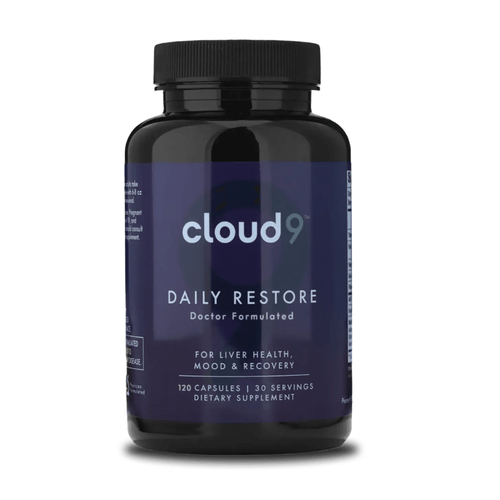
Cloud9 Daily Restore combines NAC, DHM, milk thistle, B vitamins, and ashwagandha to help support the pathways alcohol can tax most. Two capsules daily, drinking or not.
NAC | DHM | Milk Thistle | B Vitamins | Ashwagandha
See How Daily Restore WorksStep 1: The 4-7-8 Breath Reset (Before Opening Your Eyes)
Before you even open your eyes or check your phone, start with your breath. The 4-7-8 breathing technique can help activate your parasympathetic nervous system within just a few rounds, signaling to your body that you're safe even when your racing heart suggests otherwise.
Here's how it works: breathe in through your nose for a count of 4, hold for a count of 7, then exhale slowly through your mouth for a count of 8. The extended exhale is key, as research suggests longer exhales help stimulate the vagus nerve, which directly counteracts the fight-or-flight response.
Why This Works First
Starting with breathwork before any other intervention gives your nervous system a chance to recalibrate before you introduce additional stimuli. When you're in a state of hangxiety, your sympathetic nervous system is already on high alert. Checking your phone or jumping straight into problem-solving can amplify this stress response.
Do 4 complete rounds of 4-7-8 breathing while still lying down. If the count feels too long, adjust to 3-5-6 instead. The ratio matters more than the exact numbers.
Step 2: The Grounding Spiral (Reconnecting Mind and Body)
Hangxiety often creates a disconnection between your mind and body, where your thoughts are spiraling but you feel numb or detached physically. This next step uses a simple sensory technique to bring you back into your body and the present moment.
The 5-4-3-2-1 Technique
Still lying in bed, slowly identify the following without judgment:
- 5 things you can see (even with half-open eyes: ceiling, sheets, light, shadows, your hand)
- 4 things you can physically feel (pillow texture, temperature, weight of blanket, your breath)
- 3 things you can hear (traffic, birds, silence, your heartbeat, a fan)
- 2 things you can smell (your sheets, the room, even neutral air counts)
- 1 thing you can taste (even if it's just the staleness in your mouth)
This exercise works by shifting your brain from the abstract anxiety spiral to concrete sensory input. Research on grounding techniques suggests this type of present-moment awareness can reduce acute anxiety symptoms by interrupting rumination patterns.

Step 3: Strategic Hydration Protocol (Not Just Water)
Now it's time to address the physical crisis happening in your cells. Alcohol is a powerful diuretic, and you've likely lost significant fluids and electrolytes overnight. But chugging plain water isn't the fastest path to rehydration.
What to Drink First
Your body needs electrolytes to actually absorb and use the water you're drinking. Studies show that drinks containing sodium, potassium, and glucose help your body rehydrate more efficiently than water alone.
Keep one of these options on your nightstand before you go to sleep:
- Coconut water (naturally high in potassium)
- Electrolyte powder mixed in water (look for options with at least 200mg sodium)
- A sports drink diluted 50/50 with water (cuts the sugar while maintaining electrolytes)
- Pickle juice (sounds terrible, works remarkably well for sodium and hydration)
Drink 12-16 ounces slowly over 5 minutes while still in bed. Sipping slowly helps prevent nausea and allows for better absorption.
The Hydration-Anxiety Connection
Dehydration itself can trigger anxiety-like symptoms: increased heart rate, dizziness, difficulty concentrating, and irritability. When you're already dealing with alcohol-induced anxiety, dehydration amplifies every symptom. Getting fluids and electrolytes on board quickly can help reduce the physical sensations that fuel your mental spiral.
Step 4: The Gentle Movement Sequence (Still Horizontal)
Movement helps metabolize stress hormones and can reduce nausea, but the thought of getting up might feel impossible right now. This sequence keeps you horizontal while gently mobilizing your body.
Bed-Based Movement Protocol
Do each of these movements slowly, for 30-60 seconds each:
- Knee rocks: Lying on your back, bring knees to chest and gently rock side to side
- Spinal twist: Knees bent, let them fall to one side while arms spread wide, then switch
- Cat-cow on all fours: If you can manage getting on hands and knees, gently arch and round your spine
- Child's pose: Sit back on your heels, forehead to mattress, arms extended
- Ankle and wrist circles: Simple joint mobilization to get blood flowing
These movements work by activating your lymphatic system, which helps clear metabolic waste products, and by gently stimulating your vagus nerve through spinal movement. Research suggests gentle movement can also help regulate blood sugar, which often drops after drinking and contributes to anxiety and shakiness.
Step 5: The Thought Reframe (Challenging the Hangxiety Spiral)
By now you've addressed the physical crisis, and it's time to tackle the mental one. Hangxiety thoughts tend to follow predictable patterns, and most of them aren't based in reality.
Common Hangxiety Thought Patterns vs. Reality
| Hangxiety Thought | Reality Check |
|---|---|
| "Everyone thinks I'm terrible" | Most people are thinking about themselves, not analyzing your behavior |
| "I said something unforgivable" | Alcohol amplifies regret; wait 24 hours before judging your actions |
| "This anxiety means something is wrong" | This is neurochemical withdrawal, not intuition or truth |
| "I need to fix everything right now" | Your brain isn't capable of accurate assessment in this state |
| "This feeling will last forever" | Peak hangxiety symptoms typically resolve within 12-24 hours |
Write down one specific anxious thought you're having right now. Then write next to it: "This is my dehydrated, glutamate-flooded brain talking, not reality." Studies on cognitive reframing suggest that simply naming the source of distorted thinking can reduce its emotional impact.
The thoughts you're having right now are chemically induced, not character-revealing. Your brain is temporarily flooded with stress hormones and depleted of calming neurotransmitters. These thoughts are symptoms, not truths.
Step 6: The Nausea Navigation Strategy
If you're dealing with nausea alongside anxiety, you need a specific approach. Nausea can actually amplify anxiety (your brain interprets it as a threat signal), and anxiety can worsen nausea, creating a vicious cycle.
Immediate Nausea Relief Techniques
Try these in order until you find relief:
- Pressure point stimulation: Press firmly on the inside of your wrist, about three finger-widths below your palm, for 30 seconds
- Cold compress on neck: A cool washcloth on the back of your neck can help regulate nausea signals
- Peppermint: The scent alone can help; keep peppermint tea bags or essential oil nearby
- Ginger: Chew a small piece of crystallized ginger or sip ginger tea
- Elevated upper body: Stack pillows to keep your head and chest elevated at about 30 degrees
When to Eat (and What)
Don't force food if your stomach isn't ready, but if you can tolerate it, small amounts of easily digestible carbohydrates can help stabilize blood sugar. Research suggests that low blood sugar significantly contributes to anxiety symptoms and can extend hangover duration.
Best first foods while still in bed:
- A few saltine crackers or plain toast
- Half a banana (potassium and natural sugars)
- A spoonful of honey (quick glucose without requiring digestion)
- Plain oatmeal (if you can manage it)
Step 7: The 10-Minute Future Self Visualization
The final step involves borrowing hope from your future. When you're in the depths of hangxiety, it feels like this state is permanent. This visualization exercise helps create a mental bridge to the version of you that will exist later today.
The Technique
Set a timer for 10 minutes. Close your eyes and visualize yourself 12 hours from now. See yourself having moved through this feeling, sitting comfortably, maybe watching TV or talking to a friend. Picture specific details: what you're wearing, where you're sitting, the expression on your face. Notice how your future self's shoulders look relaxed, how their breathing is easy and natural.
This isn't toxic positivity or pretending you feel fine. It's creating a neurological pathway to a state that is inevitable. Studies on mental rehearsal suggest that visualizing a future state can help activate some of the same neural networks as actually being in that state, providing a small dose of relief in the present moment.
Building Your Recovery Timeline
Here's what you can reasonably expect over the next 24 hours:
- Hours 1-3: Physical symptoms may still be intense, but mental clarity should start improving
- Hours 4-8: Peak anxiety typically begins to decrease as neurotransmitters start rebalancing
- Hours 9-16: You'll likely notice significant improvement in both physical and mental symptoms
- Hours 17-24: Most people report feeling close to baseline, though fatigue may linger
Knowing this timeline can help you hold on during the worst moments. The intensity you're feeling right now is temporary, and your body is already working hard to restore balance.
How Daily Restore Supports Your Health
Understanding what your body needs is one thing. Getting consistent daily support is another. Daily Restore was designed to address the key pathways alcohol can stress most, in one simple daily formula.
NAC (N-Acetyl Cysteine)
Supports glutathione production and antioxidant defenses
DHM (Dihydromyricetin)
Supports alcohol metabolism
Milk Thistle (Silymarin)
Supports healthy liver function
B Vitamins
Help replenish nutrients involved in energy and metabolism
Ashwagandha
Supports stress resilience and healthy cortisol balance
Daily Restore is not a detox or a cure. It is a daily support formula designed for people who drink socially and want to give their body consistent, evidence-informed support.
Frequently Asked Questions
How long does hangxiety typically last?
Hangxiety symptoms can last anywhere from a few hours to a full day or more, depending on factors like how much you drank, your individual brain chemistry, and your overall stress levels. For most people, symptoms peak in the morning and gradually improve throughout the day with proper hydration, nutrition, and rest.
Can I prevent hangxiety before drinking?
While there's no guaranteed way to prevent hangxiety entirely, you can reduce your risk by staying hydrated, eating before and during drinking, pacing yourself, and supporting your body with nutrients like B vitamins and electrolytes. Some people find that taking a supplement with adaptogens and amino acids before bed can help support more balanced neurotransmitter recovery overnight.
Is hangxiety the same thing as a regular hangover?
Hangxiety is the psychological component of a hangover, specifically the anxiety, dread, and worry that can accompany physical hangover symptoms. While a regular hangover includes physical symptoms like headache and nausea, hangxiety involves the mental and emotional distress caused by temporary changes in brain chemistry after drinking.
Why does hangxiety feel worse than regular anxiety?
Hangxiety can feel particularly intense because it combines depleted neurotransmitters, dehydration, poor sleep quality, and elevated stress hormones all at once. Your nervous system is in a heightened state while your brain's natural calming mechanisms are temporarily compromised, which can create a perfect storm for amplified anxious feelings.
Should I exercise when I have hangxiety?
Gentle movement like walking or light stretching can help release endorphins and support recovery, but intense exercise may add additional stress to an already taxed system. Listen to your body and opt for mild, restorative movement rather than pushing yourself through a hard workout when you're dealing with hangxiety.
The Bottom Line
Hangxiety is a real physiological response to alcohol's impact on your brain chemistry, and it deserves the same care and attention you'd give any other wellness challenge. The good news is that you don't have to white-knuckle your way through the morning spiral. Simple, intentional steps taken before you even get out of bed can help support your nervous system and set a calmer tone for the day ahead.
From regulating your breathing and rehydrating your body to gently reintroducing nutrients and setting boundaries around morning scrolling, each step in this routine works with your body's natural recovery processes. These aren't just distractions or placebo effects. They're evidence-informed strategies that can help address the root causes of hangxiety: depleted neurotransmitters, dehydration, inflammation, and an overstimulated stress response.
For those who want more comprehensive support, Daily Restore was designed specifically to address hangxiety at the source. With targeted ingredients like L-theanine for calm focus, DHM to support alcohol metabolism, B vitamins for neurotransmitter production, and adaptogens to help balance stress hormones, it offers a science-backed foundation for more resilient mornings. Think of it as part of your overall wellness toolkit, working alongside hydration, rest, and mindful recovery practices.
Remember, occasional hangxiety is normal, but if you're experiencing persistent anxiety after drinking or finding that alcohol consistently disrupts your mental wellbeing, it may be worth reassessing your relationship with drinking altogether. Your nervous system deserves consistent support, not just crisis management. Start small, be kind to yourself, and know that calmer mornings are absolutely within reach.
Build Your Daily Support Routine
Build Your Daily Support Routine
If drinking is part of your lifestyle, your support routine should not be random. Daily Restore was designed to help social drinkers support liver health, antioxidant defenses, alcohol metabolism, nutrient replenishment, and daily recovery in one simple routine.
NAC
DHM
Milk Thistle
B Vitamins
Ashwagandha