
The Cloud9 Journal · 5 min read
Can You Take NAC and Milk Thistle Together?
Yes, for most people. NAC and milk thistle work in different ways and are often taken together. What each one does, how to take them, side effects, and what the research found.
By Mike Hardenbrook, founder of Cloud9 · Updated October 2026
Short answer: yes, for most people. NAC and milk thistle can be taken together, even at the same time, and there's no known interaction between them. They work in different ways: NAC helps your body make glutathione, an antioxidant your liver relies on, while milk thistle's active compounds (silymarin) act on liver cells directly. If you take prescription medication or have a liver condition, check with your pharmacist or doctor first.
| NAC | Milk thistle | |
|---|---|---|
| How it works | Supplies cysteine, which your body uses to make glutathione | Silymarin has antioxidant and anti-inflammatory effects on liver cells |
| What studies found | Lowered ALT, a liver enzyme, in a 3-month trial in fatty liver | Lowered ALT and AST across 55 randomized trials |
| How studies gave it | Daily, by mouth | Daily, usually as a standardized silymarin extract |
| Common side effects | Mild stomach upset or nausea | Mild stomach upset; allergy in people sensitive to ragweed-family plants |
What does NAC do for your liver?
NAC (N-acetylcysteine) is a stable form of the amino acid cysteine. Your body uses cysteine to build glutathione, an antioxidant that helps protect liver cells, including while your liver processes alcohol.
Hospitals have used NAC for decades as the antidote for acetaminophen overdose, because it restores liver glutathione quickly.1 In a randomized trial of 30 adults with fatty liver, 600 mg of NAC twice a day lowered ALT significantly after three months compared with vitamin C.2
More in our guide to NAC for liver health.
What does milk thistle do for your liver?
Milk thistle is a flowering plant whose seeds contain silymarin, a group of antioxidant and anti-inflammatory compounds. It's the most studied herb for the liver.
- A 2025 meta-analysis of 55 randomized trials and 3,545 patients found silymarin significantly lowered ALT and AST, two of the main liver enzymes on a standard blood test. The drop was clearest in fatty liver and viral hepatitis; in the alcohol-related liver disease group it wasn't statistically significant.3
- In a randomized trial of 170 people with cirrhosis, four-year survival was 58% with silymarin vs 39% with placebo (140 mg of silymarin three times a day), and the benefit showed up in the alcohol-related cirrhosis group.4
Most of these studies used a standardized silymarin extract, which is more concentrated than whole milk thistle seed powder. More in our guide to milk thistle for drinkers.
Why are NAC and milk thistle taken together?
Because they work in different ways. NAC supplies cysteine for glutathione; silymarin has its own antioxidant and anti-inflammatory effects. Each one has its own research behind it, and many liver formulas combine them for that reason.
A third ingredient often joins them: DHM (dihydromyricetin), from vine tea. In a double-blind trial of 60 adults with fatty liver, three months of DHM lowered ALT, AST and GGT compared with placebo.5 See the DHM guide.
How to take NAC and milk thistle
- At the same time is fine. There's no need to space them apart.
- Daily, like the studies. The trials above gave them every day for weeks or months, not just on the nights people drank.
- With food if your stomach is sensitive. NAC can cause mild stomach upset.
- Expect a sulfur smell. NAC naturally smells a little like sulfur. That's normal.
Side effects and who should check first
Both are well tolerated in studies. The most common complaint is mild stomach upset. Milk thistle can cause an allergic reaction in people allergic to ragweed, daisies or related plants. Talk to your doctor or pharmacist first if you're pregnant, take prescription medication (especially blood thinners or nitroglycerin), or have a diagnosed liver condition.
What our clinical trial found
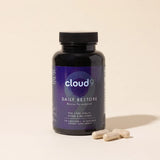
Daily Restore combines NAC, milk thistle and DHM. We tested the whole formula in a 12-week clinical trial, run by an independent clinical research company. In our 12-week clinical trial, 3 out of 4 participants had a decrease in at least one liver enzyme (AST, ALT or GGT), 92% woke up feeling refreshed more often and 83% had less next-day fatigue.
Results compare each participant's baseline with week 12. Want to track your own? Test your GGT before you start and again at 12 weeks with our at-home blood test.
Where Daily Restore fits
Daily Restore is 1 Daily Dose with 350 mg of NAC, 350 mg of whole milk thistle seed powder and 200 mg of DHM, plus 500 mg of benfotiamine (a well-absorbed form of vitamin B1), methyl B12, folate, 5-HTP, L-theanine, L-tyrosine, ashwagandha and electrolytes. It uses whole milk thistle seed powder, not the standardized extract from most of the studies above, and the full formula is what our clinical trial tested. You take it every day, so the nutrients alcohol drains stay topped up.
One customer, Lori, saw her AST go from 116 to 34, her ALT from 107 to 37 and her GGT from 233 to 66. She says she changed nothing else.
It comes with a 180-day money-back guarantee, even on opened bottles.
Common questions
Can I take NAC and milk thistle at the same time?
Yes. There's no known interaction between them, and they're often combined in one capsule. If you take prescription medication or have a liver condition, check with your doctor or pharmacist.
Should I take them before or after drinking?
The studies gave them daily and didn't compare taking them before versus after drinking. Daily, with a meal, is the pattern with research behind it.
What dose of NAC and milk thistle should I take?
No study has set a best combined dose. The fatty liver trial above used 600 mg of NAC twice a day, and the cirrhosis trial used 140 mg of silymarin three times a day. Milk thistle seed powder and standardized extract aren't interchangeable milligram for milligram, so compare labels by form, not just by number. Daily Restore uses smaller amounts of each inside a 10-ingredient formula, and that whole formula is what our 12-week clinical trial tested.
What are the benefits of NAC with milk thistle?
Each has its own evidence: in studies, NAC and silymarin each lowered liver enzymes. Taken together, you get both.
How long until my liver enzymes change?
Give it weeks, not days. Our clinical trial measured results at 12 weeks, and results vary from person to person. To track your own GGT, test before you start and again at 12 weeks with an at-home blood test.
Is NAC or milk thistle better?
They work differently, so it isn't either or. NAC helps your body make glutathione; silymarin has its own antioxidant effects. That's why so many formulas use both.
Sources
- N-Acetylcysteine. StatPearls, NCBI Bookshelf. PubMed 30725868
- Khoshbaten M, et al. N-acetylcysteine improves liver function in patients with non-alcoholic fatty liver disease. Hepatitis Monthly, 2010. PubMed 22308119
- Shahsavari K, et al. Silymarin administration: a meta-analysis on randomized trials targeting liver injury. BMC Complementary Medicine and Therapies, 2025. PubMed 40221681
- Ferenci P, et al. Randomized controlled trial of silymarin treatment in patients with cirrhosis of the liver. Journal of Hepatology, 1989. PubMed 2671116
- Chen S, et al. Dihydromyricetin improves glucose and lipid metabolism and exerts anti-inflammatory effects in nonalcoholic fatty liver disease: a randomized controlled trial. Pharmacological Research, 2015. PubMed 26032587
These studies tested individual ingredients, not Cloud9 products.
More guides for people who drink

Mentioned in this article
Reposição Diária
Mistura de Desintoxicação Hepática Cardo Mariano - 350 mg Benefícios: O Cardo Mariano é bem conhecido pelas suas propriedades protetoras do fígado, promovendo a desintoxicação e...
Keep reading