

You've noticed the fatigue. Maybe some occasional discomfort in your upper right abdomen. Your last blood work showed elevated liver enzymes, and your doctor suggested cutting back on drinking. You nodded, made a mental note, and then life got in the way.
Here's the uncomfortable truth: your liver has been sending you warning signals, and every day you ignore them, the window for reversible damage gets a little bit smaller. Unlike other organs that announce their distress loudly, your liver tends to suffer in silence until things have progressed significantly.
This isn't about judgment or fear mongering. It's about understanding what actually happens inside your body when alcohol-related liver damage goes unaddressed, and why the timeline matters more than most people realize.
Quick Take
- Early liver damage from alcohol is often reversible, but there's a critical window that closes as scarring progresses
- Fatty liver can develop after just a few weeks of heavy drinking and may cause no symptoms at all
- Once cirrhosis develops, liver damage becomes permanent and can only be managed, not reversed
- Warning signs like fatigue, abdominal pain, and elevated enzymes often appear years before serious complications
- The progression from healthy liver to irreversible damage typically follows predictable stages, each with its own intervention window
Your Liver's Remarkable Tolerance (And Why That's Actually a Problem)
Your liver is one of the most forgiving organs in your body. It can lose up to 75% of its tissue and still function relatively normally. This resilience is remarkable, but it creates a dangerous paradox: by the time you feel seriously ill, significant damage has already occurred.
Research suggests that the liver can regenerate damaged tissue in early stages of alcohol-related injury, which is why catching problems early matters so much. When you drink heavily, your liver prioritizes metabolizing alcohol over its other 500+ functions, leading to fat accumulation, inflammation, and eventually scarring.
The problem is that this process happens quietly. Most people with early-stage fatty liver disease have no symptoms at all. Your liver doesn't have pain receptors in its tissue, so discomfort typically only occurs when the organ swells enough to stretch its outer capsule or when complications develop.
Daily Support for Social Drinkers
Your liver works hard every day. Give it consistent support.
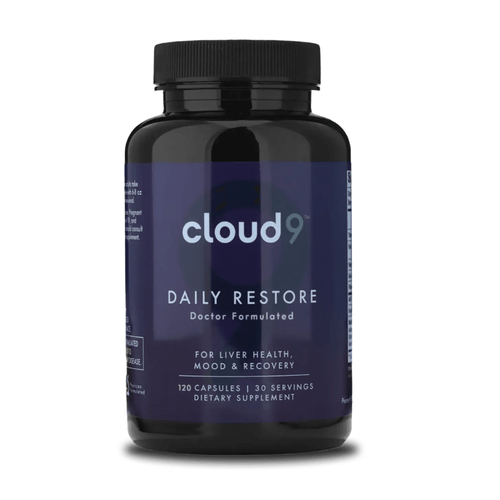
Cloud9 Daily Restore combines NAC, DHM, milk thistle, B vitamins, and ashwagandha to help support the pathways alcohol can tax most. Two capsules daily, drinking or not.
NAC | DHM | Milk Thistle | B Vitamins | Ashwagandha
See How Daily Restore WorksThe Three Stages of Alcohol-Related Liver Disease (And Where Reversibility Ends)
Stage One: Fatty Liver (Steatosis)
This is where nearly everyone who drinks heavily begins. Fat accumulates in liver cells, causing the organ to become enlarged and less efficient. The good news: this stage is almost entirely reversible with abstinence.
Fatty liver can develop after just two weeks of heavy drinking (defined as more than 8 drinks per week for women or 15 for men). At this stage, most people have zero symptoms. Some might notice mild fatigue or a vague sense of fullness in the upper right abdomen, but many feel completely normal.
Studies show that if you stop drinking at this stage, your liver can return to normal within 4-6 weeks. This is your liver's way of waving a yellow flag, not throwing up a roadblock.
Stage Two: Alcoholic Hepatitis
When drinking continues despite fatty liver, inflammation sets in. This is alcoholic hepatitis, and it's where things get more serious. Your liver is now actively inflamed, liver cells are dying, and early scarring may be developing.
Symptoms become harder to ignore at this stage. You might experience:
- Persistent fatigue that doesn't improve with rest
- Loss of appetite and unintended weight loss
- Nausea and vomiting, especially in the morning
- Abdominal pain or tenderness in the upper right side
- Jaundice (yellowing of skin and eyes)
- Low-grade fever
Here's the critical point: alcoholic hepatitis exists on a spectrum. Mild cases can still improve significantly with abstinence, though some scarring may be permanent. Severe cases carry a mortality risk of 30-50% within the first month. This is the stage where ignoring symptoms can have immediate, life-threatening consequences.
Stage Three: Cirrhosis (The Point of No Return)
Cirrhosis represents extensive scarring of the liver. The healthy tissue has been replaced by fibrous scar tissue that cannot perform normal liver functions. This is permanent. This is the line you don't want to cross.
Cirrhosis develops in about 10-20% of people who drink heavily for a decade or more, though individual factors like genetics, gender, and overall health affect this timeline. Women tend to develop cirrhosis with less alcohol consumption and in shorter timeframes than men.
Once cirrhosis is established, the focus shifts from reversal to management and preventing further deterioration. Even at this stage, stopping alcohol can prevent progression and reduce complications, but the existing scar tissue remains permanent.
What Actually Happens When You Keep Ignoring the Signs
The Cascade Effect Inside Your Liver
When warning signs go unheeded, liver damage doesn't just plateau. It accelerates. Each drink consumed by an already-damaged liver causes disproportionate harm compared to what that same drink would do to a healthy liver.
Here's why: a damaged liver is less efficient at metabolizing alcohol, which means toxins linger longer. These toxins trigger ongoing inflammation, which produces more scar tissue. That scar tissue disrupts normal blood flow through the liver, causing pressure to build up in the portal vein (portal hypertension). This increased pressure creates a cascade of complications throughout your body.
The liver doesn't fail all at once. It fails in inches, quietly trading function for scar tissue with every ignored warning until one day, the compensation mechanisms can't keep up anymore. That's when people finally feel sick, and by then, options become limited.
Complications That Develop in Advanced Disease
When cirrhosis progresses unchecked, the complications extend far beyond the liver itself. Portal hypertension causes blood to find alternate routes, creating enlarged veins (varices) in the esophagus and stomach that can rupture and bleed catastrophically.
Fluid accumulates in the abdomen (ascites) and legs (edema) because the scarred liver can't produce enough albumin to keep fluid in blood vessels. Toxins that a healthy liver would filter begin circulating to the brain, causing confusion and altered mental status (hepatic encephalopathy).
The liver also loses its ability to produce clotting factors, leading to easy bruising and bleeding. Your immune function weakens, making infections more likely and more dangerous. The risk of liver cancer increases significantly in cirrhotic livers.
The Timeline: How Long Do You Actually Have?
Individual Variation Makes This Personal
There's no universal timeline for liver damage progression, which is part of what makes this so dangerous. Some people develop cirrhosis after a decade of heavy drinking. Others drink similarly for 30 years without cirrhosis. Genetics, gender, body weight, overall health, and drinking patterns all influence your personal timeline.
Research suggests several factors that accelerate liver damage:
- Female gender (women develop liver disease with less alcohol and in shorter timeframes)
- Obesity and metabolic syndrome
- Hepatitis C or other liver diseases
- Genetic variations in alcohol metabolism enzymes
- Binge drinking patterns versus steady consumption
- Poor nutrition and vitamin deficiencies
Critical Windows for Intervention
| Stage | Typical Timeline | Reversibility | Action Window |
|---|---|---|---|
| Fatty Liver | 2 weeks to several years of heavy drinking | Highly reversible (4-6 weeks with abstinence) | Wide window, best outcomes |
| Alcoholic Hepatitis (Mild) | Months to years of continued drinking | Partially reversible, some scarring may remain | Moderate window, intervention critical |
| Alcoholic Hepatitis (Severe) | Years of heavy drinking | Limited reversibility, high mortality risk | Narrow window, immediate action needed |
| Cirrhosis (Compensated) | Typically 10-20+ years of heavy drinking | Permanent damage, but progression can be slowed | Damage control mode, prevent complications |
| Cirrhosis (Decompensated) | Advanced cirrhosis with continued drinking | Irreversible, transplant may be only option | Medical management, survival focus |
Why "Just a Little Longer" Keeps Getting More Expensive
Every month you delay addressing alcohol-related liver damage, the biological cost increases. In the fatty liver stage, a month of continued drinking might add a few more weeks to your recovery timeline. In the hepatitis stage, that same month might mean the difference between partial and minimal reversibility.
Studies show that people who achieve abstinence before developing cirrhosis have liver-related mortality rates close to the general population. Those who stop after cirrhosis develops still benefit significantly, but their long-term outcomes depend heavily on how advanced the scarring has become.
The math is brutally simple: earlier intervention equals better outcomes, more reversibility, and lower risk of life-threatening complications. Delay doesn't just postpone recovery, it fundamentally changes what recovery looks like.
What Your Body Is Trying to Tell You (And Why You Should Listen Now)
Early Warning Signs That Deserve Attention
Your body speaks in whispers before it starts shouting. These early signals often get dismissed as stress, aging, or just being tired. But when they persist or cluster together, they deserve attention:
- Fatigue that's disproportionate to your activity level
- Difficulty concentrating or mild confusion (especially if it improves when you haven't been drinking)
- Digestive issues: nausea, loss of appetite, early satiety
- Vague abdominal discomfort or fullness in the upper right side
- Unexplained weight changes
- Sleep disturbances or worsening sleep quality
- Increased bruising or longer bleeding times from minor cuts
Red Flags That Demand Immediate Medical Attention
Some symptoms indicate that liver damage has progressed beyond early stages. These require prompt medical evaluation, not "let's see how it goes":
- Jaundice (yellowing of skin or eyes)
- Dark urine that looks like tea or cola
- Pale or clay-colored stools
- Abdominal swelling or fluid accumulation
- Vomiting blood or dark material that looks like coffee grounds
- Severe confusion or personality changes
- Persistent itching without rash
- Swelling in legs and ankles that doesn't improve overnight
These symptoms suggest complications of advanced liver disease. They're your body's way of saying that compensation mechanisms are failing. This is not the time for internet research and self-management. This is the time for medical intervention.
The Lab Values Your Doctor Is Watching
Blood tests can detect liver stress before symptoms appear. If your doctor has mentioned elevated liver enzymes (ALT, AST, GGT), elevated bilirubin, low albumin, or abnormal clotting times, these are objective measures of liver function or damage.
A common pattern in alcohol-related liver disease is an AST:ALT ratio greater than 2:1, though this isn't definitive. What matters more than individual numbers is the trend over time and the constellation of abnormalities. Improving numbers with abstinence is encouraging. Worsening numbers despite "cutting back" is a signal that cutting back isn't enough.
How Daily Restore Supports Your Health
Understanding what your body needs is one thing. Getting consistent daily support is another. Daily Restore was designed to address the key pathways alcohol can stress most, in one simple daily formula.
NAC (N-Acetyl Cysteine)
Supports glutathione production and antioxidant defenses
DHM (Dihydromyricetin)
Supports alcohol metabolism
Milk Thistle (Silymarin)
Supports healthy liver function
B Vitamins
Help replenish nutrients involved in energy and metabolism
Ashwagandha
Supports stress resilience and healthy cortisol balance
Daily Restore is not a detox or a cure. It is a daily support formula designed for people who drink socially and want to give their body consistent, evidence-informed support.
Frequently Asked Questions
How long does it take for the liver to show damage from alcohol?
The timeline varies significantly based on drinking patterns, genetics, and overall health. Some people may develop fatty liver within weeks of heavy drinking, while others might not show signs of damage for years. Regular consumption above recommended guidelines can begin affecting liver function much sooner than most people realize.
Can early-stage liver damage be reversed?
In many cases, yes. Fatty liver and early inflammation can often improve significantly with lifestyle changes, including reducing or eliminating alcohol intake. The liver has a remarkable ability to regenerate and heal itself when given the right support, though more advanced damage like cirrhosis is typically irreversible.
What are the first warning signs I should watch for?
Early liver damage often presents with subtle symptoms like persistent fatigue, mild abdominal discomfort in the upper right side, and unexplained changes in digestion. Many people also notice they feel worse after drinking than they used to, or that recovery takes longer. If you're experiencing any of these signs consistently, it's worth discussing with your healthcare provider.
How much alcohol is too much for liver health?
Current guidelines suggest that even moderate drinking carries some risk. For most adults, more than one drink per day for women or two for men increases the likelihood of liver issues over time. However, everyone's threshold is different based on factors like body size, genetics, and overall health status.
Will taking supplements protect my liver if I keep drinking?
No supplement can completely counteract the effects of excessive alcohol consumption. While nutrients like milk thistle, NAC, and B vitamins may support liver function and help with recovery, they work best as part of a broader approach that includes moderating intake. Think of supplements as supportive tools, not protective shields against ongoing damage.
The Bottom Line
Your liver works tirelessly to keep you healthy, but it can only handle so much before showing signs of strain. Ignoring early warning signs can lead to progressively serious damage that becomes harder to reverse over time. The good news is that your liver is remarkably resilient when given proper support and the chance to recover.
Whether you're looking to cut back on drinking, take regular breaks, or simply support your body's natural detoxification processes, consistent daily habits make all the difference. Prioritizing hydration, nutrition, quality sleep, and stress management creates a foundation that helps your liver function at its best.
Cloud9's Daily Restore is designed to fit seamlessly into this kind of supportive routine. With research-backed ingredients like milk thistle, NAC, DHM, and essential B vitamins, it provides targeted nutritional support for liver health and overall recovery. While no supplement replaces healthy lifestyle choices, Daily Restore can be a valuable part of your daily wellness strategy.
The most important step is simply paying attention to what your body is telling you. If you're noticing warning signs or concerned about your liver health, talk with your healthcare provider. Early intervention and consistent support can make a significant difference in protecting your long-term wellness.
Build Your Daily Support Routine
Build Your Daily Support Routine
If drinking is part of your lifestyle, your support routine should not be random. Daily Restore was designed to help social drinkers support liver health, antioxidant defenses, alcohol metabolism, nutrient replenishment, and daily recovery in one simple routine.
NAC
DHM
Milk Thistle
B Vitamins
Ashwagandha