

You've probably noticed it: the foggy morning after a night of drinking, the name you can't quite remember, the conversation that slipped away mid-sentence. These aren't just random occurrences. They're your brain sending signals that alcohol is changing how it works.
Whether you drink occasionally or regularly, understanding what's happening inside your brain can help you make informed choices about your health. The good news? Your brain has remarkable healing abilities, and small changes can make a meaningful difference.
Here's what alcohol is actually doing to your brain, and the practical steps you can take to protect it.
Quick Take
- Alcohol disrupts neurotransmitter balance, affecting mood, memory, and decision-making within hours of drinking
- Regular drinking can actually shrink brain volume, particularly in areas responsible for memory and emotional regulation
- Even moderate alcohol consumption interferes with sleep architecture, preventing the deep sleep your brain needs to repair itself
- Alcohol accelerates aging in brain cells and may increase risk of cognitive decline and dementia over time
- The brain can begin healing within weeks of reducing alcohol intake, with improvements in memory, focus, and emotional stability
How Alcohol Interacts with Your Brain
Your brain operates through a delicate balance of chemical messengers called neurotransmitters. When alcohol enters your system, it doesn't just affect one area. It disrupts multiple neurotransmitter systems simultaneously, creating a cascade of changes throughout your brain.
Alcohol enhances GABA, your brain's primary calming neurotransmitter, while suppressing glutamate, which keeps you alert and focused. This is why you feel relaxed after a drink, but it's also why your reaction time slows and your judgment becomes impaired. Research suggests that these changes begin with your first drink and intensify with each additional one.
Over time, your brain tries to compensate for alcohol's regular presence by adjusting its baseline chemistry. This adaptation is what leads to tolerance and, eventually, dependence as your brain struggles to function normally without alcohol's influence.
Daily Support for Social Drinkers
Your liver works hard every day. Give it consistent support.
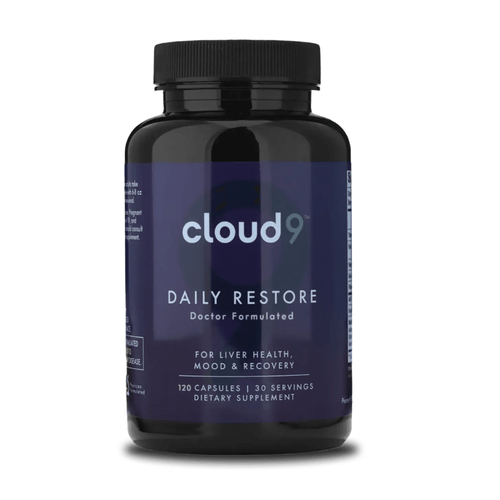
Cloud9 Daily Restore combines NAC, DHM, milk thistle, B vitamins, and ashwagandha to help support the pathways alcohol can tax most. Two capsules daily, drinking or not.
NAC | DHM | Milk Thistle | B Vitamins | Ashwagandha
See How Daily Restore Works1. Alcohol Disrupts Memory Formation and Recall
Ever experienced a "blackout" or struggled to remember details from a night of drinking? That's alcohol directly interfering with your hippocampus, the brain region responsible for forming new memories.
Short-Term Memory Impact
Alcohol doesn't erase memories that already exist. Instead, it prevents your brain from encoding new experiences into memory in the first place. Studies show that even moderate drinking can impair your ability to transfer information from short-term to long-term storage.
This happens because alcohol disrupts the electrical signals your brain cells use to communicate. When these signals are interrupted, the neural pathways needed to form memories simply don't get built.
Long-Term Cognitive Effects
Regular heavy drinking can lead to more permanent memory problems. Research suggests that chronic alcohol use may actually damage hippocampal neurons, leading to persistent difficulty with learning and recall even during periods of sobriety.
- Difficulty learning new information or skills
- Trouble recalling names, dates, or recent conversations
- Problems with spatial memory and navigation
- Reduced ability to concentrate on complex tasks
2. Alcohol Shrinks Brain Volume Over Time
This might sound alarming, but it's backed by imaging studies: regular alcohol consumption is associated with reduced brain volume, particularly in the frontal lobes and hippocampus. These are the exact areas you need for decision-making, impulse control, and memory.
What Brain Shrinkage Means
Brain volume loss doesn't happen overnight. It's a gradual process that occurs with sustained alcohol use. The shrinkage involves both gray matter (brain cells) and white matter (the connections between cells).
Research suggests that even moderate drinkers show measurable differences in brain structure compared to non-drinkers. The more someone drinks and the longer they drink, the more pronounced these changes tend to be.

Which Brain Regions Are Most Affected
| Brain Region | Primary Function | Impact of Alcohol |
|---|---|---|
| Prefrontal Cortex | Decision-making, impulse control | Reduced volume, impaired judgment |
| Hippocampus | Memory formation | Cell damage, memory problems |
| Cerebellum | Balance, coordination | Shrinkage, motor skill deficits |
| Corpus Callosum | Communication between hemispheres | Thinning, slower processing speed |
3. Alcohol Disrupts Neurotransmitter Balance
Your brain's neurotransmitters are like a symphony, each playing its part to keep you balanced, focused, and emotionally stable. Alcohol acts like someone randomly turning instruments up and down, creating chemical chaos.
The Dopamine Connection
Alcohol triggers a surge of dopamine in your brain's reward center, which is why drinking can feel pleasurable. But this artificial boost comes at a cost. Over time, regular alcohol use can blunt your brain's natural dopamine response, making it harder to feel pleasure from everyday activities.
This is one reason why people who drink regularly often report feeling flat or unmotivated when they're not drinking. Their brain's reward system has been recalibrated around alcohol's presence.
Serotonin and Mood Regulation
Alcohol also affects serotonin, the neurotransmitter involved in mood regulation. While you might feel temporarily relaxed or euphoric while drinking, alcohol ultimately depletes serotonin levels. This can contribute to anxiety, depression, and mood swings, particularly in the days following drinking.
Many people drink to relieve stress or anxiety, but alcohol's impact on neurotransmitters often creates a cycle where it actually worsens the very symptoms people are trying to escape.
4. Alcohol Interferes with Sleep Quality and Brain Repair
You might fall asleep faster after drinking, but the quality of that sleep is severely compromised. Alcohol disrupts your sleep architecture, particularly the REM (rapid eye movement) stage where your brain processes emotions and consolidates memories.
How Alcohol Changes Sleep Patterns
During the first half of the night, alcohol increases deep sleep but suppresses REM sleep. As your body metabolizes the alcohol, you experience a rebound effect: lighter, fragmented sleep with more frequent awakenings. This is why you might wake up feeling unrefreshed even after a full night in bed.
Research suggests that even moderate drinking several hours before bed can measurably reduce sleep quality. The effects are dose-dependent, meaning more alcohol creates more severe disruption.
The Brain's Nighttime Cleaning System
During deep sleep, your brain activates its glymphatic system, a waste-clearance process that removes toxic proteins and cellular debris. Alcohol interferes with this crucial cleaning process, potentially allowing harmful substances to accumulate over time.
- Reduced REM sleep impairs emotional processing and memory consolidation
- Fragmented sleep prevents proper brain waste clearance
- Poor sleep quality compounds alcohol's direct toxic effects on brain cells
- Chronic sleep disruption may accelerate cognitive aging
5. Alcohol Accelerates Brain Aging
Your brain naturally changes as you age, but alcohol can speed up this process significantly. Studies show that heavy drinkers' brains may appear several years older than their chronological age based on imaging and cognitive testing.
Oxidative Stress and Inflammation
When your body breaks down alcohol, it produces toxic byproducts like acetaldehyde and free radicals. These compounds cause oxidative stress, damaging cell membranes, proteins, and DNA throughout your brain. Your brain is particularly vulnerable because it uses enormous amounts of oxygen and has relatively weak antioxidant defenses.
Chronic alcohol use also triggers inflammatory responses in the brain. This low-grade inflammation can persist even between drinking episodes, contributing to ongoing cellular damage and potentially increasing the risk of neurodegenerative diseases.
Telomere Shortening
Research suggests that alcohol consumption is associated with shorter telomeres, the protective caps on the ends of your chromosomes. Telomere length is considered a marker of biological aging, and shorter telomeres in brain cells may contribute to cognitive decline and increased vulnerability to age-related brain diseases.
6. Alcohol Increases Risk of Cognitive Decline and Dementia
The cumulative effects of alcohol on your brain, memory problems, structural changes, neurotransmitter disruption, and accelerated aging, may increase your risk of developing serious cognitive impairment later in life.
The Dementia Connection
Large-scale studies have found associations between heavy alcohol use and increased dementia risk. Alcohol-related brain damage can lead to a specific condition called alcohol-related dementia, characterized by problems with memory, executive function, and behavioral control.
Even moderate drinking shows mixed evidence, with some studies suggesting it may offer slight protective effects while others find increased risk. The safest approach for brain health appears to be minimizing alcohol consumption overall.
Wernicke-Korsakoff Syndrome
Heavy, long-term alcohol use can lead to thiamine (vitamin B1) deficiency, resulting in Wernicke-Korsakoff syndrome. This serious condition causes severe memory problems, confusion, and coordination difficulties. While more common in severe alcohol use disorder, it represents the extreme end of alcohol's potential to damage brain function.
What You Can Do to Protect Your Brain
Here's the encouraging part: your brain has remarkable capacity to heal and regenerate. Research shows that reducing or eliminating alcohol can lead to measurable improvements in brain structure and function, sometimes within just weeks.
Immediate Steps You Can Take
You don't have to wait to start protecting your brain. These evidence-based strategies can help minimize alcohol's impact and support cognitive health starting today.
- Track your drinking honestly to understand your actual consumption patterns
- Set alcohol-free days each week to give your brain regular recovery time
- Stay hydrated before, during, and after drinking to minimize dehydration effects
- Never drink on an empty stomach, as food slows alcohol absorption
- Prioritize sleep quality by avoiding alcohol at least 3-4 hours before bed
- Consider high-quality supplements that support brain health and recovery
Supporting Brain Recovery
Beyond reducing alcohol intake, you can actively support your brain's healing processes. Exercise increases blood flow to the brain and stimulates the production of brain-derived neurotrophic factor (BDNF), which supports neuron growth and repair.
Nutrition matters too. Your brain needs B vitamins, omega-3 fatty acids, and antioxidants to repair damage and maintain healthy function. A diet rich in colorful vegetables, fatty fish, nuts, and berries provides these essential nutrients.
Timeline of Brain Recovery
| Timeframe | What's Happening in Your Brain |
|---|---|
| First Week | Sleep quality begins to improve, brain fog starts clearing |
| 2-4 Weeks | Neurotransmitter balance begins normalizing, mood stabilizes |
| 1-3 Months | Memory and cognitive function show measurable improvement |
| 6-12 Months | Brain volume can partially recover in some regions |
| 1+ Years | Significant structural and functional recovery, reduced disease risk |
When to Seek Professional Support
If you're experiencing significant memory problems, mood changes, or finding it difficult to reduce your drinking on your own, professional support can make a meaningful difference. Cognitive-behavioral therapy, medical supervision, and targeted supplementation can all support brain health and recovery.
Remember that seeking help is a sign of taking your health seriously, not a sign of weakness. Your brain is worth protecting, and you don't have to do it alone.
How Daily Restore Supports Your Health
Understanding what your body needs is one thing. Getting consistent daily support is another. Daily Restore was designed to address the key pathways alcohol can stress most, in one simple daily formula.
NAC (N-Acetyl Cysteine)
Supports glutathione production and antioxidant defenses
DHM (Dihydromyricetin)
Supports alcohol metabolism
Milk Thistle (Silymarin)
Supports healthy liver function
B Vitamins
Help replenish nutrients involved in energy and metabolism
Ashwagandha
Supports stress resilience and healthy cortisol balance
Daily Restore is not a detox or a cure. It is a daily support formula designed for people who drink socially and want to give their body consistent, evidence-informed support.
Frequently Asked Questions
How long does it take for the brain to recover from alcohol damage?
Recovery timelines vary depending on drinking patterns and overall health, but research suggests noticeable improvements can begin within weeks of reducing alcohol intake. The brain shows remarkable resilience, with cognitive function, sleep quality, and mood often improving significantly within the first few months of cutting back or quitting.
Can moderate drinking still affect brain health?
Yes, even moderate alcohol consumption can impact brain structure and function over time. Recent studies have challenged the notion of "safe" drinking levels, showing that any amount of alcohol may contribute to brain volume reduction and cognitive changes. The good news is that reducing intake at any level can support better brain health.
What supplements support brain health when cutting back on alcohol?
Key nutrients that may support brain recovery include B vitamins (especially B1 and B12), omega-3 fatty acids, magnesium, and antioxidants like NAC and milk thistle. These compounds help replenish depleted nutrients, support neurotransmitter balance, and protect against oxidative stress that alcohol can cause in brain tissue.
Does alcohol permanently damage your brain?
While severe, chronic alcohol use can cause lasting changes, many alcohol-related brain effects are reversible with sustained reduction or abstinence. The brain's neuroplasticity allows it to form new connections and repair damage over time, especially when supported by proper nutrition, sleep, exercise, and stress management.
How does alcohol affect mental health conditions like anxiety and depression?
Alcohol disrupts the balance of neurotransmitters that regulate mood, often worsening anxiety and depression over time despite providing temporary relief. Regular drinking can create a cycle where mental health symptoms drive alcohol use, which then amplifies those same symptoms. Reducing alcohol often leads to significant improvements in mood stability and emotional resilience.
The Bottom Line
Your brain is incredibly resilient, but it needs the right support to recover from alcohol's effects. Whether you're cutting back, taking regular breaks, or committing to long-term changes, the protective strategies we've covered can make a real difference in preserving cognitive function, mood stability, and overall brain health.
Daily Restore was designed specifically to support your brain and body during this journey. With targeted nutrients like NAC, milk thistle, DHM, and essential B vitamins, it helps replenish what alcohol depletes while supporting natural detoxification pathways. Taking it consistently, whether you drink occasionally or are working toward longer-term changes, can help protect your brain from oxidative stress and nutritional gaps.
The most important step is the one you take today. Small, consistent changes add up to meaningful improvements in how you think, feel, and function. Your brain has been working hard for you, and now it's time to return the favor with the daily support it deserves.
Build Your Daily Support Routine
Build Your Daily Support Routine
If drinking is part of your lifestyle, your support routine should not be random. Daily Restore was designed to help social drinkers support liver health, antioxidant defenses, alcohol metabolism, nutrient replenishment, and daily recovery in one simple routine.
NAC
DHM
Milk Thistle
B Vitamins
Ashwagandha