




The Cloud9 Journal · 4 min read
Liver Function Test Explained: ALT, AST, GGT and What Drinking Does
What each number on a liver panel means, why GGT is the one that reacts to drinking, how to bring high numbers down, and how to check from home.
Short answer: a liver function test (doctors now call it liver chemistries) measures enzymes and proteins that show how your liver is doing. ALT and AST point to liver cell stress. GGT is the marker that rises most with regular drinking. Your report shows your own lab's normal range, and it's the one to go by. If GGT isn't on your yearly panel, you can check it from home with the Cloud9 at-home blood test.
What's on a liver panel
| Marker | What it tells you | What drinking does |
|---|---|---|
| ALT (alanine aminotransferase) | Liver cell stress or injury | Can rise with regular drinking and with fatty liver |
| AST (aspartate aminotransferase) | Liver cell stress; also found in muscle | Often rises more than ALT in alcohol-related liver injury |
| GGT (gamma-glutamyl transferase) | Liver and bile duct stress | The marker most linked to regular drinking |
| ALP (alkaline phosphatase) | Bile ducts; also bone | Less specific to alcohol |
| Bilirubin | How well the liver clears a pigment from old red blood cells | Rises in more advanced liver problems |
| Albumin and PT/INR | How well the liver makes proteins | Change later, in more serious disease |
Reference ranges vary by lab, sex and age, and roughly 1 in 20 healthy people fall outside a range by definition. A normal panel also doesn't rule out fatty liver.1
GGT: the marker that reacts to drinking
GGT is an enzyme found mainly in the liver. Drinking alcohol raises it, and doctors use it to screen for and monitor heavy drinking.2 It can also rise with hepatitis, diabetes, heart failure, some medications and smoking, so a high number is a prompt to look closer, not a diagnosis.2
Many routine checkups don't include GGT, which is why people who drink often haven't seen theirs.
The AST to ALT ratio
When AST is more than twice ALT, it's a classic pattern of alcohol-related liver injury. In one study, 70% of people with alcohol-related hepatitis or cirrhosis had a ratio above 2, compared with 4% of people with viral hepatitis.3 Your doctor reads this pattern alongside GGT.
How to bring high numbers down
- Drink less, or less often. GGT tracks drinking closely, so cutting back is the most direct lever. Give it weeks, not days.
- Lose weight if you carry extra. Excess weight and fatty liver can raise liver enzymes on their own.
- Review medications and smoking. Both can raise GGT.2
- Support the liver daily. In randomized trials, DHM lowered ALT, AST and GGT,4 silymarin from milk thistle lowered ALT and AST,5 and NAC lowered ALT.6
Real numbers from a Cloud9 customer
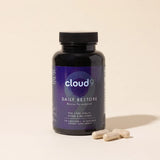
Lori, 63, started Daily Restore and changed nothing else. Her GGT went from 233 to 66, her AST from 116 to 34 and her ALT from 107 to 37. In her words: "My AST, ALT and GGT have all returned to normal for the first time in 2 years!"
In our 12-week clinical trial of Daily Restore, 3 out of 4 participants had a decrease in at least one liver enzyme.
How to test from home
The Cloud9 at-home blood test checks the markers most linked to drinking: GGT for the liver, hsCRP for inflammation, vitamin B12 and ferritin, hemoglobin and hematocrit, total testosterone and LH, and TSH for thyroid. A small device on your upper arm fills one tube in a few minutes. You mail it back in the prepaid FedEx mailer, and a CLIA-certified, CAP-accredited lab sends results within 48 hours of receiving it. It's available in all 50 states and is HSA/FSA eligible.
Your doctor's yearly panel usually covers ALT and AST already. Our test adds GGT and the other markers drinking affects.
When to retest
Liver markers move over weeks. Test once for a baseline, start your changes, and retest at 12 weeks. That's how our clinical trial measured results, and it's the idea behind the 12-Week Reset: the test plus three months of Daily Restore.
Common questions
What is a normal GGT level?
It depends on the lab, your sex and your age. Use the reference range printed on your own report.
Does one night of drinking raise GGT?
GGT mostly reflects regular drinking, but drinking can affect your result, so ask whether to skip alcohol before a test.2
How long does it take liver enzymes to come down after cutting back?
Weeks, not days. That's why we suggest testing again at 12 weeks.
Can supplements lower liver enzymes?
In randomized trials, DHM, silymarin and NAC each lowered liver enzymes. See our guides to DHM, milk thistle and NAC.
Does the Cloud9 test check ALT and AST?
No. It focuses on GGT plus inflammation, nutrient, blood and hormone markers. ALT and AST are usually on your doctor's standard panel.
Sources
- Jogu P, et al. Liver Function Tests. StatPearls, NCBI Bookshelf. PubMed 29494096
- Gamma-glutamyl transferase (GGT) test. MedlinePlus, U.S. National Library of Medicine. medlineplus.gov
- Cohen JA, Kaplan MM. The SGOT/SGPT ratio: an indicator of alcoholic liver disease. Digestive Diseases and Sciences, 1979. PubMed 520102
- Chen S, et al. Dihydromyricetin improves glucose and lipid metabolism and exerts anti-inflammatory effects in nonalcoholic fatty liver disease: a randomized controlled trial. Pharmacological Research, 2015. PubMed 26032587
- Shahsavari K, et al. Silymarin administration: a meta-analysis on randomized trials targeting liver injury. BMC Complementary Medicine and Therapies, 2025. PubMed 40221681
- Khoshbaten M, et al. N-acetylcysteine improves liver function in patients with non-alcoholic fatty liver disease. Hepatitis Monthly, 2010. PubMed 22308119
These studies tested individual ingredients, not Cloud9 products.
More guides for people who drink

Mentioned in this article
Daily Restore
Mezcla de desintoxicación del hígado Cardo mariano - 350 mg Beneficios: El cardo mariano es conocido por sus propiedades protectoras del hígado, que favorecen la desintoxicación...
Keep reading