

You wake up with your heart racing and a knot in your stomach that has nothing to do with dehydration. Your mind loops through every conversation from last night, twisting innocent moments into cringe-worthy disasters. This is hangxiety, and it's whispering lies that feel uncomfortably like truth.
Here's what most people don't know: the simple act of writing down these anxious thoughts can actually help them dissolve faster. Research suggests that externalizing anxiety through journaling interrupts the rumination cycle that keeps hangxiety locked in place. It's not about having perfect prose or profound insights; it's about getting the spiral out of your head and onto paper.
If you've ever spent an entire hungover morning trapped in your own thoughts, replaying conversations that probably went fine, a hangxiety journal might be the relief you didn't know you needed.
Quick Take
- Writing down anxious thoughts interrupts the mental rumination that intensifies hangxiety
- Morning journaling works best when done within the first hour of waking, before anxiety has time to build momentum
- Stream-of-consciousness writing is more effective than trying to create structured entries
- The physical act of writing by hand may offer additional anxiety-reduction benefits compared to typing
- Most people notice reduced anxiety intensity within 10-15 minutes of journaling
Why Your Anxious Brain Needs an External Hard Drive
When you're experiencing hangxiety, your brain is essentially running too many programs at once. Your working memory gets overloaded with anxious thoughts, each one demanding attention and triggering more worry. Studies show that the act of writing creates what psychologists call "cognitive offloading," where you transfer some of that mental burden onto an external medium.
This isn't just about feeling better in the moment. Research suggests that expressive writing can actually change how your brain processes emotional experiences. When you write about anxious thoughts, you engage different neural pathways than when you simply ruminate, potentially helping your prefrontal cortex regain some control over the emotional centers firing in overdrive.
Think of your hangxiety journal as temporary storage for thoughts that don't deserve the mental real estate they're occupying. Once they're on paper, your brain can finally stop holding onto them so tightly.
Daily Support for Social Drinkers
Your liver works hard every day. Give it consistent support.
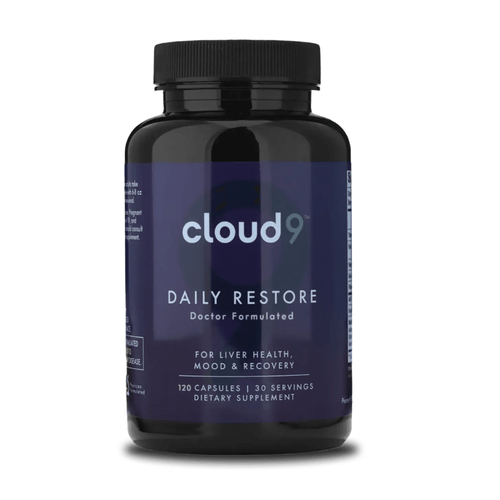
Cloud9 Daily Restore combines NAC, DHM, milk thistle, B vitamins, and ashwagandha to help support the pathways alcohol can tax most. Two capsules daily, drinking or not.
NAC | DHM | Milk Thistle | B Vitamins | Ashwagandha
See How Daily Restore WorksThe Morning-After Writing Method That Actually Works
Not all journaling approaches are equally effective for hangxiety. The key is working with your compromised cognitive state rather than against it. Your hungover brain doesn't have the capacity for deep reflection or structured thinking, and that's exactly why a specific approach matters.
The Stream-of-Consciousness Dump
Forget complete sentences or coherent thoughts. The most effective hangxiety journaling is messy, unfiltered, and completely private. Set a timer for 10 minutes and write whatever comes to mind without lifting your pen from the paper.
This technique works because it bypasses your inner critic, which is already working overtime during hangxiety. You're not trying to solve problems or gain insights; you're simply creating a channel for the anxiety to flow out of your mind and onto the page.
The Reality Check Column Method
If stream-of-consciousness feels too chaotic, try dividing your page into two columns. On the left, write down the anxious thought exactly as it appears in your mind. On the right, write what you might say to a friend having the same worry.
This creates just enough distance from your thoughts to see them more objectively. The anxious story your brain is telling rarely holds up when you write it down and read it back.
The Timed Release Approach
Set three separate 5-minute timers throughout your morning. During each session, write only about what you're feeling right now, not what you felt in the previous session. This helps you track how the anxiety naturally diminishes over time, even without intervention.
Many people find that by the third session, they have significantly less to write about. Seeing this pattern on paper can be powerfully reassuring when hangxiety tries to convince you the feeling will last forever.
Hand vs. Screen: Why the Medium Matters
While any form of writing can help process hangxiety, research suggests that handwriting may offer unique benefits. The slower pace of writing by hand creates more time for emotional processing with each word. Your brain has to engage motor skills, visual processing, and language centers simultaneously, which may help interrupt the anxiety loop more effectively.
That said, the best journaling method is the one you'll actually use. If you're more likely to reach for your phone than a notebook, typing your thoughts is infinitely better than not externalizing them at all.
| Method | Benefits | Best For |
|---|---|---|
| Handwritten Journal | Slower pace allows more processing time; tactile experience can be grounding; no digital distractions | People who find physical rituals comforting; those easily distracted by notifications |
| Phone Notes App | Always accessible; faster typing allows rapid thought capture; easy to delete immediately after | People who wake up reaching for their phone; those who write faster than they think |
| Voice-to-Text | Fastest method; mimics talking to a friend; requires minimal physical effort | Severe hangxiety where writing feels overwhelming; people who process verbally |
What to Do With Your Anxious Writings
One of the most liberating aspects of hangxiety journaling is that no one ever needs to see it, including your future self. In fact, the temporary nature of these writings is part of what makes them effective.
The Immediate Destruction Method
Some people find it helpful to tear out the pages and throw them away immediately after writing. This physical act of disposal can symbolically represent letting go of the anxious thoughts. You've acknowledged them, released them, and now they're gone.
If you're journaling digitally, delete the entry as soon as you've finished. The value was in the writing process itself, not in creating a permanent record of your worst morning thoughts.
The Evening Review Option
Alternatively, you might keep your morning entries and read them that evening when you're feeling better. This can help you recognize patterns in how hangxiety distorts your thinking. Seeing how catastrophic your morning thoughts seemed compared to how the day actually unfolded builds evidence against hangxiety's false narratives.
The anxious thoughts that feel so urgent and true at 7 AM rarely survive contact with the actual events of your day. Writing them down creates a timestamp that proves they were just thoughts, not predictions.
The Pattern Recognition Approach
If you journal regularly during hangxiety episodes, you might start noticing recurring themes. Maybe you always worry about the same friend's opinion, or perhaps your anxiety consistently centers on things you said rather than things others did. Recognizing these patterns can help you develop specific strategies for common triggers.
Keep a simple tally of recurring worries. When you can see that you've worried about the same thing fifteen times and been wrong fifteen times, it becomes harder for hangxiety to convince you the sixteenth time will be different.
Building Your Hangxiety Journal Practice
The most effective journaling habit is one that requires minimal decision-making. When you're dealing with hangxiety, your willpower and executive function are already compromised. Set yourself up for success by removing barriers before you need the practice.
Your Morning-After Toolkit
- Keep a dedicated notebook and pen on your nightstand, not in a drawer or across the room
- Create a note in your phone titled "Morning Brain Dump" so you don't have to search for it
- Set a gentle alarm with a reminder: "Time to write it down"
- Prepare a comfortable spot with good lighting where you can write undisturbed
- Have a glass of water nearby, as physical comfort supports the practice
The First Three Sessions Matter Most
Your first attempt at hangxiety journaling might feel awkward or ineffective. That's completely normal. Research suggests that expressive writing becomes more beneficial with repeated practice as you develop your own style and rhythm.
Commit to trying it three separate times before deciding whether it works for you. Each session teaches your brain that anxious thoughts can be externalized rather than endlessly recycled. By the third time, the process often starts to feel more natural and relieving.
What to Write When You Don't Know What to Write
Sometimes hangxiety is so overwhelming that even starting feels impossible. Try these prompts to get words flowing:
- "Right now I'm worried that..." and complete the sentence as many times as needed
- "The part that feels worst is..." followed by whatever comes to mind
- "If this anxiety could talk, it would say..." and let it speak uncensored
- "What I actually know to be true is..." to ground yourself in facts rather than fears
- "This feeling reminds me of..." to identify familiar patterns
The specific words matter less than the act of moving thoughts from your internal world to external form. Even writing "I don't know what to write but I feel terrible" counts as successful journaling if it helps ease the mental pressure.
How Daily Restore Supports Your Health
Understanding what your body needs is one thing. Getting consistent daily support is another. Daily Restore was designed to address the key pathways alcohol can stress most, in one simple daily formula.
NAC (N-Acetyl Cysteine)
Supports glutathione production and antioxidant defenses
DHM (Dihydromyricetin)
Supports alcohol metabolism
Milk Thistle (Silymarin)
Supports healthy liver function
B Vitamins
Help replenish nutrients involved in energy and metabolism
Ashwagandha
Supports stress resilience and healthy cortisol balance
Daily Restore is not a detox or a cure. It is a daily support formula designed for people who drink socially and want to give their body consistent, evidence-informed support.
Frequently Asked Questions
What if I don't know what to write in my hangxiety journal?
Start with simple prompts like "What am I feeling right now?" or "What thoughts keep circling in my head?" You don't need complete sentences or perfect grammar. The act of putting pen to paper, even if it's just scattered words or incomplete thoughts, can help create distance from the anxiety itself.
How long should I journal each morning?
There's no perfect duration, but many people find that 5 to 10 minutes is enough to process their thoughts without feeling overwhelmed. If you're experiencing intense hangxiety, you might write for 15 minutes or more. The key is consistency rather than length, so find a timeframe that feels sustainable for your morning routine.
Can journaling replace professional help for anxiety?
Journaling is a valuable self-care tool, but it's not a substitute for professional mental health support if you're struggling with persistent or severe anxiety. If your hangxiety regularly interferes with your daily life or you find yourself drinking to cope with anxiety, consider speaking with a therapist or healthcare provider who can offer personalized guidance.
Should I write by hand or type my hangxiety journal?
Research suggests that handwriting may offer additional benefits for processing emotions and improving memory, though the most important factor is simply doing it. If typing feels more accessible or comfortable for you, that's perfectly fine. Choose the method that you'll actually stick with consistently.
What should I do with my journal entries after I write them?
Some people find value in keeping their entries to track patterns over time, while others prefer to tear out pages or delete entries as a symbolic release. There's no right answer. If reviewing past entries helps you identify triggers or see progress, keep them. If letting them go feels more freeing, that works too.
The Bottom Line
Hangxiety can feel isolating and overwhelming, but the simple act of writing down your anxious thoughts in the morning may help them pass more quickly. By externalizing what's spinning in your mind, you create space between yourself and the anxiety, making it easier to observe rather than absorb those uncomfortable feelings.
The hangxiety journal works best as part of a broader approach to feeling better after drinking. Alongside journaling, staying hydrated, getting gentle movement, and nourishing your body with supportive nutrients can all contribute to a smoother recovery. That's where Daily Restore comes in: our supplement is specifically formulated to support your body's natural recovery processes with DHM, electrolytes, and other research-backed ingredients.
Whether you're dealing with occasional hangxiety or noticing a pattern that concerns you, starting a morning journaling practice costs nothing but a few minutes of your time. Combined with thoughtful choices about hydration, rest, and supplementation, you're giving yourself multiple tools to navigate those morning-after feelings with more ease and self-compassion.
Remember, the goal isn't to eliminate all discomfort instantly or to judge yourself for feeling anxious. It's about creating small, manageable rituals that help you move through difficult mornings with a little more grace. Your hangxiety journal can become a trusted companion in that process, one honest page at a time.
Build Your Daily Support Routine
Build Your Daily Support Routine
If drinking is part of your lifestyle, your support routine should not be random. Daily Restore was designed to help social drinkers support liver health, antioxidant defenses, alcohol metabolism, nutrient replenishment, and daily recovery in one simple routine.
NAC
DHM
Milk Thistle
B Vitamins
Ashwagandha