

You're juggling deadlines, social commitments, maybe a side hustle, and trying to maintain some semblance of self-care. The idea of a 30-minute meditation session sounds lovely in theory, but in reality? It's just not happening today.
Here's the truth: effective relaxation doesn't require an hour-long spa visit or a complete schedule overhaul. Research suggests that even brief relaxation practices can significantly lower cortisol levels and improve your stress response when practiced consistently.
This 5-minute routine is designed specifically for women in their 20s and 30s who need real relief without the time commitment. It's simple enough to do at your desk, in your car, or right before bed, and powerful enough to actually make a difference in how you feel.
Quick Take
- A 5-minute relaxation routine can help lower stress hormones and improve mental clarity when practiced daily
- The routine combines breathwork, progressive muscle relaxation, and guided visualization for maximum impact
- Consistency matters more than duration, making short daily practices more effective than occasional long sessions
- This routine requires no equipment, apps, or special location, fitting seamlessly into busy schedules
- Women in their 20s and 30s experience unique stressors that benefit from quick, accessible relaxation techniques
Why Five Minutes Is Actually Enough
Studies show that brief relaxation interventions can trigger the parasympathetic nervous system, the body's natural "rest and digest" mode, within just a few minutes. Your nervous system doesn't need extended periods to begin shifting from stress response to relaxation response.
The key is quality over quantity. A focused five-minute practice that engages specific relaxation pathways can be more beneficial than a distracted 20-minute session where your mind wanders to your to-do list. Research on micro-practices suggests that short, consistent sessions may actually improve adherence and long-term stress management compared to longer commitments that people struggle to maintain.
For women in their 20s and 30s, this is particularly relevant. This life stage often involves career building, relationship navigation, and major life transitions, all happening simultaneously. Brief, accessible techniques that don't add to your mental load are more likely to become sustainable habits.
Daily Support for Social Drinkers
Your liver works hard every day. Give it consistent support.
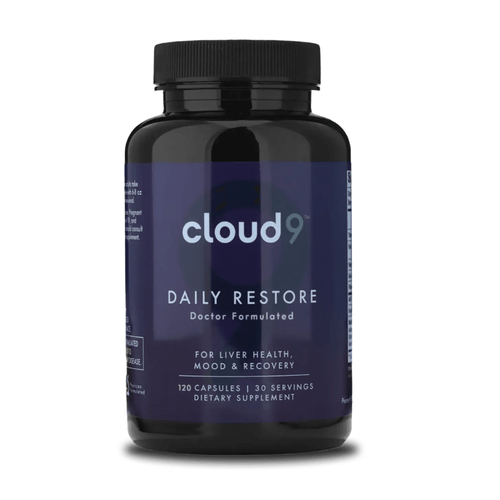
Cloud9 Daily Restore combines NAC, DHM, milk thistle, B vitamins, and ashwagandha to help support the pathways alcohol can tax most. Two capsules daily, drinking or not.
NAC | DHM | Milk Thistle | B Vitamins | Ashwagandha
See How Daily Restore WorksThe 5-Minute Relaxation Routine: Step by Step
This routine follows a specific sequence designed to progressively deepen your relaxation response. Each component builds on the previous one, taking you from surface-level stress relief to deeper nervous system regulation.
You can do this routine sitting or lying down, with your eyes closed or softly focused on a neutral point. The goal is finding what feels most comfortable and sustainable for your daily practice.
Minute 1: Grounding Breath (4-7-8 Technique)
Start with a breathing pattern that signals safety to your nervous system. The 4-7-8 breath has been shown to help activate the vagus nerve, which plays a key role in relaxation.
- Inhale quietly through your nose for a count of 4
- Hold your breath for a count of 7
- Exhale completely through your mouth for a count of 8
- Repeat this cycle 3-4 times during the first minute
- Focus on making the exhale longer than the inhale, which can help trigger relaxation
Minute 2: Progressive Muscle Release
Rather than tensing and releasing each muscle group (which takes longer), focus on sequential release through body awareness. This modified approach provides similar benefits in less time.
- Bring awareness to your jaw and consciously soften it, letting your tongue rest gently
- Drop your shoulders away from your ears, releasing any held tension
- Soften your hands, unclenching any fists or rigid fingers
- Notice your belly and allow it to be soft rather than held in
- Release any tension in your legs and feet
Minute 3: Heart-Centered Breathing
This technique combines breath awareness with positive emotion, which research suggests can help improve heart rate variability, a marker of stress resilience. Place one hand on your heart and one on your belly.
Breathe naturally while imagining the breath flowing in and out of your heart area. As you breathe, recall a moment of genuine appreciation, peace, or contentment. This doesn't need to be a major life event; it could be your morning coffee, a pet's affection, or sunshine on your face.
Minute 4: Body Scan Check-In
Quickly sweep your attention through your body, noticing any remaining areas of tension without judgment. This awareness practice helps you develop better body literacy over time.
- Start at the crown of your head and mentally scan downward
- Notice sensations without trying to change them
- Acknowledge any tight spots with curiosity rather than frustration
- If you find tension, send a few conscious breaths to that area
- Complete the scan at your toes, grounding your awareness
Minute 5: Intention Setting and Transition
End your practice by setting a simple intention for the next part of your day. Research on implementation intentions suggests that this final step can help carry the calm into your activities.
Choose one word that captures how you want to feel or be (calm, present, capable, open). Take three final deep breaths, repeating this word silently. When you're ready, gently open your eyes or shift your awareness back to your surroundings.
When and Where to Practice Your 5-Minute Routine
Consistency creates results, but that doesn't mean you need to practice at the exact same time every day. Finding moments that naturally fit your lifestyle increases the likelihood you'll actually do it.
Best Times for Busy Women
| Time of Day | Benefits | Ideal For |
|---|---|---|
| Morning (before checking phone) | Sets a calm tone for the day, reduces reactive stress | Early risers, those with morning anxiety |
| Lunch break | Resets your nervous system mid-day, improves afternoon focus | Office workers, those with afternoon energy crashes |
| After work transition | Creates separation between work and personal time | Remote workers, those who struggle to "switch off" |
| Before bed | Improves sleep quality, processes the day's stress | Those with racing thoughts at night, sleep issues |
Making It Work in Real Life
The best relaxation routine is the one you'll actually do. Here's how to integrate this practice into various scenarios without adding stress about doing it "perfectly."
- In your car: Complete the routine before starting your engine or after arriving at your destination
- At your desk: Close your office door or put on headphones to signal you're unavailable for five minutes
- In the bathroom: Yes, really. Sometimes this is the only private space available, and that's completely fine
- During your commute: If you take public transit, this routine works well with eyes open, softly focused
- In bed: Make it part of your wind-down routine, either when you first lie down or if you wake during the night
The women who benefit most from this routine aren't the ones who do it perfectly every single day. They're the ones who return to it consistently, without judgment, recognizing that some practice is always better than no practice.
Troubleshooting Common Challenges
Even a five-minute practice comes with obstacles. Here's how to navigate the most common issues women in their 20s and 30s face when trying to establish a relaxation routine.
When Your Mind Won't Quiet Down
If your thoughts are racing during the practice, that's not a sign you're doing it wrong. It's actually completely normal, especially when you're new to intentional relaxation or particularly stressed.
Instead of fighting your thoughts, try this approach: acknowledge each thought without following it ("there's a thought about that email"), then gently return attention to your breath. Think of your thoughts as clouds passing across the sky of your awareness. You don't need to stop the clouds; you just don't need to climb aboard every one.
Dealing with Time Pressure and Guilt
Many women report feeling guilty about taking even five minutes for themselves, especially during work hours or when household responsibilities are waiting. This guilt often stems from internalized beliefs about productivity and self-worth.
Consider reframing: those five minutes aren't stolen from your productivity. Research suggests they may actually enhance your efficiency, decision-making, and emotional regulation for the hours that follow. You're not being indulgent; you're maintaining the primary tool you have for getting everything done, which is you.
What If You Fall Asleep?
Falling asleep during relaxation practice often signals that you're genuinely exhausted and needed rest. If this happens occasionally, it's your body taking what it needs.
If you consistently fall asleep and want to stay awake for the practice, try sitting upright rather than lying down, practicing earlier in the day, or opening your eyes partway. Alternatively, if the routine helps you fall asleep and that's beneficial, you might intentionally use it as a sleep tool rather than a mid-day practice.
Adapting the Routine for Different Stress Levels
Not all stress is created equal, and your relaxation practice can flex to meet your current needs. Here's how to modify the basic routine based on what you're experiencing.
For High-Anxiety Days
When anxiety is particularly high, extend the breathing portion (minutes 1 and 3) and shorten the body scan. Anxious nervous systems often respond better to breath-focused practices than to body awareness, which can sometimes amplify uncomfortable sensations.
You might repeat the 4-7-8 breathing for two full minutes, then move into heart-centered breathing for another two minutes. Use the final minute for gentle intention setting, focusing on words like "safe," "steady," or "anchored."
For Overwhelm and Mental Fatigue
When you're mentally exhausted from decision fatigue or information overload, emphasize the muscle release and body scan portions. These physical awareness practices can help shift you out of cognitive overwhelm and into somatic presence.
Spend more time on the progressive muscle release, moving slowly through each body part. This gives your thinking mind a break while still engaging your awareness in a structured way.
For Emotional Processing
After a difficult conversation, disappointing news, or emotional trigger, you might need a gentler approach. Start with several cycles of simple, natural breathing before moving into the structured routine.
Allow yourself to acknowledge emotions that arise during the practice without immediately trying to change them. Sometimes the most relaxing thing you can do is create space for feelings to move through you rather than constantly managing them.
How Daily Restore Supports Your Health
Understanding what your body needs is one thing. Getting consistent daily support is another. Daily Restore was designed to address the key pathways alcohol can stress most, in one simple daily formula.
NAC (N-Acetyl Cysteine)
Supports glutathione production and antioxidant defenses
DHM (Dihydromyricetin)
Supports alcohol metabolism
Milk Thistle (Silymarin)
Supports healthy liver function
B Vitamins
Help replenish nutrients involved in energy and metabolism
Ashwagandha
Supports stress resilience and healthy cortisol balance
Daily Restore is not a detox or a cure. It is a daily support formula designed for people who drink socially and want to give their body consistent, evidence-informed support.
Frequently Asked Questions
Can I really see results from just 5 minutes of relaxation?
Yes, even brief relaxation practices can help shift your nervous system out of stress mode. Research suggests that short, consistent daily practices may be more effective than longer, sporadic sessions when it comes to managing everyday stress and supporting emotional balance.
What's the best time of day to do this routine?
The best time is whenever you'll actually do it. Many women find that mid-afternoon (around 2-3 PM) works well as an energy reset, while others prefer morning or before bed. Experiment to see what fits naturally into your schedule and helps you feel most grounded.
What if I can't quiet my mind during breathing exercises?
A wandering mind is completely normal and doesn't mean you're doing it wrong. The goal isn't to eliminate thoughts but to gently redirect your attention back to your breath each time you notice your mind drifting. This practice itself can help strengthen your ability to manage stress over time.
Can supplements really help with stress management?
Quality supplements containing adaptogens and calming botanicals may support your body's natural stress response when combined with healthy lifestyle practices. While they're not a substitute for addressing root causes of chronic stress, research suggests they can be a helpful part of a comprehensive wellness routine.
How long before I notice a difference in my stress levels?
Some women report feeling more centered after their very first session, while others notice cumulative benefits after a week or two of consistent practice. The key is making this routine a non-negotiable part of your day, similar to brushing your teeth, so the effects can build over time.
The Bottom Line
You don't need an hour-long meditation retreat or a complete schedule overhaul to experience real stress relief. This 5-minute routine, done consistently, can help you reclaim a sense of calm in the middle of your busiest days. The combination of intentional breathing, gentle movement, and mindful awareness works with your body's natural relaxation response.
Supporting your stress management from the inside out makes a difference too. Cloud9's Daily Restore is formulated specifically for women in their 20s and 30s who need reliable daily support without synthetic ingredients or unnecessary additives. With adaptogens like ashwagandha and rhodiola plus calming L-theanine, it's designed to work alongside practices like this routine to help you feel more balanced and resilient.
The real power comes from consistency. Set a daily reminder, link this routine to an existing habit (like your afternoon coffee break), and give yourself permission to prioritize these five minutes. Your nervous system, your productivity, and your overall sense of wellbeing can all benefit from this small but meaningful investment in yourself.
Remember: managing stress isn't about perfection or eliminating every challenge from your life. It's about building sustainable practices that help you navigate whatever comes your way with more ease, clarity, and confidence. You've got this.
Build Your Daily Support Routine
Build Your Daily Support Routine
If drinking is part of your lifestyle, your support routine should not be random. Daily Restore was designed to help social drinkers support liver health, antioxidant defenses, alcohol metabolism, nutrient replenishment, and daily recovery in one simple routine.
NAC
DHM
Milk Thistle
B Vitamins
Ashwagandha