

You know that feeling when your calendar notification pops up reminding you about dinner plans, and suddenly your brain starts spinning through every possible awkward scenario? That's not just nerves. That's anticipatory anxiety, and it can turn a simple social event into days of mental rehearsal and dread.
Social anxiety doesn't just happen during the actual conversation. For many people, the real struggle starts hours or even days before. The overthinking, the what-ifs, the imagining of uncomfortable silences. By the time the event arrives, you're already exhausted.
The good news? You can interrupt this pattern. With the right social anxiety tips, you can learn to stop overthinking social situations before they hijack your entire week.
Quick Take
- Anticipatory anxiety about social situations is often worse than the events themselves, triggering overthinking cycles days in advance
- Your brain's threat detection system treats social rejection like physical danger, which explains why the fear feels so intense
- Specific grounding techniques can interrupt rumination patterns before they spiral into full anxiety episodes
- Reframing your internal dialogue from prediction to curiosity helps reduce the need to mentally rehearse every scenario
- Building a pre-event routine creates a psychological buffer that signals safety to your nervous system
Why Your Brain Overthinks Social Situations
Your brain isn't broken when it obsesses over upcoming social events. Research suggests that social anxiety activates the same threat-detection systems that kept our ancestors safe from predators. Your amygdala, the brain's alarm center, treats potential social rejection like a physical threat because, evolutionarily speaking, being excluded from the group could mean death.
This explains why overthinking feels so automatic and overwhelming. Studies show that people with social anxiety have heightened activity in brain regions associated with self-focused attention and threat detection. Your mind is essentially running disaster simulations, trying to protect you by preparing for every possible negative outcome.
The irony is that this protective mechanism becomes the problem. The more you mentally rehearse social scenarios, the more anxious you become. Your nervous system can't distinguish between imagined threats and real ones, so all that overthinking triggers actual stress responses in your body.
Daily Support for Social Drinkers
Your liver works hard every day. Give it consistent support.
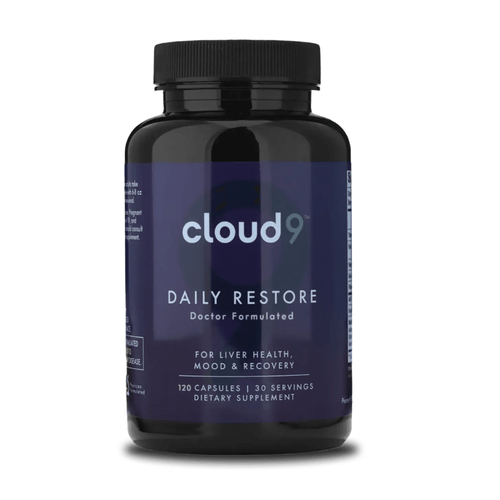
Cloud9 Daily Restore combines NAC, DHM, milk thistle, B vitamins, and ashwagandha to help support the pathways alcohol can tax most. Two capsules daily, drinking or not.
NAC | DHM | Milk Thistle | B Vitamins | Ashwagandha
See How Daily Restore WorksRecognize Your Overthinking Patterns
Before you can interrupt anxious thoughts, you need to identify when they're happening. Social anxiety overthinking typically falls into predictable patterns, and recognizing yours is the first step toward managing them.
Common Overthinking Triggers
Most anticipatory anxiety follows specific triggers. Understanding yours helps you catch the spiral early, before it gains momentum.
- Calendar notifications or reminders about upcoming events
- Invitations that require a response, especially group gatherings
- Seeing photos or posts about social events you'll attend
- Unstructured social situations where you don't know the agenda
- Events with people you don't know well or want to impress
- Situations where you'll be the center of attention, even briefly
The Mental Rehearsal Trap
One of the most common patterns is mental rehearsing, where you script conversations and plan responses to imagined scenarios. This feels productive because you're "preparing," but research suggests it actually increases anxiety rather than reducing it.
Mental rehearsal keeps you focused on yourself rather than staying present. It also sets up rigid expectations that real conversations rarely follow, leaving you feeling thrown off when things don't go according to your script.
The goal isn't to eliminate all anticipatory thoughts about social events. It's to recognize when helpful preparation crosses into unhelpful rumination, and to have tools ready when it does.
Practical Techniques to Stop Overthinking Before Events
Once you recognize your overthinking patterns, you can use specific techniques to interrupt them. These social anxiety tips work best when practiced regularly, not just saved for moments of peak anxiety.
The 5-5-5 Grounding Method
When you catch yourself spiraling into social what-ifs, this sensory grounding technique can bring you back to the present moment. It works by redirecting your attention from imagined futures to immediate reality.
Name five things you can see, five things you can hear, and five things you can physically feel right now. This simple practice activates your observational brain and temporarily interrupts the anxiety loop. Do it slowly and deliberately, taking time to actually notice each sensation.
Reframe Prediction as Curiosity
Your anxious mind wants to predict and control the future. Instead of fighting this impulse, redirect it from prediction to curiosity. When you notice yourself thinking "What if they think I'm boring?" try replacing it with "I wonder what we'll talk about" or "I'm curious what this person is interested in."
This isn't toxic positivity or forced optimism. It's a shift from closed, fearful questions to open, exploratory ones. Studies show that curiosity activates different neural pathways than fear, creating space between the trigger and your automatic anxious response.
Schedule Your Worry Time
This might sound counterintuitive, but deliberately scheduling 10-15 minutes to worry can actually reduce overall anxiety. When anxious thoughts arise throughout the day, acknowledge them and postpone them to your designated worry time.
Research suggests this technique helps contain rumination by giving it boundaries. During your scheduled time, let yourself think through concerns fully. Often, you'll find that by the time worry time arrives, the thoughts have less power or don't even seem relevant anymore.
Build a Pre-Event Routine That Works
Having a consistent routine before social events creates predictability, which can help calm your nervous system. Your routine becomes a signal that you're preparing intentionally, not spiraling anxiously.
Essential Elements of a Calming Routine
| Routine Element | Purpose | When to Do It |
|---|---|---|
| Physical movement | Releases nervous energy, regulates stress hormones | 2-3 hours before |
| Breathing exercises | Activates parasympathetic nervous system | 30 minutes before |
| Practical preparation | Addresses legitimate logistics, reduces unknowns | 1 hour before |
| Positive anchoring | Reminds you of past social successes | 15 minutes before |
| Sensory comfort | Creates physical sense of safety and grounding | Just before leaving |
Distinguish Preparation from Rumination
There's a difference between helpful preparation and anxious overthinking. Helpful preparation is action-oriented and time-limited: checking the address, planning your outfit, confirming the time. Rumination is repetitive, hypothetical, and never reaches resolution.
Use this simple test: if the thought leads to a concrete action you can take right now, it's preparation. If it's an imagined scenario you can't control or a question with no answer, it's rumination. When you notice rumination, acknowledge it and return to your grounding practice.
Shift Your Relationship with Uncertainty
At the core of social overthinking is a desire for certainty in situations that are inherently uncertain. You can't know exactly how a conversation will go, how you'll come across, or what others are thinking. The discomfort with this uncertainty fuels the mental spinning.
Practice Uncertainty Tolerance
Rather than trying to eliminate uncertainty through mental rehearsal, you can gradually build your tolerance for it. Start with small, low-stakes social uncertainties and practice sitting with the discomfort without trying to resolve it.
- Send a text without overthinking the exact wording
- Ask a question without scripting it perfectly first
- Share an opinion without checking everyone's reaction
- Let a conversation pause without rushing to fill the silence
- Leave an event without mentally reviewing everything you said
Redefine What Success Looks Like
Social anxiety often comes with impossibly high standards for social performance. Success gets defined as "no awkward moments" or "everyone likes me" or "I seem completely confident." These standards guarantee failure and fuel more overthinking.
Try redefining success as showing up authentically, having one genuine moment of connection, or simply getting through the event. Research suggests that people with social anxiety dramatically overestimate how much others notice or judge their perceived social mistakes. What feels like a major blunder to you often doesn't even register to others.
Use the Spotlight Effect Reminder
The spotlight effect is a cognitive bias where we overestimate how much others notice and remember our actions. Studies show that people are far more focused on themselves and their own concerns than on scrutinizing you.
When you're overthinking how you'll come across, remind yourself that everyone else at the event is probably thinking about themselves, not analyzing your every word. This isn't permission to be careless, it's perspective that reduces the imagined stakes of social interaction.
How Daily Restore Supports Your Health
Understanding what your body needs is one thing. Getting consistent daily support is another. Daily Restore was designed to address the key pathways alcohol can stress most, in one simple daily formula.
NAC (N-Acetyl Cysteine)
Supports glutathione production and antioxidant defenses
DHM (Dihydromyricetin)
Supports alcohol metabolism
Milk Thistle (Silymarin)
Supports healthy liver function
B Vitamins
Help replenish nutrients involved in energy and metabolism
Ashwagandha
Supports stress resilience and healthy cortisol balance
Daily Restore is not a detox or a cure. It is a daily support formula designed for people who drink socially and want to give their body consistent, evidence-informed support.
Frequently Asked Questions
How can I stop overthinking before a social event?
Try grounding techniques like the 5-4-3-2-1 method, where you identify five things you can see, four you can touch, three you can hear, two you can smell, and one you can taste. This redirects your mind from anxious thoughts to present sensory experiences. Setting a specific "worry time" earlier in the day can also help contain overthinking so it doesn't spiral right before the event.
What's the difference between social anxiety and just being introverted?
Introversion is a personality trait where you recharge through alone time, while social anxiety involves excessive fear or worry about social situations and how others perceive you. Introverts may enjoy social gatherings but need downtime afterward, whereas someone with social anxiety often experiences significant distress before, during, and after social interactions. It's possible to be both introverted and have social anxiety, but they're distinct experiences.
Can supplements really help with social anxiety?
Research suggests that certain natural ingredients like ashwagandha, L-theanine, and magnesium may help support a calmer stress response when taken consistently. While supplements aren't a standalone solution, they can be a helpful part of a broader approach that includes therapy, lifestyle changes, and stress management techniques. Results typically develop over time with regular use rather than providing immediate relief.
How long does it take to see improvement in social anxiety?
Progress varies widely depending on the severity of your anxiety and the strategies you're using. Some people notice small shifts within a few weeks of consistent practice with cognitive techniques or supplements, while deeper changes often unfold over several months. The key is maintaining regular habits rather than expecting overnight transformation, and celebrating small wins along the way.
What should I do if my social anxiety isn't improving?
If self-help strategies haven't made a meaningful difference after several weeks, consider working with a therapist who specializes in anxiety disorders. Cognitive-behavioral therapy (CBT) and exposure therapy have strong evidence for treating social anxiety. A mental health professional can provide personalized guidance and help you determine if additional support, including medication, might be beneficial.
The Bottom Line
Social anxiety can feel overwhelming, but it doesn't have to control your life. By challenging negative thought patterns, practicing grounding techniques, and gradually exposing yourself to social situations, you can build confidence and reduce the mental spiral that happens before events. These skills take time to develop, but each small step forward creates momentum.
Consistency matters more than perfection. Whether you're reframing anxious thoughts, using breathing exercises, or establishing a pre-event routine, the goal is progress over time rather than immediate transformation. Supporting your nervous system through lifestyle choices like regular sleep, movement, and stress management creates a foundation that makes these techniques more effective.
Cloud9's Daily Restore can be part of that consistent daily routine. With research-backed ingredients like ashwagandha, L-theanine, and magnesium, it's designed to help your body manage stress more effectively over time. When combined with the cognitive and behavioral strategies we've covered, it offers another layer of support for a calmer, more grounded approach to social situations.
Remember that seeking professional help is a sign of strength, not weakness. If your social anxiety significantly impacts your daily life, working with a therapist can provide personalized strategies and support. You deserve to feel comfortable in social settings, and with the right tools and support, it's absolutely possible to get there.
Build Your Daily Support Routine
Build Your Daily Support Routine
If drinking is part of your lifestyle, your support routine should not be random. Daily Restore was designed to help social drinkers support liver health, antioxidant defenses, alcohol metabolism, nutrient replenishment, and daily recovery in one simple routine.
NAC
DHM
Milk Thistle
B Vitamins
Ashwagandha