

That flutter in your chest before walking into a party. The mental replay of conversations you haven't even had yet. The sudden awareness of your heartbeat as you reach for the door. Social anxiety shows up uninvited, turning what should be enjoyable moments into something to endure.
You're not alone in this experience, and more importantly, you're not powerless against it. The physical and mental tension that surfaces before social situations can be managed with the right relaxation techniques.
These evidence-based strategies can help you shift from anxious anticipation to grounded presence, giving you practical tools to feel more like yourself when it matters most.
Quick Take
- Pre-social anxiety triggers your body's stress response, creating physical symptoms that can be calmed through specific breathing and grounding techniques
- The 4-7-8 breathing method and progressive muscle relaxation can lower cortisol levels and activate your parasympathetic nervous system
- Reframing nervous energy as excitement uses the same physiological arousal while changing your mental narrative
- Creating a pre-event ritual gives your mind something concrete to focus on instead of spiraling into worst-case scenarios
- Physical grounding techniques like the 5-4-3-2-1 method can interrupt anxiety loops and bring you back to the present moment
Why Social Situations Trigger Your Stress Response
Your nervous system doesn't distinguish between walking into a networking event and encountering a physical threat. Both scenarios can activate your sympathetic nervous system, flooding your body with stress hormones like cortisol and adrenaline. This evolutionary response kept our ancestors safe from predators, but in modern social contexts, it simply makes us uncomfortable.
Research suggests that anticipatory anxiety before social events can actually be more intense than the anxiety experienced during the event itself. Your brain runs simulations of potential negative outcomes, creating a feedback loop that amplifies physical symptoms like rapid heartbeat, shallow breathing, and muscle tension.
The good news is that your parasympathetic nervous system, your body's natural calming mechanism, can be deliberately activated. When you engage specific relaxation techniques, you send signals to your brain that you're safe, which can help reduce the intensity of your stress response.
Daily Support for Social Drinkers
Your liver works hard every day. Give it consistent support.
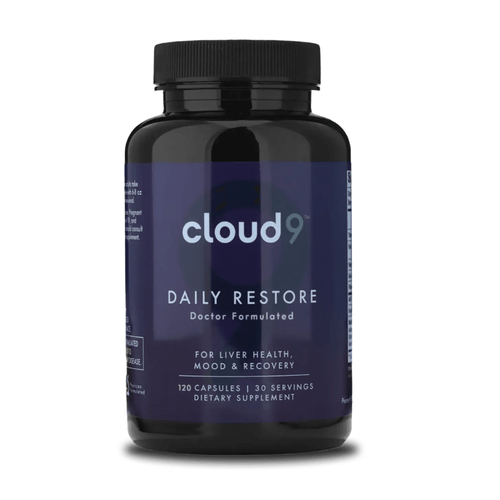
Cloud9 Daily Restore combines NAC, DHM, milk thistle, B vitamins, and ashwagandha to help support the pathways alcohol can tax most. Two capsules daily, drinking or not.
NAC | DHM | Milk Thistle | B Vitamins | Ashwagandha
See How Daily Restore WorksBreathing Techniques That Actually Work
Your breath is the most accessible tool you have for managing pre-social anxiety. Unlike your heart rate or stress hormone levels, breathing is something you can directly control, and changing your breathing pattern sends immediate feedback to your nervous system.
The 4-7-8 Technique for Immediate Calm
This method, based on ancient yogic practices, works by extending your exhale longer than your inhale. When you breathe out for a longer count, you activate your vagus nerve, which signals your body to relax.
Here's how to practice it:
- Breathe in quietly through your nose for 4 counts
- Hold your breath for 7 counts
- Exhale completely through your mouth for 8 counts, making a whooshing sound
- Repeat the cycle 3-4 times before your social event
Box Breathing for Mental Clarity
Used by athletes and military personnel, box breathing creates a balanced rhythm that can help clear mental fog and reduce racing thoughts. Each phase of the breath receives equal attention, giving your mind a simple pattern to follow instead of anxious narratives.
Practice this method 5-10 minutes before you need to be "on":
- Inhale through your nose for 4 counts
- Hold your breath for 4 counts
- Exhale through your mouth for 4 counts
- Hold empty for 4 counts
- Repeat for several cycles until you feel noticeably calmer

Belly Breathing to Release Physical Tension
When you're anxious, breathing becomes shallow and chest-focused. Deep belly breathing reverses this pattern, engaging your diaphragm and promoting fuller oxygen exchange.
Place one hand on your chest and one on your belly. As you inhale, your belly should expand while your chest remains relatively still. This simple shift in breathing location can trigger a relaxation response within minutes.
Mental Reframing Strategies to Shift Your Perspective
Your interpretation of physical sensations matters more than the sensations themselves. The butterflies in your stomach and elevated heart rate that signal "danger" in one context can be reframed as "excitement" in another, using identical physiological arousal.
The Excitement Reframe
Studies show that telling yourself "I'm excited" instead of "I'm anxious" can improve performance and reduce negative feelings. Both emotions share similar physical signatures: increased heart rate, heightened alertness, and energized feelings. The difference lies in your mental label.
Before your next social situation, say out loud: "I'm excited to meet new people" or "I'm excited for this conversation." This simple linguistic shift can change your brain's interpretation of your body's signals.
The Realistic Confidence Builder
Anxiety loves to catastrophize. Counter this tendency by asking yourself three grounding questions:
- What's the most realistic outcome of this situation?
- What evidence do I have that contradicts my worst-case scenario?
- How have I successfully handled similar situations in the past?
Write down your answers if you have time. Seeing realistic assessments on paper can interrupt anxious thought spirals more effectively than trying to reason with yourself mentally.
Your nervous system responds to what you practice most. Each time you use a relaxation technique before a social situation, you're training your brain to associate these events with calm rather than threat.
The Future-Self Perspective
Imagine yourself three hours from now, after the social event is over. In most cases, you'll feel relieved and probably realize it wasn't as difficult as you anticipated. This temporal distance can reduce the perceived threat of immediate social pressure.
Ask yourself: "Will this matter tomorrow? Next week? Next month?" This perspective shift doesn't minimize your feelings, but it can help you recognize that the intensity of pre-event anxiety is temporary.
Physical Grounding Techniques for Present-Moment Awareness
Anxiety pulls you into the future, replaying scenarios that haven't happened. Grounding techniques anchor you back to the present moment, where actual threats are usually absent.
The 5-4-3-2-1 Sensory Method
This technique engages your five senses to interrupt anxious thought patterns. It's especially useful in the minutes right before you enter a social situation, whether you're sitting in your car or standing outside a venue.
Identify these sensory details around you:
- 5 things you can see: Notice colors, shapes, textures in your environment
- 4 things you can touch: Feel the texture of your clothing, the surface beneath you, your phone in your hand
- 3 things you can hear: Background music, distant conversations, your own breathing
- 2 things you can smell: Your perfume or cologne, fresh air, coffee nearby
- 1 thing you can taste: Mint from gum, lingering coffee, or simply the taste in your mouth
Progressive Muscle Relaxation
Tension accumulates in your body before social situations, often without conscious awareness. Progressive muscle relaxation systematically releases this tension through a simple tense-and-release pattern.
Starting with your feet and moving upward, tense each muscle group for 5 seconds, then release for 10 seconds. Notice the difference between tension and relaxation. Pay special attention to areas that commonly hold stress: jaw, shoulders, hands, and forehead.
The Cold Water Reset
Temperature change provides an immediate physiological interrupt to anxiety. Splashing cold water on your face or holding ice cubes activates your dive reflex, which automatically slows your heart rate.
If you're somewhere with bathroom access, run cold water over your wrists for 30 seconds. The concentration of blood vessels near the surface of your inner wrists means temperature changes here can affect your whole body's sense of temperature and arousal level.
Creating Your Pre-Event Ritual
Consistency calms the nervous system. When you follow the same sequence of actions before social situations, you create a familiar routine that signals safety to your brain.
Designing Your Personal Calm-Down Sequence
Your ritual should take 10-20 minutes and include elements from different categories. This multi-modal approach addresses anxiety on physical, mental, and emotional levels simultaneously.
| Ritual Component | Purpose | Time Needed |
|---|---|---|
| Breathing exercise | Activates parasympathetic nervous system | 3-5 minutes |
| Physical movement | Releases muscle tension and nervous energy | 5-7 minutes |
| Mental reframe | Shifts perspective from threat to opportunity | 2-3 minutes |
| Grounding technique | Anchors awareness to present moment | 2-3 minutes |
| Personal comfort item | Provides sense of familiarity and control | Ongoing |
Sample 15-Minute Pre-Social Ritual
Here's a practical sequence you can adapt to your preferences and circumstances. The key is repetition: use the same ritual before multiple events so your brain learns to associate these actions with successful social experiences.
- Minutes 1-5: Practice 4-7-8 breathing while listening to a specific calming song
- Minutes 6-10: Do light stretching or take a brief walk to discharge physical tension
- Minutes 11-12: Write down three realistic positive outcomes for the event
- Minutes 13-14: Use the 5-4-3-2-1 sensory grounding technique
- Minute 15: Apply a familiar scent (essential oil or perfume) that you associate with confidence
The Power of Sensory Anchors
Certain scents, songs, or physical objects can become associated with calm states through repeated pairing. Research on classical conditioning suggests that when you consistently use a particular lavender spray or specific playlist during your relaxation practice, these items alone can eventually trigger relaxation.
Choose one sensory anchor and use it exclusively during your pre-event ritual. Over time, simply encountering that scent or song can help shift your nervous system toward calm, even without the full ritual sequence.
In-the-Moment Techniques When Anxiety Spikes
Even with excellent preparation, anxiety can surge once you're actually in the social situation. These discrete techniques can be used without anyone noticing, giving you tools to manage rising discomfort in real-time.
The Subtle Self-Soothing Touch
Physical self-touch activates your parasympathetic nervous system through pressure-sensitive nerves in your skin. These movements look natural in social settings while providing genuine physiological calming.
- Press your thumb into the center of your opposite palm
- Gently squeeze your earlobe between thumb and forefinger
- Place your hand over your heart and take three slow breaths
- Lightly press your tongue against the roof of your mouth
The Counting Distraction
Give your anxious mind a concrete task to interrupt spiraling thoughts. Count backward from 100 by sevens, or count the number of people wearing a specific color. This cognitive engagement redirects mental resources away from anxiety-producing narratives.
The counting needs to be challenging enough to require genuine focus but not so difficult that it creates additional stress. Simple observation tasks work well: count patterns in the wallpaper, tiles on the floor, or the number of times you hear a specific word in conversation.
Strategic Conversation Breaks
You don't need to be "on" continuously throughout a social event. Planned breaks prevent the accumulation of social fatigue and give your nervous system chances to reset.
- Excuse yourself to the restroom for a two-minute breathing reset
- Step outside briefly for fresh air and a grounding exercise
- Volunteer for a practical task like refilling drinks, which gives you purposeful movement
- Find a quieter area for a few minutes if the environment is overstimulating
How Daily Restore Supports Your Health
Understanding what your body needs is one thing. Getting consistent daily support is another. Daily Restore was designed to address the key pathways alcohol can stress most, in one simple daily formula.
NAC (N-Acetyl Cysteine)
Supports glutathione production and antioxidant defenses
DHM (Dihydromyricetin)
Supports alcohol metabolism
Milk Thistle (Silymarin)
Supports healthy liver function
B Vitamins
Help replenish nutrients involved in energy and metabolism
Ashwagandha
Supports stress resilience and healthy cortisol balance
Daily Restore is not a detox or a cure. It is a daily support formula designed for people who drink socially and want to give their body consistent, evidence-informed support.
Frequently Asked Questions
How long before a social event should I start using relaxation techniques?
Ideally, begin practicing calming techniques at least 30 minutes before you need to arrive. This gives your nervous system time to settle and helps you enter the situation from a more grounded state. For bigger events, consider starting your relaxation routine an hour or two ahead to give yourself plenty of buffer time.
What if I feel anxious even after trying breathing exercises?
It's completely normal for anxiety to persist despite your best efforts, especially in high-pressure situations. Try layering techniques: combine breathing with gentle movement, grounding exercises, or a calming supplement like Daily Restore. Remember that feeling some nerves is natural, and the goal isn't to eliminate anxiety entirely but to manage it effectively.
Can I use these relaxation tips for situations beyond social events?
Absolutely. The techniques described here work well for job interviews, public speaking, medical appointments, or any situation that triggers stress. The beauty of these strategies is their versatility, they can be adapted to fit whatever scenario you're facing.
How often should I practice these techniques to see results?
Consistency is key. Daily practice, even just 5-10 minutes, helps train your nervous system to respond more calmly under pressure. Many people find that regular practice makes the techniques more effective when they need them most, similar to building any other skill.
Is it normal to feel self-conscious about using calming techniques in public?
Yes, many people worry about drawing attention when doing breathing exercises or other techniques in social settings. The good news is that most methods can be done discreetly, like box breathing or grounding exercises. You can also step away briefly to a restroom or quiet corner if you need more privacy to reset.
The Bottom Line
Feeling calm and confident before social situations isn't about achieving perfection or eliminating every trace of nervousness. It's about equipping yourself with practical tools that help you manage stress, stay present, and show up as your best self. Whether you're using breathwork, movement, grounding techniques, or supportive supplements, the key is finding what works for your unique needs and making it part of your routine.
Building a consistent daily practice can make these techniques more effective over time. Many people find that incorporating Daily Restore into their wellness routine provides a gentle foundation of calm that makes occasional stressors easier to navigate. With premium botanical ingredients designed to support relaxation without grogginess, it can complement the behavioral strategies you're already using.
Remember that everyone experiences social anxiety differently, and what helps one person may not work for another. Give yourself permission to experiment with different approaches, combine techniques, and adjust based on what feels right. The more you practice, the more naturally these strategies will come to you when you need them most.
Social situations don't have to feel overwhelming. With the right preparation, mindset, and support, you can approach any gathering with greater ease and confidence, allowing you to actually enjoy the experience rather than just survive it.
Build Your Daily Support Routine
Build Your Daily Support Routine
If drinking is part of your lifestyle, your support routine should not be random. Daily Restore was designed to help social drinkers support liver health, antioxidant defenses, alcohol metabolism, nutrient replenishment, and daily recovery in one simple routine.
NAC
DHM
Milk Thistle
B Vitamins
Ashwagandha