

You've tried everything. You put your phone away at 9 PM, you buy the expensive pillow, you download the meditation app. Yet there you are at midnight, mind racing through tomorrow's presentation and last week's awkward conversation, wondering why sleep feels like a skill everyone else mastered.
For young women navigating demanding careers, social pressures, and the constant hum of digital life, quality sleep often feels like a luxury rather than a reality. The truth is, your evening routine might be missing the specific relaxation techniques that actually signal your nervous system it's safe to power down.
Let's explore the evening wind-down practices that research suggests can genuinely transform your sleep quality, backed by what we know about stress, hormones, and the unique pressures young women face today.
Quick Take
- Your evening wind-down should begin 90 minutes before bed, not 10 minutes, to allow your nervous system adequate transition time
- Temperature regulation and strategic light exposure matter more than most relaxation rituals people focus on
- Young women often experience heightened evening cortisol due to stress patterns, requiring specific relaxation approaches
- Combining physical relaxation with cognitive techniques produces significantly better sleep outcomes than either alone
- Consistency with your wind-down routine matters more than perfection, with benefits appearing within 7-10 days
Why Traditional Sleep Advice Fails Young Women
Most sleep recommendations treat everyone's nervous system the same way. But research suggests young women experience unique sleep disruptions tied to hormonal fluctuations, stress response patterns, and social demands that peak during these years.
Studies show that women in their 20s and 30s report higher rates of difficulty falling asleep compared to men in the same age group, often linked to rumination and heightened evening cortisol. Your brain isn't broken. It's responding predictably to real pressures, and it needs specific signals to downshift.
The evening wind-down that actually works addresses three key systems: your body temperature regulation, your stress hormone patterns, and your cognitive arousal. When you align all three, sleep quality can improve dramatically.
Daily Support for Social Drinkers
Your liver works hard every day. Give it consistent support.
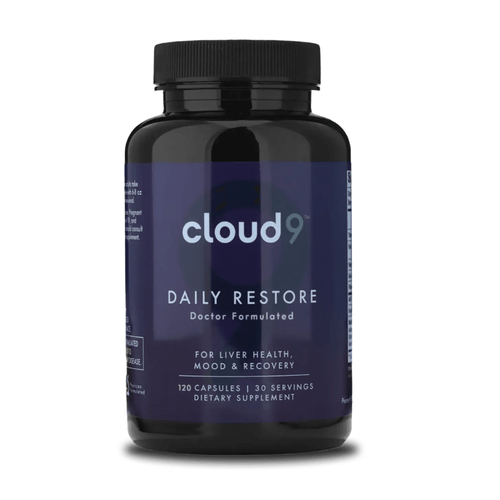
Cloud9 Daily Restore combines NAC, DHM, milk thistle, B vitamins, and ashwagandha to help support the pathways alcohol can tax most. Two capsules daily, drinking or not.
NAC | DHM | Milk Thistle | B Vitamins | Ashwagandha
See How Daily Restore WorksThe 90-Minute Wind-Down Framework
Forget the idea that you can scroll until 11:45 PM and then magically fall asleep by midnight. Your nervous system needs a genuine transition period, and research suggests 90 minutes is the sweet spot for most people.
This isn't about adding a dozen new habits. It's about strategically structuring your evening so each element builds on the last, creating a cascade of relaxation signals your body can't ignore.
The Three Phases That Matter
Think of your wind-down in three distinct 30-minute phases, each with a specific purpose:
- Phase 1: Transition (90-60 minutes before bed) – Close out the day's mental tabs, begin dimming lights, start cooling your core temperature
- Phase 2: Release (60-30 minutes before bed) – Active relaxation practices that discharge physical tension and mental activation
- Phase 3: Drift (30-0 minutes before bed) – Gentle, monotonous activities that require minimal cognitive engagement
Each phase serves a distinct neurological purpose. Jumping straight to Phase 3 without the earlier work is why many relaxation techniques feel ineffective.

Temperature: The Underrated Sleep Signal
Your core body temperature naturally drops as you approach sleep, signaling to your brain that it's time to rest. You can accelerate this process strategically.
Studies show that warming your extremities (hands and feet) while keeping your core cool creates the ideal temperature gradient for sleep. This is why a warm bath 90 minutes before bed can be so effective: you heat up temporarily, then cool down rapidly, mimicking your body's natural sleep onset pattern.
| Temperature Strategy | How It Works | Best Timing |
|---|---|---|
| Warm bath or shower | Raises then rapidly lowers core temperature | 90 minutes before bed |
| Cool bedroom (65-68°F) | Supports natural temperature drop | Throughout the night |
| Warm socks | Dilates blood vessels, speeds cooling | 30 minutes before bed |
| Face cooling | Activates relaxation response directly | When feeling wired |
Relaxation Techniques That Actually Discharge Stress
Here's what most people miss: relaxation isn't just about being calm. It's about actively releasing the accumulated tension and activation from your day.
For young women carrying high stress loads, passive techniques like simply lying down often aren't enough. You need practices that help your nervous system complete the stress cycle.
Progressive Muscle Relaxation: The Tension Release Method
This technique works because it leverages a neurological principle: you can't tense and relax simultaneously. By deliberately tensing muscle groups then releasing, you create a deeper relaxation than simply trying to "be relaxed."
Start with your feet and work upward. Tense each muscle group for 5 seconds, then release for 10 seconds, noticing the contrast. Research suggests this practice can reduce the time it takes to fall asleep by up to 50% when practiced consistently.
The Physiological Sigh: Rapid Nervous System Reset
This breathing pattern may be one of the fastest ways to downregulate your stress response. Take two quick inhales through your nose (the second inhale is key), followed by one long, slow exhale through your mouth.
Studies show this specific pattern offloads carbon dioxide more efficiently than standard deep breathing, rapidly shifting you toward parasympathetic activation. Do 2-3 rounds whenever you notice tension building.
The best evening routine isn't the one with the most steps. It's the one you'll actually do consistently, even on your messiest days. Start with one anchor practice and build from there.
Movement-Based Relaxation for Active Minds
If you're someone whose mind races at night, purely mental relaxation techniques might not be enough. Adding gentle movement can help discharge physical restlessness while occupying your cognitive energy.
- Slow flow yoga – Focus on hip openers and forward folds, which signal safety to your nervous system
- Evening walks – Rhythmic movement in cooler evening air supports natural temperature regulation
- Gentle stretching – Target areas where you hold tension: jaw, shoulders, hips, feet
- Restorative poses – Legs-up-the-wall for 5-10 minutes activates your relaxation response directly
Managing the Mental Loop: Cognitive Wind-Down Strategies
Physical relaxation is only half the equation. If your mind is still processing the day, planning tomorrow, or rehashing conversations, your body won't fully let go.
Young women often experience what researchers call "cognitive arousal": your body might be tired, but your brain won't stop. These strategies address that specific challenge.
The Brain Dump: Externalizing Mental Load
Keep a notebook by your bed specifically for evening brain dumps. Spend 10 minutes writing everything on your mind: tasks, worries, random thoughts, unfinished conversations.
Research suggests that expressive writing before bed can reduce intrusive thoughts and improve sleep onset. You're not solving problems here. You're simply moving them from internal to external storage so your brain can power down.
The Tomorrow Page: Closing Open Loops
Much of bedtime anxiety comes from open loops: things you need to remember or handle tomorrow. Create a simple "Tomorrow Page" with three categories:
- Must do (3 items max)
- Want to do (anything else that comes to mind)
- Need to remember (specific items, times, or details)
This practice can significantly reduce the "I can't forget to..." thoughts that keep you awake. Your brain relaxes when it knows the information is captured.
Redirecting Rumination: The Sensory Anchor Technique
When you catch yourself ruminating, use this pattern: Notice you're thinking, label it ("planning" or "worrying"), then redirect to physical sensation. Focus on the weight of your body on the bed, the texture of your sheets, the temperature of the air.
This isn't about stopping thoughts. It's about changing your relationship to them, shifting from engagement to observation. Studies show this metacognitive approach can reduce sleep-disrupting rumination more effectively than trying to "clear your mind."
Light Exposure: The Missing Piece Most Women Overlook
Your circadian rhythm responds to light more powerfully than almost any other signal. Yet most evening routines completely ignore strategic light management.
Research suggests that light exposure in the two hours before bed has a direct impact on melatonin production. Not all light is equal, and the timing matters as much as the intensity.
The Light Dimming Protocol
Think of your evening light as a gradual sunset. Starting 90 minutes before bed, progressively reduce both the intensity and the color temperature of light in your space.
| Time Before Bed | Light Strategy | What to Avoid |
|---|---|---|
| 90-60 minutes | Dim overhead lights, switch to lamps | Bright bathroom or kitchen lights |
| 60-30 minutes | Use only warm-toned lamps, candlelight | Phone or laptop screens without filters |
| 30-0 minutes | Minimal light, red/amber tones only | Any blue or bright white light |
The Screen Reality Check
Let's be realistic: most young women aren't going to eliminate all screens before bed. If you're going to use devices, use them strategically.
Enable night shift or blue light filters at sunset, not bedtime. Keep brightness at 30% or lower. Hold devices at a distance rather than close to your face. Consider using a separate device for evening content, one you don't associate with work or stress.
Studies show that the content you consume matters as much as the light itself. Passive, non-engaging content (like nature documentaries) impacts sleep less than interactive or emotionally activating content (like social media or news).
How Daily Restore Supports Your Health
Understanding what your body needs is one thing. Getting consistent daily support is another. Daily Restore was designed to address the key pathways alcohol can stress most, in one simple daily formula.
NAC (N-Acetyl Cysteine)
Supports glutathione production and antioxidant defenses
DHM (Dihydromyricetin)
Supports alcohol metabolism
Milk Thistle (Silymarin)
Supports healthy liver function
B Vitamins
Help replenish nutrients involved in energy and metabolism
Ashwagandha
Supports stress resilience and healthy cortisol balance
Daily Restore is not a detox or a cure. It is a daily support formula designed for people who drink socially and want to give their body consistent, evidence-informed support.
Frequently Asked Questions
How long does it take to see improvements in sleep quality?
Most people begin noticing subtle changes within the first week of establishing a consistent evening routine, though more significant improvements typically emerge after two to three weeks. The key is consistency: your body needs time to recognize and respond to the new patterns you're creating.
What if I don't have a full hour for an evening wind-down routine?
Even 15 to 20 minutes can make a meaningful difference. Focus on the essentials: dimming lights, putting away screens, and choosing one or two calming activities like gentle stretching or journaling. Quality matters more than duration when it comes to signaling to your body that it's time to transition toward rest.
Can I use my phone if I switch to night mode?
While night mode reduces blue light exposure, the content you're engaging with (emails, social media, news) can still trigger mental stimulation and stress responses. If you must use your phone, try limiting it to calming activities like meditation apps or soft music, and consider keeping it at least an arm's length away to reduce the intensity of light exposure.
Is it okay to do vigorous exercise in the evening?
This varies by individual, but research suggests that intense workouts within three hours of bedtime can raise body temperature and cortisol levels, potentially interfering with sleep onset. If evening is your only option for exercise, try to finish at least two to three hours before bed, and follow up with gentle stretching or a warm shower to help your body cool down.
What role does nutrition play in evening relaxation?
Heavy meals, caffeine, and alcohol close to bedtime can all disrupt sleep quality by affecting digestion, temperature regulation, and sleep architecture. Light, balanced evening snacks that include complex carbohydrates and a small amount of protein can help stabilize blood sugar overnight. Consider pairing your wind-down routine with calming herbal tea or a supplement like Daily Restore that supports natural relaxation pathways.
The Bottom Line
Quality sleep doesn't happen by accident. It's the natural result of creating an environment and routine that supports your body's innate ability to rest and restore. For young women juggling the demands of careers, relationships, and personal growth, an intentional evening wind-down routine can be the difference between restless nights and truly restorative sleep.
The strategies we've covered, from managing light exposure to incorporating gentle movement and breathwork, work together to signal your nervous system that it's safe to release the day's tension. When practiced consistently, these simple habits can help regulate your circadian rhythm, reduce stress hormones, and create the physiological conditions that support deeper, more refreshing sleep.
Cloud9's Daily Restore was designed specifically to complement these natural wind-down practices. With research-backed ingredients like magnesium glycinate, L-theanine, and passionflower extract, it supports your body's relaxation pathways without creating dependency or next-day grogginess. Think of it as a reliable anchor in your evening routine, working alongside your other habits to help you transition smoothly from the demands of your day to the rest your body needs.
Start with one or two changes tonight. Dim your lights an hour earlier. Put your phone in another room. Take five minutes to breathe deeply and check in with your body. Small, consistent actions compound over time, transforming not just your sleep quality but your overall sense of wellbeing, energy, and resilience in everything you do.
Build Your Daily Support Routine
Build Your Daily Support Routine
If drinking is part of your lifestyle, your support routine should not be random. Daily Restore was designed to help social drinkers support liver health, antioxidant defenses, alcohol metabolism, nutrient replenishment, and daily recovery in one simple routine.
NAC
DHM
Milk Thistle
B Vitamins
Ashwagandha