

You've tried setting drinking limits before. Maybe you decided on "only two drinks per night" or "no drinking on weeknights," only to find yourself breaking your own rules by the following weekend. The problem isn't a lack of willpower. It's that most drinking rules are built on generic advice rather than your actual life.
Creating a sustainable drinking rule requires more than good intentions. It demands honest self-assessment, realistic boundaries, and a clear understanding of what triggers your desire to drink more than you planned. When your rule aligns with your real patterns and motivations, sticking to it becomes far easier.
This guide will walk you through building a personalized drinking framework that respects your goals while acknowledging your reality. No one-size-fits-all solutions, just practical strategies that work with your lifestyle instead of against it.
Quick Take
- Effective drinking rules are specific, measurable, and based on your actual patterns rather than arbitrary limits
- The best rules include built-in flexibility for high-risk situations while maintaining overall boundaries
- Tracking your drinking for at least two weeks before setting rules reveals your true consumption patterns
- Linking your rule to concrete values (health, relationships, performance) increases long-term adherence
- Regular review and adjustment of your drinking rule prevents the rigidity that leads to abandoning it entirely
Why Most Drinking Rules Fail Within the First Month
Research suggests that the majority of people who set drinking limits abandon them within three to four weeks. The reason has less to do with self-control and more to do with how the rules are structured. Generic limits like "only drink on weekends" ignore the complexity of real life, where stress, social obligations, and emotional triggers don't follow a calendar.
Studies show that rigid, all-or-nothing approaches to behavior change typically backfire. When you set an inflexible rule and then break it once, you're more likely to abandon the entire framework rather than adjust and continue. This "abstinence violation effect" explains why one Wednesday evening drink can spiral into giving up completely on your weeknight sobriety goal.
Successful drinking rules share common characteristics: they're specific enough to be measurable, flexible enough to accommodate real situations, and connected to something you genuinely care about beyond just "drinking less." Without these elements, your rule becomes another item on your list of failed New Year's resolutions.
Daily Support for Social Drinkers
Your liver works hard every day. Give it consistent support.
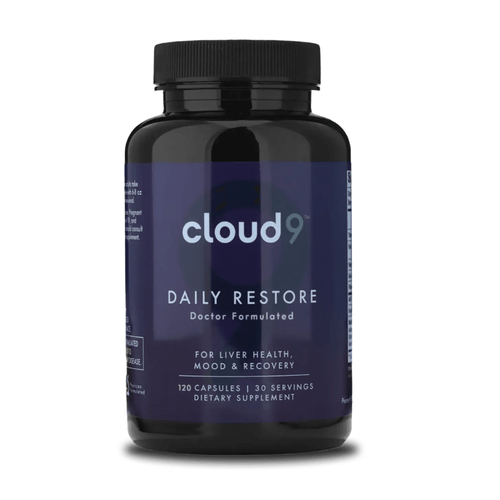
Cloud9 Daily Restore combines NAC, DHM, milk thistle, B vitamins, and ashwagandha to help support the pathways alcohol can tax most. Two capsules daily, drinking or not.
NAC | DHM | Milk Thistle | B Vitamins | Ashwagandha
See How Daily Restore WorksStep One: Track Your Current Reality Without Judgment
Before you can create a rule that works, you need to understand your actual drinking patterns. Most people significantly underestimate how much they drink when asked to recall their consumption. Your brain isn't lying to you, it's just not great at tracking this kind of detail retroactively.
What to Track for Two Weeks
Commit to honest tracking for at least 14 days before setting any new limits. Use your phone's notes app, a dedicated tracking app, or a simple notebook. The method matters less than the consistency and honesty.
- Number of drinks consumed each day (be specific about pour sizes, especially at home)
- Time of day you start drinking and when you stop
- Location and social context (alone, with friends, at a restaurant, at home)
- Emotional state before drinking (stressed, celebrating, bored, anxious, happy)
- What triggered the decision to have that first drink
- How you felt the next morning (energy level, sleep quality, productivity)
Look for Your Personal Patterns
After two weeks of tracking, review your data for patterns. You're likely to find that your drinking isn't random but follows predictable triggers and situations. Maybe you always have three drinks instead of two when dining out with certain friends. Perhaps work stress on Tuesdays consistently leads to wine on Tuesday nights.
These patterns are gold. They tell you where your rule needs the most structure and where you might need alternative coping strategies. A person who drinks from boredom needs a different rule structure than someone who drinks primarily in social situations.
Step Two: Define Your "Why" in Concrete Terms
Vague motivations produce vague results. "I want to drink less" or "I should be healthier" won't sustain you when everyone at the party is on their third round. Your motivation needs to be specific, personal, and emotionally resonant.
Connect Your Rule to Real-Life Impact
Think about the tangible ways your current drinking affects your life. Research shows that behavior change is most successful when linked to concrete values rather than abstract health concepts. Your "why" might connect to sleep quality affecting your work performance, being fully present for your kids' morning routines, training for a specific athletic goal, or maintaining energy for creative projects.
The people who stick to their drinking rules long-term aren't more disciplined. They've simply connected their limits to something they value more than the temporary pleasure of another drink.
Write Your Motivation Statement
Create a one or two sentence statement that captures your specific motivation. Make it personal and results-focused. Instead of "I want to be healthier," try "I want to wake up with enough energy to run before work three times a week." Instead of "I drink too much," try "I want to remember conversations with my partner without that fuzzy wine-brain feeling."
Keep this statement visible. Put it in your phone, write it on a card in your wallet, or make it your lock screen. You'll need to see it when you're making in-the-moment decisions about whether to have another drink.
Step Three: Build Your Rule With Strategic Flexibility
Now comes the actual rule creation. Based on your tracking data and your concrete motivation, you'll build a framework that's specific enough to guide behavior but flexible enough to survive real life.
Choose Your Rule Structure Type
Different rule structures work for different patterns and personalities. Here are the most effective frameworks, based on common drinking patterns:
| Rule Type | Best For | Example |
|---|---|---|
| Frequency Limit | People who drink small amounts but too often | Maximum 3 drinking days per week, never consecutive |
| Quantity Limit | Those who drink regularly but need portion control | Maximum 2 standard drinks per occasion, 7 per week |
| Context-Based | Social drinkers who rarely drink alone | Only drink at restaurants or social events, not at home |
| Time-Based | People whose drinking interferes with morning routines | No drinking after 8pm or on nights before early commitments |
| Hybrid | Complex patterns needing multiple boundaries | Max 3 days/week, 2 drinks per day, none after 9pm |
Add Your Flexibility Clause
This is where most people get it wrong. They create a rigid rule, then feel like failures when life happens. Instead, build flexibility directly into your framework from the start.
Your flexibility clause might allow for planned exceptions (weddings, vacations, milestone celebrations) or emergency releases (unexpectedly stressful days). The key is defining these exceptions in advance rather than making them up in the moment. For example: "I can have a third drink at planned celebrations I've marked on my calendar, maximum once per month."
Create Your Implementation Intentions
Studies on behavior change show that "implementation intentions" dramatically increase success rates. These are if-then statements that plan your response to specific triggers. Based on your tracking data, create three to five implementation intentions for your highest-risk situations.
- If I'm at a dinner party and offered a third drink, then I'll switch to sparkling water with lime
- If I feel the urge to drink on a non-drinking day, then I'll go for a 15-minute walk first
- If someone pressures me to drink more, then I'll say "I'm good with this one, thanks"
- If I'm stressed on a Tuesday evening, then I'll do my workout class instead of opening wine
- If I wake up regretting last night's drinking, then I'll review my motivation statement and adjust if needed
Step Four: Set Up Your Support System and Accountability
Even the best-designed rule needs external support. Research consistently shows that people who share their goals with others and create accountability structures are significantly more likely to maintain behavior changes long-term.
Choose Your Accountability Method
Accountability doesn't have to mean announcing your drinking rule to everyone you know. It means creating a system that helps you notice when you're drifting from your commitment and provides gentle correction. Choose the level that matches your personality and situation.
- Private tracking: Use an app or journal to record adherence, reviewing weekly
- Accountability partner: Share your rule with one trusted person who checks in weekly
- Public commitment: Tell close friends about your new limits so they can support your choices
- Professional support: Work with a counselor or coach for structured guidance
- Community connection: Join a mindful drinking group or online community with similar goals
Plan Your Monthly Review Process
Your drinking rule isn't set in stone. It's a working document that should evolve as you learn what works and what doesn't. Schedule a monthly 15-minute review where you honestly assess your adherence, challenges, and whether the rule still serves your goals.
During this review, ask yourself specific questions: Did I stick to my rule this month? If not, what situations triggered the exceptions? Do I need to adjust my rule or add new implementation intentions? Is my motivation still resonant, or do I need to reconnect with my "why"? Has my life changed in ways that require rule modifications?
This regular review process prevents the all-or-nothing thinking that kills most drinking rules. Instead of abandoning your entire framework after a tough week, you adjust and continue. Progress isn't perfection, it's consistent forward movement with room for course correction.
How Daily Restore Supports Your Health
Understanding what your body needs is one thing. Getting consistent daily support is another. Daily Restore was designed to address the key pathways alcohol can stress most, in one simple daily formula.
NAC (N-Acetyl Cysteine)
Supports glutathione production and antioxidant defenses
DHM (Dihydromyricetin)
Supports alcohol metabolism
Milk Thistle (Silymarin)
Supports healthy liver function
B Vitamins
Help replenish nutrients involved in energy and metabolism
Ashwagandha
Supports stress resilience and healthy cortisol balance
Daily Restore is not a detox or a cure. It is a daily support formula designed for people who drink socially and want to give their body consistent, evidence-informed support.
Frequently Asked Questions
What if I break my drinking rule? Does that mean I've failed?
Not at all. Slip-ups are a normal part of behavior change, not a sign of failure. What matters most is how you respond: treat it as useful information about what triggered the exception, adjust your rule if needed, and simply restart the next day without self-judgment.
How long does it take for a personal drinking rule to become automatic?
Research suggests habit formation typically takes anywhere from 18 to 254 days, with an average around 66 days. The key is consistency rather than perfection. Most people notice their drinking rule starts feeling more natural within the first month, though full automation may take longer depending on your previous patterns.
Can I have different drinking rules for different situations?
While you can create context-specific guidelines, having too many variations can make your rule harder to remember and follow. Start with one clear, overarching rule that applies to most situations, then add one or two specific exceptions if absolutely necessary, like special occasions that happen infrequently.
Should I tell other people about my drinking rule?
Sharing your rule with supportive people can increase accountability and make social situations easier to navigate. You don't need to explain all the details, a simple "I'm keeping it to two drinks tonight" or "I'm taking a break from drinking on weeknights" is often enough to reduce social pressure.
How do I know if my drinking rule is working?
Track both behavioral and wellbeing metrics. Are you following your rule most of the time? Do you feel more in control? Notice improvements in sleep quality, energy levels, mood, or productivity. If you're consistently sticking to your rule and feeling better overall, it's working.
The Bottom Line
Creating a personal drinking rule that actually sticks comes down to making it specific, meaningful, and realistic for your lifestyle. The most effective rules are simple enough to remember under pressure, flexible enough to accommodate real life, and connected to values that matter deeply to you. Rather than focusing on deprivation, frame your rule around what you're gaining: better sleep, clearer thinking, improved energy, or stronger relationships.
Consistency matters more than perfection. Building sustainable habits takes time, practice, and self-compassion when things don't go according to plan. Track your progress, celebrate small wins, and adjust your approach based on what you learn about your patterns and triggers. The goal isn't to follow an arbitrary set of restrictions, it's to develop a relationship with alcohol that supports your overall wellbeing.
Supporting your body's natural recovery processes can make sticking to your rule easier. Daily Restore is designed to work alongside your intentions by providing targeted nutritional support for your liver, brain, and cellular health. With ingredients like milk thistle, NAC, and B vitamins, it helps your body handle the demands of modern life while you work on building healthier patterns.
Remember, creating a drinking rule is about taking control of your choices rather than letting habits run on autopilot. Start with one clear guideline, build your support systems, and give yourself credit for every day you honor the commitment you've made to yourself. Small, consistent changes add up to meaningful transformation over time.
Build Your Daily Support Routine
Build Your Daily Support Routine
If drinking is part of your lifestyle, your support routine should not be random. Daily Restore was designed to help social drinkers support liver health, antioxidant defenses, alcohol metabolism, nutrient replenishment, and daily recovery in one simple routine.
NAC
DHM
Milk Thistle
B Vitamins
Ashwagandha