

You're not trying to quit drinking entirely. You just want to be that person who genuinely enjoys one glass of wine at dinner and feels done. The person who doesn't think about the second drink, or the third.
If you've ever envied those seemingly effortless one-drink people, here's the truth: they're not relying on willpower alone. They've developed a different relationship with alcohol, one that's built on mindset shifts rather than restriction. And the good news? You can learn it too.
This guide breaks down the psychology of moderate drinking and gives you practical strategies to retrain your brain. Whether you're looking to improve your health, sleep better, or simply feel more in control, becoming a one-drink person is less about deprivation and more about recalibration.
Quick Take
- Becoming a one-drink person isn't about willpower, it's about changing your mental association with alcohol
- Research suggests that the anticipation of alcohol often provides more pleasure than the actual drinking experience
- Strategic timing, drink choice, and environmental cues can significantly influence how much you consume
- Building new rituals and rewards helps replace the psychological function alcohol serves in your life
- Most people report better sleep, clearer thinking, and improved mood when they reduce to one drink or less
Why the First Drink Feels Different Than the Rest
There's actual neuroscience behind why that first sip feels so satisfying. Research suggests that dopamine, the brain's reward chemical, spikes most dramatically in anticipation of and during the first drink. By the second or third glass, you're chasing a neurological high that's already peaked.
This explains why many heavy drinkers report that subsequent drinks don't actually feel better. They're operating on autopilot, following a habit loop rather than experiencing genuine pleasure. Understanding this can be powerful: if most of the enjoyment happens early, why not stop there?
The one-drink sweet spot also preserves your ability to feel good the next day. Studies show that even moderate drinking can fragment sleep and reduce REM cycles, but limiting intake to one drink typically allows your body to metabolize the alcohol before deep sleep begins.
Daily Support for Social Drinkers
Your liver works hard every day. Give it consistent support.
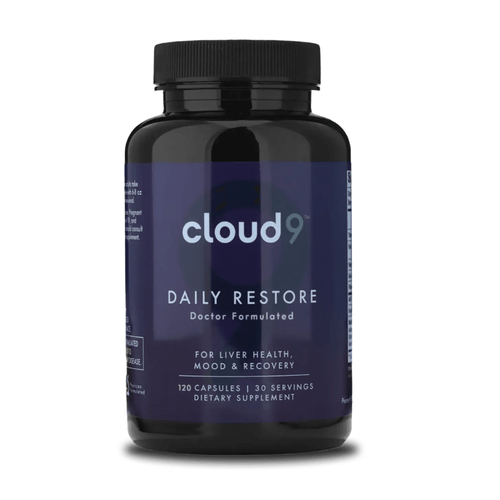
Cloud9 Daily Restore combines NAC, DHM, milk thistle, B vitamins, and ashwagandha to help support the pathways alcohol can tax most. Two capsules daily, drinking or not.
NAC | DHM | Milk Thistle | B Vitamins | Ashwagandha
See How Daily Restore WorksThe Mindset Shifts That Make One Drink Enough
Reframe What You're Gaining, Not Losing
The biggest mental trap is viewing moderation as deprivation. Instead, focus on what you gain by stopping at one: better sleep, sharper mornings, genuine relaxation without the anxiety rebound. This isn't about restriction, it's about optimization.
Try this perspective shift: you're not missing out on drinks two and three. You're protecting the quality of your sleep, your next morning, and your overall well-being. When you reframe it this way, saying no to another drink becomes an act of self-care rather than self-denial.
Question the Autopilot
Most multi-drink sessions happen without conscious decision-making. You finish one glass and automatically pour another, driven by habit rather than desire. Breaking this pattern requires inserting a pause between drinks.
Before reaching for a refill, ask yourself: "Do I actually want this, or am I just following the script?" This simple question can interrupt the autopilot and give your conscious mind a chance to weigh in. You might be surprised how often the honest answer is "not really."
Embrace the Identity Shift
Stop thinking of yourself as someone who's trying to drink less. Start identifying as someone who simply prefers one drink. This subtle language shift has profound psychological effects, moving you from a state of resistance to one of alignment.
When you say "I'm a one-drink person" rather than "I'm trying to cut back," you're claiming an identity instead of fighting a battle. Research in behavior change suggests that identity-based habits stick better than goal-based ones because they become part of who you are.

Practical Strategies to Stop at One
Choose Your Drink Strategically
Not all drinks are created equal when it comes to stopping at one. Pick something you genuinely savor rather than something you gulp. A complex craft cocktail or a really good wine invites slower, more mindful consumption than a basic mixed drink.
Consider these factors when selecting your one drink:
- Choose quality over quantity: a premium option you'll sip slowly rather than a cheap version you'll rush through
- Opt for drinks that require attention, like a neat whiskey or a sophisticated cocktail, rather than easy-drinking options
- Select lower-alcohol varieties (a session beer instead of an IPA, a lighter wine) to reduce the physiological pull toward more
- Avoid drinks associated with multi-drink occasions in your personal history
Control Your Environment
Your surroundings dramatically influence how much you drink. If there's an open bottle on the counter or you're at an all-you-can-drink event, stopping at one becomes exponentially harder. Set yourself up for success by managing your environment.
At home, this might mean buying single-serving options or immediately storing the bottle after pouring. At social events, it could mean positioning yourself away from the bar or bringing your own special non-alcoholic option for drink number two.
The Timing Trick
When you have your drink matters as much as what you drink. Having your one drink with dinner, rather than before, naturally limits consumption because you're focused on food. The meal provides satisfaction and distraction, making it easier to feel complete with just one glass.
Similarly, having your drink later in the evening (but not too late) means less time for additional rounds. If you typically start drinking at 6pm and go to bed at 11pm, that's five hours of potential consumption. Start at 8pm instead, and you've shortened the window.
Building New Rituals to Replace the Second Drink
Understand What Alcohol Really Does for You
People rarely drink just for the taste. Alcohol serves psychological functions: it marks transitions, provides comfort, facilitates social connection, or offers a sense of reward. To successfully become a one-drink person, you need to identify what role those extra drinks play in your life.
The drinks you have after the first one are rarely about taste or even feeling good. They're usually about habit, social pressure, or using alcohol to meet an emotional need that could be met in healthier ways.
Once you know what function alcohol serves (stress relief, social lubrication, celebrating the end of the workday), you can intentionally create alternative rituals. These might include a special tea ceremony, a walk around the block, calling a friend, or a relaxing bath.
Create a Compelling Alternative
The key is making your replacement ritual genuinely appealing, not punitive. If your second drink typically signals "I'm done with work mode," create an equally satisfying transition ritual. This might be changing clothes, lighting a candle, or making an elaborate mocktail.
Have a specific, pleasurable non-alcoholic drink ready to transition to after your one alcoholic beverage. This could be sparkling water with fruit, a premium non-alcoholic spirit, or a fancy coffee drink. The point is to maintain the ritual of having something special in your hand without the alcohol.
Track the Benefits
Motivation fades without feedback. Keep a simple log of how you feel on one-drink nights versus multi-drink nights. Note your sleep quality, morning energy, mood, and productivity the next day. Most people find the contrast striking and motivating.
This isn't about guilt or judgment. It's about gathering data on what actually makes you feel good. When you can clearly see that one-drink nights lead to better mornings and more energy, the choice becomes easier.
Comparison: One-Drink vs. Multi-Drink Evenings
| Aspect | One Drink Evening | Multi-Drink Evening |
|---|---|---|
| Sleep Quality | Minimal disruption, normal REM cycles | Fragmented sleep, reduced REM, early waking |
| Next Morning | Clear-headed, energized, productive | Foggy, low energy, reduced motivation |
| Evening Recall | Clear memories, present conversations | Hazy details, less emotional connection |
| Mood Stability | Steady, no anxiety rebound | Potential next-day anxiety or irritability |
| Sense of Control | Empowered, intentional | Potential regret or loss of agency |
| Health Impact | Minimal to moderate, within guidelines | Increased inflammation, liver stress, caloric load |
Navigating Social Pressure and Special Occasions
Prepare Your Response
One of the biggest challenges to being a one-drink person is other people's reactions. Friends may push another round, or you might feel social pressure to keep pace. Having a prepared, confident response makes these moments easier.
Effective responses that shut down pressure without explanation:
- "I'm good with one tonight, but I'd love another sparkling water"
- "I'm pacing myself, I've got an early morning"
- "One is my sweet spot, I feel better when I stop here"
- "I'm switching to [non-alcoholic option], but keep me company"
Redefine Special Occasions
The "special occasion" exception can quickly become the rule. If every Friday is special, every dinner out is special, and every stressful day deserves a reward, you're back to regular multi-drink habits. Being a one-drink person means redefining what makes occasions truly special.
Consider reserving multi-drink occasions for genuinely rare events (a few times per year rather than per week) and making those conscious, planned choices. This preserves the celebratory aspect without normalizing excess consumption.
Find Your People
Surrounding yourself with others who support moderate drinking makes everything easier. This doesn't mean abandoning friends who drink more, but it might mean seeking out additional social circles where alcohol isn't central to every gathering.
Look for communities focused on mindful drinking, wellness, or activities that don't revolve around bars. When moderation is normalized in your social environment, it stops feeling like a solo effort and becomes simply how you and your people operate.
How Daily Restore Supports Your Health
Understanding what your body needs is one thing. Getting consistent daily support is another. Daily Restore was designed to address the key pathways alcohol can stress most, in one simple daily formula.
NAC (N-Acetyl Cysteine)
Supports glutathione production and antioxidant defenses
DHM (Dihydromyricetin)
Supports alcohol metabolism
Milk Thistle (Silymarin)
Supports healthy liver function
B Vitamins
Help replenish nutrients involved in energy and metabolism
Ashwagandha
Supports stress resilience and healthy cortisol balance
Daily Restore is not a detox or a cure. It is a daily support formula designed for people who drink socially and want to give their body consistent, evidence-informed support.
Frequently Asked Questions
How long does it take to become a one drink person?
The timeline varies for everyone, but most people notice a shift in their relationship with alcohol within 2-4 weeks of consistent practice. The key is approaching this as a gradual mindset change rather than an overnight transformation, giving yourself grace as you build new habits and rewire old patterns.
What if I have one drink and still want more?
This is completely normal, especially in the beginning. The urge to continue drinking often comes from habit rather than genuine desire. Try having a prepared non-alcoholic drink ready to sip on, step outside for fresh air, or remind yourself of your "why" for making this change.
Can supplements really help reduce alcohol cravings?
Research suggests that certain nutrients like DHM, milk thistle, and B vitamins may support healthy liver function and help your body process alcohol more efficiently. While supplements aren't a magic solution, they can be a helpful tool when combined with mindset work and intentional habit changes.
Is it okay to have more than one drink occasionally?
Becoming a one drink person isn't about perfection or rigid rules. It's about shifting your default relationship with alcohol so that having just one feels natural and satisfying most of the time. If you occasionally choose to have more, that doesn't erase your progress or mean you've failed.
What's the difference between being a one drink person and quitting alcohol entirely?
Being a one drink person means you still enjoy alcohol occasionally but in a way that feels controlled and intentional. It's ideal for people who want to maintain a healthy relationship with drinking rather than eliminate it completely. If you find moderation challenging or have concerns about your drinking patterns, speaking with a healthcare provider about your specific situation is always a good idea.
The Bottom Line
Becoming a one drink person isn't about willpower or deprivation. It's about fundamentally changing how you think about alcohol, why you drink, and what you truly want from social experiences. When you shift from "I can only have one" to "I only want one," everything changes.
The strategies we've covered, from pre-deciding your limit to savoring your drink slowly to building a supportive routine, all work together to make moderation feel natural rather than forced. This isn't a diet or a challenge with an end date. It's a sustainable approach to drinking that lets you enjoy alcohol without the negative effects of overdoing it.
Supporting your body with the right nutrients can make this transition smoother. Cloud9's Daily Restore is designed to fit seamlessly into your routine, providing DHM, milk thistle, and essential vitamins that support healthy liver function and help you feel your best. Taking it consistently, whether you're drinking that day or not, helps establish the kind of stable foundation that makes mindful drinking easier.
Remember, this is your journey. There's no perfect timeline, no single right way to approach it. Start with one strategy, build from there, and give yourself credit for every intentional choice you make. The mindset shift that turns you into a one drink person happens gradually, one conscious decision at a time.
Build Your Daily Support Routine
Build Your Daily Support Routine
If drinking is part of your lifestyle, your support routine should not be random. Daily Restore was designed to help social drinkers support liver health, antioxidant defenses, alcohol metabolism, nutrient replenishment, and daily recovery in one simple routine.
NAC
DHM
Milk Thistle
B Vitamins
Ashwagandha