

We talk about sleep optimization, gut health, stress management, and supplement stacks. We debate seed oils and screen time. But when it comes to alcohol, the conversation gets suspiciously quiet, or worse, aggressively defensive.
This isn't about judgment or absolutes. It's about filling the gap between "everything in moderation" platitudes and the actual physiological reality of what happens when we drink. If you've ever felt confused by mixed messages about alcohol, or wondered why your "healthy lifestyle" doesn't seem to include honest information about your Friday night wine habit, this one's for you.
Let's have the conversation that's long overdue.
Quick Take
- Cultural narratives around alcohol often contradict emerging research about its health impacts, creating confusion and cognitive dissonance
- No amount of alcohol is technically "good" for you, despite decades of messaging about red wine and heart health
- Social and professional pressure to drink remains one of the biggest barriers to making informed choices about alcohol consumption
- Understanding how alcohol affects sleep, recovery, mental health, and metabolism can help you make decisions aligned with your actual values
- Reducing or eliminating alcohol doesn't require hitting "rock bottom" or identifying with traditional recovery frameworks
Why the Alcohol Conversation Stays Surface-Level
We've normalized alcohol to the point where choosing not to drink requires explanation, but drinking rarely does. Research suggests this isn't accidental. The alcohol industry has spent decades funding studies, shaping public perception, and embedding drinking culture into our social fabric in ways that make questioning it feel almost rebellious.
Meanwhile, emerging research continues to challenge long-held beliefs about moderate drinking. The idea that a glass of red wine is "heart-healthy" has been largely debunked, yet it persists in popular culture. Studies show that even low levels of alcohol consumption can impact sleep architecture, hormone balance, and cellular repair processes.
The result is a strange cultural disconnect. We obsess over organic produce and filtered water, then pour a neurotoxin into our bodies multiple times a week without much thought. Not because we're careless, but because the conversation around alcohol has been carefully managed to avoid uncomfortable truths.
Daily Support for Social Drinkers
Your liver works hard every day. Give it consistent support.
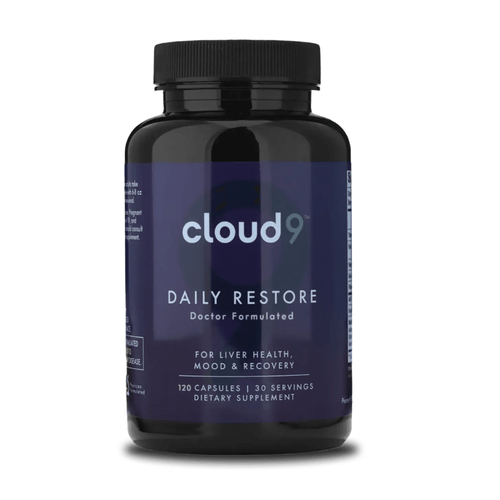
Cloud9 Daily Restore combines NAC, DHM, milk thistle, B vitamins, and ashwagandha to help support the pathways alcohol can tax most. Two capsules daily, drinking or not.
NAC | DHM | Milk Thistle | B Vitamins | Ashwagandha
See How Daily Restore WorksThe Science Nobody Wants to Talk About
What Actually Happens When You Drink
Alcohol is metabolized as a toxin because that's what it is. Your liver prioritizes processing it above almost everything else, which means other metabolic functions get put on hold. This isn't moral commentary, it's biochemistry.
Here's what research suggests happens in your body after drinking:
- Sleep disruption: Alcohol may help you fall asleep faster, but it significantly reduces REM sleep and sleep quality overall, leaving you less restored even if you sleep the same number of hours
- Hormonal impact: Even moderate drinking can affect testosterone, estrogen, and cortisol levels, influencing everything from body composition to mood regulation
- Gut health compromise: Alcohol damages the gut lining and disrupts the microbiome, potentially contributing to inflammation and digestive issues
- Recovery interference: Protein synthesis and muscle recovery are impaired, making your workout efforts less effective
- Mental health effects: While alcohol temporarily increases GABA (a calming neurotransmitter), the rebound effect can worsen anxiety and depression over time
The "Moderate Drinking" Myth
For years, we've heard that moderate drinking might actually be good for you. Recent large-scale studies suggest this was based on flawed research that didn't adequately account for lifestyle factors. Non-drinkers in early studies often included former heavy drinkers who quit due to health problems, skewing the data.
When researchers control for these factors, the supposed health benefits of moderate drinking largely disappear. What remains is a clearer picture that any amount of alcohol carries some degree of risk, even if that risk is relatively small at low consumption levels.
The Social Pressure Problem
Why Not Drinking Feels Harder Than It Should
Here's something interesting: choosing to eat plant-based or avoid gluten is generally met with accommodation and respect. Choosing not to drink often triggers defensiveness, pressure, or invasive questions. This tells us something important about how deeply embedded alcohol is in our social structures.
The pressure shows up in predictable patterns:
- Business meetings and networking events where drinking is the default
- Social gatherings where "just one" becomes a negotiation
- The assumption that celebration requires champagne and grief requires whiskey
- Dating culture where "drinks" is the standard first meeting
- The subtle implication that people who don't drink are either boring or in recovery
The fact that you need a "good reason" not to drink, but no reason at all to drink, reveals exactly how normalized alcohol has become in our culture.
The Identity Trap
We've created a false binary: you either drink normally or you have a "problem." This leaves out the vast middle ground of people who simply feel better without alcohol but don't identify with traditional recovery narratives. You don't need to hit rock bottom to decide that regular drinking doesn't align with your health goals.
Research suggests that many people who reduce or eliminate alcohol don't fit the clinical definition of alcohol use disorder. They're simply making an informed choice based on how they want to feel and perform. But the lack of cultural scripts for this middle path makes it feel isolating or strange.
Making Informed Choices Without the Shame Spiral
Honest Self-Assessment Questions
Instead of asking "do I have a problem," try asking more specific questions that actually help you understand your relationship with alcohol:
| Question | Why It Matters |
|---|---|
| How do I actually feel the day after drinking? | Beyond the obvious hangover, notice mood, energy, motivation, and mental clarity |
| Am I drinking because I want to or because it's expected? | Helps distinguish genuine enjoyment from social obligation |
| What am I using alcohol to manage? | Stress, social anxiety, boredom, and transition rituals are common drivers |
| How does my drinking align with my stated health goals? | Creates space to notice if your actions match your values |
| Can I easily take breaks from drinking when I choose to? | Tests whether your relationship with alcohol feels optional or obligatory |
What Reducing or Quitting Actually Looks Like
People who cut back or eliminate alcohol often report similar patterns of change. The first few weeks can feel socially awkward and physically surprising as your body recalibrates. Sleep might actually worsen temporarily before improving significantly.
Common experiences in the first 30 to 90 days include:
- Better sleep quality and more vivid dreams as REM cycles normalize
- Improved mood stability and reduced anxiety, especially in the second month
- Clearer thinking and better memory formation
- Changes in body composition even without changing diet or exercise
- More consistent energy throughout the day
- Initial boredom or restlessness that often leads to discovering new ways to relax and socialize
Practical Strategies That Don't Require Willpower
Relying on willpower alone tends to fail because it's a limited resource. Instead, consider these environmental and cognitive strategies:
Change your environment: Keep less alcohol at home, choose non-drinking activities, and find one or two friends who support your choices without making it a big deal.
Reframe the narrative: Instead of "I can't drink," try "I don't drink" or "I'm taking a break to see how I feel." The language shift changes it from deprivation to choice.
Find genuine replacements: This doesn't mean just swapping in mocktails. What are you actually seeking? Relaxation, social connection, a transition ritual? Address the underlying need directly.
Experiment with timeframes: A 30-day break provides data without the pressure of forever. Many people find that the temporary experiment naturally extends because they feel significantly better.
The Conversations We Need to Normalize
Moving Beyond Personal Choice to Cultural Shift
Individual decisions matter, but they're harder to make and sustain when the entire culture pushes in the opposite direction. We need broader conversations about why alcohol is uniquely protected from the same scrutiny we apply to other substances and behaviors that affect health.
This includes questioning why alcohol is marketed as essential to celebration, sophistication, relaxation, and social bonding. It means creating space for people to opt out without explanation or judgment. It requires acknowledging that the normalization of regular drinking serves commercial interests more than individual wellbeing.
What Honest Alcohol Awareness Actually Means
Real alcohol awareness isn't about scare tactics or moral superiority. It's about having access to complete information and the freedom to make choices based on that information rather than cultural defaults or industry messaging.
It means recognizing that you can:
- Reduce or eliminate alcohol without identifying as "sober" or "in recovery" unless those frameworks serve you
- Change your relationship with drinking at any point, for any reason, without needing to justify it
- Acknowledge that alcohol affects your health and performance while still choosing to drink sometimes
- Question why we treat alcohol so differently from other substances that impact wellbeing
- Support others' choices about drinking without projecting your own relationship with alcohol onto them
How Daily Restore Supports Your Health
Understanding what your body needs is one thing. Getting consistent daily support is another. Daily Restore was designed to address the key pathways alcohol can stress most, in one simple daily formula.
NAC (N-Acetyl Cysteine)
Supports glutathione production and antioxidant defenses
DHM (Dihydromyricetin)
Supports alcohol metabolism
Milk Thistle (Silymarin)
Supports healthy liver function
B Vitamins
Help replenish nutrients involved in energy and metabolism
Ashwagandha
Supports stress resilience and healthy cortisol balance
Daily Restore is not a detox or a cure. It is a daily support formula designed for people who drink socially and want to give their body consistent, evidence-informed support.
Frequently Asked Questions
How much alcohol is considered "safe" to drink?
Current guidelines suggest that lower consumption is generally better for health, with some research indicating that even moderate drinking may carry more risks than previously thought. The "safe" amount varies by individual factors like genetics, health conditions, and medications, so what works for one person may not apply to another.
Can supplements really help support my body if I drink alcohol regularly?
While supplements cannot eliminate the effects of alcohol, certain nutrients may help support your body's natural recovery processes. Research suggests that ingredients like NAC, dihydromyricetin, and B vitamins can assist with liver function and cellular health when used consistently as part of a broader wellness routine.
What are the signs that my drinking might be affecting my health?
Common signs include disrupted sleep patterns, increased anxiety or mood changes, digestive issues, difficulty concentrating, and slower recovery after drinking. Physical symptoms like frequent headaches, skin changes, or unexplained fatigue can also indicate that alcohol is impacting your body more than you realize.
Is it better to take hangover supplements before or after drinking?
For best results, many people find that taking supportive supplements both before drinking and the following morning can help. However, daily supplementation that supports your liver and cellular health consistently, regardless of when you drink, may provide more comprehensive benefits than spot treatment alone.
How long does it take to notice improvements after reducing alcohol intake?
Many people report better sleep quality and increased energy within just a few days of cutting back. More significant changes, like improved skin clarity, mental sharpness, and liver function markers, typically become noticeable within two to four weeks of consistent reduction or abstinence.
The Bottom Line
The conversation about alcohol is changing, and it's about time. We're moving beyond outdated ideas of "everything in moderation" and starting to acknowledge the real, measurable effects that even occasional drinking can have on our bodies and minds. Being honest about alcohol doesn't mean you have to quit entirely, but it does mean making informed choices with eyes wide open.
Whether you're reconsidering your relationship with alcohol or simply looking to support your body through social drinking, small changes can make a meaningful difference. Prioritizing hydration, eating well, getting quality sleep, and giving your body consistent nutritional support are all practical steps that add up over time.
Daily Restore was designed for exactly this purpose: to provide your body with targeted nutrients that support liver function, cellular health, and natural recovery processes on a daily basis. Rather than treating symptoms after the fact, it works best as part of a consistent routine that helps your body handle the demands you place on it.
At the end of the day, taking better care of yourself isn't about perfection. It's about making thoughtful choices, being honest about what serves you, and giving your body the support it needs to feel its best. That's a conversation worth having.
Build Your Daily Support Routine
Build Your Daily Support Routine
If drinking is part of your lifestyle, your support routine should not be random. Daily Restore was designed to help social drinkers support liver health, antioxidant defenses, alcohol metabolism, nutrient replenishment, and daily recovery in one simple routine.
NAC
DHM
Milk Thistle
B Vitamins
Ashwagandha