
The Cloud9 Journal · 2 min read
Diet Mixers and Alcohol: Same Vodka, a Higher Peak
A lab study gave 16 drinkers the same vodka with regular and diet mixers. The diet version peaked about 18% higher on a breathalyzer, and they didn't feel the difference.
From Good Measure, Mike Hardenbrook's weekly letter on what the research actually says about drinking well.
A vodka with a diet mixer looks like the lighter order. In one lab study, it peaked higher. Researchers at Northern Kentucky University gave 16 social drinkers the same dose of vodka (roughly three to four drinks' worth) on separate days, once with regular soda and once with diet. With diet, average peak breath alcohol was about 18% higher (0.091 versus 0.077 on a breathalyzer), from the same amount of alcohol.

Average peak breathalyzer reading, 16 social drinkers, same dose of vodka. Northern Kentucky University, 2013.
The part that stuck with me: the drinkers didn't report feeling any more intoxicated with the diet mixer, despite that higher peak. On a reaction-time test, their scores were worst in the diet session. For scale, the US driving limit in most states is 0.08: the regular-mixer average peaked below it, the diet-mixer average above it.
Why would a mixer matter?
The calories in a regular mixer appear to slow how fast your stomach empties into the small intestine, where most alcohol is absorbed. Take them away and the alcohol arrives sooner. An earlier Australian study saw the same pattern on ultrasound: the diet version left the stomach faster, and blood alcohol peaked higher.
Fair caveats
These are small lab studies. A 2015 follow-up with 20 people also found higher breath alcohol with diet mixers at two alcohol doses. None of this tells us what plain soda water does, or makes sugary mixers the healthier choice. The dinner-table version: the same alcohol doesn't always mean the same peak.
This week's pick
Vermouth and soda, the Spanish and Italian aperitivo: 3 ounces of good sweet vermouth over ice, topped with soda and an orange slice. Cocchi Vermouth di Torino (16%) or Carpano Antica (16.5%) both work. At those strengths, a 3-ounce pour holds about 0.8 US standard drinks, and it tastes like the start of a good evening. One detail most home bars miss: vermouth is wine, so keep it in the fridge once it's open.
What to take away
A diet mixer cuts calories, not the alcohol in your glass, and in these studies it produced a higher alcohol peak without people feeling any more intoxicated. That's not a reason to switch to sugary mixers. Have food and pace yourself, whichever mixer you choose.
Whichever drink you pick, from vodka and diet soda to that vermouth and soda, I built Daily Restore for daily support, not just the morning after: one dose each morning, made for people who drink. In our 12-week clinical trial of 36 people who drink, 92% reported waking up refreshed more often. Every order is covered by our 180-day guarantee, even on empty bottles.

Already taking it? Pair it with Chill Out, our evening formula with magnesium and L-theanine. See Chill Out
Sources: the 2013 Northern Kentucky University study (Alcoholism: Clinical and Experimental Research), the 2015 follow-up (free to read), and the earlier Australian ultrasound study.
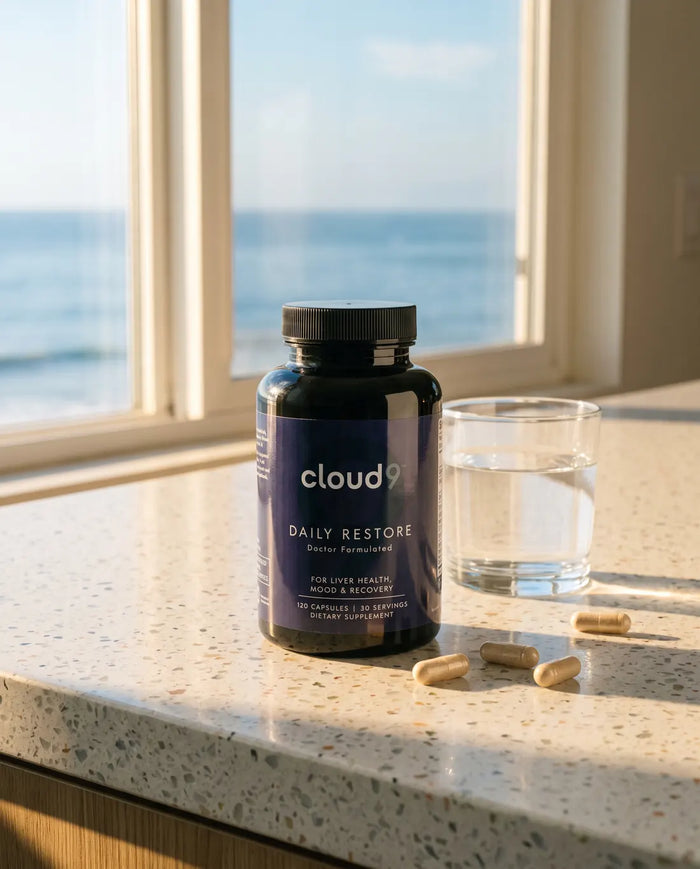
Doctor-formulated · 1 Daily Dose
Daily Restore, for people who enjoy a drink
Supports healthy liver enzymes, replaces the nutrients alcohol drains, and helps you wake up clear. Free US shipping with Subscribe & Save.
Keep reading