

You managed high school presentations just fine. College parties were awkward but survivable. Now, at 27 or 34, the thought of a work meeting or casual dinner with friends triggers a cascade of physical symptoms you never experienced before. Your heart races, your mind goes blank, and the recovery time afterward feels longer than ever.
If social anxiety feels worse now than it did in your teens, you're not imagining it. Research suggests that social anxiety often peaks during the transition years of early and mid-adulthood, when social expectations and life pressures converge in ways that can amplify existing anxieties.
Understanding why this happens, and what actually works to manage it, can help you move through social situations with more confidence and less exhaustion.
Quick Take
- Social anxiety often intensifies in your 20s and 30s due to increased performance demands, life transitions, and heightened self-awareness
- Brain development during this period can actually make you more sensitive to social evaluation and perceived judgment
- The modern comparison culture and social media amplify feelings of inadequacy that fuel social anxiety
- Evidence-based approaches like exposure therapy, cognitive restructuring, and nervous system regulation can significantly reduce symptoms
- Small, consistent practices often work better than major lifestyle overhauls when managing social anxiety
The Neuroscience Behind Why Social Anxiety Intensifies Now
Your brain doesn't finish developing until your mid-to-late 20s, particularly the prefrontal cortex, the region responsible for emotional regulation and impulse control. During this maturation process, your brain becomes more sophisticated at detecting social threats and evaluating your performance in social situations. This heightened awareness can feel like a double-edged sword.
Studies show that the amygdala, your brain's threat-detection center, remains highly reactive to social evaluation well into your 30s. When you're younger, your brain's response to social situations is less refined. As you age into adulthood, you become more attuned to subtle social cues, which means you're also more likely to perceive rejection or judgment where none exists.
Additionally, your nervous system's stress response can become more sensitized over time if social anxiety goes unaddressed. Repeated experiences of social stress can create neural pathways that make your anxiety response quicker and more intense, a phenomenon researchers call "kindling."
Daily Support for Social Drinkers
Your liver works hard every day. Give it consistent support.
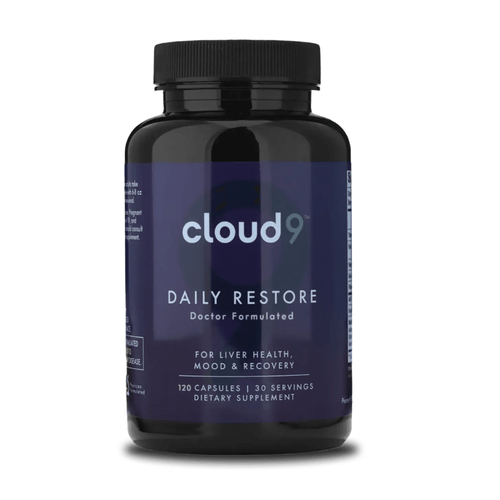
Cloud9 Daily Restore combines NAC, DHM, milk thistle, B vitamins, and ashwagandha to help support the pathways alcohol can tax most. Two capsules daily, drinking or not.
NAC | DHM | Milk Thistle | B Vitamins | Ashwagandha
See How Daily Restore WorksWhy Your 20s and 30s Create the Perfect Storm for Social Anxiety
The Performance Pressure Escalates
Unlike the relatively structured environment of school, adult life demands constant social performance across multiple contexts. You're expected to network professionally, maintain friendships, date strategically, and present a polished version of yourself in countless situations. Each context comes with its own unwritten rules and potential for perceived failure.
Career advancement often hinges on your ability to advocate for yourself, present ideas confidently, and build professional relationships. These high-stakes social interactions carry real consequences for your financial security and professional identity, raising the emotional stakes considerably.
Life Transitions Multiply Rapidly
Your 20s and 30s are dense with transitions: new jobs, relocations, relationship milestones, potential parenthood, and shifting friend groups. Each transition requires you to establish yourself socially in unfamiliar territory. Research suggests that transitions are particularly challenging for those with social anxiety because they remove established safety behaviors and familiar social scripts.
The comparison trap becomes unavoidable during this period. Everyone around you seems to be hitting different milestones at different times, and social media provides a constant highlight reel that can make your own progress feel inadequate. This comparison culture can intensify the self-consciousness that fuels social anxiety.
Self-Awareness Sharpens (Sometimes Too Much)
As you mature, you develop a more complex understanding of how others might perceive you. While this social intelligence can be useful, it can also create a hypervigilant internal observer that constantly monitors your performance. You might notice yourself having thoughts like "I'm talking too much" or "That comment sounded stupid" during conversations, thoughts that didn't occur to you as frequently when you were younger.
This metacognition, or thinking about your thinking, can create a self-fulfilling cycle. The more you monitor yourself, the more awkward you feel, which generates more anxiety, which increases monitoring. Breaking this cycle requires deliberate intervention.
The Modern Factors Making Social Anxiety Worse
Digital Communication Changes Social Expectations
The rise of text-based communication has created a paradox for social anxiety. While texting and messaging can feel safer than face-to-face interaction, they've also raised expectations for constant availability and immediate responses. The ambiguity of digital communication (Was that period passive-aggressive? Why haven't they responded yet?) can fuel anxious rumination.
Video calls occupy an uncomfortable middle ground, combining the pressure of real-time interaction with the awkwardness of watching yourself on screen. Many people report that video meetings feel more draining than in-person conversations, partly because you're simultaneously performing and observing yourself perform.
Social Media Creates Impossible Standards
Research consistently links social media use with increased social anxiety, particularly in young adults. Platforms designed to showcase curated highlight reels make it difficult to remember that everyone struggles socially sometimes. The illusion that others are effortlessly confident can make your own anxiety feel like a personal failing rather than a common human experience.
The performative nature of social media also blurs the line between authentic connection and image management. When you're already anxious about how others perceive you, having a permanent, public record of your social self can amplify that anxiety significantly.
What Actually Helps: Evidence-Based Strategies That Work
Exposure Work (Done Right)
Gradual, systematic exposure to feared social situations remains one of the most effective treatments for social anxiety. The key is creating a hierarchy of situations from least to most anxiety-provoking and working through them progressively. Avoiding social situations provides temporary relief but strengthens the anxiety long-term by confirming the false belief that these situations are truly dangerous.
Effective exposure isn't about forcing yourself into overwhelming situations. It's about staying in moderately uncomfortable situations long enough for your anxiety to naturally decrease, teaching your nervous system that the feared outcome doesn't actually occur. This process, called habituation, rewires the associations your brain has created between social situations and threat.
| Exposure Level | Example Situations | Anxiety Rating (0-10) |
|---|---|---|
| Low | Making small talk with a cashier, asking a stranger for directions | 2-4 |
| Medium | Attending a casual group hangout, speaking up in a smaller meeting | 5-6 |
| High | Giving a presentation, going to a party where you know few people | 7-8 |
| Very High | Public speaking to a large audience, confronting someone about a conflict | 9-10 |
Cognitive Restructuring for Social Thoughts
Social anxiety thrives on cognitive distortions, particularly mind reading (assuming you know what others think) and catastrophizing (imagining the worst possible outcome). Learning to identify and challenge these thoughts can reduce their power. The goal isn't to replace negative thoughts with unrealistically positive ones, but to develop more balanced, evidence-based perspectives.
Common thought patterns to watch for include:
- All-or-nothing thinking: "If I stumble over my words, the entire presentation is ruined"
- Overgeneralization: "I was awkward at that party, so I'm bad at all social situations"
- Mental filtering: Focusing exclusively on the one awkward moment while ignoring twenty successful interactions
- Personalization: Assuming someone's distracted behavior is about you rather than their own stress or fatigue
The paradox of social anxiety is that the more you focus on managing how others perceive you, the less present and authentic you become, which actually makes genuine connection harder. Learning to shift attention outward, toward curiosity about others rather than evaluation of yourself, can break this cycle.
Nervous System Regulation Techniques
Social anxiety isn't just a mental experience; it's deeply physical. Learning to regulate your nervous system can reduce the intensity of physical symptoms and help you stay present during social interactions. These techniques work best when practiced regularly, not just in high-anxiety moments.
Effective regulation strategies include:
- Box breathing (4 counts in, 4 hold, 4 out, 4 hold) to activate your parasympathetic nervous system
- Progressive muscle relaxation to release tension that builds before and during social situations
- Bilateral stimulation like walking or tapping to help process anxious thoughts and reduce their emotional charge
- Cold water exposure (splashing your face, holding ice) to interrupt acute anxiety spirals
- Humming or singing, which stimulates the vagus nerve and can create a calming effect
Building Genuine Social Skills (Not Performance Skills)
Many people with social anxiety develop impressive performance skills, like the ability to seem engaged while internally spiraling. What often helps more is developing authentic connection skills: active listening, asking follow-up questions, sharing vulnerably, and tolerating conversational imperfection. These skills reduce the performance pressure because they shift focus from "how am I doing?" to "what's this person actually saying?"
Practice treating conversations as learning opportunities rather than tests. When you're genuinely curious about someone's perspective or experience, your self-consciousness naturally decreases because your attention is directed outward. This doesn't eliminate anxiety immediately, but it provides an alternative focus that can make interactions more manageable and meaningful.
Strategic Lifestyle Factors That Support Anxiety Management
While lifestyle changes alone rarely resolve social anxiety, certain factors can significantly impact your baseline anxiety level and resilience. Sleep deprivation, for instance, amplifies threat perception and reduces your capacity to regulate emotions effectively. Similarly, chronic stress from other life areas can lower your threshold for social anxiety triggers.
Consider these supporting factors:
- Consistent sleep schedule to support emotional regulation and reduce overall anxiety sensitivity
- Regular movement that suits your preferences, which can reduce baseline anxiety and improve stress resilience
- Limiting caffeine intake, particularly before social situations, as it can amplify physical anxiety symptoms
- Reducing social media scrolling, especially comparison-focused platforms, in the hours before social events
- Building in recovery time after demanding social situations rather than back-to-back scheduling
When Professional Support Makes the Difference
Therapy Approaches That Work for Social Anxiety
Cognitive Behavioral Therapy (CBT) specifically designed for social anxiety has strong research support and typically involves both cognitive work and gradual exposure. Many people see significant improvement within 12-16 sessions of focused treatment. Acceptance and Commitment Therapy (ACT) offers another effective approach, emphasizing psychological flexibility and values-based action rather than symptom elimination.
Group therapy for social anxiety might sound counterintuitive, but research suggests it can be particularly effective. Practicing social skills in a supportive environment with others who share similar struggles provides both exposure and normalization. You learn that awkward moments don't lead to rejection and that others experience similar internal experiences.
Considering Medication
For some people, medication can be a helpful component of treatment, particularly when anxiety is severe enough to prevent engagement in exposure work or daily functioning. SSRIs (selective serotonin reuptake inhibitors) are commonly prescribed for social anxiety and can reduce overall anxiety levels, making it easier to practice new skills and engage in therapeutic work.
Medication works best as part of a comprehensive approach rather than a standalone solution. It can lower the baseline anxiety that makes everything feel overwhelming, creating space for you to build skills and challenge avoidance patterns. The decision to try medication is individual and worth discussing with a psychiatrist or prescribing therapist who specializes in anxiety disorders.
How Daily Restore Supports Your Health
Understanding what your body needs is one thing. Getting consistent daily support is another. Daily Restore was designed to address the key pathways alcohol can stress most, in one simple daily formula.
NAC (N-Acetyl Cysteine)
Supports glutathione production and antioxidant defenses
DHM (Dihydromyricetin)
Supports alcohol metabolism
Milk Thistle (Silymarin)
Supports healthy liver function
B Vitamins
Help replenish nutrients involved in energy and metabolism
Ashwagandha
Supports stress resilience and healthy cortisol balance
Daily Restore is not a detox or a cure. It is a daily support formula designed for people who drink socially and want to give their body consistent, evidence-informed support.
Frequently Asked Questions
Why does social anxiety seem to come out of nowhere in your late 20s?
Social anxiety often intensifies during this period because of increased life pressures, such as career transitions, relationship expectations, and social comparison. Your brain is also experiencing the final stages of prefrontal cortex development, which can temporarily increase self-consciousness and worry about how others perceive you.
Can social anxiety get better on its own, or do I need professional help?
While some people experience improvement over time with lifestyle changes and self-help strategies, persistent social anxiety often benefits from professional support. Therapy, particularly cognitive behavioral therapy (CBT), has strong research backing for social anxiety. Many people find that combining professional guidance with daily wellness practices provides the most comprehensive support.
How long does it typically take to see improvement in social anxiety symptoms?
The timeline varies significantly from person to person, but research suggests that with consistent effort, many people notice gradual improvements within 8 to 12 weeks of implementing new strategies. Progress isn't always linear, and small setbacks are normal. Building a sustainable daily routine that includes stress management, proper sleep, and anxiety support can help create steady forward momentum.
Is it normal to feel more anxious in social situations after the pandemic?
Absolutely. Extended periods of isolation and reduced social interaction can make previously comfortable situations feel overwhelming. Your nervous system essentially got out of practice with social engagement, and it takes time to rebuild that comfort level. Be patient with yourself as you gradually re-engage with social settings.
What's the difference between being introverted and having social anxiety?
Introversion is a personality trait where you recharge through alone time and may prefer smaller gatherings, but you don't necessarily fear social situations. Social anxiety involves excessive worry about judgment or embarrassment that interferes with your life, even in situations you might want to enjoy. It's entirely possible to be an extrovert with social anxiety or an introvert without it.
The Bottom Line
Social anxiety that intensifies in your 20s and 30s isn't a sign of weakness or personal failure. It's a natural response to increased life pressures, biological changes, and the heightened self-awareness that comes with this stage of life. Understanding why it happens can help you approach it with more self-compassion and clarity about what might actually help.
The most effective approach typically combines multiple strategies: gradual exposure to social situations, cognitive techniques to challenge anxious thoughts, lifestyle habits that support your nervous system, and when needed, professional guidance. Progress may be gradual, but small consistent steps can lead to meaningful improvement over time.
Daily Restore offers a gentle way to support your body's stress response system as part of a broader wellness routine. With research-backed ingredients like ashwagandha, L-theanine, and magnesium glycinate, it's designed to help your nervous system find more balance throughout the day. While it's not a cure for social anxiety, many people find it helps take the edge off daily stress and supports a calmer baseline.
Remember that building confidence in social situations is a practice, not a destination. With patience, the right support, and consistent daily habits, you can create real shifts in how you experience and navigate the social world around you.
Build Your Daily Support Routine
Build Your Daily Support Routine
If drinking is part of your lifestyle, your support routine should not be random. Daily Restore was designed to help social drinkers support liver health, antioxidant defenses, alcohol metabolism, nutrient replenishment, and daily recovery in one simple routine.
NAC
DHM
Milk Thistle
B Vitamins
Ashwagandha