

You've done it again. The dinner reservation is in three hours, and suddenly your chest feels tight. Your mind floods with worst-case scenarios: awkward silences, saying something embarrassing, everyone noticing how anxious you look. So you reach for your phone and craft another excuse.
If this pattern feels familiar, you're not alone. Research suggests that social anxiety affects roughly 12% of adults at some point in their lives, and last-minute cancellations are one of the most common ways it shows up. The relief you feel after canceling is real, but it's also temporary and often followed by guilt, loneliness, or frustration with yourself.
Understanding why you cancel and learning practical strategies to interrupt the pattern can help you reclaim your social life without the constant cycle of commitment and retreat.
Quick Take
- Canceling plans provides immediate anxiety relief but reinforces the fear cycle, making future social situations feel even more threatening
- Your brain's threat detection system overestimates social danger, creating physical symptoms that feel urgent but aren't actually harmful
- The "window of tolerance" concept explains why anxiety spikes as events get closer, even when you felt fine making the plans
- Small behavioral experiments, like staying for just 30 minutes, can gradually retrain your nervous system's response to social situations
- Distinguishing between "I can't" and "I don't want to" helps you make choices based on values rather than avoidance
What's Really Happening When You Cancel
Social anxiety operates on a predictable timeline. When you first make plans, the event feels distant and manageable. Your logical brain is in charge, and you genuinely want to connect with people. But as the date approaches, your nervous system starts treating the upcoming interaction like a genuine threat.
Studies show that anticipatory anxiety, the worry about future events, often peaks right before the activity rather than during it. Your amygdala, the brain's alarm center, becomes hyperactive and starts scanning for potential social dangers: judgment, rejection, embarrassment. This triggers a cascade of physical responses including increased heart rate, muscle tension, and the urgent feeling that you need to escape.
When you cancel, your anxiety drops immediately. This instant relief is powerful, but it teaches your brain that social situations truly are dangerous and that avoidance is the solution. Over time, this pattern can narrow your comfort zone, making even previously manageable situations feel overwhelming.
Daily Support for Social Drinkers
Your liver works hard every day. Give it consistent support.
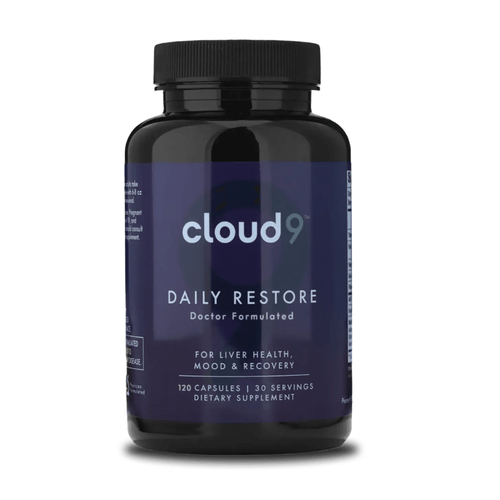
Cloud9 Daily Restore combines NAC, DHM, milk thistle, B vitamins, and ashwagandha to help support the pathways alcohol can tax most. Two capsules daily, drinking or not.
NAC | DHM | Milk Thistle | B Vitamins | Ashwagandha
See How Daily Restore WorksThe Hidden Cost of Canceling
The relief that comes from canceling feels like proof that you made the right decision. Your body relaxes, the mental chatter quiets, and you can return to your safe routine. But this short-term solution creates long-term challenges that many women don't recognize until the pattern is deeply established.
What You're Actually Reinforcing
Each cancellation strengthens a neural pathway that associates social situations with danger and avoidance with safety. Your brain doesn't distinguish between actual threats and perceived ones. When you avoid something and feel better, your nervous system files that information as confirmation that the situation was genuinely dangerous.
This creates a problematic feedback loop. The more you avoid, the more anxious you feel about future social interactions. Research on exposure therapy demonstrates that avoidance prevents your brain from learning that most social situations are actually safe and manageable.
The Relationship Impact
Frequent cancellations affect how others perceive your reliability and interest in the friendship. While true friends will understand occasional cancellations, repeated last-minute changes can signal disinterest or unreliability. People may stop inviting you, not out of anger, but because they assume you're not interested or too busy.
This creates a painful irony: the anxiety that drives you to cancel often stems from a deep desire for connection. But the canceling behavior itself can lead to social isolation, reinforcing feelings of loneliness and the belief that you're fundamentally different from others.

Why the Anxiety Feels So Physical
One reason canceling feels necessary is that social anxiety doesn't just live in your mind. The physical symptoms can be intense enough that you genuinely question whether you're well enough to go out.
Common Physical Symptoms Before Social Events
- Racing heart or heart palpitations that make you worry something is medically wrong
- Nausea or stomach upset that feels like legitimate illness
- Muscle tension, particularly in your shoulders, neck, and jaw
- Shortness of breath or feeling like you can't get enough air
- Dizziness or feeling disconnected from your body
- Fatigue that makes the idea of showering and getting ready feel impossible
- Headaches that conveniently arrive hours before you need to leave
These symptoms are real, not imagined. Your sympathetic nervous system is activating your fight-or-flight response. The problem isn't that you're making it up. The problem is that your threat detection system is miscalibrated, responding to social interaction with the same urgency it would use for actual danger.
Understanding Your Window of Tolerance
The "window of tolerance" is a concept from trauma therapy that applies perfectly to social anxiety. It refers to the zone where you can function effectively and process experiences without becoming overwhelmed. When anticipatory anxiety pushes you outside this window, your nervous system shifts into survival mode.
This explains why you can feel genuinely excited about plans on Monday but completely panicked by Friday. As the event approaches, your arousal level increases, eventually pushing you out of your window of tolerance. Once you're outside that window, rational thinking becomes difficult and your body screams for relief through cancellation.
Practical Strategies to Break the Pattern
Breaking the canceling cycle doesn't mean forcing yourself to attend every event while white-knuckling through panic. It means gradually expanding your capacity for social situations while developing tools to manage the discomfort that arises.
The 30-Minute Commitment
Instead of committing to entire evenings, make a deal with yourself to show up for just 30 minutes. This approach serves two purposes: it makes the commitment feel less overwhelming, and it often reveals that your anxiety decreases once you're actually in the situation.
Research on exposure therapy shows that anxiety typically follows a predictable curve. It rises as you anticipate and enter the situation, peaks within the first 10-20 minutes, and then naturally begins to decrease as your nervous system realizes no actual threat exists. By staying for 30 minutes, you give yourself the chance to experience this natural reduction.
The goal isn't to eliminate anxiety before social events. The goal is to prove to yourself that you can tolerate discomfort and that it won't harm you. Each time you show up despite anxiety, you're rewriting the story your nervous system tells about social situations.
Create a Pre-Event Protocol
Having a structured routine for the hours before social events can help regulate your nervous system and reduce the intensity of anticipatory anxiety. This isn't about eliminating nerves entirely but about keeping yourself within your window of tolerance.
| Timing | Strategy | Why It Helps |
|---|---|---|
| 3-4 hours before | Light physical activity (walk, yoga, stretching) | Metabolizes stress hormones and regulates nervous system |
| 2 hours before | Eat a balanced meal with protein | Stabilizes blood sugar, which affects anxiety levels |
| 1 hour before | Start getting ready earlier than needed | Reduces time pressure, a common anxiety amplifier |
| 30 minutes before | Box breathing or progressive muscle relaxation | Activates parasympathetic nervous system |
| Right before leaving | Remind yourself of your 30-minute commitment only | Makes the task feel manageable rather than overwhelming |
Distinguish Between Can't and Don't Want To
Not every cancellation is driven by anxiety. Sometimes you're genuinely exhausted, overscheduled, or simply not interested in a particular event. Learning to distinguish between anxiety-driven avoidance and legitimate preference is crucial for making values-based decisions.
Ask yourself: "If I woke up tomorrow and the anxiety about this event was completely gone, would I want to go?" If the answer is yes, that's a sign the anxiety is driving the urge to cancel. If the answer is no, you might be dealing with a scheduling issue, an incompatible social situation, or simply needing rest.
Use Graduated Exposure
You don't have to start with the most challenging social situations. Research on exposure hierarchies shows that gradually working up from easier to more difficult situations can help build confidence and expand your comfort zone without overwhelming your nervous system.
Create your own hierarchy of social situations, rating them from 1 to 10 based on how much anxiety they provoke. Start practicing your anti-canceling strategies with situations rated 3 to 5. As these become more manageable, gradually work toward more challenging scenarios.
Challenge the Post-Cancellation Story
Pay attention to what you tell yourself after canceling. Many women immediately construct a narrative that justifies the decision: "I was too tired anyway," "They probably didn't want me there," or "I would have been awkward and ruined everyone's night." These stories feel protective, but they reinforce the avoidance pattern.
Instead, try honest acknowledgment: "I canceled because my anxiety felt overwhelming. I got temporary relief, but I also missed an opportunity to connect. Next time, I can try showing up for even 30 minutes." This approach builds self-awareness without shame, which research suggests is more effective for behavior change than self-criticism.
When to Honor the Need to Cancel
Breaking the canceling pattern doesn't mean you should never change plans. There are legitimate reasons to cancel, and learning to recognize them is part of developing a healthier relationship with social commitments.
Valid Reasons to Change Plans
- You're actually ill with symptoms beyond anxiety (fever, contagious condition, severe physical pain)
- A genuine emergency or urgent responsibility has arisen
- You've recognized you're in a period of burnout and need to prioritize rest
- The event conflicts with your values or boundaries in a way you didn't recognize when you agreed
- You've overcommitted and need to make a strategic choice about where to direct limited energy
The difference between anxiety-driven canceling and thoughtful decision-making often comes down to timing and pattern. Occasional cancellations with adequate notice, based on genuine needs, are part of healthy boundary-setting. Last-minute cancellations that follow a predictable anxiety pattern and leave you feeling relieved but also guilty and isolated signal something different.
Building Cancellation Criteria
Consider establishing clear criteria for when you'll allow yourself to cancel versus when you'll commit to showing up despite discomfort. This removes the decision from the moment of peak anxiety, when your judgment is most compromised.
For example, you might decide that you'll only cancel for the valid reasons listed above, and that anxiety alone won't be sufficient. Or you might give yourself one "anxiety cancel" per month for situations rated 7 or above on your personal difficulty scale, but commit to pushing through for lower-rated events. The specific rules matter less than having them established in advance.
How Daily Restore Supports Your Health
Understanding what your body needs is one thing. Getting consistent daily support is another. Daily Restore was designed to address the key pathways alcohol can stress most, in one simple daily formula.
NAC (N-Acetyl Cysteine)
Supports glutathione production and antioxidant defenses
DHM (Dihydromyricetin)
Supports alcohol metabolism
Milk Thistle (Silymarin)
Supports healthy liver function
B Vitamins
Help replenish nutrients involved in energy and metabolism
Ashwagandha
Supports stress resilience and healthy cortisol balance
Daily Restore is not a detox or a cure. It is a daily support formula designed for people who drink socially and want to give their body consistent, evidence-informed support.
Frequently Asked Questions
Is canceling plans always a sign of social anxiety?
Not necessarily. Everyone needs downtime occasionally, and canceling plans now and then is perfectly normal. However, if you find yourself consistently backing out due to overwhelming worry about judgment, embarrassment, or physical anxiety symptoms, it may signal social anxiety that could benefit from support.
How can I tell the difference between introversion and social anxiety?
Introverts enjoy social time but need alone time to recharge, and they feel content with their choice to stay in. Social anxiety, on the other hand, involves intense fear or worry about social situations that interferes with what you actually want to do. If you're canceling plans you genuinely wanted to attend because of fear rather than preference, that points more toward anxiety.
What should I do if I've already canceled plans and feel guilty?
Start by being honest with your friend or the person you canceled on, even if it's just to say you weren't feeling up to it. Most people are more understanding than we expect. Then, use this as a learning moment: reflect on what triggered the cancellation and what you might try differently next time, whether that's breathing exercises beforehand or setting up a shorter meetup.
Can natural supplements really help with social anxiety?
Research suggests that certain natural ingredients like ashwagandha, L-theanine, and magnesium can help support the body's stress response and promote a calmer state of mind. While they're not a cure-all, many people find that quality supplements can take the edge off anxiety when combined with behavioral strategies and healthy lifestyle habits.
How long does it take to get better at following through with plans?
Progress varies for everyone, but many people notice gradual improvement within a few weeks to months of consistent practice. The key is taking small steps, celebrating small wins, and being patient with yourself. Each time you show up despite the anxiety, you're building evidence that you can handle these situations, which makes the next one a little easier.
The Bottom Line
Canceling plans at the last minute when you have social anxiety isn't about being flaky or unreliable. It's your nervous system trying to protect you from perceived threat, even when there's no real danger. Understanding this pattern is the first step toward changing it.
The strategies we've covered, from gradual exposure to cognitive reframing to physical grounding techniques, can help you build confidence and follow through more often. Progress takes time, and there will still be days when staying home is the right call. The goal isn't perfection but rather expanding your comfort zone at a pace that feels manageable.
For many people, addressing social anxiety works best with a multi-pronged approach. That's where Cloud9 Daily Restore comes in. This carefully formulated blend combines adaptogens like ashwagandha with calming amino acids and essential minerals to help support your body's natural stress response. Taking it as part of your daily routine can provide a steady foundation of calm, making it easier to implement the behavioral strategies that help you show up for the connections that matter.
Remember, you're not alone in this struggle, and small steps forward are still steps forward. With consistency, self-compassion, and the right support, you can start saying yes and actually meaning it.
Build Your Daily Support Routine
Build Your Daily Support Routine
If drinking is part of your lifestyle, your support routine should not be random. Daily Restore was designed to help social drinkers support liver health, antioxidant defenses, alcohol metabolism, nutrient replenishment, and daily recovery in one simple routine.
NAC
DHM
Milk Thistle
B Vitamins
Ashwagandha