
You've been looking forward to tonight for weeks. But now that it's three hours away, your stomach is doing backflips, your mind is racing through worst-case scenarios, and you're already planning escape routes. Sound familiar?
Social anxiety doesn't mean you're broken or weak. It means your nervous system is doing its job a little too enthusiastically. The good news: you can work with your body's natural calming mechanisms to shift from panic mode to present mode.
This pre-event routine is designed specifically for young women who want practical, fast-acting strategies that actually work when the pressure is on. No fluff, no "just relax" advice—just science-backed techniques you can use starting today.
Quick Take
- Social anxiety triggers a physical stress response that you can interrupt with targeted pre-event techniques
- The 3-hour window before an event is your sweet spot for nervous system regulation
- Physiological sigh breathing can reduce anxiety faster than traditional deep breathing exercises
- Strategic outfit and conversation prep reduces cognitive load when you're already stressed
- Post-event processing matters just as much as pre-event prep for long-term confidence building
Why Pre-Event Anxiety Hits Different for Young Women
Research suggests that women in their late teens through early thirties experience social anxiety at nearly twice the rate of men, particularly around performance and appearance-based social situations. This isn't just in your head—it's a combination of hormonal influences, socialization patterns, and the very real pressure of navigating social expectations.
Your brain treats social threats the same way it treats physical threats. When you think about walking into that party or presentation, your amygdala can't tell the difference between social rejection and actual danger. This triggers the same fight-or-flight response: racing heart, sweaty palms, tunnel vision, and that overwhelming urge to cancel.
The key is working with this response rather than against it. Studies show that trying to suppress anxiety often makes it worse, while using specific regulation techniques during the pre-event window can significantly reduce both anticipatory anxiety and in-the-moment distress.
Daily Support for Social Drinkers
Your liver works hard every day. Give it consistent support.
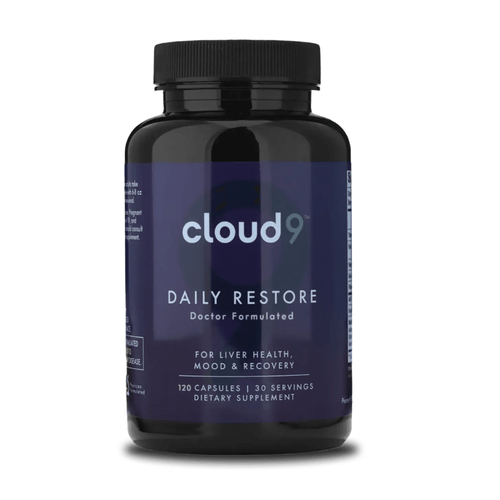
Cloud9 Daily Restore combines NAC, DHM, milk thistle, B vitamins, and ashwagandha to help support the pathways alcohol can tax most. Two capsules daily, drinking or not.
NAC | DHM | Milk Thistle | B Vitamins | Ashwagandha
See How Daily Restore WorksThe 3-Hour Pre-Event Timeline That Works
The three hours before a social event represent your golden window for nervous system regulation. Too early and the techniques won't carry through. Too late and you're already in full panic mode. This timeline is designed to progressively calm your system while building genuine confidence.
3 Hours Before: The Physical Reset
Start with movement. Not intense cardio that leaves you exhausted, but intentional physical activity that burns off stress hormones and resets your baseline. Research suggests that 20-30 minutes of moderate movement can reduce anxiety levels for up to four hours.
- Take a walk outside if possible—natural light and movement are a powerful combination
- Do a yoga flow focused on hip and shoulder opening (where we store tension)
- Dance to three of your favorite high-energy songs in your room
- Do bodyweight exercises: 10 squats, 10 push-ups, 30-second plank, repeat three times
Follow this with a shower using temperature contrast. Alternate between warm and cool water for the last two minutes. This activates your vagus nerve, which signals to your brain that you're safe enough to relax.
2 Hours Before: The Mental Rehearsal
This is where most people go wrong. They either avoid thinking about the event entirely (which increases anxiety) or catastrophize about everything that could go wrong. Instead, do structured visualization that your brain interprets as positive preparation.
Sit comfortably and close your eyes. Spend five minutes walking through the event in your mind, but from a place of curiosity rather than fear. Visualize yourself arriving, making eye contact, having one good conversation, laughing at something funny. Keep it realistic—you don't need to picture yourself as the life of the party.
The goal isn't to eliminate nervousness completely. It's to create a mental blueprint where you see yourself handling the situation, even if it's imperfectly. Your brain doesn't know the difference between a vividly imagined experience and a real one.
1 Hour Before: The Physiological Shift
This is when you deploy the most powerful breathing technique for acute anxiety: the physiological sigh. Research from Stanford has shown this pattern to be more effective than traditional meditation for rapid stress reduction.
Here's how it works: Take a deep breath in through your nose, then before exhaling, take a second quick inhale to fully expand your lungs. Then slowly exhale through your mouth. Repeat this pattern for five cycles. This double-inhale mechanism re-inflates collapsed air sacs in your lungs and removes carbon dioxide more efficiently, signaling safety to your nervous system.
Pair this with strategic outfit selection. Lay out your clothes now, not in a rushed panic. Choose something that makes you feel like yourself—not what you think you should wear, but what genuinely feels comfortable and confident.
Conversation Starters You Can Actually Use
One of the biggest anxiety triggers is the fear of awkward silence or not knowing what to say. Having a mental toolkit of genuine conversation starters reduces cognitive load when you're already managing anxiety.
The Question Framework
Forget generic small talk. People respond to questions that let them share something they care about. Prepare three questions in these categories before you go:
| Question Type | Example | Why It Works |
|---|---|---|
| Recent Experience | "What's something good that happened this week?" | Positive, specific, easy to answer |
| Opinion-Based | "Have you been watching anything good lately?" | Low pressure, reveals interests |
| Forward-Looking | "Any fun plans coming up?" | Creates enthusiasm, easy follow-up |
| Context-Specific | "How do you know [host/organizer]?" | Relevant, opens storytelling |
The Exit Strategy
Knowing you can leave reduces anxiety about being trapped. Give yourself permission to have a graceful exit plan. This isn't about actually leaving—it's about knowing you could if you needed to.
- Set a minimum time (like 45 minutes) rather than forcing yourself to stay until the end
- Have a ready phrase: "I need to head out soon, but I'm glad I got to chat with you"
- Take strategic breaks—bathroom trips, getting water, stepping outside for air
- Use the "anchor person" technique: find one friendly face and return to them between other interactions
The During-Event Grounding Techniques
Even with perfect preparation, anxiety can spike during the actual event. These in-the-moment techniques work because they interrupt the anxiety spiral and bring you back to the present.
The 5-4-3-2-1 Sensory Reset
When you feel panic rising, discretely work through this sensory checklist. It forces your brain to focus on concrete reality rather than imagined threats:
- 5 things you can see: The pattern on someone's shirt, the color of the walls, a plant in the corner
- 4 things you can touch: Your phone in your pocket, the texture of your clothing, the temperature of your drink
- 3 things you can hear: Background music, laughter across the room, someone's conversation nearby
- 2 things you can smell: Your perfume, the scent of food or drinks
- 1 thing you can taste: Your drink, gum, the lingering taste of dinner
The Confident Body Hack
Your physiology influences your psychology more than you realize. Research on embodied cognition shows that changing your physical posture can actually shift your emotional state. You don't need to fake confidence—you can build it through body positioning.
Stand or sit with your shoulders back and down, feet planted firmly on the ground. Take up space rather than making yourself small. Hold your drink at chest height rather than clutched to your stomach. Make your body open rather than crossed or hunched. These aren't just appearances—they send feedback to your brain that you're safe and capable.
The Post-Event Processing That Changes Everything
What you do after the event matters just as much as your pre-event prep. This is where most people sabotage their progress by replaying every awkward moment or convincing themselves it went worse than it did.
The Realistic Review
Within a few hours of getting home, spend ten minutes doing a balanced review. Write down or mentally note three categories of observations:
- What went better than expected: Even small wins count—you showed up, you had one good conversation, you didn't leave early
- Neutral moments you're catastrophizing: That pause in conversation, the joke that didn't land, forgetting someone's name
- One thing to adjust next time: Not as punishment, but as gentle calibration
Studies suggest that people with social anxiety overestimate how negatively others perceive them by a significant margin. That moment you're obsessing over? The other person likely doesn't even remember it.
The Evidence Collection
Your anxiety brain wants to file this event under "proof that social situations are terrible." Don't let it. Actively look for evidence that contradicts your anxiety narrative. Did someone smile at you? Did anyone seem genuinely interested in what you said? Did you survive a moment that felt hard?
Keep a simple notes file on your phone labeled "Social Wins." After each event, add one entry—no matter how small. Over time, you build a concrete record that challenges the story anxiety tells you about your social capabilities.
How Daily Restore Supports Your Health
Understanding what your body needs is one thing. Getting consistent daily support is another. Daily Restore was designed to address the key pathways alcohol can stress most, in one simple daily formula.
NAC (N-Acetyl Cysteine)
Supports glutathione production and antioxidant defenses
DHM (Dihydromyricetin)
Supports alcohol metabolism
Milk Thistle (Silymarin)
Supports healthy liver function
B Vitamins
Help replenish nutrients involved in energy and metabolism
Ashwagandha
Supports stress resilience and healthy cortisol balance
Daily Restore is not a detox or a cure. It is a daily support formula designed for people who drink socially and want to give their body consistent, evidence-informed support.
Frequently Asked Questions
How long before an event should I start my pre-event routine?
Starting your routine 30 to 60 minutes before an event typically works well for most women. This gives your nervous system time to shift from a stressed state to a calmer one without feeling rushed. If you know you tend to experience anticipatory anxiety earlier, you might benefit from starting your grounding practices a few hours ahead.
What if I still feel anxious after trying these techniques?
It's completely normal for anxiety to linger even after using calming techniques, especially during your first few attempts. These practices can help reduce the intensity of anxiety rather than eliminate it entirely. Remember that showing up despite feeling nervous is itself an act of courage, and your comfort with these tools will likely grow with consistent practice.
Can I use these techniques during the event if anxiety spikes?
Absolutely. Discreet breathing exercises like box breathing can be done anywhere without drawing attention. You can also excuse yourself briefly to practice grounding techniques in a bathroom or quiet corner. Many women find that having a mental toolkit they can access mid-event provides a sense of control that reduces anxiety on its own.
Will adaptogens make me feel drowsy or "out of it" at social events?
Quality adaptogens like ashwagandha and rhodiola are designed to support balanced energy rather than sedate you. They work by helping your body adapt to stress, which can create a calm but alert state. Most women report feeling more centered and present rather than sleepy, though everyone's response can vary slightly.
How often should I practice these techniques for them to work best?
Consistency matters more than perfection. Practicing breathing exercises and visualization regularly, even on non-event days, can help train your nervous system to respond more quickly when you need it. Research suggests that daily practice, even for just five minutes, may strengthen your ability to self-regulate during stressful moments.
The Bottom Line
Social anxiety doesn't have to control your calendar or limit your experiences. A thoughtful pre-event routine that combines breathing techniques, physical grounding, positive visualization, and adaptogenic support can help you show up more confidently to the moments that matter. The key is finding what works for your unique nervous system and building these practices into a ritual you can rely on.
While pre-event strategies offer valuable in-the-moment support, daily consistency can make an even bigger difference over time. Taking Daily Restore each morning provides your body with sustained adaptogenic support that may help buffer stress throughout your day, not just before specific events. This foundation of calm can make those pre-event routines even more effective when you need them.
Remember that managing social anxiety is a journey, not a destination. Some events will feel easier than others, and that's perfectly normal. What matters is that you're building a toolkit of evidence-based strategies that empower you to engage with the world on your own terms. With practice, patience, and the right support, you can develop a sense of calm confidence that extends far beyond any single social situation.
Your social life deserves to feel like a source of connection and joy, not stress. Start small, be kind to yourself, and trust that each time you practice these techniques, you're strengthening your ability to navigate anxiety with greater ease.
Build Your Daily Support Routine
Build Your Daily Support Routine
If drinking is part of your lifestyle, your support routine should not be random. Daily Restore was designed to help social drinkers support liver health, antioxidant defenses, alcohol metabolism, nutrient replenishment, and daily recovery in one simple routine.
NAC
DHM
Milk Thistle
B Vitamins
Ashwagandha