
You've got 30 minutes before you need to leave for that dinner party, work event, or friend's gathering. Your outfit is laid out, but your mind is racing with conversation topics, social anxiety, and that familiar tension in your shoulders. Sound familiar?
The difference between showing up frazzled and arriving genuinely relaxed often comes down to those final minutes before you walk out the door. What most women don't realize is that a focused 10-minute routine can shift your entire nervous system from stress mode to social-ready.
This isn't about perfection or adding more pressure to your pre-event prep. It's about simple, science-backed relaxation tips that work with your body's natural calming mechanisms, so you can show up feeling like yourself instead of fighting anxiety the whole night.
Quick Take
- A structured 10-minute pre-event routine can significantly reduce social anxiety and physical tension
- Combining breathwork, sensory grounding, and intentional movement activates your parasympathetic nervous system
- The routine works best when started 30-45 minutes before departure, not in the final rushed moments
- Consistency matters more than perfection, even 5 minutes of these techniques can help shift your state
- Natural support like CBD can enhance relaxation when paired with these behavioral strategies
Why Your Pre-Event State Matters More Than You Think
Research suggests that the emotional and physical state you're in when you arrive at a social event significantly influences your entire experience. When your nervous system is already activated from rushing or anxiety, it's much harder to relax and connect authentically once you're there.
Studies on social anxiety show that anticipatory stress, the worry leading up to an event, often creates more distress than the event itself. This pre-event activation triggers your sympathetic nervous system, raising cortisol levels and creating that familiar feeling of being "on edge." Your body interprets the upcoming social situation as a threat, even when logically you know it's safe.
The good news is that intentional relaxation practices can counteract this response. By dedicating just 10 minutes to calming techniques before you leave, you're essentially telling your nervous system that you're safe, which allows your parasympathetic system (your body's natural relaxation response) to take over.
Daily Support for Social Drinkers
Your liver works hard every day. Give it consistent support.
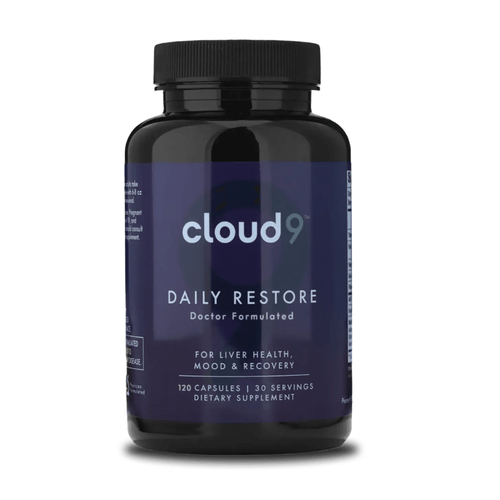
Cloud9 Daily Restore combines NAC, DHM, milk thistle, B vitamins, and ashwagandha to help support the pathways alcohol can tax most. Four capsules daily, drinking or not.
NAC | DHM | Milk Thistle | B Vitamins | Ashwagandha
See How Daily Restore WorksThe 10-Minute Evening Routine: Your Step-by-Step Guide
This routine is designed to be completed after you're dressed and ready, giving you a buffer between preparation stress and social engagement. Set a timer for 10 minutes and move through each phase without rushing.
Minutes 1-3: Regulated Breathing to Reset Your Nervous System
Start with breathwork because it's the fastest way to signal safety to your brain. Slow, controlled breathing activates your vagus nerve, which directly influences your body's relaxation response.
Try the 4-7-8 breathing technique: Breathe in through your nose for 4 counts, hold for 7 counts, and exhale slowly through your mouth for 8 counts. Repeat this cycle 4-5 times. The extended exhale is key, as it tells your body to shift from fight-or-flight into rest-and-digest mode.
- Sit comfortably in a quiet space where you won't be interrupted
- Place one hand on your chest and one on your belly to feel the breath
- Focus on making your belly rise more than your chest for deeper diaphragmatic breathing
- If 4-7-8 feels too long, try a simpler 4-4-6 pattern instead
- Keep your jaw relaxed and shoulders dropped throughout
Minutes 4-6: Sensory Grounding and Body Awareness
Anxiety lives in the future, in the "what ifs" of social scenarios you haven't experienced yet. Sensory grounding brings you firmly into the present moment, where you're actually safe and capable.
Use the 5-4-3-2-1 technique, but modify it for relaxation rather than crisis management. Name 5 things you can see (focus on calming objects: a plant, soft lighting, your favorite shoes). Acknowledge 4 things you can touch (your soft sweater, smooth countertop, cool glass of water). Notice 3 sounds (distant traffic, your breath, music). Identify 2 scents (your perfume, fresh air). Recognize 1 taste (mint from toothpaste, a sip of tea).
Minutes 7-9: Gentle Movement and Tension Release
Physical tension accumulates in specific areas when we're anxious: jaw, neck, shoulders, and hands. Deliberately releasing this tension can create an immediate sense of relief.
Start with your jaw. Open your mouth wide, then close it and relax completely. Repeat three times. Roll your shoulders backward five times, then forward five times. Shake out your hands vigorously for 10 seconds. Do gentle neck rolls, moving slowly and breathing deeply.
| Body Area | Quick Release Technique | Time Needed |
|---|---|---|
| Jaw & Face | Open mouth wide, massage temples, release tongue from roof of mouth | 30 seconds |
| Neck & Shoulders | Slow head rolls, shoulder shrugs, gentle side-to-side stretches | 1 minute |
| Hands & Arms | Shake out vigorously, make fists and release, wrist circles | 30 seconds |
| Full Body | Progressive muscle relaxation: tense each area for 3 seconds, then release | 1 minute |
Minute 10: Positive Anchoring and Intention Setting
The final minute is about mental framing. Instead of reviewing everything that could go wrong, set a simple, positive intention for the evening that has nothing to do with others' perceptions of you.
Try intentions like: "I'm here to listen and learn something new," or "I'll find one genuine connection tonight," or simply "I'm going to enjoy this meal and be present." Write it down on your phone or say it out loud three times. This gives your brain a concrete, manageable focus instead of vague social performance anxiety.
The goal isn't to eliminate all nervousness. Some activation can actually enhance your social performance. The goal is to move from overwhelming anxiety to manageable, even energizing, alertness.
Enhancing Your Routine: When to Add Extra Support
While this 10-minute routine is powerful on its own, some evenings require additional support. If you're dealing with particularly high-stakes events, chronic social anxiety, or notice that behavioral techniques alone aren't quite enough, consider layering in natural relaxation support.
Timing Your Support Strategies
CBD products, for example, typically take 30-60 minutes to reach full effect when taken orally. This means if you want support during your event, you'd take it before starting your 10-minute routine, not after. This allows the calming effects to align with your arrival time.
The combination of behavioral relaxation techniques and natural support can work synergistically. Research suggests that when you're already in a calmer physiological state (from breathwork and movement), your body may be more receptive to the benefits of compounds that support your endocannabinoid system.
- Take any natural supplements 45-60 minutes before you need to leave
- Avoid caffeine in the 3-4 hours before evening events, as it can counteract relaxation efforts
- Stay hydrated throughout the day, as dehydration can increase anxiety symptoms
- Eat a balanced snack before your routine to stabilize blood sugar and energy
- Consider keeping a small essential oil roller in your bag for subtle grounding during the event
Building Long-Term Resilience
While this routine works immediately, practicing these techniques regularly, not just before events, builds lasting resilience to social stress. Studies on anxiety management show that consistent relaxation practice actually changes how your brain responds to stressful situations over time.
Try using this routine at least once a week, even when you don't have an event scheduled. This trains your nervous system to access calm states more easily. You're essentially creating a well-worn neural pathway to relaxation that becomes faster and more automatic with practice.
Customizing the Routine for Different Event Types
Not all social events create the same type of stress. A work networking event requires different preparation than an intimate dinner party with close friends. Here's how to adapt your 10-minute routine based on your specific situation.
For High-Stakes Professional Events
When the pressure is on and you need to be "on" professionally, emphasize the grounding and intention-setting portions. Spend extra time on the sensory grounding exercise to stay present rather than spiraling into performance anxiety. Your intention might be task-focused: "I'll ask three thoughtful questions and really listen to the answers."
Add a brief visualization during your breathing phase. Imagine yourself moving through the event with confidence, having pleasant conversations, and leaving feeling satisfied. Research on mental rehearsal suggests this can improve actual performance and reduce anticipatory anxiety.
For Large Group Gatherings
Big parties or events with many unfamiliar faces can feel overwhelming. For these situations, extend the physical movement portion and add some energizing elements. Instead of purely calming movements, include a few dynamic stretches or even jumping jacks to channel nervous energy productively.
Set an intention that gives you permission to manage your energy: "I can take breaks when I need them," or "It's okay to leave after an hour if I'm drained." Having an exit strategy reduces the trapped feeling that amplifies social anxiety.
| Event Type | Primary Challenge | Routine Emphasis |
|---|---|---|
| Work Networking | Performance pressure, professional image concerns | Extra grounding and visualization, confident posture work |
| Large Parties | Overstimulation, social exhaustion | Energy management intention, permission to take breaks |
| Intimate Dinners | Sustained conversation, vulnerability | Deep breathing for presence, self-compassion framing |
| First Dates | Judgment fears, authentic self-presentation | Tension release in jaw and shoulders, curiosity-based intention |
| Family Gatherings | Old patterns, emotional triggers | Boundary-setting intention, extra breathwork for regulation |
For Intimate Gatherings with Close Friends
Even comfortable social situations can create anxiety, especially if you're dealing with personal stress or feeling emotionally raw. For these events, focus your routine on self-compassion and presence rather than performance.
During your intention-setting, acknowledge that it's okay to be yourself, including any vulnerable or less-than-perfect parts. Close friends are the people who can handle your authenticity. Your intention might be: "I'll be honest about how I'm really doing," or "I'll let myself receive support tonight."
What to Do When You Only Have 5 Minutes
Life happens, and sometimes you're running late or forgot to build in prep time. Here's the abbreviated version that still delivers meaningful relaxation benefits in half the time.
Spend 2 minutes on breath regulation only. Do the 4-7-8 breathing technique for 6-8 full cycles. This is your non-negotiable foundation because breathing has the most immediate physiological impact on your stress response.
Use 2 minutes for rapid physical release. Focus exclusively on the areas where you personally hold the most tension. For most women, this is the jaw, neck, and shoulders. Do exaggerated movements: open your mouth as wide as possible, roll your shoulders dramatically, shake out your entire body.
Spend the final minute on your intention only. Skip the elaborate sensory grounding and go straight to setting one clear, self-focused intention for the evening. Say it out loud three times while looking at yourself in the mirror. This anchors the intention more strongly than just thinking it.
- Keep the breathing technique the same even when rushed, quality matters more than quantity
- Don't skip the physical release, even 30 seconds of movement helps discharge nervous energy
- Make your intention even simpler when time is short: "I've got this" counts
- Consider keeping a pre-made "calm kit" by the door: essential oil, mints, a reminder card with your favorite intention
- Remember that doing an imperfect routine is infinitely better than skipping it entirely
How Daily Restore Supports Your Health
Understanding what your body needs is one thing. Getting consistent daily support is another. Daily Restore was designed to address the key pathways alcohol can stress most, in one simple daily formula.
NAC (N-Acetyl Cysteine)
Supports glutathione production and antioxidant defenses
DHM (Dihydromyricetin)
Supports alcohol metabolism
Milk Thistle (Silymarin)
Supports healthy liver function
B Vitamins
Help replenish nutrients involved in energy and metabolism
Ashwagandha
Supports stress resilience and healthy cortisol balance
Daily Restore is not a detox or a cure. It is a daily support formula designed for people who drink socially and want to give their body consistent, evidence-informed support.
Frequently Asked Questions
How early before an event should I start this routine?
Ideally, begin your 10-minute routine about 30 to 60 minutes before you need to leave. This gives your body time to respond to the relaxation techniques while still leaving enough time to get ready. If you're particularly anxious about a specific event, you might also benefit from a shorter version of the routine earlier in the day.
Can I do this routine if I only have 5 minutes?
Absolutely. Even a shortened version can help calm your nervous system before social situations. Focus on the breathing exercises and one grounding technique, which can be done in just a few minutes. Consistency matters more than duration, so a brief routine is better than skipping it entirely.
What if I still feel anxious after completing the routine?
Pre-event jitters are completely normal, and this routine is designed to take the edge off rather than eliminate all nervousness. If you still feel some anxiety, that's okay. You can repeat a quick breathing exercise once you arrive at the event, or use the grounding techniques discreetly while socializing.
How long does it take to see results from this routine?
Many women notice a difference the first time they try these techniques, though the benefits tend to deepen with regular practice. Research suggests that consistent relaxation practices can help train your nervous system to respond more calmly over time. Give yourself at least a few weeks of regular use to experience the full potential.
Can I combine this routine with supplements like Daily Restore?
Yes, pairing behavioral techniques with quality supplements can create a comprehensive approach to managing social stress. Daily Restore is formulated to support your body's natural calm response when taken consistently, and it works well alongside mindfulness and breathing practices. For best results, take it daily rather than just before events.
The Bottom Line
Social events don't have to feel overwhelming. A simple 10-minute evening routine that combines breathing exercises, grounding techniques, and positive visualization can help you arrive feeling more centered and confident. These aren't just temporary fixes: when practiced regularly, they can help retrain your stress response over time.
The key is consistency. Rather than waiting until you have a big event on the calendar, consider making this routine a regular part of your evening wind-down. Studies show that daily relaxation practices can support better stress resilience, helping you feel more prepared for both planned social situations and unexpected ones.
For women looking to support their calm from the inside out, pairing these techniques with Daily Restore can create a powerful foundation. Formulated with research-backed ingredients, Daily Restore is designed to work with your body's natural systems when taken consistently as part of your daily routine.
Remember, feeling some nervousness before social events is completely human. The goal isn't to become a different person, it's to show up as your most grounded, authentic self. With the right tools and a little practice, you can walk into any room feeling ready to connect.
Build Your Daily Support Routine
Build Your Daily Support Routine
If drinking is part of your lifestyle, your support routine should not be random. Daily Restore was designed to help social drinkers support liver health, antioxidant defenses, alcohol metabolism, nutrient replenishment, and daily recovery in one simple routine.
NAC
DHM
Milk Thistle
B Vitamins
Ashwagandha