

You've had one of those days. Work was relentless, the kids were exhausting, or maybe nothing specific happened but the weight of everything just feels heavy. And there it is: that familiar pull toward a glass of wine or a cold beer, promising instant relief from the tension coiled in your chest.
But you've started to notice something. The relief doesn't last. The stress comes back harder the next day, sometimes bringing guilt and fatigue along with it. You want to break this cycle, but you're worried that stopping will leave you defenseless against the pressure with nothing to take the edge off.
Here's what you need to know: you can stop using alcohol to manage stress without feeling worse. In fact, research suggests that people who develop alternative coping strategies often report lower stress levels overall within just a few weeks. Let's explore how to make that shift without white-knuckling through every difficult moment.
Quick Take
- Alcohol actually increases cortisol levels within hours, making stress worse over time even though it feels calming initially
- The first two weeks are hardest, but most people report feeling significantly less anxious by week three
- Having specific replacement rituals ready before high-stress moments is more effective than relying on willpower alone
- Physical stress-relief techniques can reduce tension faster than alcohol without the rebound effect
- Building a "stress toolkit" with 5-7 go-to strategies helps you match the right tool to different types of stress
Why Alcohol Makes Stress Worse (Even Though It Doesn't Feel That Way)
When you take that first sip after a stressful day, your brain releases GABA, a neurotransmitter that genuinely does calm your nervous system. This isn't imaginary. The relaxation you feel is real, which is exactly why the pattern becomes so compelling.
But here's what happens next: within a few hours, your body compensates by reducing its natural GABA production and increasing stress hormones like cortisol. Studies show that regular drinkers often have elevated baseline cortisol levels, meaning they're actually more stressed when not drinking than they were before they started using alcohol to cope. You're not managing stress, you're creating a cycle where you need alcohol to feel "normal."
The sleep disruption compounds this effect. While alcohol may help you fall asleep faster, it fragments your sleep cycles and reduces REM sleep, the restorative phase your brain needs to process stress and regulate emotions. Research suggests that poor sleep quality is one of the primary reasons people feel more anxious the day after drinking, creating a vicious cycle where stress drives drinking, and drinking creates more stress.
Daily Support for Social Drinkers
Your liver works hard every day. Give it consistent support.
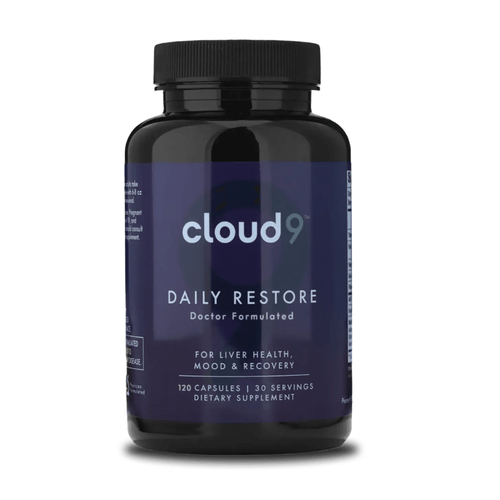
Cloud9 Daily Restore combines NAC, DHM, milk thistle, B vitamins, and ashwagandha to help support the pathways alcohol can tax most. Two capsules daily, drinking or not.
NAC | DHM | Milk Thistle | B Vitamins | Ashwagandha
See How Daily Restore WorksBuilding Your Stress Toolkit: Alternatives That Actually Work
The key to stopping drinking when stressed isn't just removing alcohol. It's having ready alternatives that address what you're actually seeking: physical relaxation, mental relief, or emotional release. Different types of stress require different tools.
Physical Tension Relief
When stress lives in your body as tight shoulders, a clenched jaw, or that knot in your stomach, you need physical interventions. These techniques can reduce muscle tension and lower heart rate within minutes, often faster than alcohol.
- Progressive muscle relaxation: Systematically tense and release muscle groups from your toes to your forehead. Research shows this can lower cortisol levels comparably to moderate exercise.
- Cold exposure: Splash cold water on your face or hold ice cubes for 30 seconds. This activates your vagus nerve and interrupts the stress response immediately.
- Intensive movement: Do 20 jumping jacks, run up and down stairs, or do push-ups until you're breathless. Burning off stress hormones through movement prevents them from accumulating.
- Hot bath or shower: The temperature shift signals your nervous system to shift from "fight or flight" to "rest and digest" mode.
Mental Reset Strategies
Sometimes stress is less about physical tension and more about racing thoughts, worry loops, or decision fatigue. These approaches help quiet mental chatter without numbing out.
- The 5-4-3-2-1 grounding technique: Name 5 things you see, 4 you can touch, 3 you hear, 2 you smell, and 1 you taste. This pulls you out of your head and into the present moment.
- Brain dump journaling: Spend 10 minutes writing everything in your head onto paper with no editing or structure. Studies suggest expressive writing can reduce intrusive thoughts for hours afterward.
- Puzzle or game focus: Engage in something that requires just enough concentration to interrupt worry without being stressful itself. Crosswords, Sudoku, or simple mobile games work well.
- Intentional distraction: Watch a favorite show, listen to a compelling podcast, or read something engaging. This isn't avoidance, it's giving your stress response time to naturally decrease.
Emotional Processing Tools
Some stress needs to be felt and moved through rather than solved or relaxed away. When you're grieving, angry, disappointed, or overwhelmed by circumstances you can't control, these approaches help.
- Voice memo venting: Record yourself talking through what you're feeling for 5-10 minutes. Hearing your own voice can provide perspective that internal rumination doesn't.
- Cry it out: If tears are close, let them come. Research shows crying releases stress hormones and produces natural pain-relieving endorphins.
- Connect with someone: Text or call a friend not to solve anything, but just to be heard. Social connection activates oxytocin, which directly counters cortisol.
- Physical release: Scream into a pillow, punch a mattress, or tear up paper. Giving physical form to emotional energy helps complete the stress cycle.
Creating Replacement Rituals (Because Timing Matters)
One of the most challenging aspects of stopping drinking when stressed is that it's rarely just about the alcohol itself. It's about the ritual, the transition, the signal to your brain that the stressful part of the day is over. You need to replace not just the substance, but the ceremony.
Think about when and why you typically reach for a drink. Is it the moment you walk through the door? The transition from work mode to home mode? The point when you finally sit down after dinner? Identify these trigger moments specifically.
The Power of Sensory Replacement
Your brain associates certain sensory experiences with relaxation because you've trained it to do so. You can retrain these associations with intentional replacement rituals that engage the same senses.
| What Alcohol Provided | Replacement Ritual |
|---|---|
| The fizz and ceremony of opening a drink | Sparkling water with lime in a special glass, kombucha, or craft mocktails |
| Warmth and weight in your stomach | Hot herbal tea, warm bone broth, or heated golden milk |
| Hand-to-mouth ritual while unwinding | Crunchy snacks, flavored ice chips, or chewing gum |
| Specific taste that signals "off duty" | Strong flavored beverages: ginger beer, tart cherry juice, or bitter aperitifs |
| The 5pm transition marker | Changing clothes, lighting a candle, or 10-minute walk around the block |
The First Two Weeks: What to Expect
Here's the honest truth: the first week or two can feel harder before they feel easier. This isn't because you're doing something wrong. It's because your brain is recalibrating its stress response system and your body is adjusting to managing cortisol without the artificial ups and downs alcohol created.
Most people report feeling more irritable, having trouble sleeping, and experiencing heightened anxiety during days 3-10. This is temporary. Studies tracking people who stop drinking show that anxiety scores typically drop below their original baseline by week three, and continue improving for months afterward.
The discomfort you feel in those first two weeks isn't proof that you can't handle stress without alcohol. It's proof that your body is healing from the cycle alcohol created. Every difficult moment you move through without drinking is teaching your nervous system that it can regulate itself naturally.
When Stress Becomes Overwhelming: Knowing Your Limits
Sometimes the stress you're facing is bigger than what self-care strategies alone can handle. There's an important difference between normal life stress and chronic overwhelm that may benefit from professional support.
Signs You May Need Additional Support
- You experience panic attacks or persistent anxiety that interferes with daily functioning
- Stress has continued for months without relief despite trying multiple coping strategies
- You feel unable to stop drinking even when you genuinely want to
- Physical symptoms like chest pain, digestive issues, or chronic insomnia are present
- You have intrusive thoughts about harming yourself or feel consistently hopeless
- Your relationships, work performance, or health are significantly suffering
Recognizing when you need help isn't a failure. Research consistently shows that people who combine behavioral strategies with professional support, whether that's therapy, medical intervention, or structured programs, have significantly better outcomes than those who try to manage everything alone.
Building Your Support System
Stopping drinking when stressed is considerably easier when you're not doing it in isolation. Consider telling a few trusted people what you're working on and what would be helpful.
- Be specific in your requests: "I'm not drinking for a while. It would help if you didn't offer me wine when I come over" is clearer than vague statements about cutting back.
- Find your people: Online communities, local groups, or even one friend who's also reevaluating their relationship with alcohol can provide accountability without judgment.
- Prepare your responses: Have a simple answer ready for social situations. "I'm taking a break" or "I'm not drinking tonight" requires no further explanation.
- Celebrate small wins: Share your progress with someone who gets it. Each day you handle stress differently is worth acknowledging.
Practical Strategies for High-Stress Situations
Knowing strategies is different from implementing them when you're in the thick of a stressful moment. Here's how to actually use these tools when your brain is screaming for the familiar relief of alcohol.
The 10-Minute Rule
When the urge to drink hits hard, commit to trying one alternative strategy for just 10 minutes first. Set a timer. If after 10 minutes you still feel you need a drink, you can reassess. Most people find the urge has decreased significantly or passed entirely within this window.
During those 10 minutes, choose the strategy that matches your current state. If you're restless and agitated, pick a physical option. If your mind is racing, try a mental reset. If you're emotionally raw, go for a processing tool.
Create a Crisis Card
In moments of high stress, your thinking brain goes offline and your reactive brain takes over. You won't remember your carefully planned strategies. Write them down now while you're calm.
On your phone or an index card, list your top 5-7 go-to stress relief strategies with specific, actionable steps. When you're overwhelmed, pull out the list and pick one. Having it written removes the burden of decision-making when you're least equipped to make decisions.
Change Your Environment Immediately
If you're in the kitchen where you typically pour a drink, physically move to another room or go outside. Environmental cues trigger automatic behaviors. Breaking the pattern by changing your location interrupts the autopilot response and gives your intentional brain a chance to engage.
This is especially important in the first few weeks when new habits haven't solidified yet. Your environment has more power over your behavior than you realize, so use that to your advantage by removing yourself from high-risk locations during vulnerable moments.
How Daily Restore Supports Your Health
Understanding what your body needs is one thing. Getting consistent daily support is another. Daily Restore was designed to address the key pathways alcohol can stress most, in one simple daily formula.
NAC (N-Acetyl Cysteine)
Supports glutathione production and antioxidant defenses
DHM (Dihydromyricetin)
Supports alcohol metabolism
Milk Thistle (Silymarin)
Supports healthy liver function
B Vitamins
Help replenish nutrients involved in energy and metabolism
Ashwagandha
Supports stress resilience and healthy cortisol balance
Daily Restore is not a detox or a cure. It is a daily support formula designed for people who drink socially and want to give their body consistent, evidence-informed support.
Frequently Asked Questions
How long does it take to break the stress-drinking habit?
Most people begin noticing shifts in their patterns within 2-4 weeks of consistent effort, though everyone's timeline varies. The key is replacing the habit with healthier responses rather than simply trying to eliminate it through willpower alone. Building new neural pathways takes time, so patience with yourself during this process is essential.
Will I feel more anxious when I stop using alcohol to cope with stress?
You might experience a temporary adjustment period as your body recalibrates, but this typically improves within a few days to two weeks. Research suggests that while alcohol may seem to reduce stress in the moment, it actually increases anxiety over time by disrupting sleep quality and brain chemistry. Supporting your body with proper nutrition, hydration, and supplements like Daily Restore can help ease this transition.
What if I slip up and drink when stressed?
One instance doesn't erase your progress or mean you've failed. Use it as valuable information: what triggered the response, what you might do differently next time, and what support you might need. The goal isn't perfection but building resilience and developing a toolkit of responses that work for you over time.
Can supplements really help reduce the urge to drink when stressed?
Studies show that targeted nutrients can help support the brain chemistry involved in stress response and cravings. Ingredients like L-theanine, ashwagandha, and B vitamins may help promote calm and support neurotransmitter balance, making it easier to resist reaching for alcohol. While supplements aren't a magic solution, they can be a valuable part of a comprehensive approach that includes behavioral changes and stress management techniques.
Is it better to quit drinking completely or just cut back?
This depends entirely on your relationship with alcohol and your personal goals. Some people find that complete abstinence is clearer and easier, while others successfully moderate their intake. If you find that stress consistently leads you to drink more than intended, or that "just one" reliably turns into several, a period of complete abstinence might help you reset and develop alternative coping strategies.
The Bottom Line
Breaking the stress-drinking cycle doesn't mean white-knuckling your way through difficult moments or feeling worse before you feel better. It means building a sustainable foundation of support that addresses both the physiological and emotional drivers behind the habit.
The most effective approach combines practical strategies like identifying your triggers, creating a replacement ritual, and building your support network with physiological support that helps your body manage stress more effectively. When you address both the habit pattern and the underlying brain chemistry, you're far more likely to succeed without feeling deprived or overwhelmed.
Daily Restore was designed specifically to support this process by providing research-backed nutrients that may help promote calm, support healthy stress response, and reduce cravings. When taken consistently as part of your daily routine, it can work alongside the behavioral changes you're making to help you feel balanced and supported rather than fighting an uphill battle.
Remember, changing your relationship with alcohol is a process, not a single decision. Be patient with yourself, celebrate small wins, and focus on progress rather than perfection. With the right tools and support, you can develop healthier ways to manage stress that leave you feeling genuinely better, not just temporarily numbed.
Build Your Daily Support Routine
Build Your Daily Support Routine
If drinking is part of your lifestyle, your support routine should not be random. Daily Restore was designed to help social drinkers support liver health, antioxidant defenses, alcohol metabolism, nutrient replenishment, and daily recovery in one simple routine.
NAC
DHM
Milk Thistle
B Vitamins
Ashwagandha