

You know you need to relax. You've read the articles about self-care, downloaded the meditation apps, and promised yourself you'll start a calming bedtime routine. Yet here you are, collapsing into bed after another exhausting day, wondering when you'll ever find time to actually unwind.
The problem isn't that relaxation rituals don't work. It's that most advice assumes you have unlimited time and zero competing priorities. Real life requires a different approach, one that acknowledges your packed calendar and still delivers genuine stress relief.
Creating a relaxation ritual that actually sticks means understanding what your nervous system needs, then building sustainable practices around your existing life. Here's how to make it happen without adding another item to your overwhelming to-do list.
Quick Take
- Effective relaxation rituals work with your schedule, not against it, starting with just 5-10 minutes daily
- Your nervous system responds best to consistent timing and multi-sensory cues that signal safety and rest
- Stacking relaxation practices onto existing habits dramatically increases long-term success rates
- The right ritual for you depends on your stress response type and available windows of time
- Small, personalized rituals outperform elaborate routines you can't maintain consistently
Why Most Relaxation Routines Fail (And What Actually Works)
Research suggests that the biggest predictor of whether a wellness practice sticks isn't how effective it is, but how well it fits into your existing lifestyle. Studies on habit formation show that attempts to overhaul your entire routine typically fail within weeks, while small, targeted changes can create lasting behavioral shifts.
Your nervous system craves predictability. When you practice relaxation at roughly the same time each day, your body begins anticipating that downshift, making it easier to access calm states. This isn't just psychological, it's physiological. Your cortisol rhythms, heart rate variability, and even digestive patterns can sync to regular relaxation windows.
The key distinction is between relaxation as an event versus relaxation as a ritual. Events require motivation and perfect conditions. Rituals become automatic, triggered by environmental cues and time anchors that don't depend on willpower or ideal circumstances.
Daily Support for Social Drinkers
Your liver works hard every day. Give it consistent support.
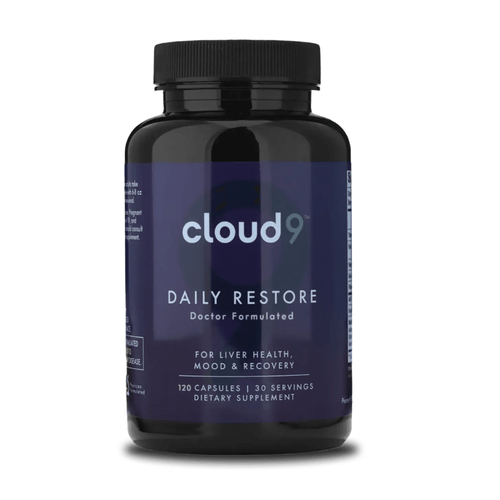
Cloud9 Daily Restore combines NAC, DHM, milk thistle, B vitamins, and ashwagandha to help support the pathways alcohol can tax most. Two capsules daily, drinking or not.
NAC | DHM | Milk Thistle | B Vitamins | Ashwagandha
See How Daily Restore WorksUnderstanding Your Personal Stress Response Type
Before designing your ritual, you need to understand how your body typically responds to stress. This awareness helps you choose practices that directly counteract your specific patterns rather than following generic advice that may not address your needs.
The Three Primary Stress Response Patterns
Most people fall into one of three dominant stress response categories, though you may experience combinations depending on the situation. Identifying your pattern helps you select the most effective relaxation techniques.
- High-activation responders: You get wired, anxious, racing thoughts, tension in shoulders and jaw. You need practices that discharge energy before calming down.
- Shutdown responders: You feel numb, exhausted, disconnected, or foggy. You need gentle activation before you can access genuine relaxation.
- Oscillating responders: You swing between wired and exhausted, often feeling tired but unable to rest. You need practices that regulate rather than simply calm or energize.
Matching Practices to Your Pattern
High-activation responders benefit from progressive muscle relaxation, vigorous movement followed by stillness, or breath practices with extended exhales. Starting with intense sensation helps discharge the activation before transitioning to calm.
Shutdown responders need the opposite approach. Gentle movement, sensory awakening through temperature changes or texture, and energizing breathwork can bring you back online before deeper relaxation becomes accessible. Trying to meditate when you're already disconnected often backfires.
Oscillating responders require regulating practices that don't push too far in either direction. Rhythmic activities like walking, gentle yoga flows, or humming create stability without extreme activation or sedation.
The 5-Step Framework for Building Your Personal Ritual
Creating a sustainable relaxation ritual follows a specific sequence. Skip steps and you'll likely abandon the practice when life gets chaotic. Follow this framework and your ritual becomes resilient enough to survive busy periods.
Step 1: Identify Your Non-Negotiable Time Windows
Look at your actual schedule, not your ideal one. Where do you have 5-10 minutes that realistically exist every day? Common windows include right after waking, during lunch breaks, immediately after work, or the 10 minutes before bed.
The best time isn't necessarily morning or evening, it's whenever you can be most consistent. A reliable 8pm ritual outperforms an "ideal" 6am practice you'll skip half the time.
Step 2: Choose Your Anchor Habit
Habit stacking research shows that linking new behaviors to existing routines dramatically improves adherence. Your relaxation ritual should attach to something you already do without thinking.
| Existing Habit | Possible Relaxation Ritual |
|---|---|
| Morning coffee brewing | 3-minute breathing practice while waiting |
| Closing laptop at end of workday | 5-minute transition walk or stretch sequence |
| Brushing teeth before bed | Body scan or gentle movements in pajamas |
| Lunch break | 10-minute nature exposure or quiet sitting |
| Getting into car after work | 5 minutes of music or silence before driving |
Step 3: Design Your Sensory Signature
Multi-sensory cues help your nervous system recognize that it's time to shift states. Over time, these signals become powerful triggers for relaxation, even when you're stressed or resistant.
Choose 2-3 sensory elements that will appear each time you practice. This might include a specific essential oil scent, a particular blanket or cushion, a dedicated playlist, or always dimming the lights. The consistency matters more than what you choose.
Step 4: Start Ridiculously Small
The ritual that you'll actually do every day is infinitely more valuable than the perfect routine you'll abandon by next week. Start smaller than feels meaningful, then expand once consistency is automatic.
Your initial ritual should feel almost absurdly easy. Three conscious breaths. Two minutes of stretching. One song's worth of sitting quietly. You're building the neural pathway of showing up, not trying to solve all your stress in one session.
Most people resist this step because it doesn't feel like enough. But research on habit formation consistently shows that tiny, sustainable actions compound over time while ambitious goals typically lead to abandonment and discouragement.
Step 5: Build Your Expansion Options
Once your minimal ritual feels automatic (usually 2-4 weeks), create a menu of ways to extend it on days when you have more time or need deeper support. This flexibility prevents all-or-nothing thinking that kills consistency.
- The minimum viable ritual: Your 5-minute non-negotiable that happens even on your worst days
- The standard ritual: 10-15 minutes when you have normal schedule capacity
- The extended ritual: 20-30 minutes for weekends or when you need extra support
Troubleshooting Common Ritual Roadblocks
Even well-designed rituals hit obstacles. Planning for these challenges in advance helps you navigate them without abandoning your practice entirely.
When Your Schedule Explodes
Busy periods will happen. Instead of skipping your ritual completely, have a 2-minute emergency version ready. This might be three deep breaths with your hands on your heart, 90 seconds of gentle neck rolls, or simply closing your eyes and noticing three sounds around you.
Maintaining any version of your ritual during chaos preserves the habit pathway. You can always expand back to your full practice once things stabilize, but rebuilding from zero is much harder than scaling back up.
When Resistance Shows Up
Some days you'll feel completely unmotivated to practice. This is normal and doesn't mean your ritual isn't working. The goal is to show up anyway, even if the quality feels off or you're just going through the motions.
Often, resistance appears right before a breakthrough. Your nervous system may be protecting you from feeling what you need to feel. Showing up anyway, with compassion for the resistance, teaches your system that it's safe to let down defenses.
When Results Feel Slow
Relaxation rituals work cumulatively, not instantly. You're literally rewiring stress response patterns that took years to establish. Studies on nervous system regulation suggest that consistent practice over 6-8 weeks typically produces noticeable shifts in baseline stress levels.
Track subtle changes rather than waiting for dramatic transformation. Are you falling asleep slightly faster? Noticing tension earlier in the day? Recovering from stressful events a bit quicker? These small improvements indicate your ritual is working even when big changes aren't yet visible.
Advanced Ritual Design: Personalizing for Maximum Impact
Once your basic ritual is established, you can refine it based on what your nervous system responds to most. This personalization phase turns a good ritual into one that's perfectly calibrated for your needs.
Experimenting with Ritual Elements
Try changing one element at a time while keeping the rest consistent. Does adding soft music enhance your relaxation or distract you? Do you settle more deeply with eyes closed or soft gaze? Does movement before stillness help or hinder?
Keep notes on what genuinely helps you settle versus what sounds good in theory but doesn't serve you. Your ritual should be based on your actual experience, not Instagram-worthy aesthetics or what works for other people.
Creating Ritual Variations for Different States
As you become more attuned to your nervous system, you can develop different ritual versions for different starting states. What helps when you're anxious may differ from what helps when you're depleted or overwhelmed.
- High-stress variation: More movement, longer practice, emphasis on physical discharge
- Low-energy variation: Gentler approach, shorter duration, focus on restoration not activation
- Maintenance variation: Your standard ritual when you're in a relatively balanced state
Seasonal and Life Phase Adjustments
Your relaxation needs change across seasons and life circumstances. A ritual that works perfectly during stable periods may need modification during major transitions, seasonal shifts, or times of grief or celebration.
Give yourself permission to evolve your practice. The structure stays consistent, but the specific elements can flex to meet you where you are. This adaptability is what allows rituals to support you across decades, not just weeks.
How Daily Restore Supports Your Health
Understanding what your body needs is one thing. Getting consistent daily support is another. Daily Restore was designed to address the key pathways alcohol can stress most, in one simple daily formula.
NAC (N-Acetyl Cysteine)
Supports glutathione production and antioxidant defenses
DHM (Dihydromyricetin)
Supports alcohol metabolism
Milk Thistle (Silymarin)
Supports healthy liver function
B Vitamins
Help replenish nutrients involved in energy and metabolism
Ashwagandha
Supports stress resilience and healthy cortisol balance
Daily Restore is not a detox or a cure. It is a daily support formula designed for people who drink socially and want to give their body consistent, evidence-informed support.
Frequently Asked Questions
How long does it take to see results from a relaxation ritual?
Most people begin noticing shifts in their stress response within one to two weeks of consistent practice. Research suggests that the nervous system starts adapting to regular relaxation cues fairly quickly, though deeper changes in stress resilience may develop over several weeks or months.
What if I can only spare 5 minutes a day?
Five minutes of focused relaxation is significantly better than nothing at all. Studies show that even brief mindfulness or breathing practices can help lower cortisol levels and improve mood. Start with what you can realistically maintain, and you can always expand your ritual as it becomes a natural part of your routine.
Should my relaxation ritual be the same every day?
Consistency helps train your nervous system to recognize relaxation cues, but some flexibility is perfectly fine. You might keep core elements the same while rotating other components based on your needs that day. The key is maintaining regularity in timing and intention rather than rigid adherence to identical steps.
Can I do my relaxation ritual at different times each day?
While anchoring your ritual to a consistent time can strengthen the habit, a flexible schedule is better than skipping it entirely. If your schedule varies, try linking your ritual to a daily activity rather than a specific time, like right after your morning coffee or before dinner.
What if my mind won't quiet down during relaxation?
A racing mind is completely normal and doesn't mean your ritual isn't working. The goal isn't to eliminate thoughts but to create a consistent practice of returning to the present moment. Over time, research suggests this practice can help reduce mental chatter and improve your ability to shift out of stress mode.
The Bottom Line
Creating a relaxation ritual that works for your busy lifestyle doesn't require hours of free time or a perfectly zen environment. It simply needs to be something you can realistically commit to on most days, built around your actual schedule and preferences rather than an idealized version of self-care.
The most effective rituals combine several elements: consistent timing, sensory cues that signal relaxation to your nervous system, and activities that genuinely appeal to you. Whether that's five minutes of deep breathing with essential oils, a brief evening stretching routine, or a calming supplement like Cloud9's Daily Restore paired with journaling, the right ritual is the one you'll actually maintain.
Speaking of consistency, many people find that adding a daily supplement creates a helpful anchor for their relaxation practice. Cloud9's Daily Restore combines adaptogens and calming botanicals that may help support your body's stress response when taken regularly, making it a natural addition to your evening wind-down or morning centering routine.
Remember, building a sustainable relaxation ritual is about progress, not perfection. Start small, stay consistent, and adjust as you learn what genuinely helps you shift from stress mode to restoration mode. Your nervous system will thank you for the regular reset, even if it looks different from anyone else's practice.
Build Your Daily Support Routine
Build Your Daily Support Routine
If drinking is part of your lifestyle, your support routine should not be random. Daily Restore was designed to help social drinkers support liver health, antioxidant defenses, alcohol metabolism, nutrient replenishment, and daily recovery in one simple routine.
NAC
DHM
Milk Thistle
B Vitamins
Ashwagandha