

That feeling when you walk into a crowded coffee shop and suddenly every pair of eyes seems locked on you. Your heart races, your palms sweat, and all you can think about is how everyone must be judging the way you look, move, or exist in that space.
Social anxiety in public spaces can turn everyday activities into exhausting ordeals. Whether it's grocery shopping, attending a work event, or simply walking down a busy street, the fear of negative evaluation can make you want to avoid the world entirely.
The good news: you can learn to manage social anxiety in public without avoiding life. With the right tools and understanding, those overwhelming moments can become more manageable, one step at a time.
Quick Take
- Social anxiety in public spaces stems from fear of negative evaluation, but most people are too focused on themselves to judge you as harshly as you imagine
- Grounding techniques like the 5-4-3-2-1 method can interrupt anxious thought spirals in real time
- Gradual exposure to feared situations, combined with self-compassion, helps retrain your brain's threat response
- Physical strategies like controlled breathing and anchoring objects provide immediate relief during anxiety spikes
- Professional support through therapy, particularly cognitive behavioral approaches, can accelerate progress significantly
What Happens in Your Brain During Social Anxiety
Social anxiety isn't just "being shy" or nervous in crowds. Research suggests it involves your brain's threat detection system, the amygdala, misinterpreting social situations as actual dangers. When you enter a public space, your nervous system may react as if you're facing a real threat, triggering the classic fight-or-flight response.
This explains why social anxiety produces such intense physical symptoms. Your body floods with stress hormones, your heart rate spikes, and your muscles tense up, all preparing you to escape a danger that doesn't actually exist. Meanwhile, your prefrontal cortex, the rational part of your brain, struggles to override these alarm signals.
Studies show that people with social anxiety tend to overestimate how much others notice and judge them, a phenomenon called the "spotlight effect." In reality, most people in public spaces are wrapped up in their own concerns, not scrutinizing your every move. Understanding this gap between perception and reality is the first step toward managing anxiety more effectively.
Daily Support for Social Drinkers
Your liver works hard every day. Give it consistent support.
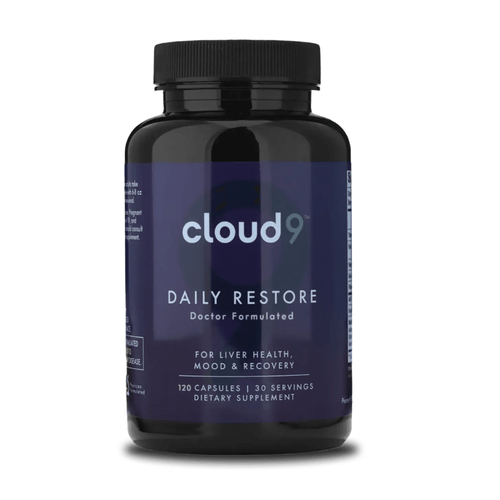
Cloud9 Daily Restore combines NAC, DHM, milk thistle, B vitamins, and ashwagandha to help support the pathways alcohol can tax most. Two capsules daily, drinking or not.
NAC | DHM | Milk Thistle | B Vitamins | Ashwagandha
See How Daily Restore WorksImmediate Techniques to Use When Anxiety Strikes
When you feel social anxiety rising in a public space, having a toolkit of quick interventions can make all the difference. These techniques work by redirecting your attention away from anxious thoughts and back to the present moment.
The 5-4-3-2-1 Grounding Method
This sensory awareness technique interrupts the anxiety spiral by anchoring you in your immediate environment. It engages your observational mind instead of your judging mind, giving your nervous system a chance to reset.
- Identify 5 things you can see around you (a red sign, someone's jacket, a plant)
- Notice 4 things you can physically feel (your feet on the ground, the temperature, your clothes)
- Listen for 3 sounds in your environment (traffic, conversation hum, music)
- Recognize 2 things you can smell (or two smells you enjoy thinking about)
- Name 1 thing you can taste (gum, coffee, or just the taste in your mouth)
Box Breathing for Quick Calm
Controlled breathing directly impacts your vagus nerve, which helps regulate your stress response. Box breathing is simple enough to do anywhere without drawing attention to yourself.
Breathe in for 4 counts, hold for 4 counts, exhale for 4 counts, hold empty for 4 counts. Repeat this cycle 4-5 times. You can count silently or track the pattern by tracing a square shape with your eyes or finger.
The Anchor Object Strategy
Carry a small object in your pocket that you can touch when anxiety rises. A smooth stone, a piece of fabric, or even a specific coin can serve as a physical reminder that you're safe. The tactile sensation gives your mind something concrete to focus on instead of spiraling thoughts.

Cognitive Tools to Reframe Anxious Thoughts
Your thoughts fuel social anxiety, but you can learn to challenge and reframe them. These cognitive strategies help you see situations more realistically and with more self-compassion.
Question the Thought, Not Yourself
When you think "everyone is staring at me" or "I look ridiculous," pause and ask yourself: What's the actual evidence for this thought? If a friend had this thought, what would I tell them?
Research on cognitive behavioral therapy shows that writing down anxious thoughts and examining them objectively can reduce their emotional charge. You're not trying to think positively, you're trying to think accurately.
The "So What?" Technique
Follow your anxious thought to its conclusion. "Someone might judge my outfit. So what? They'll think something negative. So what? They'll forget about it in five minutes and move on with their day." This exercise often reveals that the feared outcome isn't as catastrophic as anxiety makes it feel.
The spotlight effect makes us believe we're the main character in everyone else's story. In reality, you're a background extra in most people's day, just as they are in yours. This isn't depressing, it's liberating.
Reframe Physical Symptoms
Instead of interpreting your racing heart as proof that something is wrong, try viewing it as your body giving you energy. Studies suggest that reframing arousal symptoms as helpful rather than harmful can improve performance and reduce anxiety in social situations.
| Anxious Interpretation | Reframed Interpretation |
|---|---|
| "My heart is racing, something is wrong" | "My body is alert and ready, I have energy" |
| "I'm sweating, everyone will notice" | "My body is regulating temperature, this is normal" |
| "My face is red, I look anxious" | "Blood flow increases when I'm activated, no one is analyzing my complexion" |
| "I can't think clearly, I'm failing" | "My mind is moving quickly, I can slow down and focus on one thing" |
Building Long-Term Confidence Through Gradual Exposure
While immediate coping techniques help in the moment, lasting change comes from gradually facing feared situations. This doesn't mean forcing yourself into overwhelming scenarios, it means building tolerance slowly and systematically.
Create Your Anxiety Hierarchy
List public situations from least to most anxiety-provoking. A low-anxiety situation might be walking through a quiet park, while a high-anxiety one could be speaking up in a crowded meeting. Rate each situation from 0-10 based on your anxiety level.
Start practicing with situations rated 3-4 on your scale. As those become more manageable, gradually work up to more challenging scenarios. This approach, supported by exposure therapy research, helps your brain learn that these situations are safe without overwhelming your system.
The Power of Repetition
Exposure works through repetition, not perfection. Going to the same coffee shop multiple times teaches your brain more than visiting ten different places once. Each repeated exposure without catastrophe weakens the anxiety response.
- Choose one manageable public space to visit regularly
- Stay in the situation until your anxiety decreases by at least half, even if just slightly
- Notice what you learn each time (most people don't care, nothing bad happened, you survived the discomfort)
- Celebrate small wins without dismissing them as "not enough"
Bring Compassion to the Process
Self-criticism intensifies social anxiety, while self-compassion reduces it. Research on self-compassion shows that treating yourself with the same kindness you'd offer a struggling friend actually improves your ability to face difficult situations.
When you have a tough experience in public, avoid the "I'm so stupid, I should be over this by now" spiral. Instead, acknowledge: "This was hard, I felt anxious, and I still showed up. That took courage." Progress isn't linear, and setbacks are part of the process, not evidence of failure.
When to Seek Professional Support
While self-help strategies can make a real difference, social anxiety sometimes requires professional guidance. There's no shame in recognizing when you need additional support, it's actually a sign of self-awareness and strength.
Signs You Might Benefit from Therapy
Consider reaching out to a mental health professional if your social anxiety significantly limits your daily life, prevents you from pursuing opportunities, or hasn't improved with self-help efforts over several months.
- You regularly avoid important activities because of social anxiety
- Physical symptoms are severe or interfere with functioning
- You experience panic attacks in public spaces
- Anxiety affects your work performance or relationships
- You feel depressed or hopeless about your situation
- You use alcohol or other substances to cope with social situations
What Professional Treatment Looks Like
Cognitive behavioral therapy has strong research support for treating social anxiety. A therapist can help you identify thought patterns, practice exposure in a supported way, and develop personalized coping strategies. Some people also benefit from medication in combination with therapy, particularly when anxiety is severe.
Newer approaches like acceptance and commitment therapy focus on changing your relationship with anxious thoughts rather than eliminating them entirely. Instead of fighting anxiety, you learn to acknowledge it while still taking valued actions. Many people find this approach less exhausting than constantly battling their symptoms.
How Daily Restore Supports Your Health
Understanding what your body needs is one thing. Getting consistent daily support is another. Daily Restore was designed to address the key pathways alcohol can stress most, in one simple daily formula.
NAC (N-Acetyl Cysteine)
Supports glutathione production and antioxidant defenses
DHM (Dihydromyricetin)
Supports alcohol metabolism
Milk Thistle (Silymarin)
Supports healthy liver function
B Vitamins
Help replenish nutrients involved in energy and metabolism
Ashwagandha
Supports stress resilience and healthy cortisol balance
Daily Restore is not a detox or a cure. It is a daily support formula designed for people who drink socially and want to give their body consistent, evidence-informed support.
Frequently Asked Questions
Is social anxiety the same as being shy or introverted?
Not quite. While shyness and introversion involve preferring quieter social settings, social anxiety includes intense fear of judgment and physical symptoms that can interfere with daily life. Introverts may enjoy social situations but need time alone to recharge, whereas social anxiety creates distress that can feel overwhelming in public spaces.
How long does it take to see improvement in social anxiety symptoms?
Progress varies from person to person, but many people notice small improvements within a few weeks of consistent practice with coping strategies. Research suggests that combining cognitive techniques with gradual exposure and supportive supplements like adaptogens can help accelerate the process. Patience with yourself is key, as lasting change typically unfolds over several months.
Can supplements really help with social anxiety?
Certain supplements, particularly adaptogens like ashwagandha and Rhodiola, have shown promise in supporting the body's stress response and may help reduce anxiety symptoms when used consistently. They work best as part of a broader approach that includes behavioral strategies and lifestyle changes. While they're not a cure-all, many people find them helpful for taking the edge off anxious feelings in social situations.
What if my social anxiety is too severe for self-help strategies?
If social anxiety significantly impacts your ability to work, maintain relationships, or complete daily tasks, professional help from a therapist or psychiatrist can make a real difference. Cognitive-behavioral therapy has strong evidence for treating social anxiety, and in some cases, medication may be appropriate. Self-care strategies and supplements can complement professional treatment, but they shouldn't replace it when symptoms are severe.
How do I know if what I'm feeling is normal nervousness or social anxiety?
Everyone experiences some nervousness in social situations, especially unfamiliar ones. Social anxiety becomes a concern when the fear is disproportionate to the situation, persists for months, and leads you to avoid activities you'd otherwise enjoy. If you find yourself constantly worried about embarrassment or judgment, or if physical symptoms like rapid heartbeat and sweating regularly interfere with your life, it may be worth exploring support options.
The Bottom Line
Social anxiety in public spaces can feel isolating, but it's more common than you might think, and it's absolutely manageable with the right tools. The key is building a consistent practice that combines cognitive strategies, gradual exposure, and physical support for your nervous system. Small steps add up over time.
Grounding techniques, breathing exercises, and reframing negative thoughts can help in the moment, while regular self-care practices and supportive supplements create a foundation for long-term resilience. Cloud9's Daily Restore brings together adaptogens like ashwagandha and Rhodiola that may help your body handle stress more effectively, making it easier to show up in social situations with greater ease.
Remember that progress isn't linear. Some days will feel easier than others, and that's completely normal. What matters is showing up for yourself consistently, celebrating small wins, and being patient with the process. Whether you're working with a therapist, trying new coping strategies, or adding Daily Restore to your routine, each step you take is moving you toward a life where social spaces feel less threatening and more manageable.
You don't have to let the fear of judgment hold you back from the experiences and connections you deserve. With practice and support, you can learn to navigate public spaces with greater confidence and calm.
Build Your Daily Support Routine
Build Your Daily Support Routine
If drinking is part of your lifestyle, your support routine should not be random. Daily Restore was designed to help social drinkers support liver health, antioxidant defenses, alcohol metabolism, nutrient replenishment, and daily recovery in one simple routine.
NAC
DHM
Milk Thistle
B Vitamins
Ashwagandha