

You know that moment when the first drink hits and suddenly the music sounds better, conversations flow easier, and the weight of the day starts to lift? Then fast forward two hours, and you're fighting fatigue, struggling to follow the conversation, and wondering why you can't recapture that initial spark.
This dramatic shift isn't just in your head. Your brain and body respond completely differently to alcohol as the night progresses, creating two distinct phases that explain why the beginning and end of drinking feel like night and day. Understanding this pattern is crucial for alcohol awareness and making informed choices about drinking.
Let's break down what's really happening inside your body from that first sip to the last call.
Quick Take
- Alcohol creates a biphasic response: initial stimulation followed by sedation as blood alcohol levels change
- The first drink triggers dopamine release and blocks inhibitory signals, creating feelings of energy and confidence
- Later drinks increase sedative effects as your brain attempts to restore balance and GABA activity increases
- Your body's tolerance to stimulant effects develops faster than tolerance to depressant effects during a single session
- Recognizing these phases can help you make more conscious decisions about consumption patterns
The Science Behind Alcohol's Two Faces
Alcohol is classified as a depressant, but that classification doesn't tell the whole story. Research shows that alcohol actually has biphasic effects, meaning it produces two distinct phases of response depending on your blood alcohol concentration (BAC) and whether it's rising or falling.
During the ascending phase, when your BAC is climbing after those first drinks, alcohol primarily acts as a stimulant. It floods your brain with dopamine, the neurotransmitter associated with reward and pleasure, while simultaneously reducing the activity of GABA receptors that normally keep excitement in check. This combination creates that unmistakable buzz: heightened mood, increased sociability, and a boost in confidence.
But as your BAC peaks and begins to descend, the depressant effects take over. Your brain works to restore equilibrium, ramping up those inhibitory GABA signals and depleting dopamine reserves. The result is the familiar slide into sluggishness, impaired coordination, and depressed mood that characterizes the later stages of drinking.
Daily Support for Social Drinkers
Your liver works hard every day. Give it consistent support.
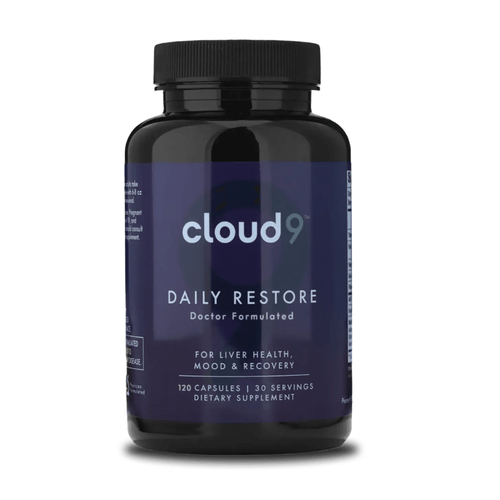
Cloud9 Daily Restore combines NAC, DHM, milk thistle, B vitamins, and ashwagandha to help support the pathways alcohol can tax most. Two capsules daily, drinking or not.
NAC | DHM | Milk Thistle | B Vitamins | Ashwagandha
See How Daily Restore WorksWhat Happens During the First Drink
That initial drink sets off a cascade of neurochemical changes that explain why it feels so uniquely good. Within minutes of alcohol entering your bloodstream, your brain begins releasing dopamine in key reward centers, particularly the nucleus accumbens and ventral tegmental area.
The Stimulation Phase
Studies suggest that at low to moderate BAC levels (typically between 0.02 and 0.05%), alcohol enhances several stimulating effects. Your prefrontal cortex, the brain region responsible for self-monitoring and inhibition, becomes less active. This is why that first drink often makes you feel more outgoing and less self-conscious.
Your body also experiences physical changes during this phase:
- Heart rate typically increases slightly
- Blood pressure may rise temporarily
- Perceived energy levels climb despite alcohol being a depressant
- Motor control remains relatively intact or only slightly impaired
- Mood elevation peaks as dopamine floods reward pathways
The Psychological Shift
Beyond the purely physical effects, the first drink creates a psychological turning point. For many people, it signals a transition from work mode to relaxation, from stress to relief. This conditioned response can amplify the actual pharmacological effects, making that initial drink feel even more powerful than its chemical impact alone would suggest.
The contrast between who you are before the first drink and after it is often more dramatic than the difference between drink two and drink three, even though later drinks involve higher absolute alcohol levels. This highlights how much of alcohol's impact involves your brain's changing sensitivity rather than just the amount consumed.
The Shift: When Stimulation Becomes Sedation
The transition from feeling energized to feeling drained doesn't happen all at once. It's a gradual process that most people don't notice until they're well into the sedation phase. Research indicates this shift typically begins once your BAC exceeds 0.05-0.08%, though individual variation is significant.
Your Brain's Balancing Act
Your brain doesn't passively accept alcohol's influence. It actively fights to maintain homeostasis, the balanced state that keeps you functioning normally. As alcohol continues to flood your system, your brain compensates by increasing the activity of inhibitory neurotransmitters and decreasing excitatory ones.
This compensatory mechanism explains why the stimulant effects fade even as you continue drinking. Your brain essentially builds acute tolerance to the pleasurable effects faster than it does to the impairing effects. You're chasing a feeling that becomes progressively harder to achieve.
The Descending Phase
Once your BAC begins to fall, whether because you've stopped drinking or slowed down, the depressant effects dominate completely. This phase brings distinctly different experiences:
- Fatigue and drowsiness replace earlier energy
- Coordination and balance become noticeably impaired
- Mood often shifts toward irritability or sadness
- Cognitive functions like memory and decision-making decline sharply
- Physical discomfort may begin as your body processes toxins
Why You Can't Recreate That First-Drink Feeling
Many people unconsciously try to recapture the mood lift and energy of the first drink by continuing to drink throughout the night. Unfortunately, the neurochemistry doesn't work that way. Each subsequent drink moves you further into the depressant phase rather than back toward stimulation.
The Tolerance Factor
Even within a single drinking session, your brain develops what's called acute tolerance. The dopamine response to alcohol diminishes with each drink, while the sedative effects accumulate. This creates a double bind where you need more alcohol to feel any positive effects, but more alcohol only deepens the negative ones.
This pattern becomes even more pronounced for regular drinkers who develop chronic tolerance over weeks and months. Their initial stimulation phase may become barely noticeable, while the depressant effects remain strong or even intensify.
Comparing the Phases
| Effect | First Drink (Rising BAC) | Later Drinks (Peak/Falling BAC) |
|---|---|---|
| Mood | Elevated, euphoric, confident | Depressed, irritable, unstable |
| Energy Level | Increased perceived energy | Fatigue and drowsiness |
| Social Behavior | More outgoing and talkative | Withdrawn or aggressive |
| Motor Control | Minimal impairment | Significant impairment |
| Cognitive Function | Slight disinhibition | Poor judgment, memory issues |
| Primary Neurotransmitter Activity | Dopamine release, reduced GABA | Increased GABA, depleted dopamine |
Individual Factors That Influence Your Response
Not everyone experiences alcohol's biphasic effects in the same way or to the same degree. Multiple factors determine how pronounced each phase feels and how quickly the transition happens.
Biological Variables
Your genetics play a significant role in how you metabolize alcohol and how your brain responds to it. Some people naturally produce more of the enzymes that break down alcohol, while others have genetic variations that affect dopamine signaling. Body weight, biological sex, and liver health also substantially impact how alcohol moves through your system.
Women typically experience higher BAC levels than men after consuming the same amount of alcohol, due to differences in body composition and enzyme levels. This means the transition from stimulation to sedation may happen more quickly and at lower absolute quantities.
Environmental and Psychological Factors
The setting in which you drink can amplify or dampen alcohol's effects. A stimulating environment with music, social interaction, and activity may prolong the feeling of the stimulation phase, while a quiet setting might make the depressant effects more noticeable. Your expectations about drinking also matter, research suggests that people who expect alcohol to energize them may experience stronger initial stimulation.
Other factors that influence your response include:
- Whether you've eaten recently and what you've eaten
- Your hydration status before and during drinking
- Current stress levels and baseline mood
- Medications or supplements you're taking
- How quickly you're consuming drinks
- Your drinking history and any established tolerance patterns
The Danger Zone: Misreading Your Body's Signals
One of the most significant risks of alcohol's biphasic effects is the mismatch between how impaired you feel and how impaired you actually are. During the ascending phase, you might feel energized and capable even as your coordination and judgment are already compromised. By the time you notice the sedation setting in, your impairment is typically severe.
This disconnect contributes to poor decision-making around driving, risk-taking behaviors, and continuing to drink beyond safe limits. The first drink might make you feel more capable and in control precisely when you're beginning to lose both.
How Daily Restore Supports Your Health
Understanding what your body needs is one thing. Getting consistent daily support is another. Daily Restore was designed to address the key pathways alcohol can stress most, in one simple daily formula.
NAC (N-Acetyl Cysteine)
Supports glutathione production and antioxidant defenses
DHM (Dihydromyricetin)
Supports alcohol metabolism
Milk Thistle (Silymarin)
Supports healthy liver function
B Vitamins
Help replenish nutrients involved in energy and metabolism
Ashwagandha
Supports stress resilience and healthy cortisol balance
Daily Restore is not a detox or a cure. It is a daily support formula designed for people who drink socially and want to give their body consistent, evidence-informed support.
Frequently Asked Questions
Why does the first drink feel relaxing while later drinks make me feel sluggish?
The first drink initially boosts dopamine and GABA activity, creating that pleasant, relaxed sensation. As you continue drinking, alcohol's depressant effects accumulate, your brain chemistry becomes increasingly imbalanced, and dehydration sets in, leading to that heavy, sluggish feeling. Your body is essentially shifting from mild stimulation to deeper sedation.
How long does it take for alcohol to affect the brain?
Alcohol reaches your brain remarkably quickly, typically within 5 to 10 minutes of consumption. Peak blood alcohol concentration usually occurs between 30 and 90 minutes after drinking, depending on factors like whether you've eaten, your body weight, and how quickly you're drinking. This is why the effects can feel like they sneak up on you.
Can drinking water between alcoholic drinks really help?
Yes, alternating alcoholic drinks with water can help reduce some negative effects. Staying hydrated helps counteract alcohol's diuretic effect, may slow your drinking pace, and can support your body's natural processing systems. While it won't eliminate alcohol's impact on your brain chemistry, it's a simple strategy that research suggests can make a meaningful difference in how you feel.
Why do I sometimes feel more anxious the day after drinking?
This phenomenon, sometimes called "hangxiety," occurs because alcohol disrupts your brain's delicate balance of neurotransmitters. After the temporary GABA boost wears off, your brain can overcompensate, leading to increased anxiety and irritability. Your glutamate levels also rebound, which can contribute to feelings of restlessness and unease the next day.
Is there a way to support my body's recovery after drinking?
While nothing can completely undo alcohol's effects, supporting your body with proper hydration, nutrient-dense foods, quality sleep, and targeted supplements can help. Replenishing key nutrients that alcohol depletes, particularly B vitamins, antioxidants, and electrolytes, may help your body recover more efficiently. A consistent approach to wellness, even on days when you don't drink, tends to be more effective than sporadic interventions.
The Bottom Line
The dramatic difference between your first and last drink isn't just in your head. It's the result of cascading neurochemical changes, accumulating dehydration, and your body working overtime to process a substance it recognizes as a toxin. Understanding this progression can help you make more informed choices about when and how much you drink.
Whether you're moderating your intake, taking breaks from alcohol, or simply looking to feel better overall, supporting your body consistently makes a difference. Cloud9's Daily Restore is designed to work with your body's natural systems every day, providing bioavailable glutathione, DHM, and essential nutrients that help replenish what alcohol depletes and support healthy liver function.
The key word is "daily." Rather than reaching for support only after a night out, building a foundation of consistent wellness can help your body handle whatever you throw at it. Think of it as preventive care for your social life, giving your system the tools it needs to maintain balance.
Your relationship with alcohol is personal, and there's no one-size-fits-all approach. But awareness is always the first step toward making choices that align with how you want to feel, not just tonight, but tomorrow and beyond.
Build Your Daily Support Routine
Build Your Daily Support Routine
If drinking is part of your lifestyle, your support routine should not be random. Daily Restore was designed to help social drinkers support liver health, antioxidant defenses, alcohol metabolism, nutrient replenishment, and daily recovery in one simple routine.
NAC
DHM
Milk Thistle
B Vitamins
Ashwagandha