
You wake up the morning after a few drinks and your brain feels like it's moving through molasses. Words don't come as quickly. Simple decisions feel surprisingly difficult. That mental sharpness you usually rely on has been replaced by a frustrating fog that lingers long after the initial buzz has worn off.
This isn't just your imagination, and it's not simply a matter of being tired. Alcohol creates measurable changes in how your brain processes information, communicates between neurons, and performs even basic cognitive tasks.
Understanding what's actually happening in your brain can help you make more informed choices about drinking and recognize the real cognitive cost of that extra glass of wine.
Quick Take
- Alcohol disrupts neurotransmitter balance, slowing communication between brain cells and creating that characteristic mental fog
- Even moderate drinking can impair executive function, memory formation, and processing speed for 24-48 hours after consumption
- Your prefrontal cortex, the brain's decision-making center, is especially vulnerable to alcohol's effects
- Dehydration and inflammation contribute to cognitive slowdown alongside alcohol's direct neurological effects
- Regular drinking creates cumulative effects that can make baseline cognitive function progressively slower over time
What Alcohol Actually Does to Your Brain Chemistry
When you drink alcohol, it doesn't just affect one area of your brain. It fundamentally alters the balance of neurotransmitters, the chemical messengers that allow brain cells to communicate with each other. Research suggests that alcohol simultaneously enhances the effects of GABA, your brain's primary inhibitory neurotransmitter, while suppressing glutamate, which typically excites and energizes neural activity.
This dual action creates a neurological slowdown that affects everything from how quickly you process visual information to how well you can recall a conversation from an hour ago. Your neurons are literally firing more slowly and less efficiently than they do when you're sober.
The effect isn't limited to the hours you're actively drinking. Studies show that this neurotransmitter disruption can persist well into the next day, which is why you might struggle to focus during an important meeting even though you stopped drinking the night before.
Daily Support for Social Drinkers
Your liver works hard every day. Give it consistent support.
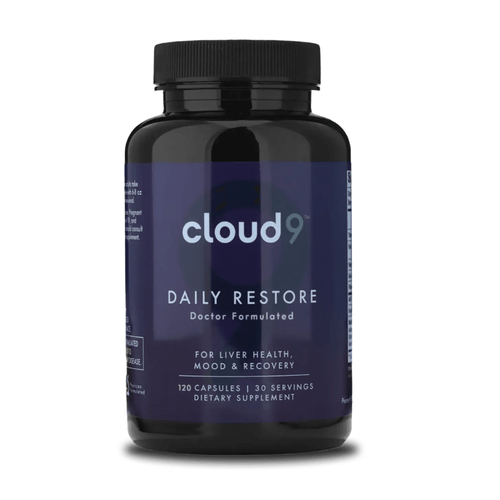
Cloud9 Daily Restore combines NAC, DHM, milk thistle, B vitamins, and ashwagandha to help support the pathways alcohol can tax most. Two capsules daily, drinking or not.
NAC | DHM | Milk Thistle | B Vitamins | Ashwagandha
See How Daily Restore WorksThe Prefrontal Cortex: Your Brain's Executive Under Attack
Your prefrontal cortex sits right behind your forehead and handles what neuroscientists call executive functions: planning, decision-making, impulse control, and working memory. This is the part of your brain that helps you stay focused during a complex task or think through the consequences of your actions.
Alcohol has a disproportionate impact on this region. Research suggests the prefrontal cortex is one of the first areas to show impairment when you drink and one of the last to fully recover.
How Executive Function Breaks Down
The effects show up in surprisingly practical ways. You might notice yourself rereading the same paragraph multiple times without absorbing it, struggling to follow a multi-step recipe, or making uncharacteristically poor judgments about time management.
Here's what typically gets impaired:
- Working memory capacity (holding information in your mind while you use it)
- Task switching and mental flexibility
- Impulse inhibition and self-control
- Planning and organizing complex activities
- Evaluating risks and making sound decisions
The 48-Hour Recovery Window
Even after you feel physically recovered from drinking, your prefrontal cortex may still be operating below baseline. Studies show that executive function can remain impaired for up to 48 hours after moderate to heavy drinking.
This means that Friday night drinks can affect your mental performance through Sunday afternoon, a timeline most people significantly underestimate when planning their weekends.
Memory Formation: Why You Can't Remember What You Just Read
That frustrating experience of reading something while drinking or hungover and having it completely disappear from your memory isn't a failure of attention. It's a direct result of alcohol's impact on your hippocampus, the brain structure responsible for forming new memories.
The Encoding Problem
Memory formation happens in stages: encoding, consolidation, and retrieval. Alcohol particularly disrupts the encoding phase, where your brain takes new information and creates initial memory traces. Research suggests that even moderate blood alcohol levels can significantly impair the hippocampus's ability to encode new memories, especially complex or detailed information.
This is why you might remember the general outline of a conversation you had while drinking but completely forget specific details, names, or commitments you made. The information never properly made it into your memory system in the first place.
Sleep, Alcohol, and Memory Consolidation
Memory consolidation happens primarily during sleep, when your brain processes and stores the day's experiences. Alcohol severely disrupts this process by interfering with REM sleep and deep sleep stages.
Even if you sleep for eight hours after drinking, the quality of that sleep is compromised in ways that directly affect memory formation. Your brain simply can't perform the overnight maintenance work that turns short-term memories into long-term storage.
The cognitive effects of alcohol extend far beyond the hours you're actively drinking. What feels like a simple hangover is actually your brain struggling to restore normal neurotransmitter balance, repair cellular damage, and resume standard cognitive operations.
Processing Speed: Why Everything Takes Longer
One of the most noticeable effects of alcohol on brain health is a general slowing of mental processing speed. This affects everything from how quickly you can respond to a question to how long it takes you to solve a problem or make a decision.
Reaction Time and Information Processing
Research shows that alcohol slows the speed at which neurons fire and communicate with each other. This creates measurable delays in reaction time that persist even after blood alcohol levels return to zero. You might notice this as a general sense of being "off" or slower than usual, even if you can't pinpoint exactly what's different.
The effects compound when you're trying to process multiple streams of information simultaneously. Tasks that require coordination between different brain regions, like driving while navigating or participating in a complex conversation, become disproportionately more difficult.
Cognitive Load and Mental Fatigue
When your brain is operating at reduced efficiency due to alcohol, even routine cognitive tasks require more mental effort. This creates faster mental fatigue and makes it harder to sustain attention over time.
You might find yourself needing more breaks, feeling exhausted after relatively simple mental work, or experiencing that familiar sensation of your brain simply "shutting down" in the afternoon following a night of drinking.
The Inflammation and Dehydration Factor
Beyond alcohol's direct effects on neurotransmitters, two additional factors contribute significantly to cognitive slowdown: neuroinflammation and dehydration.
Alcohol-Induced Brain Inflammation
Your body treats alcohol as a toxin, triggering an inflammatory response as it works to metabolize and eliminate it. This inflammation doesn't just affect your liver; it impacts your brain tissue as well. Research suggests that neuroinflammation can impair the function of brain cells, slow neural communication, and contribute to that characteristic mental fog.
The inflammatory process also triggers the release of cytokines, immune system molecules that can make you feel tired, sluggish, and mentally slow. This is part of why hangovers often feel similar to having a mild flu.
Dehydration's Cognitive Consequences
Alcohol is a potent diuretic, causing your body to lose more fluid than you're taking in. Even mild dehydration can significantly impact cognitive function. Studies show that dehydration of just 1-2% of body weight can impair attention, memory, and processing speed.
Your brain is approximately 75% water, and it requires adequate hydration to maintain the electrochemical gradients that allow neurons to fire properly. When you're dehydrated, everything slows down.
| Cognitive Function | Impact During Drinking | Impact 12-24 Hours Later |
|---|---|---|
| Working Memory | Significantly impaired | Moderately impaired |
| Processing Speed | Markedly slower | Mildly to moderately slower |
| Executive Function | Severely impaired | Moderately impaired |
| Memory Formation | Severely impaired | Mildly impaired |
| Attention Span | Significantly reduced | Moderately reduced |
| Decision Making | Severely impaired | Mildly to moderately impaired |
Cumulative Effects: When Occasional Drinking Becomes Regular
The brain effects described so far apply to individual drinking episodes, but regular alcohol consumption creates additional concerns. When you drink frequently, your brain doesn't get sufficient time to fully recover between sessions.
Neuroplasticity and Adaptive Changes
Your brain is remarkably adaptable, but this works against you with regular drinking. Research suggests that chronic alcohol exposure causes your brain to adapt to its presence by altering neurotransmitter receptor density and sensitivity. Your brain essentially recalibrates to function in an alcohol-affected state.
This means that over time, you may need alcohol just to feel "normal," while your baseline cognitive function when sober actually declines. The brain becomes less efficient at tasks that once came easily.
Gray Matter and White Matter Changes
Imaging studies show that regular drinking is associated with measurable changes in brain structure. Gray matter volume, particularly in the prefrontal cortex and hippocampus, can decrease with chronic alcohol consumption. White matter, which facilitates communication between different brain regions, may also show signs of degradation.
These structural changes correlate with observable decreases in cognitive performance, particularly in areas like problem-solving, memory, and processing speed. The good news is that research suggests many of these changes can partially reverse with sustained abstinence.
The Tolerance Trap
As you develop tolerance to alcohol's effects, you might think your brain is handling it better. In reality, tolerance often means your brain has adapted in ways that actually make it more vulnerable to alcohol's negative effects.
You may need more drinks to feel the same buzz, but the cognitive impairment is still occurring at the same or even greater levels. You've simply become less aware of how impaired you actually are, which can lead to a false sense of functioning normally when your performance is objectively compromised.
How Daily Restore Supports Your Health
Understanding what your body needs is one thing. Getting consistent daily support is another. Daily Restore was designed to address the key pathways alcohol can stress most, in one simple daily formula.
NAC (N-Acetyl Cysteine)
Supports glutathione production and antioxidant defenses
DHM (Dihydromyricetin)
Supports alcohol metabolism
Milk Thistle (Silymarin)
Supports healthy liver function
B Vitamins
Help replenish nutrients involved in energy and metabolism
Ashwagandha
Supports stress resilience and healthy cortisol balance
Daily Restore is not a detox or a cure. It is a daily support formula designed for people who drink socially and want to give their body consistent, evidence-informed support.
Frequently Asked Questions
How long does it take for your brain to recover after drinking alcohol?
Recovery time varies depending on how much you drank and your individual metabolism, but research suggests mild cognitive effects can last 24 to 48 hours after your last drink. For regular drinkers, noticeable improvements in mental clarity and processing speed often appear within a few weeks of reducing alcohol consumption. Full neurological recovery can take several months, though brain plasticity allows for significant healing over time.
Can moderate drinking still affect your brain function?
Yes, even moderate alcohol consumption can have measurable effects on cognitive performance and brain structure. Studies show that people who drink moderately may experience subtle changes in memory consolidation, reaction time, and brain volume over time. The effects are dose-dependent, meaning the more you drink, the more pronounced the impact tends to be.
Why do I feel foggy or slow the day after drinking, even without a hangover?
That mental fog often comes from lingering disruptions to neurotransmitter balance, inflammation, and poor sleep quality caused by alcohol. Even if you don't feel physically hungover, your brain may still be recovering from alcohol's effects on GABA, glutamate, and serotonin systems. Dehydration and blood sugar fluctuations can also contribute to that sluggish feeling.
Does drinking kill brain cells permanently?
While alcohol doesn't necessarily kill brain cells outright in the way once thought, chronic heavy drinking can damage neurons and reduce brain volume, particularly in areas like the hippocampus and prefrontal cortex. The good news is that the brain has remarkable regenerative capacity, and research suggests that reducing or eliminating alcohol can support neuroplasticity and the growth of new neural connections.
What can I do to protect my brain if I choose to drink?
Limiting frequency and quantity is the most effective strategy, along with staying well-hydrated and eating before drinking. Supporting your body with nutrients that promote liver function, reduce inflammation, and replenish depleted vitamins can also help minimize some of alcohol's negative effects. A consistent daily wellness routine that includes antioxidants, B vitamins, and liver-supporting compounds may offer additional protective benefits.
The Bottom Line
Alcohol affects your brain in ways that go far beyond the immediate buzz. From disrupting neurotransmitter balance to interfering with memory formation and slowing your processing speed, even occasional drinking can leave you feeling mentally sluggish. Understanding these mechanisms isn't about judgment, it's about making informed choices that align with how you want to feel and perform.
Whether you're cutting back, taking breaks, or simply looking to support your body on the days you do drink, what you do consistently matters more than what you do occasionally. Prioritizing hydration, nutrition, quality sleep, and stress management creates a foundation that helps your brain function at its best.
Cloud9's Daily Restore is designed to fit into that daily routine, offering a blend of liver-supporting nutrients, antioxidants, and vitamins that help your body process what you put into it. It's not a magic solution, but when combined with mindful choices around alcohol, it can be a valuable part of supporting long-term brain health and mental clarity.
Your brain is resilient and capable of remarkable recovery. The choices you make today, including how often you drink and how well you support your body's natural processes, can make a meaningful difference in how sharp and clear you feel tomorrow and for years to come.
Build Your Daily Support Routine
Build Your Daily Support Routine
If drinking is part of your lifestyle, your support routine should not be random. Daily Restore was designed to help social drinkers support liver health, antioxidant defenses, alcohol metabolism, nutrient replenishment, and daily recovery in one simple routine.
NAC
DHM
Milk Thistle
B Vitamins
Ashwagandha