

If you've been thinking about drinking less but aren't sure where to start, you're not alone. Many people find themselves wanting to reset their relationship with alcohol without necessarily quitting completely.
The good news? You don't need to wait for a special occasion or make a dramatic announcement. Small, strategic changes starting this week can help you drink less, feel better, and regain control over your choices.
Whether you're concerned about your health, your sleep, or simply how alcohol fits into your life, these seven evidence-informed tips can help you create lasting change without feeling deprived.
Quick Take
- Tracking your drinks and identifying triggers can reveal patterns you didn't know existed
- Setting specific, measurable goals makes cutting back more manageable than vague intentions
- Having alcohol-free alternatives ready reduces decision fatigue in social situations
- Your environment and social circle play a bigger role than willpower alone
- Small habit changes can lead to significant reductions in weekly alcohol consumption
Why Cutting Back on Alcohol Matters for Your Health
Research consistently shows that even moderate reductions in alcohol consumption can lead to meaningful health benefits. Studies suggest that cutting back may improve sleep quality, support liver function, boost immune response, and help maintain healthier weight.
Beyond the physical benefits, many people report better mental clarity, improved mood stability, and enhanced productivity when they reduce their drinking. The effects can show up faster than you might expect, with some benefits appearing within the first week.
The key is understanding that you don't have to quit entirely to experience positive changes. Even reducing your intake by a few drinks per week can make a measurable difference in how you feel day to day.
Daily Support for Social Drinkers
Your liver works hard every day. Give it consistent support.
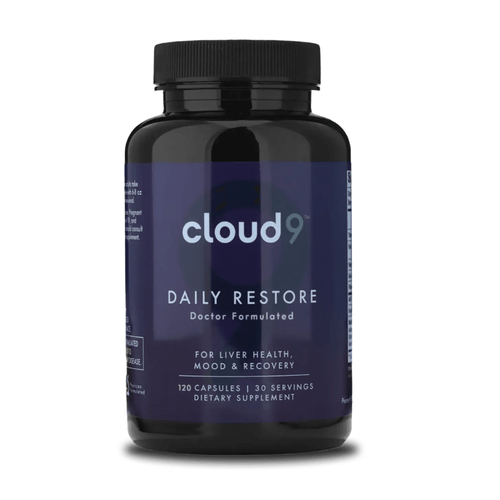
Cloud9 Daily Restore combines NAC, DHM, milk thistle, B vitamins, and ashwagandha to help support the pathways alcohol can tax most. Two capsules daily, drinking or not.
NAC | DHM | Milk Thistle | B Vitamins | Ashwagandha
See How Daily Restore Works1. Track Your Current Drinking Patterns
Before you can cut back effectively, you need to know your baseline. Most people underestimate how much they actually drink, which makes it harder to set realistic goals.
How to Track Effectively
Start by keeping a simple log for one to two weeks. Note not just what you drink, but when, where, and what you're feeling at the time.
- Use a notes app or dedicated tracking tool to record each drink in real time
- Document the context: Were you stressed? Celebrating? Bored?
- Notice patterns in timing, like whether weekends are significantly different
- Track how you feel the next day after different amounts
What Your Patterns Reveal
After a week or two, review your log for trends. You might discover that you drink more when you're anxious about work, or that you automatically pour a drink when you start cooking dinner, regardless of whether you actually want it.
These insights become your roadmap. Once you know your triggers and habits, you can address them directly rather than relying on willpower alone.
2. Set Clear, Specific Goals
"Drink less" is too vague to be useful. Your brain needs concrete targets to work toward.
Creating Your Personal Drinking Limits
Based on your tracking data, choose a specific, measurable goal. This might be a weekly limit, drink-free days, or maximum drinks per occasion.
| Goal Type | Example | Best For |
|---|---|---|
| Weekly limit | No more than 7 drinks per week | Overall consumption control |
| Drink-free days | Three alcohol-free days weekly | Breaking daily habits |
| Per-occasion limit | Maximum 2 drinks at social events | Preventing over-drinking in social settings |
| Time-based rule | No drinking before 7 PM | Eliminating automatic early drinking |
Making Goals Stick
Write your goals down and put them somewhere visible. Research on behavior change suggests that people who write down specific intentions are significantly more likely to follow through.
Consider telling a trusted friend or partner about your goals. Social accountability can provide extra motivation, especially during challenging moments.
3. Identify and Prepare for Your Triggers
Your tracking data likely revealed certain situations, emotions, or times of day when you're most likely to drink. These are your triggers, and they're not a sign of weakness, they're simply learned patterns.
Common Drinking Triggers
- Stress or anxiety from work or relationships
- Transitional moments like arriving home or finishing a task
- Social pressure or FOMO in group settings
- Boredom or lack of engaging activities
- Habitual cues like sitting in a certain chair or watching specific shows
Creating If-Then Plans
For each trigger you've identified, create a specific alternative action. These "if-then" plans give your brain a clear path forward that doesn't involve alcohol.
Instead of white-knuckling through cravings, have a plan. If I feel stressed after work, then I'll take a 15-minute walk before going inside. If friends suggest happy hour, then I'll suggest a specific restaurant where I enjoy the food, not just the drinks.
The more specific your backup plan, the less mental energy you'll spend making decisions in the moment. Decision fatigue is real, and it's much easier to follow a predetermined plan than to negotiate with yourself when you're tired or stressed.
4. Stock Up on Quality Alternatives
One of the simplest but most overlooked strategies is having delicious non-alcoholic options readily available. When your only alternative to wine is tap water, you're setting yourself up for unnecessary temptation.
Beyond Basic Soft Drinks
The non-alcoholic beverage market has exploded in recent years. Premium options now include sophisticated flavors and ingredients that make cutting back feel less like deprivation.
- Non-alcoholic spirits and cocktails with complex flavor profiles
- Sparkling waters infused with adaptogens or nootropics
- Kombucha or fermented drinks for a sophisticated feel
- Premium teas or coffee drinks for evening relaxation
- Freshly made mocktails with quality ingredients
The Ritual Matters
Part of drinking's appeal is the ritual, the act of pouring something special into a nice glass and savoring it. You can maintain that ritual with non-alcoholic options.
Use your good glassware. Add ice, garnishes, or special touches. The sensory experience of a well-crafted drink can satisfy many of the same psychological needs that alcohol does, without the negative effects.
5. Redesign Your Environment
Your physical environment has more influence over your behavior than you might realize. Small changes to your space can remove friction from better choices and add friction to less helpful ones.
At Home
Consider these environmental adjustments to support your goals:
- Move alcohol out of easy sight, like to a higher cabinet or basement
- Keep fewer drinks at home overall, buying only what you plan to consume
- Place your non-alcoholic alternatives at eye level in the fridge
- Change your evening routine location if you associate certain spots with drinking
- Stock your usual "drinking glass" with your favorite alternative instead
In Social Settings
You can also prepare your social environment. Arrive at gatherings with a non-alcoholic drink already in hand, or offer to be the designated driver, which creates a clear boundary.
Choose social activities that don't center on alcohol. Meeting friends for morning coffee, a fitness class, or a museum visit removes drinking from the equation entirely.
6. Build New Stress Management Tools
If your tracking revealed that stress is a major drinking trigger, you'll need to develop alternative ways to decompress. This isn't optional, it's essential for long-term success.
Evidence-Based Stress Relief Strategies
Research suggests several approaches that can help regulate stress and anxiety without alcohol:
- Movement: Even 10 minutes of walking can shift your nervous system state
- Breathwork: Simple breathing exercises activate your relaxation response
- Progressive muscle relaxation: Systematic tension and release of muscle groups
- Engaging hobbies: Activities that create flow states naturally reduce stress
- Social connection: Talking with supportive people provides emotional regulation
The Replacement Principle
Don't just remove alcohol, replace it with something genuinely rewarding. If you used drinking to unwind, you need another unwinding method that actually works for you.
Experiment with different options until you find what genuinely helps. The goal is to discover stress relief that leaves you feeling better the next day, not worse.
7. Get Strategic About Social Situations
Social pressure is one of the biggest obstacles to cutting back. Having a solid game plan for navigating social situations can make the difference between success and giving in when you didn't want to.
What to Say When Offered a Drink
You don't owe anyone a detailed explanation. Simple, confident responses work best:
- "I'm good with this" (gesturing to your non-alcoholic drink)
- "I'm taking a break from drinking"
- "I'm driving tonight"
- "I'm trying something new this month"
- Simply "No thanks" with a smile
Finding Your People
Pay attention to which friends support your goals and which ones make it harder. This doesn't mean cutting people out of your life, but it might mean adjusting how and when you spend time with different people.
You might also discover a whole community of people who are sober-curious or intentionally drinking less. These connections can provide support and normalize your choices in ways that make the journey easier.
How Daily Restore Supports Your Health
Understanding what your body needs is one thing. Getting consistent daily support is another. Daily Restore was designed to address the key pathways alcohol can stress most, in one simple daily formula.
NAC (N-Acetyl Cysteine)
Supports glutathione production and antioxidant defenses
DHM (Dihydromyricetin)
Supports alcohol metabolism
Milk Thistle (Silymarin)
Supports healthy liver function
B Vitamins
Help replenish nutrients involved in energy and metabolism
Ashwagandha
Supports stress resilience and healthy cortisol balance
Daily Restore is not a detox or a cure. It is a daily support formula designed for people who drink socially and want to give their body consistent, evidence-informed support.
Frequently Asked Questions
How long does it take to notice benefits from cutting back on alcohol?
Many people report better sleep quality and increased energy within the first week of reducing their alcohol intake. More significant changes, like improved mood, clearer thinking, and better physical health markers, often become noticeable within two to four weeks of consistent moderation.
What if I slip up and drink more than I planned?
Setbacks are a normal part of changing any habit, and they don't erase your progress. The key is to reflect on what triggered the slip without judgment, then refocus on your goals the next day. Think of this as a learning process rather than a pass-or-fail test.
Can supplements really help with cravings and recovery?
Research suggests that certain nutrients can support your body during the adjustment period when you're cutting back on drinking. Ingredients like DHM, milk thistle, and B vitamins may help support liver function and promote recovery, though they work best when combined with lifestyle changes like proper hydration, nutrition, and stress management.
Do I have to quit drinking completely to see health benefits?
Not necessarily. Studies show that even moderate reductions in alcohol consumption can lead to meaningful health improvements, including better sleep, weight management, and reduced inflammation. The right approach depends on your personal health goals, current drinking patterns, and overall wellness objectives.
When should I seek professional help for my drinking?
If you experience physical withdrawal symptoms when you try to cut back, find that drinking interferes with your work or relationships, or feel unable to control your consumption despite wanting to, it's time to consult a healthcare professional. They can provide personalized guidance and connect you with appropriate resources for your situation.
The Bottom Line
Cutting back on drinking doesn't require a dramatic overhaul of your life. Small, strategic changes like tracking your intake, finding enjoyable alternatives, and building a support system can lead to meaningful improvements in how you feel day to day. The key is to start with one or two strategies that resonate with you and build from there.
Remember that progress isn't always linear. Some weeks will feel easier than others, and that's completely normal. What matters most is your commitment to showing up for yourself consistently, even when it's challenging. Celebrate the small wins along the way, whether that's choosing a mocktail over wine or waking up feeling refreshed on a Sunday morning.
Supporting your body during this transition can make the process smoother. Cloud9's Daily Restore was designed specifically for people who want consistent daily support as they moderate their drinking. With DHM, milk thistle, and essential vitamins, it provides targeted nutrients that may help your body recover and adapt to healthier habits.
Whether you're taking a break from alcohol, cutting back gradually, or simply looking to feel better overall, these seven tips can help you take meaningful steps this week. Your future self will thank you for the effort you're putting in today.
Build Your Daily Support Routine
Build Your Daily Support Routine
If drinking is part of your lifestyle, your support routine should not be random. Daily Restore was designed to help social drinkers support liver health, antioxidant defenses, alcohol metabolism, nutrient replenishment, and daily recovery in one simple routine.
NAC
DHM
Milk Thistle
B Vitamins
Ashwagandha