

You've tried to cut back before. You set rules, made promises to yourself, and started each week with determination. Yet by Thursday evening, the familiar pattern repeated itself. If you blamed your lack of willpower, you were focusing on the wrong thing entirely.
Mindful drinking isn't a test of personal strength. It's a deliberate rewiring of the automatic systems that drive your drinking habits. When you understand this difference, changing your relationship with alcohol shifts from an uphill battle to a manageable process.
Here's what actually works when willpower alone doesn't.
Quick Take
- Willpower is a limited resource that depletes throughout the day, making it unreliable for sustained behavior change
- Strategic interventions work with your brain's natural patterns rather than fighting against them
- Environmental design, replacement rituals, and deliberate dopamine sources can reduce drinking without constant mental effort
- Understanding your specific triggers allows you to create personalized strategies that actually stick
- Combining multiple small strategies creates sustainable change that doesn't depend on daily motivation levels
The Willpower Myth That Keeps You Stuck
Research suggests that willpower functions more like a muscle that fatigues with use than an unlimited personal trait. Throughout your day, every decision you make, from what to wear to how to respond to a difficult email, draws from the same limited pool of self-control resources. By evening, when you typically face decisions about drinking, your willpower reserves are already depleted.
This explains why you can resist a morning mimosa with ease but struggle to say no to wine after a stressful workday. Your capacity for self-control follows a predictable pattern, and evening alcohol decisions often occur at your lowest point of resistance. Understanding this isn't about excusing the behavior but recognizing that relying solely on willpower sets you up to fail.
Studies show that people who successfully change habits don't actually have more willpower than others. They use strategies that require less conscious effort, creating systems that make the desired behavior easier and the unwanted behavior harder. This is the foundation of mindful drinking that lasts.
Daily Support for Social Drinkers
Your liver works hard every day. Give it consistent support.
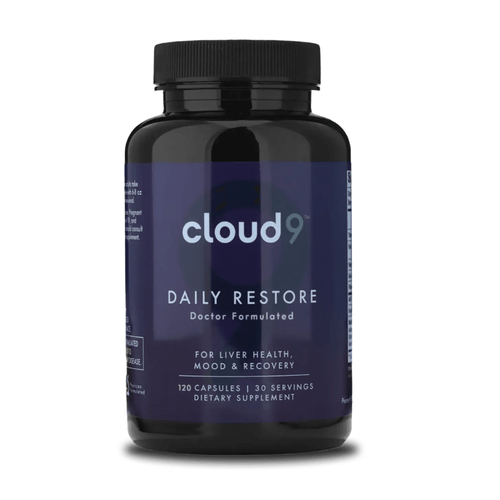
Cloud9 Daily Restore combines NAC, DHM, milk thistle, B vitamins, and ashwagandha to help support the pathways alcohol can tax most. Two capsules daily, drinking or not.
NAC | DHM | Milk Thistle | B Vitamins | Ashwagandha
See How Daily Restore WorksStrategy One: Design Your Environment, Not Your Resolve
Your physical environment shapes your drinking patterns more powerfully than any internal pep talk. When alcohol is immediately accessible and visible, you're fighting an uphill battle every single time you try to resist. Strategic environmental design removes the need for constant decision-making.
Simple Environmental Interventions
The most effective changes require zero willpower because they work before the craving even starts. These modifications to your physical space create natural friction between impulse and action, giving your rational mind time to engage.
- Remove alcohol from your home entirely for 30 days, or relocate it to an inconvenient location like a basement or locked cabinet
- Stock your refrigerator at eye level with appealing non-alcoholic alternatives in attractive glassware
- Change your route home to avoid passing liquor stores or bars during high-risk times
- Rearrange your kitchen so the wine glasses aren't the first thing you see when opening cabinets
- Keep your favorite non-alcoholic beverages colder than you'd normally store alcohol, making them more immediately satisfying
The Two-Minute Rule Applied to Drinking
Making drinking require two extra minutes of effort can dramatically reduce consumption. This isn't about creating impossible barriers but adding enough friction that automatic behavior becomes conscious choice. Keep wine in a garage refrigerator instead of your kitchen, or require yourself to walk to a store rather than drinking what's at home.
Conversely, make not drinking absurdly easy. Pre-mix non-alcoholic cocktails and keep them chilled. Set out your favorite glass with a garnish already prepared. Create an environment where the path of least resistance leads away from alcohol rather than toward it.
Strategy Two: Build Replacement Rituals That Actually Satisfy
You don't just drink alcohol for the ethanol itself. You drink for the ritual, the transition between work and relaxation, the social lubricant, the sensory experience, and the reliable dopamine hit. Effective mindful drinking strategies replace these functions rather than leaving a void.
Understanding What Your Drink Actually Does
Before you can replace a drinking habit, you need to identify what purpose it serves. Different people drink for different reasons, and your replacement strategy should match your specific drivers. A rushed end-of-day stress drinker needs different solutions than a social anxiety drinker.
| Drinking Function | What It Provides | Strategic Replacement |
|---|---|---|
| Transition Ritual | Signals work time is over | 5-minute walk, changing clothes, specific playlist, elaborate tea ceremony |
| Stress Relief | Nervous system down-regulation | Box breathing, cold shower, progressive muscle relaxation, vigorous exercise |
| Social Confidence | Reduces inhibition and anxiety | Having a drink in hand (non-alcoholic), arriving early when fewer people are present, time-limited attendance |
| Reward/Treat | Dopamine and pleasure | High-quality chocolate, engaging hobby, connection with friends, novel experiences |
| Sensory Experience | Taste, ritual, sophistication | Premium non-alcoholic spirits, kombucha in wine glasses, craft coffee or tea |
The Ritual Matters More Than You Think
Your brain forms powerful associations between specific cues and behaviors. The sound of a cork popping, the weight of a wine glass, the act of pouring, these sensory elements trigger anticipation and craving independent of the alcohol itself. Preserving the ritual while changing the content can satisfy much of the drive to drink.
Use the same glassware, the same timing, the same comfortable chair. Make your non-alcoholic option feel special rather than punitive. The ritual creates a sense of reward and transition that your brain craves, and maintaining it reduces the feeling of deprivation that undermines most attempts at moderation.
The most successful mindful drinkers don't eliminate their evening ritual. They preserve everything they love about it while strategically removing the one element that wasn't serving them.
Strategy Three: Pre-Commit When Your Rational Brain Is Strong
In the morning, when your willpower is highest and you're not facing immediate temptation, your rational brain makes different decisions than it does at 7 PM after a difficult day. Strategic pre-commitment leverages this natural variation in decision-making capacity.
Making Future Decisions Now
Pre-commitment removes the decision from the moment of weakness and places it in a moment of strength. These aren't vague intentions but specific, actionable decisions with built-in accountability. The key is creating enough structure that your evening self would have to actively override your morning self's decision.
- Text a friend your specific drinking plan for the week and ask them to check in
- Schedule evening activities that are incompatible with drinking, like early morning workout classes the next day
- Use apps that track consecutive alcohol-free days, leveraging loss aversion to maintain streaks
- Pre-pay for alcohol-free activities or experiences, creating financial commitment
- Write yourself a letter in the morning explaining why you're choosing not to drink, to be read when cravings hit
Implementation Intentions: The If-Then Formula
Research shows that people who use specific if-then planning are significantly more likely to follow through on behavioral changes. These aren't general goals but precise scripts for specific situations. Instead of "I'll drink less this week," you create: "If I feel stressed after work, then I will take a 10-minute walk before entering my house."
The power of implementation intentions lies in their specificity. You're not relying on in-the-moment decision-making but following a pre-determined plan. Your brain recognizes the "if" trigger and automatically initiates the "then" response, bypassing the need for willpower entirely.
Strategy Four: Manage Your Dopamine, Not Just Your Drinking
Alcohol triggers dopamine release, creating the anticipation and reward cycle that makes it so compelling. If drinking is your primary source of pleasure and novelty, any attempt to reduce it will feel like deprivation. Strategic mindful drinking means cultivating alternative dopamine sources before you reduce alcohol.
Building a Dopamine-Rich Life Without Alcohol
Your brain needs regular hits of novelty, achievement, and pleasure to function optimally. When these needs aren't met through healthy channels, alcohol becomes an easy default. Creating a life with naturally higher baseline dopamine makes drinking feel less essential rather than more difficult.
- Engage in activities with built-in progression and achievement, like learning an instrument or language
- Prioritize social connection outside of drinking contexts, as human bonding is a powerful dopamine source
- Introduce regular novelty through new experiences, even small ones like trying unfamiliar foods or taking different routes
- Exercise releases dopamine and endorphins while reducing stress, creating a biological shift that makes alcohol less appealing
- Pursue creative activities that create flow states, which produce sustained dopamine release
The Timing Strategy: When to Deploy Your Techniques
Different strategies work better at different stages of a craving cycle. Environmental design works preventatively, before cravings start. Replacement rituals work during the typical drinking window. Pre-commitment works in moments of clarity. Understanding this timing allows you to deploy the right tool at the right moment rather than fighting with willpower alone.
Create a personalized toolkit that addresses each stage. What will you do at 3 PM when you start anticipating your evening drink? What specific action will you take when you walk in the door? What will satisfy the need that drinking typically fills? Answering these questions in advance removes the burden from your depleted evening willpower.
How Daily Restore Supports Your Health
Understanding what your body needs is one thing. Getting consistent daily support is another. Daily Restore was designed to address the key pathways alcohol can stress most, in one simple daily formula.
NAC (N-Acetyl Cysteine)
Supports glutathione production and antioxidant defenses
DHM (Dihydromyricetin)
Supports alcohol metabolism
Milk Thistle (Silymarin)
Supports healthy liver function
B Vitamins
Help replenish nutrients involved in energy and metabolism
Ashwagandha
Supports stress resilience and healthy cortisol balance
Daily Restore is not a detox or a cure. It is a daily support formula designed for people who drink socially and want to give their body consistent, evidence-informed support.
Frequently Asked Questions
What is the difference between willpower and strategy when it comes to mindful drinking?
Willpower relies on constant mental effort and self-control, which research suggests depletes throughout the day. Strategy, on the other hand, involves setting up your environment, routines, and choices in advance so you don't have to rely on moment-to-moment decision-making. Strategic approaches can help reduce the cognitive burden of making healthier choices.
How long does it take to see results from a strategic approach to mindful drinking?
Many people report noticing shifts in their patterns within the first two to three weeks of implementing consistent strategies. However, sustainable change typically develops over several months as new habits become automatic. The key is focusing on progress rather than perfection, allowing your strategies to evolve as you learn what works best for you.
Can I still socialize if I'm practicing mindful drinking?
Absolutely. Mindful drinking is about making intentional choices, not isolation. Strategic approaches like having a non-alcoholic drink in hand, setting personal limits before events, or suggesting activity-based social gatherings can help you stay connected while honoring your goals. Many people find their social lives actually improve when they're more present and intentional.
What should I do if my strategies stop working?
It's normal for strategies to need adjustment over time as your life circumstances change. When something stops working, treat it as useful information rather than failure. Revisit your triggers, experiment with new approaches, and consider whether you need additional support like routine supplementation or accountability partners to reinforce your efforts.
How can supplements support a strategic approach to mindful drinking?
Quality supplements with ingredients like DHM, milk thistle, and L-theanine may help support your body's natural processes during alcohol metabolism and stress response. When taken consistently as part of a daily routine, they can complement behavioral strategies by providing physiological support. Think of them as another tool in your strategic toolkit rather than a standalone solution.
The Bottom Line
Mindful drinking isn't about summoning endless willpower or white-knuckling your way through social situations. It's about building smart, sustainable strategies that work with your lifestyle rather than against it. By understanding your triggers, redesigning your environment, and creating consistent routines, you can make choices that align with your goals without constant internal struggle.
The most effective approaches combine multiple strategies: environmental design, social planning, routine building, and physiological support. When these elements work together, they create a framework that makes mindful choices feel natural rather than forced. Progress may not always be linear, but with the right strategies in place, each day becomes an opportunity to reinforce patterns that serve you.
Daily Restore was designed to be part of this strategic approach. By taking it consistently each morning, you create a daily touchpoint that reinforces your commitment while providing your body with targeted support. The blend of DHM, milk thistle, L-theanine, and essential vitamins may help support liver function, stress response, and overall wellness as you navigate your mindful drinking journey.
Remember, the goal isn't perfection. It's building a sustainable relationship with alcohol that honors both your social life and your wellbeing. With strategy on your side, you're not fighting against yourself, you're setting yourself up for success, one intentional choice at a time.
Build Your Daily Support Routine
Build Your Daily Support Routine
If drinking is part of your lifestyle, your support routine should not be random. Daily Restore was designed to help social drinkers support liver health, antioxidant defenses, alcohol metabolism, nutrient replenishment, and daily recovery in one simple routine.
NAC
DHM
Milk Thistle
B Vitamins
Ashwagandha