

That nagging sensation that everyone in the room is scrutinizing your every move. The internal running commentary dissecting how you just said hello, sat down, or laughed at that joke. If you feel like you're constantly under a microscope in social situations, you're not imagining things, but you might be misinterpreting them.
Social anxiety affects approximately 12% of adults at some point in their lives, and the feeling of being judged is one of its most common symptoms. The good news is that understanding why this happens and having practical strategies can help you navigate social situations with more ease and confidence.
This guide offers actionable social anxiety tips to help you manage those uncomfortable moments when your mind insists everyone is watching and critiquing you.
Quick Take
- The spotlight effect makes us overestimate how much others notice our behavior by up to 40%
- Your brain's threat detection system may be interpreting neutral faces as critical or disapproving
- Grounding techniques can interrupt the anxiety spiral within 60 to 90 seconds
- Gradual exposure to social situations helps retrain your brain's response over time
- Most people are far more focused on their own concerns than judging yours
Why Your Brain Is Convinced Everyone Is Watching
Your feeling of being judged isn't random, it's rooted in how your brain processes social information. Research suggests that people with social anxiety show heightened activity in the amygdala, the brain region responsible for detecting threats. In social situations, this can mean your brain treats a room full of people the same way it would treat a physical danger.
This hypervigilance is compounded by what psychologists call the "spotlight effect," our tendency to dramatically overestimate how much others notice about us. Studies show that we believe people notice our appearance and behavior about 40% more than they actually do. That awkward thing you said? Most people didn't catch it, and those who did have likely already forgotten it.
Your brain may also be misreading neutral expressions as negative ones. When you're anxious, you're more likely to interpret ambiguous facial expressions as critical or disapproving, even when the other person is simply thinking about their grocery list or wondering if they left the stove on.
Daily Support for Social Drinkers
Your liver works hard every day. Give it consistent support.
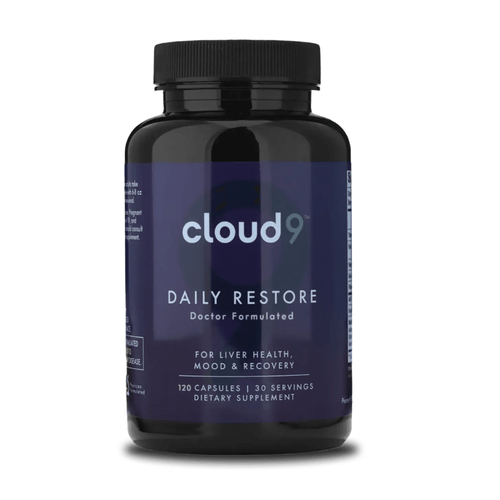
Cloud9 Daily Restore combines NAC, DHM, milk thistle, B vitamins, and ashwagandha to help support the pathways alcohol can tax most. Two capsules daily, drinking or not.
NAC | DHM | Milk Thistle | B Vitamins | Ashwagandha
See How Daily Restore WorksImmediate Strategies When the Judging Feeling Hits
When you're in the middle of a social situation and that overwhelming sense of being scrutinized strikes, you need tools that work quickly. These techniques can help interrupt the anxiety spiral before it takes over completely.
The 5-4-3-2-1 Grounding Method
This sensory awareness technique pulls you out of anxious thoughts and back into the present moment. It works by redirecting your attention from internal worries to external reality, giving your nervous system a chance to reset.
Here's how to use it discreetly in any social setting:
- Identify 5 things you can see (a painting, someone's blue shirt, the exit sign)
- Notice 4 things you can physically feel (your feet on the floor, the chair supporting you, your watch on your wrist)
- Listen for 3 sounds (conversation nearby, air conditioning, traffic outside)
- Identify 2 things you can smell (coffee, someone's cologne, fresh air)
- Name 1 thing you can taste (gum, your last sip of water, mint from toothpaste)
Tactical Breathing Without Drawing Attention
Deep breathing activates your parasympathetic nervous system, which counteracts the fight-or-flight response. The key is doing it subtly so you don't feel even more self-conscious.
Try box breathing: breathe in for 4 counts, hold for 4, exhale for 4, hold for 4. You can do this while nodding along in conversation or taking a sip of your drink. No one will notice you're regulating your nervous system.
The Redirect and Refocus Technique
When you catch yourself spiraling into "everyone is judging me" thoughts, actively redirect your attention outward. Focus intently on what someone is actually saying rather than how you think you're coming across. Ask a follow-up question, this forces your brain to shift from internal critique to external engagement.
The moment you shift from "what are they thinking about me?" to "what are they actually saying?" you reclaim control of your attention and often your anxiety decreases naturally.
Reframing Your Relationship With Judgment
Beyond immediate coping strategies, changing how you think about judgment itself can reduce social anxiety over time. These mental shifts take practice but can fundamentally alter your social experience.
The Reality Check: What People Actually Notice
Most people in social situations are managing their own internal experience, not auditing yours. Research on attention and memory suggests that people retain very little detail about others' behavior in casual social interactions. They remember the general vibe and major moments, not the small stumbles you're convinced were catastrophic.
Consider this comparison between what you think happened and what others likely experienced:
| What You Think Happened | What Others Likely Noticed |
|---|---|
| You stumbled over your words and sounded incompetent | A brief pause in conversation (if noticed at all) |
| Your face turned red and everyone saw you were anxious | Slight color change, attributed to room temperature or nothing specific |
| You didn't contribute enough and seemed boring or disinterested | A quieter person in the group (a neutral observation) |
| Your joke landed awkwardly and everyone thought you were weird | A comment that didn't get a big reaction (then they moved on) |
Separating Thoughts From Facts
Just because you think everyone is judging you doesn't make it true. This distinction is central to cognitive behavioral approaches for social anxiety. Your thoughts are interpretations, not objective reality.
Practice labeling anxious thoughts as what they are: "I'm having the thought that people think I'm awkward" rather than "People think I'm awkward." This small language shift creates psychological distance and reminds you that thoughts are mental events, not facts.
The Judgment Paradox
Here's something worth considering: the more you worry about being judged, the more self-focused you become, which can actually make social interactions harder. When you're monitoring yourself constantly, you have less mental bandwidth for genuine connection. Ironically, letting go of the fear of judgment often improves how you come across.
Building Long-Term Resilience Against Social Anxiety
While immediate techniques help in the moment, developing lasting confidence in social situations requires consistent practice. These approaches work gradually to retrain how your brain responds to social scenarios.
Graduated Exposure: Start Small and Build
Exposure therapy is one of the most effective approaches for social anxiety, but you don't need a therapist to start applying its principles. The idea is to gradually face feared situations in manageable doses, allowing your brain to learn that the feared outcome rarely happens.
Create a personal hierarchy of social situations from least to most anxiety-provoking:
- Saying good morning to a cashier or barista
- Making small talk with a neighbor
- Asking a question in a small meeting
- Attending a social gathering for 30 minutes
- Initiating plans with an acquaintance
- Speaking up in a larger group setting
- Attending an event where you don't know many people
Start with the easiest item and practice it repeatedly until it feels manageable. Then move to the next level. The key is consistency, brief, regular exposure works better than occasional intense challenges.
Post-Event Processing: Breaking the Rumination Cycle
If you're prone to replaying social interactions afterward, analyzing everything you said and did, you're engaging in post-event processing. This rumination actually reinforces social anxiety rather than resolving it.
Instead, try a structured debrief:
- Write down three things that went reasonably well or better than expected
- Note one thing you'd like to do differently next time (not as self-criticism, but as a practical adjustment)
- Acknowledge one anxious prediction that didn't come true
- Set a time limit (10 minutes maximum) for this reflection, then consciously move on to another activity
Self-Compassion as a Counterweight
Research suggests that self-compassion, treating yourself with the same kindness you'd offer a friend, can significantly reduce social anxiety symptoms. When you make a social misstep, notice the harsh internal commentary and intentionally soften it.
Instead of "I'm so awkward, I always mess up," try "That felt uncomfortable, and that's okay. Most people have moments like this. I'm learning and that takes time." This isn't toxic positivity, it's realistic kindness toward yourself.
When to Seek Additional Support
These social anxiety tips can be genuinely helpful for managing everyday feelings of being judged. However, if your social anxiety significantly interferes with your work, relationships, or quality of life, professional support may be beneficial.
Signs It Might Be Time for Professional Help
Consider reaching out to a mental health professional if you experience any of the following:
- You regularly avoid social situations that are important to you (skipping events you want to attend, turning down opportunities)
- Physical symptoms like panic attacks, nausea, or intense trembling occur in social settings
- You use alcohol or other substances to manage social situations
- The anxiety persists even after trying self-help strategies consistently for several months
- Your relationships or career are suffering because of social avoidance
- You experience intense anxiety in most social situations, not just specific ones
What Effective Treatment Looks Like
Cognitive behavioral therapy (CBT) and exposure-based therapies have strong research support for treating social anxiety. These approaches help you identify and challenge anxious thinking patterns while gradually building confidence through supported exposure to feared situations. Some people also benefit from medication, particularly when anxiety is severe or hasn't responded to therapy alone.
The right therapist will work collaboratively with you to develop a treatment plan that fits your specific concerns and goals. Treatment doesn't mean eliminating all social discomfort, it means reducing anxiety to manageable levels so it doesn't control your choices.
How Daily Restore Supports Your Health
Understanding what your body needs is one thing. Getting consistent daily support is another. Daily Restore was designed to address the key pathways alcohol can stress most, in one simple daily formula.
NAC (N-Acetyl Cysteine)
Supports glutathione production and antioxidant defenses
DHM (Dihydromyricetin)
Supports alcohol metabolism
Milk Thistle (Silymarin)
Supports healthy liver function
B Vitamins
Help replenish nutrients involved in energy and metabolism
Ashwagandha
Supports stress resilience and healthy cortisol balance
Daily Restore is not a detox or a cure. It is a daily support formula designed for people who drink socially and want to give their body consistent, evidence-informed support.
Frequently Asked Questions
Can social anxiety go away on its own?
While some people experience temporary social nervousness that fades with time, clinical social anxiety typically requires active intervention to improve. Working with a therapist, practicing exposure techniques, and building coping skills can help significantly reduce symptoms over time.
How do I know if my social anxiety is serious enough to seek help?
If your fear of social situations is interfering with work, relationships, or daily activities, or if you're avoiding important events because of anxiety, it's worth talking to a mental health professional. You don't need to wait until things feel unbearable to get support.
What's the difference between being shy and having social anxiety?
Shyness is a personality trait that involves feeling reserved in social situations but doesn't necessarily cause significant distress. Social anxiety involves intense fear, physical symptoms, and avoidance behaviors that impact your quality of life and ability to function in everyday situations.
Can supplements really help with social anxiety?
Research suggests that certain ingredients like L-theanine, ashwagandha, and magnesium may help support the body's stress response and promote a sense of calm. While supplements aren't a standalone solution, they can be a helpful part of a broader approach that includes therapy, lifestyle changes, and other coping strategies.
How long does it take to see improvement in social anxiety?
The timeline varies for everyone, but many people begin noticing gradual improvements within a few weeks to a few months of consistently practicing coping techniques and working with a therapist. Progress isn't always linear, and some setbacks are normal as you build new skills and patterns.
The Bottom Line
Social anxiety can make you feel like you're under a spotlight, but the reality is that most people are too focused on their own concerns to scrutinize you as harshly as you might fear. By challenging negative thought patterns, gradually facing feared situations, and building supportive daily habits, you can reduce the intensity of social anxiety and reclaim your confidence in social settings.
The strategies we've covered, from breathing techniques to cognitive reframing, work best when practiced consistently. Creating a routine that includes stress management, adequate sleep, regular movement, and proper nutrition gives your nervous system the foundation it needs to stay more balanced when social challenges arise.
This is where Cloud9's Daily Restore can fit into your approach. With research-backed ingredients like L-theanine, ashwagandha, and magnesium, Daily Restore is designed to support your body's natural stress response and help you feel more grounded throughout the day. It's not about eliminating all nervousness, but rather supporting your system so you have more capacity to engage with the coping skills that matter most.
Remember, overcoming social anxiety is a journey, not a destination. Be patient with yourself, celebrate small wins, and know that with the right combination of tools and support, you can move through social situations with greater ease and authenticity.
Build Your Daily Support Routine
Build Your Daily Support Routine
If drinking is part of your lifestyle, your support routine should not be random. Daily Restore was designed to help social drinkers support liver health, antioxidant defenses, alcohol metabolism, nutrient replenishment, and daily recovery in one simple routine.
NAC
DHM
Milk Thistle
B Vitamins
Ashwagandha