

As told to the Cloud9 editorial team. Shared with permission. April 2025.
I don't remember the day it became every night.
I remember the first time, though. Our oldest had just started high school. The house was quiet for the first time in fifteen years at 4:30 in the afternoon. I poured a glass of Sauvignon Blanc, stood at the kitchen island, and watched the light change through the window over the sink. I told my husband later that it was the first moment in a very long time that had felt like mine.
That was maybe 2018.
By 2022 I was pouring at 4:30 every afternoon. By 2023 I was pouring a second glass while I made dinner and a third while I ate. By 2024 I was waking up at 3 a.m. most nights and could not figure out why.
The arithmetic got obvious after I started paying attention. Three glasses of wine is not a hangover-free amount of alcohol for a 52-year-old woman, even if she's fit and eats well and drinks water in between. I was waking up foggy. My workouts felt harder. My mood was flat in a way that I kept attributing to perimenopause.
I told myself it wasn't a problem. I didn't get drunk. I didn't miss work. I didn't embarrass myself at dinner parties. I wasn't "one of those people."
But I thought about drinking all the time.
The 5 p.m. Voice

By 2 or 3 in the afternoon, the mental countdown would start. I'd find myself calculating. What do I have planned tonight? When can I pour? Is there enough wine in the fridge or do I need to swing by the store?
If I was in a meeting at 4:30, I'd be half-present, watching the clock, wanting to be home.
If I was at a kid's event that ran late, I'd feel a low-grade irritation I couldn't name.
If someone invited us over and they weren't serving wine, I'd find a way to decline.
I want to be clear that none of this felt dramatic. I wasn't pacing. I wasn't shaking. I was just thinking about wine all the time, in the background, under everything else.
My husband is a glass-with-dinner guy. He'd have one, and I'd have three, and he didn't notice because I drank quickly before he came to the table and then nursed the last one through the meal.
The private drinking is the tell, I read somewhere recently. When you drink more alone than with people, that's the check-engine light.
Mine had been blinking for years.
If this sounds like your story, you're not alone. And there's a reason it keeps happening. Here's what finally worked for me.
What I Tried
I'm not going to pretend I did nothing.
I did Dry January three years running. I made it the whole month twice. Both times, by Valentine's Day, I was back to three glasses a night.
I read This Naked Mind by Annie Grace. Cover to cover. Twice. The logic is impeccable. The argument is that alcohol isn't something we have to give up because it's secretly not giving us anything we actually want. I read it, I agreed with it, I underlined things. Then I poured a glass of wine and kept drinking three a night.

I tried "only on weekends." That lasted eleven days.
I tried the Sinclair Method, which is taking naltrexone (a prescription medication) an hour before you drink. It blocks the buzz. The idea is that over time, your brain stops associating drinking with reward and you drink less. My doctor was willing to write the script. I tried it for about three months. What I found was that it dulled the pleasure of drinking without dulling the craving. I still wanted the wine. I just didn't feel anything when I had it. That felt worse, somehow. I stopped.
I downloaded Reframe, and I Am Sober, and Sunnyside. I opened each of them about four times and then never again.
I went to a few therapy sessions to talk about why I drank. The therapist was kind. We agreed that I drank to create a transition between my work-self and my home-self, and to quiet the anxious hum of modern life, and because I liked it. None of which was wrong. None of which made me drink less.
I tried meditation. I tried yoga. I tried going for a walk at 5 p.m. instead of pouring. I tried telling myself I deserved not to drink. I tried telling myself I deserved to drink. I tried everything.
What I did not try, because I hadn't heard of it, was fixing my brain chemistry.
The Thing Nobody Told Me

Here is what I wish someone had explained to me in 2022.
Alcohol depletes your brain's supply of the exact chemicals that keep cravings quiet. Dopamine. Serotonin. B vitamins. Folate. Every night you drink, you take a little more out of the tank. And the next day, your brain reaches for what made it feel okay yesterday.
That reaching is what I was calling willpower failure.
It was not willpower failure. It was a chemistry deficit. I was trying to think my way out of something that wasn't a thinking problem.
"I was trying to think my way out of something that wasn't a thinking problem."
I learned this from a supplement I started taking last spring, called Crave Away.
It's built around a root called Kudzu, which has been used in Chinese medicine for over a thousand years to help heavy drinkers drink less. A team of researchers at McLean Hospital (which is affiliated with Harvard Medical School) has been studying it for two decades. Their published trials showed heavy drinkers reduced their drinking by 34 to 57 percent when taking Kudzu extract. In the papers, the researchers compared Kudzu's effect to naltrexone, which I had already tried.
I read the papers. I read the bio of Dr. Brooke Scheller, who advises Cloud9 and wrote a book called How to Eat to Change How You Drink. I read the reviews. I ordered a bottle.
The First 30 Days
I kept notes, because I'm a notes person.
Week one. Nothing felt different, physically. What I noticed was mental. The 3 p.m. countdown got quieter. It was still there. It was just softer. I still drank most nights that week. I just wasn't rehearsing the evening in my head all afternoon.
Week two. I started sleeping through the night. This was unexpected. I hadn't slept through the night in maybe two years. I read later that 5-HTP, which is in the formula, supports serotonin, which supports sleep, and that alcohol disrupts serotonin. On Thursday of that week I poured a glass of wine, drank half of it, and put it down. I remember standing in my kitchen thinking, huh.
Week three. I had three weeknights where I didn't drink at all. Not because I was forcing it. I just didn't think to pour one. One of those nights I realized at 9 p.m. that I hadn't even thought about wine since lunch, and that was a thing I don't think had happened since our oldest was in middle school.
Week four. My weekly count was down from around 18 drinks to around 5. Zero white-knuckling. Zero counting. I still drink on the weekends. I still have a glass at a nice dinner. But Monday through Thursday I mostly don't, and it doesn't require effort.
The morning fog is gone. My sleep is the best it's been in years. My workouts feel different. My mood has lifted in a way I can't fully articulate.
The most valuable thing, though, is the mental silence. I had no idea how much of my brain space drinking was taking up until it wasn't.
What's Actually in It

Crave Away contains a clinical dose of Kudzu root extract (the hero ingredient, backed by the Harvard-affiliated research), plus a stack of nutrients that restore what alcohol depletes: Mucuna Pruriens and L-Tyrosine to rebuild dopamine. Griffonia (5-HTP) for serotonin and sleep. Benfotiamine, the bioavailable form of B1, to clear fog and restore energy. Methylcobalamin (B12) and active Folate for cellular recovery.
Two capsules a day.
The formula was developed with guidance from Dr. Brooke Scheller, a doctor of clinical nutrition who specializes in alcohol health and serves as an advisor to Cloud9.
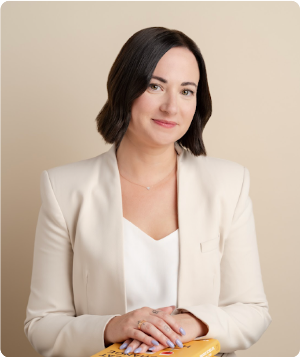 Dr. Brooke Scheller, DCN, CNS — Doctor of Clinical Nutrition. Advisor to Cloud9. Author, How to Eat to Change How You Drink.
There's a 60-day money-back guarantee. Free shipping. You can pause or cancel the subscription anytime.
60-day money-back guarantee. Free shipping. Pause anytime.
Where I Am Now
I'm not going to tell you I've quit drinking. I haven't. I don't want to.
What I can tell you is that the 5 p.m. voice is gone. The countdown is gone. The private three glasses are gone.
I drink when I actually want to, which turns out to be maybe twice a week. And when I do, one is usually enough. Sometimes I have a second. I haven't had a third in months.
If you're where I was (drinking every night, not an alcoholic, tired of pretending you're fine with it), this is where I'd start.
Not because it's magic. Because it fixes the chemistry, and the chemistry was the part I couldn't fix with thinking.
60-day money-back guarantee. Free shipping. Pause anytime.
Customer story shared with permission. Individual results vary.
These statements have not been evaluated by the Food and Drug Administration. This product is not intended to diagnose, treat, cure, or prevent any disease.