

You wake up with your heart racing, stomach churning, replaying every conversation from last night in vivid, mortifying detail. The physical hangover is bad enough, but the anxiety feels unbearable. Your mind spirals through worst-case scenarios while your chest tightens with each breath.
This is hangxiety, and it's not just in your head. Alcohol disrupts your nervous system, leaving you flooded with stress hormones and depleted of calming neurotransmitters. The good news? A specific breathing technique can help reset your nervous system and ease those symptoms in under five minutes.
If you're struggling with morning-after anxiety that makes you want to hide under the covers, this evidence-based approach can help you find relief fast.
Quick Take
- Hangxiety happens when alcohol withdrawal activates your stress response and depletes calming brain chemicals
- Box breathing (4-4-4-4 pattern) can help activate your parasympathetic nervous system within minutes
- This technique works by increasing CO2 tolerance and signaling safety to your brain
- Combining breathing exercises with hydration and gentle movement provides the most relief
- Consistent practice makes the technique more effective over time, even for preventing future hangxiety
Why Hangxiety Hijacks Your Breathing
When you drink, alcohol initially enhances GABA, a neurotransmitter that calms your nervous system. As the alcohol leaves your system, your brain rebounds into a state of hyperexcitability. Your stress response kicks into overdrive, flooding your body with cortisol and adrenaline while GABA levels plummet.
This chemical imbalance triggers physical symptoms that your brain interprets as danger. Your breathing becomes shallow and rapid, which actually increases anxiety by lowering carbon dioxide levels in your blood. Research suggests this creates a feedback loop where anxious breathing perpetuates anxious thoughts.
Breaking this cycle requires deliberately shifting your nervous system from fight-or-flight mode into rest-and-digest mode. That's exactly what targeted breathing techniques can help accomplish.
Daily Support for Social Drinkers
Your liver works hard every day. Give it consistent support.
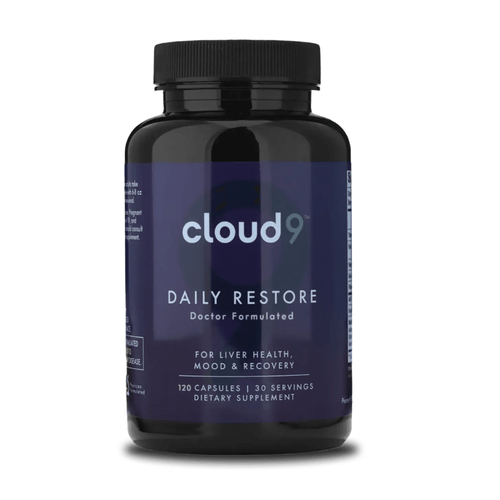
Cloud9 Daily Restore combines NAC, DHM, milk thistle, B vitamins, and ashwagandha to help support the pathways alcohol can tax most. Two capsules daily, drinking or not.
NAC | DHM | Milk Thistle | B Vitamins | Ashwagandha
See How Daily Restore WorksThe Box Breathing Technique for Hangxiety Relief
Box breathing, also called square breathing or four-square breathing, is a simple pattern used by Navy SEALs, emergency responders, and anxiety therapists. The technique involves equal counts for each phase of breathing, creating a rhythmic pattern that calms your nervous system.
Studies show that controlled breathing exercises can help reduce cortisol levels, lower heart rate, and increase feelings of calm within just a few minutes. The key is the equal timing, which helps regulate your autonomic nervous system.
How to Practice Box Breathing
Find a comfortable seated position or lie on your back with one hand on your chest and one on your belly. Close your eyes if that feels comfortable, or soften your gaze toward the floor.
Follow this pattern:
- Inhale slowly through your nose for 4 counts
- Hold your breath gently for 4 counts (don't strain)
- Exhale slowly through your mouth for 4 counts
- Hold your lungs empty for 4 counts
- Repeat for 5 rounds minimum, up to 5 minutes
What to Expect During Your First Session
Your first few rounds might feel awkward or even slightly uncomfortable. You might notice your mind wandering or feel impatient. These reactions are completely normal, especially when you're already anxious.
By the third or fourth round, many people report feeling their shoulders drop, their jaw unclench, or their racing thoughts begin to slow. The physical shift often happens before the mental relief, so stick with it even if your mind is still spinning.
Adjusting the Technique for Your Comfort
If a 4-count feels too long or causes strain, try a 3-count instead. The goal is calm, effortless breathing, not forced breath-holding. As you practice, you can gradually extend to 5 or 6 counts if that feels better.
Some people find exhaling through pursed lips (like blowing out a candle) more calming than a full mouth exhale. Experiment to find what helps you feel most grounded.
The beauty of box breathing is its simplicity. You don't need apps, equipment, or perfect conditions. Just your breath and a willingness to pause for five minutes.
Why This Technique Works for Hangxiety Specifically
Box breathing addresses multiple mechanisms that drive hangxiety. The slow, controlled pattern directly counteracts the shallow, rapid breathing that accompanies anxiety. By deliberately extending your exhale and creating brief pauses, you're sending powerful signals to your brain.
Research suggests that controlled breathing can help stimulate the vagus nerve, a major pathway between your brain and body that regulates your stress response. When activated, the vagus nerve triggers your parasympathetic nervous system, which promotes relaxation and recovery.
The Carbon Dioxide Connection
When you're anxious, you tend to overbreathe, which reduces carbon dioxide in your blood. Counterintuitively, this makes you feel like you can't get enough air. The breath holds in box breathing help normalize CO2 levels, which can reduce that suffocating sensation.
This CO2 recalibration also helps your body use oxygen more efficiently. You might notice clearer thinking and reduced dizziness after just a few rounds.
Breaking the Anxiety-Breathing Loop
Hangxiety creates a vicious cycle where anxious thoughts trigger stressed breathing, which reinforces anxious thoughts. Box breathing interrupts this loop by giving your mind a simple, repetitive task that's incompatible with spiraling.
Counting to four repeatedly occupies the part of your brain that would otherwise be catastrophizing. Meanwhile, the physical rhythm soothes your nervous system, creating space for calmer thoughts to emerge.
Combining Breathing with Other Hangxiety Relief Strategies
While box breathing can provide significant relief on its own, it works even better as part of a comprehensive approach. Think of it as your first line of defense, most effective when paired with other supportive strategies.
The Hangxiety Relief Protocol
| Strategy | Why It Helps | When to Use |
|---|---|---|
| Box Breathing | Activates parasympathetic nervous system, normalizes CO2 levels | First thing upon waking, or anytime anxiety spikes |
| Hydration + Electrolytes | Supports nervous system function, reduces physical stress | Immediately after breathing, continue throughout morning |
| Gentle Movement | Metabolizes stress hormones, releases endorphins | After initial anxiety subsides, 10-15 minute walk |
| Protein + Complex Carbs | Stabilizes blood sugar, provides neurotransmitter building blocks | Within 30-60 minutes of waking |
| Limiting Stimulation | Reduces sensory overwhelm while nervous system recovers | Throughout morning recovery period |
Creating Your Morning Routine
Start with five minutes of box breathing before you even get out of bed. Then drink a large glass of water with a pinch of salt or electrolyte powder. Give yourself permission to move slowly and avoid checking your phone immediately.
If your anxiety is still elevated after 10 minutes, do another round of breathing. The technique is safe to repeat as often as needed throughout the day.
When to Seek Additional Support
If you're experiencing hangxiety frequently (more than once a week), or if the anxiety persists for more than a few hours despite these techniques, it may be worth examining your relationship with alcohol. Recurring hangxiety often signals that your nervous system needs more recovery time between drinking episodes.
Consider speaking with a healthcare provider if anxiety symptoms are severe, interfere with daily functioning, or include panic attacks. They can help rule out underlying anxiety disorders and discuss additional support options.
Building Long-Term Resilience Against Hangxiety
While box breathing offers immediate relief, practicing it regularly, even when you're not anxious, can help build resilience. Studies show that consistent breathwork practice can help lower baseline anxiety levels and improve stress response over time.
Think of it as training your nervous system. The more you practice shifting into a calm state, the easier and faster that shift becomes.
Daily Practice Guidelines
- Practice box breathing for 5 minutes each morning, regardless of how you feel
- Use the technique during moments of mild stress to reinforce the calming response
- Track your anxiety levels before and after practice to notice patterns
- Gradually extend your practice time as it becomes more comfortable
- Experiment with practicing at different times of day to find what works best
Preventing Future Hangxiety Episodes
Beyond breathing practice, certain habits can help reduce hangxiety frequency and intensity. Staying well-hydrated while drinking, eating before and during alcohol consumption, and allowing adequate recovery time between drinking sessions all make a difference.
Some people find that certain types of alcohol trigger worse hangxiety than others. Pay attention to patterns and consider whether adjusting what or how much you drink might help.
How Daily Restore Supports Your Health
Understanding what your body needs is one thing. Getting consistent daily support is another. Daily Restore was designed to address the key pathways alcohol can stress most, in one simple daily formula.
NAC (N-Acetyl Cysteine)
Supports glutathione production and antioxidant defenses
DHM (Dihydromyricetin)
Supports alcohol metabolism
Milk Thistle (Silymarin)
Supports healthy liver function
B Vitamins
Help replenish nutrients involved in energy and metabolism
Ashwagandha
Supports stress resilience and healthy cortisol balance
Daily Restore is not a detox or a cure. It is a daily support formula designed for people who drink socially and want to give their body consistent, evidence-informed support.
Frequently Asked Questions
Can breathing exercises really help with hangover anxiety?
Yes, controlled breathing techniques can help regulate your nervous system when you're experiencing hangxiety. Research suggests that slow, deliberate breathing activates your parasympathetic nervous system, which helps counter the fight-or-flight response that alcohol withdrawal can trigger. While breathing won't eliminate all hangover symptoms, it can be an effective tool for managing the anxious feelings that often accompany them.
How long should I practice box breathing for hangxiety relief?
Most people notice a calming effect within 3 to 5 minutes of consistent box breathing practice. You can continue for up to 10 minutes if needed, but even a few cycles can help shift your nervous system response. The key is focusing on the rhythm and counting, which gives your mind something concrete to anchor to instead of spiraling anxious thoughts.
What if I feel dizzy or lightheaded while doing breathing exercises?
If you feel dizzy, pause the exercise and breathe normally until the sensation passes. This can happen if you're breathing too forcefully or holding your breath for too long, especially when dehydrated from alcohol. Try reducing the count from 4 seconds to 3 seconds, or simply focus on slow, gentle breaths without the structured holds until you feel more stable.
Should I use breathing techniques instead of other hangover remedies?
Breathing exercises work best as part of a comprehensive approach to hangover recovery. Continue drinking plenty of water, eating nourishing foods, and resting as needed. Think of controlled breathing as a tool specifically for the anxiety component, while other strategies address the physical symptoms like dehydration and nutrient depletion.
Can I practice these breathing techniques preventatively before drinking?
While breathing exercises can help build overall stress resilience, they won't prevent hangxiety from occurring if you drink heavily. The most effective prevention is moderating alcohol intake, staying hydrated while drinking, and supporting your body with proper nutrition. That said, having a regular breathwork practice may help you manage stress and anxiety more effectively in general, which could influence how intensely you experience hangxiety.
The Bottom Line
Hangxiety is a real physiological response to alcohol's effects on your nervous system, and it can make the morning after feel overwhelming. Box breathing and other controlled breathing techniques offer a simple, accessible way to help calm your nervous system when anxious feelings hit. While they won't cure a hangover, these practices can provide meaningful relief from the racing thoughts and physical tension that often accompany post-drinking anxiety.
The beauty of breathwork is that it requires nothing but a few minutes of your time and can be done anywhere, whether you're lying in bed or sitting at your kitchen table. Combined with proper hydration, rest, and nourishment, breathing exercises can be a valuable part of your hangover recovery toolkit.
For those looking to support their body more consistently, Cloud9 Daily Restore offers a blend of adaptogens and nutrients designed to help your system manage stress and recover from daily challenges. While no supplement can undo the effects of excessive drinking, building a foundation of daily support may help your body handle occasional indulgences with more resilience.
Remember, the most effective strategy for avoiding hangxiety is drinking in moderation or not at all. But when you do find yourself dealing with post-drinking anxiety, you now have a science-backed technique that can help you find calm in under five minutes.
Build Your Daily Support Routine
Build Your Daily Support Routine
If drinking is part of your lifestyle, your support routine should not be random. Daily Restore was designed to help social drinkers support liver health, antioxidant defenses, alcohol metabolism, nutrient replenishment, and daily recovery in one simple routine.
NAC
DHM
Milk Thistle
B Vitamins
Ashwagandha