

You're not here because you think you have a problem. You're here because something feels off, a nagging sense that maybe your relationship with alcohol has shifted in ways you didn't quite notice happening.
That awareness alone is valuable. Most people never pause to honestly assess their drinking habits, letting patterns solidify over months or years without examination. The ability to look at your relationship with alcohol clearly, without shame or denial, is a skill that can protect your health and quality of life.
This guide offers practical frameworks for assessing where you stand. Not to diagnose, not to judge, but to help you see your patterns clearly enough to make informed choices.
Quick Take
- Honest self-assessment requires examining frequency, quantity, emotional triggers, and consequences without defensiveness
- Warning signs include drinking more than intended, using alcohol to manage emotions, and experiencing negative impacts on relationships or responsibilities
- Physical dependence develops gradually through tolerance and withdrawal symptoms that many people rationalize or ignore
- Tracking tools like drinking journals and standardized questionnaires can reveal patterns your mind might minimize
- Seeking support, whether through friends, professionals, or programs, is a sign of strength rather than failure
Why Self-Assessment Is Harder Than It Sounds
Our brains are remarkably skilled at self-deception when it comes to habits that provide short-term comfort. Research suggests that people consistently underestimate both the amount they drink and the frequency of their drinking episodes, sometimes by significant margins.
This isn't about dishonesty in the moral sense. Your mind naturally protects behaviors that feel rewarding or that help you cope with stress, anxiety, or social discomfort. Add in the social normalization of drinking in most cultures, and you have a perfect recipe for blind spots.
Effective self-assessment requires deliberately disabling these protective mechanisms. It means approaching your drinking patterns with the same objective curiosity you might bring to someone else's habits, recognizing that what you discover isn't a verdict on your character but information you can use.
Daily Support for Social Drinkers
Your liver works hard every day. Give it consistent support.
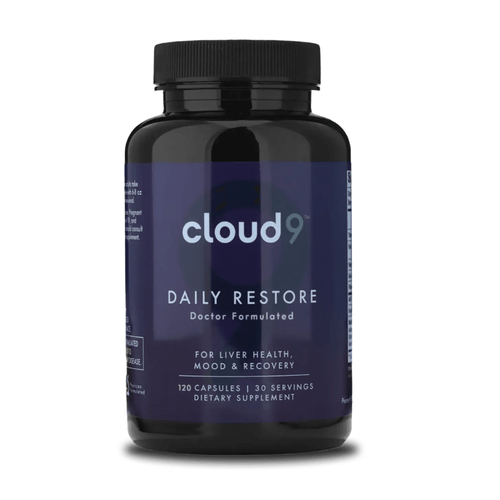
Cloud9 Daily Restore combines NAC, DHM, milk thistle, B vitamins, and ashwagandha to help support the pathways alcohol can tax most. Two capsules daily, drinking or not.
NAC | DHM | Milk Thistle | B Vitamins | Ashwagandha
See How Daily Restore WorksThe Four Dimensions of Alcohol Assessment
A complete picture of your relationship with alcohol requires looking at multiple aspects of how drinking shows up in your life. Each dimension offers different insights into whether your current patterns serve you well or deserve reconsideration.
Quantity and Frequency
Start with the basics, but be more precise than you usually are. "A couple of drinks" might actually be four, and "social drinking" might happen five nights a week.
Standard drink measurements matter more than you might think. A generous pour of wine at home can easily contain two or three standard drinks, meaning your "one glass with dinner" could actually represent half your weekly recommended limit.
- Track actual ounces, not just "glasses" or "drinks"
- Count the nights per week you drink anything at all
- Notice patterns like daily drinking versus binge episodes
- Compare your consumption to recommended guidelines (no more than 7 drinks per week for women, 14 for men, according to health authorities)
Emotional and Psychological Patterns
The relationship between alcohol and your emotional life reveals more than numbers alone. Studies show that people who regularly use alcohol to manage difficult emotions are at higher risk for developing problematic patterns, regardless of how much they drink.
Ask yourself when you most want a drink. If the answer consistently involves stress, anxiety, loneliness, boredom, or other uncomfortable feelings, that pattern deserves attention.
- Do you drink primarily to change how you feel emotionally?
- Does the thought of not drinking in certain situations create anxiety?
- Have you noticed yourself planning activities around drinking opportunities?
- Do you feel relief or excitement when you know you'll be able to drink?
Functional Impact
Consequences offer perhaps the clearest signal about whether your drinking has crossed from beneficial to problematic. This includes everything from subtle impacts on sleep quality to more obvious problems with work, relationships, or responsibilities.
| Area of Life | Warning Signs |
|---|---|
| Physical Health | Poor sleep quality, digestive issues, frequent hangovers, weight changes, reduced energy |
| Work/Productivity | Missing deadlines, calling in sick, reduced focus, drinking before or during work hours |
| Relationships | Partner concerns, arguments about drinking, choosing alcohol over social connections |
| Financial | Spending more than budgeted, prioritizing alcohol purchases, hiding expenses |
| Mental Health | Increased anxiety or depression, mood swings, memory gaps, emotional numbness |
Control and Intention
The gap between your intentions and your actual behavior reveals a great deal. If you regularly drink more than you planned, stay out longer than intended, or break personal rules about when or how much you'll drink, that loss of control matters.
Research indicates that difficulty moderating consumption, even when you have clear reasons to do so, is one of the most reliable indicators of problematic drinking. This includes situations where you intended to have one or two drinks but consistently end up having four or five.
Practical Tools for Honest Assessment
Abstract reflection has its limits. Concrete tracking and structured questions can reveal patterns that remain invisible to casual self-examination.
The Drinking Journal Approach
For two to four weeks, track every drink with specific details. This isn't about judgment but data collection that bypasses your brain's tendency to minimize or forget.
- Exact amount and type of each drink
- Time of day and duration of drinking
- Location and who you were with
- Emotional state before, during, and after
- Any consequences the next day (physical, emotional, social)
Most people are surprised by what emerges. Patterns become visible that were previously rationalized away: the stress-drinking every Tuesday after a particular meeting, the escalation that happens when drinking alone, the extra drinks that appear after the first two.
Standardized Self-Assessment Questions
Several validated questionnaires can help structure your assessment. While these don't replace professional evaluation, they offer research-backed frameworks for examining your patterns.
The most telling question isn't whether you drink too much in absolute terms. It's whether your drinking creates problems in your life and whether you find it difficult to change the pattern even when you want to.
Key questions to consider honestly:
- Have you tried to cut down or stop drinking but found you couldn't?
- Do you spend significant time thinking about drinking, obtaining alcohol, or recovering from drinking?
- Have you given up activities you used to enjoy because of drinking?
- Do you continue drinking despite knowing it's causing or worsening problems?
- Do you need more alcohol than you used to in order to feel the effects?
- Do you experience withdrawal symptoms (anxiety, shakiness, sweating, nausea) when you don't drink?
The Experiment Method
Sometimes the clearest assessment comes from testing your flexibility. Try taking a defined break from alcohol, whether it's 30 days, 60 days, or another timeframe that feels challenging but achievable.
The experience itself is informative. Notice what's difficult about it, what triggers arise, how your social life adjusts, and how you feel physically and emotionally. Difficulty abstaining for a predetermined period, especially when you've decided it's something you want to try, offers important information about your level of dependence.

Recognizing Physical Dependence
Physical dependence develops gradually and often goes unrecognized because each small shift feels normal in the moment. Your body adapts to regular alcohol presence, creating physiological changes that make drinking feel necessary for equilibrium.
Tolerance as a Warning Sign
Needing more alcohol to achieve the same effect isn't a badge of honor or a sign of experience. It's evidence that your brain chemistry is adapting to regular alcohol exposure, which can indicate developing dependence.
If you've noticed that two drinks barely affects you when it used to provide a pleasant buzz, or that you can drink amounts that would incapacitate others, your nervous system has likely adjusted its baseline functioning. This adaptation makes it progressively harder to feel "normal" without alcohol in your system.
Withdrawal Symptoms You Might Be Ignoring
Withdrawal doesn't always look like severe tremors or obvious distress. For many people, it shows up as subtle symptoms they've learned to attribute to other causes or simply accept as normal.
- Morning anxiety that improves after drinking
- Difficulty sleeping without alcohol
- Irritability or restlessness when you can't drink as planned
- Mild shakiness or sweating in the morning
- Using alcohol to cure a hangover
- Feeling "off" until you have a drink
If you experience any of these regularly, your body has likely developed physiological dependence. This doesn't mean you're powerless or doomed, but it does mean that changing your drinking patterns will require more than simple willpower and may benefit from professional support.
Moving From Assessment to Action
Honest assessment is valuable only if it leads somewhere. Once you have a clearer picture of your relationship with alcohol, you can make informed decisions about what, if anything, needs to change.
When to Seek Professional Support
You don't need to hit rock bottom before asking for help. In fact, early intervention typically leads to better outcomes and prevents the accumulation of consequences that make change harder.
Consider professional guidance if you've identified any of these patterns:
- You've tried to cut back or stop on your own without success
- You experience physical withdrawal symptoms when you don't drink
- Drinking is causing clear problems in relationships, work, or health
- You're using alcohol to manage mental health symptoms like depression or anxiety
- You feel unable to imagine social situations or stress management without alcohol
Support can range from conversations with your primary care physician to counseling, support groups, or specialized treatment programs. The right level of help depends on your specific situation, and starting with an honest conversation with a healthcare provider can help you determine what makes sense.
Creating Your Personal Change Strategy
For some people, assessment reveals patterns that need adjustment but don't require complete abstinence. Others discover that moderation hasn't worked and likely won't, making sobriety the clearer path.
Neither choice is inherently better. The question is what serves your health, relationships, and quality of life. Your assessment should inform a strategy that's realistic about your specific challenges and honest about what's worked or failed in the past.
| Approach | Best For | Success Factors |
|---|---|---|
| Moderation | Those without physical dependence who want to reduce consumption | Clear limits, tracking, alternative coping strategies, accountability |
| Extended Break | People wanting to reset their relationship and assess life without alcohol | Defined timeline, social support, new routines, reflection practices |
| Sobriety | Those with dependence, failed moderation attempts, or clear preference for abstinence | Support system, professional help if needed, identity shift, ongoing practice |
Whatever path you choose, honest ongoing assessment remains important. Your relationship with alcohol isn't static. Patterns can shift, and staying aware of those shifts helps you adjust your approach before small concerns become larger problems.
How Daily Restore Supports Your Health
Understanding what your body needs is one thing. Getting consistent daily support is another. Daily Restore was designed to address the key pathways alcohol can stress most, in one simple daily formula.
NAC (N-Acetyl Cysteine)
Supports glutathione production and antioxidant defenses
DHM (Dihydromyricetin)
Supports alcohol metabolism
Milk Thistle (Silymarin)
Supports healthy liver function
B Vitamins
Help replenish nutrients involved in energy and metabolism
Ashwagandha
Supports stress resilience and healthy cortisol balance
Daily Restore is not a detox or a cure. It is a daily support formula designed for people who drink socially and want to give their body consistent, evidence-informed support.
Frequently Asked Questions
How do I know if my drinking has crossed the line from moderate to problematic?
If you find yourself drinking more than you intended, experiencing negative consequences but continuing anyway, or feeling unable to cut back despite wanting to, these may be signs worth examining. Other indicators include needing alcohol to relax, thinking about drinking frequently throughout the day, or noticing that your tolerance has increased significantly over time.
Can I assess my relationship with alcohol on my own, or do I need professional help?
Self-assessment is a valuable first step and can provide important insights into your drinking patterns. However, if you discover concerning patterns or feel unable to change your behavior despite wanting to, working with a healthcare provider or addiction specialist can offer personalized guidance. Professional support becomes especially important if you experience withdrawal symptoms when you stop drinking.
What's the difference between problem drinking and alcohol use disorder?
Problem drinking refers to any pattern of alcohol use that causes negative consequences in your life, while alcohol use disorder is a clinical diagnosis based on specific criteria including loss of control, continued use despite problems, and physical dependence. Not everyone who drinks problematically meets the criteria for alcohol use disorder, but both situations benefit from honest assessment and appropriate intervention.
Is it possible to change my drinking habits without quitting completely?
For some people, moderation is an achievable goal, particularly if they haven't developed physical dependence or severe alcohol use disorder. Setting clear limits, tracking consumption, and being honest about your ability to stick to those boundaries can help determine if moderation works for you. If you repeatedly find yourself unable to moderate despite sincere efforts, abstinence may be the healthier path forward.
How can I support my body during and after changing my drinking habits?
Proper nutrition, hydration, quality sleep, and consistent daily routines can all support your body as you change your relationship with alcohol. Many people also find that supplements containing ingredients like NAC, milk thistle, and B vitamins help support liver health and overall wellness during this transition. Building sustainable habits alongside any changes to your drinking can create a foundation for long-term success.
The Bottom Line
Assessing your relationship with alcohol honestly takes courage, but it's one of the most important steps you can take for your health and wellbeing. Whether you discover that your drinking is within healthy limits or realize that changes are needed, the awareness itself creates an opportunity for intentional choices rather than automatic patterns.
The assessment tools and reflection questions outlined in this article can help you see your drinking habits clearly, without judgment but with honesty. Remember that your relationship with alcohol isn't static: it can change over time, and regular check-ins with yourself help ensure that your choices continue to align with your values and goals.
If you're working to reduce your drinking or support your body after periods of heavier alcohol use, Daily Restore can be part of your consistent wellness routine. With ingredients like NAC, milk thistle, and essential B vitamins, it's designed to support liver health and overall vitality as you build healthier habits.
Whatever you discover about your drinking patterns, know that change is possible and support is available. Taking the first step of honest assessment shows strength, not weakness, and it opens the door to a healthier, more intentional relationship with alcohol and with yourself.
Build Your Daily Support Routine
Build Your Daily Support Routine
If drinking is part of your lifestyle, your support routine should not be random. Daily Restore was designed to help social drinkers support liver health, antioxidant defenses, alcohol metabolism, nutrient replenishment, and daily recovery in one simple routine.
NAC
DHM
Milk Thistle
B Vitamins
Ashwagandha