

You've probably noticed it happening: you pour a glass of wine to unwind, and before you know it, the bottle's half empty and you're pouring a third or fourth drink. You're not trying to overdo it, but somehow the evening just gets away from you.
Slowing down your drinking doesn't have to mean white-knuckling through social events or feeling like you're missing out. The truth is, most people want to drink less but struggle with the "how" part. The good news? Small, practical shifts in your routine can make a significant difference without requiring massive willpower or lifestyle overhauls.
Whether you're trying to cut back for better sleep, clearer mornings, or just a healthier relationship with alcohol, these seven evidence-based tricks can help you pace yourself naturally.
Quick Take
- Strategic drink spacing and alternating non-alcoholic options can naturally reduce your total intake by 30-50%
- Using smaller glassware and measuring your pours helps counteract the tendency to unconsciously overpour by 20-30%
- Setting specific time-based rules (like no drinking before 7pm) creates automatic boundaries without constant decision-making
- Pairing drinking with activities that require attention naturally slows consumption and increases enjoyment
- Physical barriers like keeping alcohol out of immediate reach add just enough friction to interrupt automatic refilling
Why Fast Drinking Happens (And Why It Matters)
Most people don't set out to drink quickly, but our brains are wired for efficiency and habit. Research suggests that once we start a familiar behavior like drinking, we tend to go on autopilot, especially in comfortable settings like our own homes. That glass in your hand becomes almost invisible as you scroll through your phone or watch TV.
The speed at which you drink significantly impacts how much you end up consuming. Studies show that when people slow their drinking pace, they naturally consume less overall while reporting similar levels of enjoyment and relaxation. The physical act of pacing creates space for your brain to register satisfaction before you've overdone it.
Beyond just quantity, drinking speed affects how alcohol impacts your body. Slower consumption gives your liver more time to process alcohol efficiently, potentially reducing next-day fatigue and supporting better sleep quality throughout the night.
Daily Support for Social Drinkers
Your liver works hard every day. Give it consistent support.
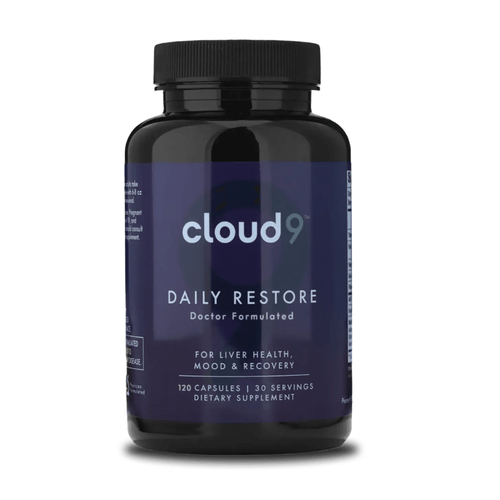
Cloud9 Daily Restore combines NAC, DHM, milk thistle, B vitamins, and ashwagandha to help support the pathways alcohol can tax most. Two capsules daily, drinking or not.
NAC | DHM | Milk Thistle | B Vitamins | Ashwagandha
See How Daily Restore Works1. The Alternating Drink Strategy
One of the most effective tricks for slowing down is also one of the simplest: alternate every alcoholic drink with a non-alcoholic one. This approach automatically cuts your alcohol consumption in half while keeping your hands busy and maintaining the social ritual of having a drink.
How to Make It Work
The key is choosing non-alcoholic options you actually enjoy, not just tolerating water. When your alternate drink feels like a treat rather than a punishment, you're much more likely to stick with the pattern.
- Keep sparkling water with lime, bitters, or a splash of juice on hand
- Invest in quality non-alcoholic spirits or wines that feel special
- Use the same glassware for both drinks to maintain the sensory experience
- Set a clear rule: finish the non-alcoholic option before pouring another alcoholic drink
This strategy works particularly well at social events. You're never empty-handed, you stay hydrated, and you naturally pace yourself without drawing attention to the fact that you're moderating.
The Science Behind It
Research on habit formation suggests that substitution is more effective than simple restriction. By replacing rather than removing, you satisfy the behavioral urge (holding a drink, sipping something) while reducing alcohol intake. This approach also helps maintain electrolyte balance and reduces dehydration, which can minimize next-day discomfort.
2. Strategic Glass and Bottle Placement
Your environment shapes your behavior more than you might realize. One study on eating behavior found that people consume significantly more when food is within arm's reach compared to just a few feet away. The same principle applies to drinking.
Create Productive Friction
Making alcohol slightly less convenient doesn't require major effort, but it creates just enough pause to interrupt automatic refilling. These small barriers give your conscious mind a chance to check in before you pour another.
- Keep the bottle or six-pack in the kitchen rather than next to your couch
- Put wine back in the fridge between pours instead of leaving it on the counter
- Store backup bottles in the garage or basement rather than the main kitchen
- Use a wine preserver system that requires deliberate opening
The magic isn't in making alcohol difficult to access, it's in breaking the mindless reach-and-pour cycle. That short walk to the kitchen becomes a moment to ask yourself: "Do I actually want another, or am I just refilling out of habit?"
3. Time-Based Drinking Rules
Decision fatigue is real. When you have to constantly negotiate with yourself about whether to have a drink, you're burning mental energy that could be better spent elsewhere. Time-based rules remove the back-and-forth by creating clear, automatic boundaries.
Popular Timing Strategies
| Rule Type | How It Works | Best For |
|---|---|---|
| No drinking before 7pm | Eliminates early evening drinks that often lead to more consumption | People who start drinking right after work |
| Last call at 9pm | Sets an endpoint so you don't drink late into the night | Improving sleep quality and morning energy |
| 30-minute spacing | Must wait at least 30 minutes between drinks | Social drinkers who lose track of pace |
| Weekends only | Restricts drinking to Friday-Saturday nights | Breaking the daily drinking habit |
Making Your Rule Stick
The best time-based rule is one you'll actually follow. Start with a boundary that feels challenging but doable, not something so restrictive it sets you up for failure. You can always tighten the rule later once the first one becomes automatic.
Consider setting a phone reminder for your chosen time. When 7pm or 9pm rolls around, that notification serves as a neutral third party enforcing your rule, which can feel easier than relying purely on willpower.
4. Smaller Glassware, Measured Pours
Here's an uncomfortable truth: most people significantly underestimate how much they're actually drinking. Research consistently shows that free-pouring at home leads to servings 30-40% larger than standard drink sizes. That "glass of wine" might actually be two.
The Visual Trick
Our brains judge fullness visually, not by actual volume. A smaller glass filled to the top feels more satisfying than a large glass half-full, even when the smaller one contains less total liquid. This perceptual quirk can work in your favor.
- Switch to 8-10 oz wine glasses instead of oversized 16 oz ones
- Use actual measuring tools (jiggers for spirits, marked glasses) at least initially to calibrate your eye
- Pour drinks in good lighting where you can clearly see the amount
- Take a photo of a properly measured pour to reference later
Once I started actually measuring my wine pours, I realized I'd been drinking nearly double what I thought. Just using a smaller glass and filling it properly meant I could have my two glasses but actually consume what used to be one oversized pour. Same satisfaction, half the alcohol.
The Measurement Habit
Measuring doesn't have to become a permanent ritual, but doing it for a week or two recalibrates your perception. You'll start to recognize what 5 oz of wine or 1.5 oz of spirits actually looks like in your specific glassware. That visual memory makes it easier to pour appropriately even when you're not actively measuring.
5. Pair Drinking with Engaging Activities
Mindless drinking happens when alcohol is the primary activity. When you're just sitting and drinking, you naturally consume faster because there's nothing else to occupy your attention. Pairing drinks with genuinely engaging activities slows your pace automatically.
Activities That Naturally Slow Consumption
- Playing board games or cards that require strategy and attention
- Cooking an elaborate meal where you need focus and coordination
- Having deep, meaningful conversations rather than passive TV watching
- Working on creative projects like painting, writing, or crafting
- Playing music (instruments require sober coordination)
The key is choosing activities that genuinely demand your engagement. Scrolling social media while drinking doesn't count, you can do that on autopilot. But trying to follow a complex recipe or play a strategic game means you'll naturally set your glass down more often and forget about it for longer stretches.
The Dinner Difference
Studies show that people drink more slowly when eating, particularly when enjoying a proper meal rather than just snacks. The act of cutting food, chewing, and tasting creates natural pauses. Plus, food in your stomach slows alcohol absorption, leading to more gradual effects that may reduce the urge to drink quickly.
Try making a rule that you only drink while actively eating dinner, not before or after. This built-in time limit naturally caps your consumption while maximizing enjoyment.
6. The First Drink Delay
The decision to have that first drink often happens automatically, especially if you have a strong after-work or evening routine. But research on impulse control suggests that even small delays can significantly impact whether we follow through on an urge.
Building in Strategic Delays
The goal isn't to never drink, it's to make sure you're genuinely choosing it rather than defaulting to it. A 15-30 minute delay creates space between the impulse and the action.
- Change clothes and start a different activity before deciding about a drink
- Drink a full glass of water or tea first and reassess after finishing it
- Take a short walk around the block before opening the fridge
- Complete one small task (dishes, a work email, watering plants) before pouring
You might find that after the delay, you don't want the drink as much as you thought. Or you might still want it, which is fine, but you've made it a conscious choice rather than an automatic response to walking in the door.
The Ritual Replacement
Often, what we're really craving isn't the alcohol itself but the ritual of transition from work mode to relaxation mode. Creating an alternative ritual (making special tea, doing a short meditation, changing into comfortable clothes) can satisfy that need while delaying or reducing drinking.
7. Track Without Judgment
What gets measured gets managed. Simply tracking your drinks, even without trying to change anything at first, often leads to natural reduction. The act of writing it down creates awareness and accountability that autopilot drinking doesn't have.
Simple Tracking Methods
| Method | Pros | Cons |
|---|---|---|
| Phone notes app | Always with you, quick, private | No built-in analytics or patterns |
| Dedicated drinking app | Automatic patterns, stats, reminders | Requires downloading and setup |
| Paper calendar | Visual overview, tactile, no tech needed | Easy to forget, less convenient |
| Bottle markers | Immediate visual feedback on bottles | Only works at home, can feel clinical |
The Non-Judgmental Approach
The crucial element is tracking without shame or criticism. You're gathering data, not judging yourself. Notice patterns: Do you drink more on Tuesdays? After stressful work calls? When you skip dinner? These insights help you understand your triggers and make strategic changes.
Start by tracking for one week without trying to change anything. Just observe. You'll likely find that awareness alone leads to slight modifications, and you'll identify specific situations where implementing one of these other tricks would be most helpful.
How Daily Restore Supports Your Health
Understanding what your body needs is one thing. Getting consistent daily support is another. Daily Restore was designed to address the key pathways alcohol can stress most, in one simple daily formula.
NAC (N-Acetyl Cysteine)
Supports glutathione production and antioxidant defenses
DHM (Dihydromyricetin)
Supports alcohol metabolism
Milk Thistle (Silymarin)
Supports healthy liver function
B Vitamins
Help replenish nutrients involved in energy and metabolism
Ashwagandha
Supports stress resilience and healthy cortisol balance
Daily Restore is not a detox or a cure. It is a daily support formula designed for people who drink socially and want to give their body consistent, evidence-informed support.
Frequently Asked Questions
Will slowing down my drinking really make a difference if I'm not quitting completely?
Absolutely. Research suggests that even modest reductions in alcohol consumption can lead to improved sleep quality, better mood regulation, and reduced health risks. The goal isn't perfection: it's finding a sustainable pace that supports your overall wellness without feeling like deprivation.
How long does it take to notice benefits from drinking more slowly?
Many people report feeling more energized and clearheaded within just a few days of pacing their consumption differently. Physical benefits like better hydration and improved sleep often appear first, while longer-term changes to mood and mental clarity may develop over several weeks as your body adjusts.
What if social pressure makes it hard to stick with these strategies?
Having a simple script ready can help: "I'm pacing myself tonight" or "I'm trying to feel great tomorrow" usually shuts down questions without drama. Remember, most people are far more focused on themselves than on what's in your glass, and those who push too hard about your choices may be dealing with their own relationship with alcohol.
Can supplements really help with moderation?
While no supplement replaces the importance of behavioral strategies, research suggests that certain nutrients like DHM, vitamin B complex, and antioxidants may support your body's natural processes when alcohol is consumed. Think of quality supplements as part of a holistic approach that includes mindful pacing, hydration, and intentional choices.
What's the best way to stay consistent with these habits?
Start with just one or two strategies that feel easiest to implement, then build from there as they become second nature. Tracking your progress in a journal or app can provide motivation, and pairing new habits with existing routines (like having a glass of water with your morning coffee) helps them stick long-term.
The Bottom Line
Slowing down your drinking doesn't mean missing out on life's pleasures or becoming the person who can't relax and have fun. It's about being intentional with your choices, respecting your body's needs, and waking up feeling like the best version of yourself. The strategies we've covered, from alternating drinks to choosing quality over quantity, are simple shifts that can create meaningful change without the all-or-nothing pressure that so often leads to failure.
The truth is, moderation is a skill that improves with practice. Some nights will feel easier than others, and that's completely normal. What matters is having a toolkit of strategies you can draw from and the self-awareness to recognize when you need extra support. Building these habits now creates a foundation for long-term wellness that extends far beyond any single night out.
If you're looking for consistent daily support, Cloud9's Daily Restore was designed specifically for people who want to maintain a balanced relationship with alcohol. With DHM, vitamins, antioxidants, and minerals that support your body's natural processes, it's an easy addition to your routine that complements the mindful strategies you're already practicing. Think of it as your daily reset button, helping you stay on track with your wellness goals.
Remember, this journey is yours to design. Whether you're cutting back significantly or simply want to be more mindful about when and how you drink, every small change adds up. Start with what feels manageable, be patient with yourself as you learn, and celebrate the progress you make along the way. Your future self will thank you.
Build Your Daily Support Routine
Build Your Daily Support Routine
If drinking is part of your lifestyle, your support routine should not be random. Daily Restore was designed to help social drinkers support liver health, antioxidant defenses, alcohol metabolism, nutrient replenishment, and daily recovery in one simple routine.
NAC
DHM
Milk Thistle
B Vitamins
Ashwagandha