

You're getting ready for a party, dinner with friends, or even just a casual coffee date, and suddenly that voice in your head turns into a full-volume commentator. Every outfit looks wrong. Every conversation starter sounds forced. Your brain helpfully replays that awkward thing you said three years ago.
If your inner critic seems to wake up and choose violence specifically before social events, you're not alone. This pre-social anxiety spiral has roots in your brain's protective mechanisms. Understanding why it happens is the first step to quieting that voice and showing up as your authentic self.
Let's explore what's really going on when your mind turns against you before social situations, and how to respond with natural, effective strategies that work with your nervous system instead of against it.
Quick Take
- Your inner critic intensifies before social events as a protective mechanism rooted in evolutionary threat detection
- Pre-event anxiety creates a mental rehearsal loop that can spiral into harsh self-judgment and catastrophic thinking
- Physical anxiety symptoms like increased cortisol and adrenaline amplify negative thought patterns hours before social situations
- Grounding techniques, breathwork, and targeted adaptogens can help regulate your nervous system before events
- Reframing your inner critic's voice as outdated protection rather than truth creates space for more balanced self-talk
Why Your Brain Turns On You Before Social Situations
Your inner critic isn't trying to ruin your night. It's actually attempting to protect you from perceived social threats, a holdover from when being excluded from the group meant genuine danger to survival. Research suggests that the brain processes social rejection using some of the same neural pathways as physical pain, which explains why the stakes can feel so high.
When you have a social event on the calendar, your brain begins a threat-assessment process. It starts scanning for potential risks: judgment from others, saying the wrong thing, not fitting in, being exposed as somehow inadequate. This anticipatory anxiety can begin hours or even days before the actual event, giving your inner critic plenty of time to build its case against you.
Studies show that people with social anxiety tend to have heightened activity in the amygdala, the brain's alarm system, when anticipating social evaluation. This creates a feedback loop where worrying about the event triggers stress hormones, which then fuel more worried thoughts, which trigger more stress hormones. Your inner critic gets louder because your entire nervous system is responding to a threat that hasn't even happened yet.
Daily Support for Social Drinkers
Your liver works hard every day. Give it consistent support.
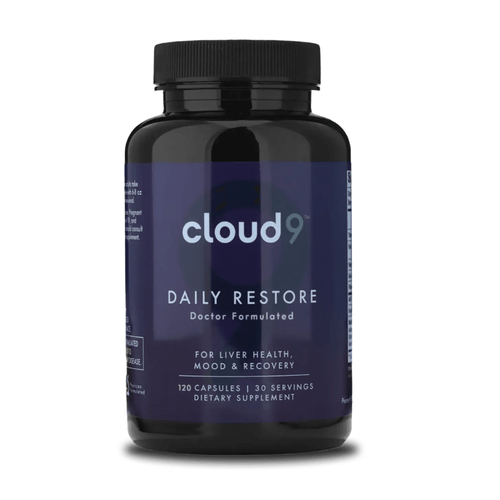
Cloud9 Daily Restore combines NAC, DHM, milk thistle, B vitamins, and ashwagandha to help support the pathways alcohol can tax most. Two capsules daily, drinking or not.
NAC | DHM | Milk Thistle | B Vitamins | Ashwagandha
See How Daily Restore WorksThe Pre-Event Anxiety Spiral: What's Really Happening
The Mental Rehearsal That Goes Wrong
Your brain naturally tries to prepare for upcoming events by running mental simulations. This is actually a useful function when it works correctly. The problem is that for those prone to social anxiety, these mental rehearsals turn into catastrophic previews rather than helpful preparation.
Instead of calmly thinking through conversation topics or logistics, you start scripting disasters. You imagine awkward silences, critical looks, and worst-case scenarios. Your inner critic becomes the director of a horror film starring you, and it plays on repeat right up until you walk out the door.
Physical Symptoms Feed Mental Chatter
The mind-body connection works both ways. As your thoughts become more anxious, your body responds with increased cortisol, faster heart rate, and shallow breathing. But here's the tricky part: your brain then interprets these physical symptoms as confirmation that something really is wrong.
This creates what psychologists call the anxiety feedback loop. Your thoughts make your body anxious, your anxious body makes your thoughts more negative, and your inner critic uses all of this as evidence that you should definitely not go to this event. The voice gets louder because it's reading your physical state as validation of its warnings.

Natural Ways to Quiet Your Inner Critic Before Social Events
Ground Yourself in the Present Moment
Your inner critic thrives on future-focused catastrophizing. Bringing yourself back to right now, where you are actually safe and the event hasn't happened yet, can interrupt the spiral. This isn't about positive thinking or affirmations that might feel false when you're anxious.
Try these grounding techniques in the hours before your event:
- 5-4-3-2-1 sensory awareness: Name 5 things you see, 4 you can touch, 3 you hear, 2 you smell, 1 you taste
- Place both feet flat on the ground and notice the sensation of contact and support
- Hold ice cubes in your hands or splash cold water on your face to activate your parasympathetic nervous system
- Name your location out loud: "I am in my bedroom, it is 5pm, I am getting ready for dinner"
Breathwork to Reset Your Nervous System
Research suggests that controlled breathing can directly influence the vagus nerve, which helps regulate your stress response. When your inner critic is loudest, your breathing has likely become shallow and rapid, which signals danger to your brain.
The 4-7-8 breathing pattern can be particularly effective: inhale through your nose for 4 counts, hold for 7, exhale slowly through your mouth for 8. Do this 3-4 times about 30 minutes before you need to leave. This physiological shift can turn down the volume on anxious thoughts by telling your body that you're actually safe.
Reframe the Voice, Don't Fight It
Trying to argue with or suppress your inner critic often backfires, making the thoughts more persistent. Instead, you can acknowledge the voice while separating from its message. This is a core principle of acceptance-based approaches to anxiety.
When your inner critic says "Everyone will think you're awkward," try responding with: "That's my anxiety trying to protect me. I'm noticing that thought, and I'm choosing to go anyway." You're not debating whether the thought is true or false. You're simply recognizing it as a thought, not a fact.
This small shift can help you carry the anxious thoughts with you without letting them control your decisions. Your inner critic can come along for the ride, but it doesn't get to drive.
Natural Supplements and Adaptogens for Pre-Event Calm
Supporting Your Nervous System from the Inside
While behavioral strategies are essential, certain natural compounds can help support a calmer baseline nervous system, making your inner critic less likely to reach emergency-broadcast-system levels before social events. These work best as part of a consistent routine, not just crisis management.
Adaptogenic herbs have been used traditionally to help the body manage stress more effectively. L-theanine, commonly found in green tea, may promote relaxation without sedation. Some people find magnesium glycinate helpful for overall nervous system support, particularly when taken regularly rather than just before stressful events.
Timing Matters
If you're considering natural support for social anxiety, consistency tends to matter more than acute dosing. Taking adaptogens only an hour before an event is unlikely to provide significant benefit. Building up support over days or weeks can help create a more resilient stress response system overall.
That said, some people find benefit from having a calming ritual 1-2 hours before social events: a specific tea, a supplement routine, or a combination of physical and nutritional support that signals to their system that they're taking care of themselves.
Creating Your Pre-Event Reset Routine
What Makes a Routine Actually Work
The most effective pre-event routine is one you'll actually do, even when your inner critic is screaming at you to cancel. This means keeping it simple, specific, and tied to your actual preparation process rather than adding extra tasks that create more stress.
Consider building your reset routine into activities you're already doing. If you're getting ready anyway, that's when you do your grounding. If you're driving to the event, that's when you do your breathing. Stack your calming strategies onto existing behaviors rather than creating a separate anxiety-management to-do list.
Sample Pre-Event Timeline
| Time Before Event | Action | Purpose |
|---|---|---|
| 2-3 hours before | Light movement (walk, stretch, gentle yoga) | Process stress hormones, shift out of rumination |
| 1-2 hours before | Eat a balanced snack with protein | Stabilize blood sugar, which affects mood and anxiety |
| 30-45 minutes before | 4-7-8 breathing + grounding technique | Activate parasympathetic nervous system, return to present |
| While getting ready | Notice and name inner critic thoughts without judgment | Create distance from thoughts, reduce their power |
| Right before leaving | One conscious statement: "I can handle whatever happens" | Set an intention based on capability, not outcome |
Adjusting Based on What Actually Helps
Track what works for you over several events rather than judging based on a single experience. Your inner critic might still be present even when you're doing everything "right," and that's okay. The goal isn't to eliminate all nervous thoughts, but to reduce their intensity and your reaction to them.
Some people find that music helps during preparation, others need silence. Some benefit from talking to a trusted friend beforehand, others need to avoid discussing their anxiety. Give yourself permission to experiment and find your own combination of strategies that actually quiet your specific inner critic.
How Daily Restore Supports Your Health
Understanding what your body needs is one thing. Getting consistent daily support is another. Daily Restore was designed to address the key pathways alcohol can stress most, in one simple daily formula.
NAC (N-Acetyl Cysteine)
Supports glutathione production and antioxidant defenses
DHM (Dihydromyricetin)
Supports alcohol metabolism
Milk Thistle (Silymarin)
Supports healthy liver function
B Vitamins
Help replenish nutrients involved in energy and metabolism
Ashwagandha
Supports stress resilience and healthy cortisol balance
Daily Restore is not a detox or a cure. It is a daily support formula designed for people who drink socially and want to give their body consistent, evidence-informed support.
Frequently Asked Questions
Why does my inner critic seem worse right before social events than during them?
Anticipatory anxiety tends to peak before an event because your mind fills uncertainty with worst-case scenarios. Once you're actually engaged in the social situation, you're focused on real interactions rather than imagined outcomes. The gap between expectation and reality is where your inner critic thrives.
Can supplements really help with pre-social nervousness?
Research suggests that certain botanicals and adaptogens can help support your body's natural stress response when taken consistently. Ingredients like ashwagandha, L-theanine, and magnesium have been studied for their potential to promote calm without drowsiness. They work best as part of a daily routine rather than a quick fix taken minutes before an event.
How long does it take for natural calming supplements to work?
Some people notice subtle effects within a few hours, while adaptogens like ashwagandha typically build in effectiveness over two to four weeks of consistent use. The key is daily consistency rather than sporadic dosing. Think of these supplements as supporting your baseline calm rather than providing an immediate rescue effect.
What if my inner critic is actually trying to protect me?
Your inner critic often stems from a protective instinct, trying to shield you from rejection or embarrassment. The problem is that it overestimates threats and underestimates your ability to handle them. You can acknowledge its intention while choosing not to let it run the show, recognizing that growth happens when you move forward despite the noise.
Is it normal to need recovery time after social events, even enjoyable ones?
Absolutely. Social interactions require mental and emotional energy, particularly if you've been managing anxiety or self-critical thoughts throughout. Building in recovery time afterward is a form of self-care, not a sign of weakness. Many people find that honoring this need actually makes them more present and engaged during social situations.
The Bottom Line
Your inner critic gets louder before social events because your brain is trying to prepare you for perceived social threats. Understanding this pattern is the first step toward changing your relationship with it. By recognizing the thoughts as protective rather than prophetic, you can create distance between the criticism and your sense of self.
Natural approaches like cognitive reframing, breathwork, and physical grounding techniques can help you show up more confidently. When combined with consistent botanical support, these strategies may help quiet the pre-event noise that keeps you from fully engaging. The goal isn't to eliminate nervousness entirely, but to prevent it from hijacking your social experiences.
Cloud9's Daily Restore was designed with this exact challenge in mind. Its blend of ashwagandha, L-theanine, magnesium, and other calming botanicals can help support your body's natural ability to manage stress when taken consistently. Rather than waiting until your inner critic is at full volume, building a daily foundation of calm may help you approach social situations from a more grounded place.
Remember, quieting your inner critic is a practice, not a destination. Some days will feel easier than others, and that's completely normal. What matters is developing a toolkit of strategies and supports that work for you, so you can spend less time in your head and more time genuinely connecting with the people around you.
Build Your Daily Support Routine
Build Your Daily Support Routine
If drinking is part of your lifestyle, your support routine should not be random. Daily Restore was designed to help social drinkers support liver health, antioxidant defenses, alcohol metabolism, nutrient replenishment, and daily recovery in one simple routine.
NAC
DHM
Milk Thistle
B Vitamins
Ashwagandha