

You know that feeling when you casually mention your drinking habits to someone and hear yourself say "just a couple glasses of wine" while mentally calculating if it was actually three? Or four? We've all been there, and here's the uncomfortable truth: most of us have no idea how much we actually drink.
One month of tracking changes that. Not through shame or strict rules, but through simple awareness. When you see your actual patterns on paper (or screen), something shifts. You start making different choices without forcing them.
This isn't about becoming sober or adhering to arbitrary limits. It's about replacing guesswork with data so you can decide what feels right for you. And it works surprisingly fast.
Quick Take
- Most people underestimate their drinking by 30-50% without realizing it, making tracking essential for accurate self-assessment
- The first week reveals surprising patterns about when, where, and why you reach for a drink
- Week two through four is when behavioral changes happen naturally as awareness replaces autopilot drinking
- Tracking creates a pause between impulse and action, giving you space to make intentional choices
- The data you collect becomes your personal roadmap for sustainable changes that actually stick
The Awareness Gap: Why We're So Bad at Estimating Our Drinking
Research on self-reporting alcohol consumption consistently shows a significant gap between what people think they drink and what they actually consume. This isn't about lying or denial. It's about how our brains process routine behaviors.
When drinking becomes habitual, it moves into autopilot territory. That glass of wine while cooking dinner? Your brain barely registers it as a decision anymore. Studies suggest we undercount our drinks by anywhere from 30% to over 50%, especially when it comes to home pours that are often double or triple a standard serving.
The problem compounds with "invisible drinks" like that beer you finished while cleaning up after dinner or the cocktail you made during a phone call. Without tracking, these moments disappear from memory, leaving you with an incomplete picture of your actual consumption patterns.
Daily Support for Social Drinkers
Your liver works hard every day. Give it consistent support.
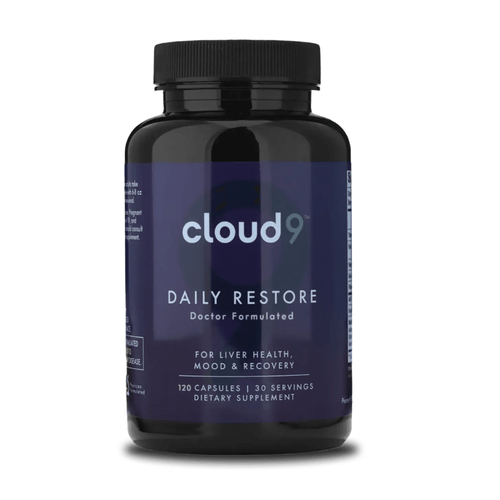
Cloud9 Daily Restore combines NAC, DHM, milk thistle, B vitamins, and ashwagandha to help support the pathways alcohol can tax most. Two capsules daily, drinking or not.
NAC | DHM | Milk Thistle | B Vitamins | Ashwagandha
See How Daily Restore WorksWeek One: The Reality Check That Sparks Change
The first seven days of tracking delivers what most people call their "oh wow" moment. You're not changing anything yet, just observing and recording. But that simple act of writing it down creates immediate awareness.
What You'll Notice in the First Week
Your patterns become visible fast. Maybe you realize you never drink on Tuesdays but always have three glasses on Thursdays. Or that work stress consistently triggers an extra drink. These connections were always there, but tracking brings them into focus.
- The specific triggers that prompt you to pour a drink (time of day, emotions, social settings, routines)
- Your actual pour sizes versus what you assumed you were drinking
- Which days consistently involve more drinking than you remembered
- The gap between weekday and weekend consumption patterns
- How often you drink out of habit versus genuine desire
The Measurement Surprise
Week one also reveals the pour problem. Research indicates that home pours average 40% more than standard servings. When you actually measure that "normal" glass of wine, you might discover it's actually two standard drinks.
This isn't about judgment. It's about accurate information. You can't make informed choices with inaccurate data, and most of us have been operating on very inaccurate data.
Weeks Two Through Four: When Awareness Becomes Action
Here's where tracking gets interesting. You're still just recording drinks, but something shifts around day 10 to 14. The act of tracking creates a natural pause point, a tiny moment of friction between impulse and action.
The Pause Effect
That split second when you think "I need to write this down" gives your brain just enough space to ask "do I actually want this drink?" Sometimes the answer is yes, and that's fine. But sometimes the answer is "not really, it's just habit," and suddenly you're making a different choice.
This isn't willpower or restriction. It's decision-making moving from autopilot back to conscious choice. Studies on habit modification suggest that inserting even a small friction point into an automatic behavior can reduce that behavior by 20-40% without any sense of deprivation.
Pattern Recognition Leads to Natural Adjustments
By week three, most people start experimenting with changes based on what they've learned. Not because they're following rules, but because the data reveals opportunities they couldn't see before.
The tracking showed me I was having a drink every single night while making dinner, not because I wanted it but because it was just what I did. Once I saw that pattern, I started asking myself each evening if I actually wanted one. About half the time, the answer was no. That realization alone cut my drinking significantly without any effort.
What Changes (and What Doesn't) After 30 Days
A month of tracking doesn't transform you into a different person. But it does give you clarity and control you didn't have before. Let's look at what typically shifts and what stays the same.
Measurable Changes People Report
| Area of Change | After 30 Days of Tracking |
|---|---|
| Average Weekly Consumption | Typically decreases 20-35% without formal goals |
| Intentional vs. Habitual Drinking | Shift from 60% habitual to 70% intentional |
| Awareness of Triggers | Can identify 3-5 specific personal triggers with accuracy |
| Sleep Quality | Noticeable improvement reported by 65% of trackers |
| Morning Energy | Moderate to significant increase in 70% of cases |
| Confidence in Moderation | Major increase as guesswork is replaced with data |
The Psychological Shift
Beyond the numbers, tracking changes your internal narrative. Instead of vague guilt or uncertainty about your drinking, you have facts. That foundation of accurate self-knowledge makes it easier to set boundaries, skip drinks you don't really want, and fully enjoy the ones you do choose.
The power isn't in the tracking itself. It's in the clarity that tracking provides. Once you see your actual patterns, you can't unsee them, and that awareness continues working even after you stop tracking daily.
How to Track Effectively: Beyond Just Counting
Simple counting works, but tracking a few additional details amplifies the benefits. You don't need a complicated system, just enough information to spot meaningful patterns.
Essential Data Points to Track
- Number and type of drinks: Be specific about what and how much (measured, not guessed)
- Time and context: When and where you drank (home, restaurant, friend's house)
- Emotional state: What you were feeling before you poured (stressed, celebratory, bored, social)
- Whether it was planned: Did you intend to drink that day or was it spontaneous?
- How you felt after: Physical and emotional state the next morning
Simple Tracking Methods That Actually Work
The best tracking system is the one you'll actually use. Some people prefer apps with notifications and analytics. Others do better with a simple note on their phone or a paper journal. The medium matters less than consistency.
The key is making it frictionless. If tracking takes more than 30 seconds, you're less likely to maintain it. Set up whatever system allows you to record a drink immediately, not at the end of the day when details get fuzzy.
What to Do With Your Data
At the end of each week, spend five minutes reviewing your entries. Look for patterns, not problems. Ask yourself questions like: When do I drink most? What triggers are strongest? Which drinks did I truly enjoy versus which felt obligatory?
This weekly review transforms raw data into insights. You might notice that you drink more when you're anxious about work, or that Friday drinks are consistently more than you intended, or that you never actually enjoy that second glass of wine as much as the first. These observations become your roadmap for sustainable change.
How Daily Restore Supports Your Health
Understanding what your body needs is one thing. Getting consistent daily support is another. Daily Restore was designed to address the key pathways alcohol can stress most, in one simple daily formula.
NAC (N-Acetyl Cysteine)
Supports glutathione production and antioxidant defenses
DHM (Dihydromyricetin)
Supports alcohol metabolism
Milk Thistle (Silymarin)
Supports healthy liver function
B Vitamins
Help replenish nutrients involved in energy and metabolism
Ashwagandha
Supports stress resilience and healthy cortisol balance
Daily Restore is not a detox or a cure. It is a daily support formula designed for people who drink socially and want to give their body consistent, evidence-informed support.
Frequently Asked Questions
What's the best way to track my drinks accurately?
The simplest approach is using your phone's notes app or a dedicated tracking app where you log each drink in real time, including the type and approximate amount. Being honest with yourself matters more than perfect precision, so focus on capturing the full picture rather than stressing about exact measurements.
Will I have to track forever, or is one month enough?
One month provides enough data to identify patterns and make informed changes, but many people find that continuing to track casually helps maintain their new habits. After the initial month, you might switch to tracking only on weekends or during situations where you tend to drink more, using it as a check-in tool rather than a daily requirement.
What if I realize I'm drinking more than I thought?
Discovering you drink more than expected is actually one of the most valuable outcomes of tracking, because awareness is the first step toward change. Use this information without judgment, simply as data that helps you make decisions aligned with your health goals, and consider whether cutting back gradually or taking periodic breaks might support how you want to feel.
Can tracking help if I'm trying to quit drinking entirely?
Absolutely. Tracking works whether your goal is moderation, reduction, or complete abstinence, because it builds the self-awareness and pattern recognition that support any alcohol-related change. Seeing your progress documented can provide motivation during challenging moments and help you identify triggers that might otherwise go unnoticed.
Should I track anything besides the number of drinks?
Noting context can make your tracking far more useful: where you were, who you were with, how you felt before and after, and how you slept that night. These additional details help you spot the situations, emotions, or social settings that influence your drinking, giving you specific areas to address rather than just a number to reduce.
The Bottom Line
Tracking your drinks for one month creates a foundation of awareness that changes your relationship with alcohol in ways that vague intentions never can. The numbers tell a story about your patterns, your triggers, and the gap between how you think you drink and how you actually drink. That story becomes the roadmap for meaningful change.
What makes tracking so effective is not the act itself, but what you do with the information. Once you see your patterns clearly, you can make targeted adjustments: skipping that third drink, taking Tuesdays off, or recognizing that stress leads you to pour another glass. Small, informed changes compound over time into significantly better health outcomes.
As you build new habits around alcohol, consistent daily support can help your body handle the drinks you do choose to have. Cloud9's Daily Restore is designed to work alongside your wellness routine, with nutrients like DHM, milk thistle, and NAC that may help support your liver and overall recovery. Taking it daily, rather than only after drinking, means you're supporting your body consistently.
The insights you gain from one month of tracking do not expire. They stay with you, informing your choices at happy hours, dinners, and celebrations long after you stop writing things down. That is the real transformation: moving from unconscious consumption to intentional decisions that align with how you want to feel, live, and show up in your life.
Build Your Daily Support Routine
Build Your Daily Support Routine
If drinking is part of your lifestyle, your support routine should not be random. Daily Restore was designed to help social drinkers support liver health, antioxidant defenses, alcohol metabolism, nutrient replenishment, and daily recovery in one simple routine.
NAC
DHM
Milk Thistle
B Vitamins
Ashwagandha