

You've always been a responsible drinker. A glass of wine with dinner, cocktails on the weekend, maybe a beer or two while watching the game. Nothing excessive, nothing that's ever caused problems. But here's what most people don't realize: the relationship between alcohol and your brain changes significantly after 40, and those "just a few drinks" habits might be affecting you differently than they did a decade ago.
This isn't about scare tactics or suggesting you need to quit entirely. It's about understanding how your body and brain process alcohol as you age, and why the stakes for cognitive health get higher with each passing year.
If you're over 40 and enjoy drinking socially, paying attention to your brain health isn't optional anymore. It's essential.
Quick Take
- After 40, your brain becomes more vulnerable to alcohol's effects due to natural aging changes and reduced resilience
- Even moderate drinking can impact memory, focus, and long-term cognitive function in ways that accumulate over time
- Your body metabolizes alcohol more slowly as you age, leading to prolonged exposure and increased brain impact
- Social drinkers often underestimate their consumption and miss early warning signs of cognitive changes
- Proactive brain support strategies can help protect cognitive function while maintaining social drinking habits
Your Brain Changes After 40, and So Does Alcohol's Impact
The brain you have at 45 isn't the same brain you had at 25, and that matters more than most people realize when it comes to alcohol consumption. Research shows that the adult brain naturally loses volume starting around age 40, with the prefrontal cortex (responsible for decision-making and impulse control) and hippocampus (critical for memory formation) being particularly vulnerable. These same regions are also the most sensitive to alcohol's effects.
At the same time, your brain's ability to repair and regenerate slows down. The neuroplasticity that helped your younger brain bounce back from occasional overindulgence becomes less robust. What used to be temporary impairment can now contribute to longer-lasting changes in cognitive function.
Studies suggest that adults over 40 show measurable cognitive impacts from drinking levels that might not have caused noticeable effects in their 20s and 30s. This isn't about being weak or sensitive. It's basic biology.
Daily Support for Social Drinkers
Your liver works hard every day. Give it consistent support.
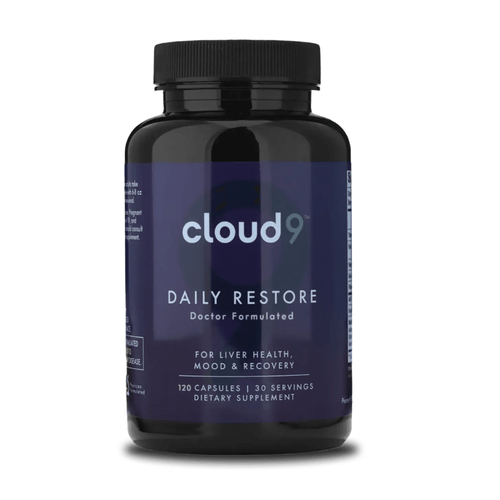
Cloud9 Daily Restore combines NAC, DHM, milk thistle, B vitamins, and ashwagandha to help support the pathways alcohol can tax most. Two capsules daily, drinking or not.
NAC | DHM | Milk Thistle | B Vitamins | Ashwagandha
See How Daily Restore WorksThe "Moderate Drinking" Myth: Why Standard Guidelines May Not Apply to You
Most social drinkers consider themselves moderate consumers, but the definition of "moderate" gets murky after 40. Standard guidelines (up to one drink per day for women, two for men) don't account for how aging changes alcohol metabolism and brain sensitivity.
How Your Body Processes Alcohol Differently After 40
Your liver produces less of the enzymes needed to break down alcohol as you age. This means alcohol stays in your bloodstream longer, giving it more time to affect your brain. Additionally, body composition changes (typically less water, more fat) mean alcohol becomes more concentrated in your system, even if you're drinking the same amount you always have.
For many people over 40, what used to be "a couple of drinks" now has the physiological impact of three or four. Your tolerance might feel the same, but your brain is experiencing something very different.
The Accumulation Effect Nobody Talks About
Here's what makes social drinking particularly tricky for brain health: it's not just about individual drinking sessions, it's about cumulative exposure over time. Research suggests that regular, moderate drinking can lead to measurable brain changes that accumulate over years and decades.
Think of it like this: each drink creates a small amount of oxidative stress and inflammation in your brain. In your younger years, your brain's repair mechanisms kept pace. After 40, those repairs happen more slowly, and the effects begin to stack up. A study examining brain scans of middle-aged adults found that even moderate drinkers showed accelerated brain aging compared to non-drinkers.
Warning Signs Your Social Drinking Might Be Affecting Your Brain
The challenge with gradual cognitive changes is that they're easy to dismiss or attribute to normal aging. But certain signs deserve attention, especially if you're a regular social drinker over 40.
| Cognitive Change | What to Watch For |
|---|---|
| Memory Lapses | Forgetting conversations, missing appointments, or having trouble recalling recent events (beyond normal occasional forgetfulness) |
| Focus Issues | Difficulty concentrating on tasks, frequent distractions, or needing more time to complete familiar work |
| Word-Finding Problems | Increased instances of "tip of the tongue" moments or struggling to articulate thoughts clearly |
| Executive Function Decline | Trouble with planning, organizing, or making decisions that used to come easily |
| Processing Speed | Noticeably slower mental reactions, especially in the days following drinking |
The Next-Day Cognitive Hangover
Even without a traditional hangover, your brain may be experiencing what researchers call "hangover effects" that last 24-48 hours after drinking. These include reduced attention span, impaired memory formation, and slower processing speed. For social drinkers who have wine with dinner several nights a week, this means your brain may rarely be functioning at full capacity.
Many people over 40 assume their mental fog is just stress or aging, never connecting it to their regular evening drinks. But when they reduce or eliminate alcohol for even two weeks, the clarity that returns can be remarkable.
Sleep, Alcohol, and Your Aging Brain: The Triple Threat
If there's one area where social drinking after 40 creates a particularly dangerous cycle, it's sleep. Alcohol disrupts sleep architecture at any age, but the combination of age-related sleep changes and alcohol's effects creates a perfect storm for brain health.
Why Sleep Matters More Than Ever for Brain Health
Your brain clears out metabolic waste and consolidates memories during deep sleep. Research shows this "brain cleaning" process (called the glymphatic system) becomes less efficient as we age. When you add alcohol to the equation, which suppresses deep sleep and REM sleep, you're essentially preventing your brain from doing its nightly maintenance.
Over time, this accumulated sleep debt and reduced brain cleaning may contribute to cognitive decline. Studies suggest that poor sleep quality in middle age is associated with increased risk of dementia later in life.
The False Relaxation Trap
Many social drinkers use alcohol to unwind and help them sleep. The irony: while alcohol might help you fall asleep faster, it significantly reduces sleep quality. You're trading ease of falling asleep for brain health, often without realizing it.
- Alcohol reduces REM sleep, which is crucial for memory consolidation and emotional regulation
- It causes more frequent nighttime awakenings, even if you don't remember them
- The rebound effect as alcohol metabolizes can cause early morning waking and anxiety
- Sleep fragmentation increases with age, and alcohol makes it worse
- Poor sleep from alcohol increases next-day cravings for sugar and stimulants, creating a cycle
Proactive Strategies to Protect Your Brain While Still Enjoying Social Situations
Understanding the risks doesn't mean you have to become a teetotaler or avoid social situations. It means being strategic and intentional about your choices, especially as you move through your 40s, 50s, and beyond.
Rethink Your Baseline Habits
The biggest opportunity for brain protection often lies in your routine, not special occasions. If you automatically pour wine with dinner every night or have a beer while cooking, these habitual drinks add up to significant weekly exposure. Consider designating alcohol-free days or limiting alcohol to truly social occasions rather than solo relaxation.
Research suggests that having at least three consecutive alcohol-free days per week allows your brain and liver time to recover and repair. This pattern may be more protective than spreading the same amount of alcohol across seven days.
Support Your Brain's Resilience
When you do choose to drink, you can minimize the impact by supporting your brain's natural defenses. These strategies can help reduce oxidative stress and inflammation that alcohol creates:
- Stay hydrated before, during, and after drinking (aim for one glass of water per alcoholic drink)
- Never drink on an empty stomach; protein and healthy fats slow alcohol absorption
- Consider taking antioxidant-rich supplements like NAC, vitamin C, or omega-3s
- Prioritize sleep on nights you don't drink to give your brain recovery time
- Engage in regular aerobic exercise, which supports brain health and may offset some alcohol effects
- Challenge your brain with new learning and social connections beyond drinking contexts
The Power of Tracking and Awareness
Most social drinkers significantly underestimate how much they consume. A "glass" of wine at home is often 8-10 ounces rather than the standard 5-ounce serving. That "couple of beers" might be three or four without conscious attention.
Try tracking your actual consumption for two weeks without trying to change it. Many people find this awareness alone leads to natural reduction. Apps and simple journal entries can reveal patterns you didn't realize existed.
When to Consider a More Significant Change
Sometimes, the honest answer is that the level of drinking that's become normal for you isn't compatible with optimal brain health after 40. This doesn't mean you have a drinking problem in the traditional sense. It means the cost-benefit analysis has shifted.
Questions to Ask Yourself
Consider whether any of these situations feel familiar:
- Do you find it difficult to imagine social events or relaxation without alcohol?
- Have you noticed memory or focus issues but dismissed them as "just getting older"?
- Do you drink more than you intend to, even when you plan to have "just one"?
- Has your alcohol tolerance increased, requiring more to feel the same effects?
- Do you feel defensive when someone mentions your drinking habits?
- Have you tried to cut back before but found it harder than expected?
If several of these resonate, it might be time to reassess your relationship with alcohol more fundamentally. This isn't about judgment. It's about recognizing that what worked at 30 might not serve you at 45 or 50.
How Daily Restore Supports Your Health
Understanding what your body needs is one thing. Getting consistent daily support is another. Daily Restore was designed to address the key pathways alcohol can stress most, in one simple daily formula.
NAC (N-Acetyl Cysteine)
Supports glutathione production and antioxidant defenses
DHM (Dihydromyricetin)
Supports alcohol metabolism
Milk Thistle (Silymarin)
Supports healthy liver function
B Vitamins
Help replenish nutrients involved in energy and metabolism
Ashwagandha
Supports stress resilience and healthy cortisol balance
Daily Restore is not a detox or a cure. It is a daily support formula designed for people who drink socially and want to give their body consistent, evidence-informed support.
Frequently Asked Questions
How much alcohol is considered safe for brain health after 40?
Current research suggests that even moderate drinking (1-2 drinks per day) can impact brain health over time, especially after 40 when the brain's natural repair mechanisms slow down. Many health experts now recommend limiting alcohol to special occasions rather than daily consumption, or considering alcohol-free days each week to give your brain time to recover.
Can brain changes from social drinking be reversed?
The good news is that the brain has remarkable plasticity, meaning it can repair and rebuild connections when given the right support. Reducing alcohol intake, staying hydrated, eating nutrient-rich foods, and taking targeted supplements like Daily Restore may help support cognitive recovery. The earlier you start making changes, the better your brain's ability to adapt and heal.
What's the difference between social drinking and problem drinking?
Social drinking typically means having a few drinks in social settings without dependence or negative consequences, while problem drinking involves difficulty controlling intake, drinking alone, or experiencing health or relationship issues. However, even regular social drinking can impact brain health over 40, so it's worth paying attention to both how much and how often you drink, regardless of the social context.
Are certain types of alcohol better for brain health than others?
While you may have heard that red wine contains beneficial antioxidants, research suggests that alcohol itself has similar effects on the brain regardless of the type. The key factor is the amount of ethanol consumed, not whether it comes from wine, beer, or spirits. If you do choose to drink, moderation matters more than the beverage type.
How quickly will I notice improvements if I cut back on drinking?
Many people report better sleep quality within a few days and improved mental clarity within a week or two of reducing alcohol intake. Longer-term benefits like enhanced memory and cognitive function may become noticeable after several weeks to months. Pairing lifestyle changes with brain-supporting nutrients can help optimize your results and keep you feeling your best during the transition.
The Bottom Line
Your brain after 40 deserves extra attention, especially if social drinking is part of your routine. The combination of age-related changes and alcohol's effects on neuroinflammation, cellular energy, and neurotransmitter balance can add up over time, potentially affecting your memory, focus, and long-term cognitive health.
The good news is that small, consistent changes can make a meaningful difference. Reducing your alcohol intake, staying hydrated, prioritizing quality sleep, and supporting your brain with targeted nutrients are all strategies that research suggests can help protect cognitive function. You don't need to overhaul your entire lifestyle overnight, just commit to taking your brain health seriously.
Cloud9's Daily Restore was specifically designed to support people navigating this exact situation. With ingredients like DHM, L-theanine, milk thistle, and B vitamins, it provides daily support for the specific pathways that alcohol can impact. Think of it as part of your daily routine, like brushing your teeth or taking a multivitamin, a simple habit that supports your brain's resilience over time.
Your brain has carried you this far. Now's the time to give it the consistent, thoughtful support it needs to stay sharp, focused, and healthy for decades to come.
Build Your Daily Support Routine
Build Your Daily Support Routine
If drinking is part of your lifestyle, your support routine should not be random. Daily Restore was designed to help social drinkers support liver health, antioxidant defenses, alcohol metabolism, nutrient replenishment, and daily recovery in one simple routine.
NAC
DHM
Milk Thistle
B Vitamins
Ashwagandha