

That knot in your stomach when the wedding invitation arrives. The rehearsed excuse already forming when your coworker mentions after-work drinks. The exhausting mental gymnastics of calculating escape routes before you even walk through the door.
Social anxiety doesn't just make events uncomfortable, it can quietly reshape your life around avoidance. But here's what matters: you don't have to choose between missing out and white-knuckling your way through every gathering. There are concrete, practical strategies that can help you show up more comfortably for the moments that matter.
This guide offers actionable techniques specifically designed for the social situations young women navigate most often, from wedding receptions to networking mixers to family parties where everyone asks about your life plans.
Quick Take
- Social anxiety triggers physical responses that can be managed with specific breathing and grounding techniques
- Pre-event preparation, including role-playing conversations and setting realistic goals, reduces anticipatory anxiety
- Strategic positioning and intentional conversation frameworks make mingling feel less overwhelming
- Post-event recovery practices prevent the anxiety spiral that often follows social gatherings
- Professional support combined with self-directed strategies offers the most effective long-term approach
Understanding Social Anxiety in Social Settings
Social anxiety isn't just shyness or introversion. It's a physiological stress response triggered by the perceived threat of social evaluation. Research suggests that social anxiety activates the same fear circuitry in the brain that responds to physical danger, which explains why a casual networking event can feel as threatening as a legitimate crisis.
For young women specifically, studies show that social anxiety often intensifies around events involving appearance-based judgment, professional evaluation, or situations where you're expected to perform a certain social role. The brain's threat detection system goes into overdrive, flooding your body with cortisol and adrenaline even though you're objectively safe.
Understanding this mechanism matters because it shifts the framework from "something is wrong with me" to "my nervous system is responding to a perceived threat." That shift opens up space for practical intervention rather than self-criticism.
Daily Support for Social Drinkers
Your liver works hard every day. Give it consistent support.
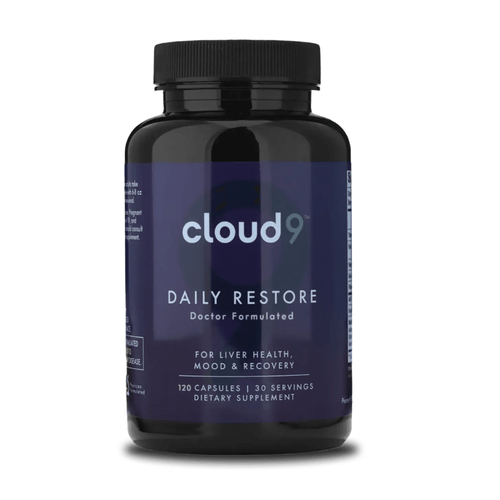
Cloud9 Daily Restore combines NAC, DHM, milk thistle, B vitamins, and ashwagandha to help support the pathways alcohol can tax most. Two capsules daily, drinking or not.
NAC | DHM | Milk Thistle | B Vitamins | Ashwagandha
See How Daily Restore WorksBefore the Event: Preparation Strategies That Actually Help
Reframe Your Goals
The pressure to be charismatic, witty, or the life of the party feeds anxiety. Instead, set micro-goals that feel achievable. Your only objective might be to have one genuine conversation, stay for 45 minutes, or introduce yourself to two new people.
Write down your specific goal before you go. Make it so small it feels almost too easy. Success builds confidence for the next event, while unrealistic expectations create a cycle of perceived failure.
Practice Conversation Frameworks
Anticipatory anxiety often centers on "what will I say?" Having a loose mental script reduces that uncertainty. Prepare three to five open-ended questions you can rely on when conversation stalls.
- "How do you know the host?" or "What brings you to this event?"
- "What's been keeping you busy lately?"
- "Have you been to any other events like this recently?"
- "What do you do when you're not at [work/events like this]?"
- "Any recommendations for [something relevant to the setting]?"
These aren't about being inauthentic. They're scaffolding that supports conversation until natural flow takes over.
Physical Preparation Matters
Choose your outfit days in advance. Wear something you've worn before and feel comfortable in, not something new that might add physical self-consciousness to your mental load. Eat a balanced meal beforehand so low blood sugar doesn't amplify anxiety symptoms.
Plan your logistics: transportation, arrival time, parking. Each decision you make in advance is one fewer thing your anxious brain needs to process in the moment.

During the Event: In-the-Moment Techniques
The First 15 Minutes Are Critical
Your anxiety will likely peak within the first 15 minutes of arrival. This is normal and temporary. Research on exposure therapy suggests that anxiety naturally decreases if you stay in the situation rather than escape it.
Arrive with a friend if possible, or give yourself a specific task immediately upon entry (get a drink, find the bathroom, locate the coat check). Small actions ground you in the present moment and interrupt the anxiety spiral.
The discomfort you feel walking into a room full of strangers isn't evidence that something's wrong. It's your nervous system doing exactly what it evolved to do. The goal isn't to eliminate that feeling, it's to move forward while carrying it.
Grounding Techniques You Can Use Anywhere
When you feel anxiety rising, these discrete practices can help regulate your nervous system without drawing attention:
- Box breathing: Inhale for 4 counts, hold for 4, exhale for 4, hold for 4. Repeat 3-4 times.
- 5-4-3-2-1 sensory check: Identify 5 things you see, 4 you can touch, 3 you hear, 2 you smell, 1 you taste.
- Progressive muscle relaxation: Tense and release muscle groups starting with your toes, moving upward.
- Cold water on wrists: Excuse yourself to the bathroom and run cold water on your inner wrists for 30 seconds.
Strategic Positioning
Where you position yourself in a room affects your comfort level. Standing near a wall or in a corner (with a view of exits) often feels safer than being in the center of a space. Position yourself near the food or drink table, which gives you a legitimate reason to be standing alone while you gather yourself.
If you're at a seated event like a wedding, arriving early enough to choose your seat can make a significant difference. Aisle seats or seats near exits provide a subtle sense of control.
The Power of Micro-Exits
You don't have to endure hours of continuous socializing. Give yourself permission to take brief breaks. Step outside for fresh air, take a longer bathroom break, volunteer to help with something in another room.
These aren't escapes, they're strategic resets that allow your nervous system to downregulate before re-engaging. Research suggests that brief exposure followed by short breaks is often more sustainable than prolonged, white-knuckled endurance.
Conversation Navigation: Specific Scenarios
When Someone Asks What You Do
This common question can trigger anxiety about being judged or found uninteresting. Prepare a one-sentence answer that's honest but doesn't require elaboration unless you want to provide it. "I work in marketing" or "I'm between jobs right now" or "I'm a graduate student" is sufficient.
Then immediately redirect: "How about you?" or "Have you always worked in [their field]?" People generally enjoy talking about themselves, and asking questions takes pressure off you to perform.
Handling Invasive Questions
Family events and weddings often come with intrusive questions about relationships, career plans, or life choices. Having prepared, polite deflections ready reduces the anxiety of being caught off guard.
| Invasive Question | Polite Deflection |
|---|---|
| "When are you getting married/having kids?" | "No timeline yet! How have you been?" or "Still figuring that out. Tell me about [change subject]." |
| "What are you doing with your degree?" | "Exploring a few different paths right now. Have you been to any good shows lately?" |
| "You've lost/gained weight!" | "Thanks for noticing! So what's new with you?" |
| "Are you still single?" | "Yep, living my life! What about you, what's been going on?" |
Exiting Conversations Gracefully
Anxiety often spikes when you want to leave a conversation but don't know how. Simple, honest exits work best: "I'm going to grab another drink, it was great talking with you" or "I need to find the restroom, but let's catch up later" or "I promised myself I'd say hello to a few people, excuse me."
You don't need an elaborate excuse. A brief, polite statement followed by a smile and purposeful movement is sufficient.
After the Event: Recovery and Reflection
Preventing the Post-Event Anxiety Spiral
For many people with social anxiety, the aftermath is worse than the event itself. Your brain replays every interaction, catastrophizing perceived mistakes and imagining judgment that likely doesn't exist.
Interrupt this pattern immediately. When you notice yourself ruminating, practice thought-stopping: literally say "stop" out loud or visualize a stop sign. Then deliberately redirect to a specific, present-moment activity (a puzzle, a walk, a phone call with someone supportive).
Realistic Post-Event Assessment
Instead of letting your anxious brain create the narrative, write down objective facts about the event while they're still fresh:
- How long did you stay?
- How many conversations did you have?
- What was one thing that went better than expected?
- What's one skill you practiced (even if imperfectly)?
- Did anyone actually respond negatively to you, or is that assumption?
This factual inventory often reveals that your experience was more neutral or even positive than your anxiety is telling you it was.
Physical Recovery
Social events are physiologically demanding when you have social anxiety. Your body has been in a stress response, which depletes resources. Prioritize rest, hydration, and gentle movement the next day.
Don't schedule back-to-back high-stress social events if you can avoid it. Build in recovery time so you're not operating from a place of depletion.
How Daily Restore Supports Your Health
Understanding what your body needs is one thing. Getting consistent daily support is another. Daily Restore was designed to address the key pathways alcohol can stress most, in one simple daily formula.
NAC (N-Acetyl Cysteine)
Supports glutathione production and antioxidant defenses
DHM (Dihydromyricetin)
Supports alcohol metabolism
Milk Thistle (Silymarin)
Supports healthy liver function
B Vitamins
Help replenish nutrients involved in energy and metabolism
Ashwagandha
Supports stress resilience and healthy cortisol balance
Daily Restore is not a detox or a cure. It is a daily support formula designed for people who drink socially and want to give their body consistent, evidence-informed support.
Frequently Asked Questions
Is it normal to feel anxious before every social event, even ones I've been to before?
Absolutely. Social anxiety doesn't always diminish with familiarity, and many women experience heightened nerves before gatherings regardless of how many times they've attended similar events. The anticipatory anxiety can actually be more intense than the event itself, which is why having preparation strategies in place can make a meaningful difference.
How long before an event should I start using anxiety management techniques?
Starting your routine the morning of the event, or even the night before, can help create a calmer baseline. Techniques like breathwork and grounding exercises work best when practiced consistently rather than only in moments of peak stress. Building these habits into your daily routine means they'll feel more natural and effective when you need them most.
What if I have to leave an event early because of anxiety?
Leaving early is completely valid and sometimes the healthiest choice you can make. Having an exit strategy doesn't mean you've failed, it means you're respecting your limits and taking care of yourself. Many people find that simply knowing they can leave if needed actually reduces their anxiety enough to stay longer.
Can supplements really help with social anxiety?
Research suggests that certain botanicals and adaptogens may support the body's stress response and promote a calmer state of mind. Ingredients like ashwagandha, L-theanine, and magnesium have been studied for their potential to help manage everyday stress and nervous tension. While supplements aren't a cure-all, they can be a helpful part of a broader anxiety management toolkit when used consistently.
Should I tell people at the event that I have social anxiety?
This is entirely your choice and depends on your comfort level and the context. Sharing with a trusted friend at the event can provide valuable support and understanding, but you're under no obligation to explain your feelings to anyone. Sometimes having one person who knows can make the entire experience feel more manageable.
The Bottom Line
Managing social anxiety at parties, weddings, and work events isn't about eliminating nerves entirely. It's about building a personalized toolkit of strategies that help you show up more comfortably and authentically. From practical preparation techniques to in-the-moment grounding exercises, small shifts can create meaningful change in how you experience social situations.
Consistency matters more than perfection. The breathing exercises, boundary-setting practices, and self-compassion work you do between events build resilience that carries into challenging moments. Supporting your nervous system daily creates a foundation that makes occasional high-stress situations more manageable.
Cloud9's Daily Restore was designed with this consistency in mind. Formulated with research-backed botanicals like ashwagandha, L-theanine, and magnesium, it provides gentle, daily support for stress resilience and nervous system balance. When combined with the practical strategies outlined here, it can be part of a holistic approach to managing social anxiety that works with your life, not against it.
Remember that progress isn't linear, and difficult moments don't erase the work you've done. Every event you attend, every conversation you have, and every time you practice self-compassion is building your capacity to navigate social situations with greater ease. You're not alone in this, and finding what works for you is a journey worth taking.
Build Your Daily Support Routine
Build Your Daily Support Routine
If drinking is part of your lifestyle, your support routine should not be random. Daily Restore was designed to help social drinkers support liver health, antioxidant defenses, alcohol metabolism, nutrient replenishment, and daily recovery in one simple routine.
NAC
DHM
Milk Thistle
B Vitamins
Ashwagandha