
You're at a gathering with friends, but instead of enjoying the conversation, you're analyzing every word you say. Your heart races when someone asks you a question. You smile and nod, but inside, you're wondering if everyone can tell how uncomfortable you feel.
Social anxiety doesn't mean you're antisocial or unfriendly. It means your mind goes into overdrive in social situations, making it hard to relax and be yourself. For young women especially, the pressure to appear confident, likable, and effortlessly social can make these moments even more challenging.
The good news: you can learn to quiet that anxious voice and actually enjoy being around people. These strategies can help you shift from survival mode to presence, so social situations feel less like tests you have to pass and more like experiences you get to have.
Quick Take
- Social anxiety often stems from fear of judgment, but learning to ground yourself in the present moment can help quiet overthinking
- Physical techniques like breathing exercises and body awareness create immediate calm when anxiety spikes
- Shifting focus from how you're perceived to genuine curiosity about others reduces self-conscious thoughts
- Small, consistent exposure to social situations builds confidence more effectively than avoiding them
- Self-compassion and realistic expectations make social interactions less pressure-filled and more authentic
Understanding Social Anxiety in Young Women
Research suggests that women experience social anxiety at higher rates than men, particularly during late teens and twenties. This isn't just nervousness, it's a persistent fear of being judged, embarrassed, or rejected in social settings. Your brain perceives social situations as threats, triggering a fight-or-flight response even when you're just meeting friends for coffee.
Studies show that social anxiety often involves intense self-focus. You become hyperaware of your body language, facial expressions, and every word that comes out of your mouth. This internal monitoring makes it nearly impossible to be present because you're simultaneously participating in the conversation and critiquing your performance.
The cycle feeds itself: anxiety makes you less present, which makes interactions feel awkward, which reinforces the belief that you're "bad" at socializing. Breaking this pattern starts with understanding that your anxious thoughts aren't facts, they're just your brain trying to protect you from a threat that usually isn't real.
Daily Support for Social Drinkers
Your liver works hard every day. Give it consistent support.
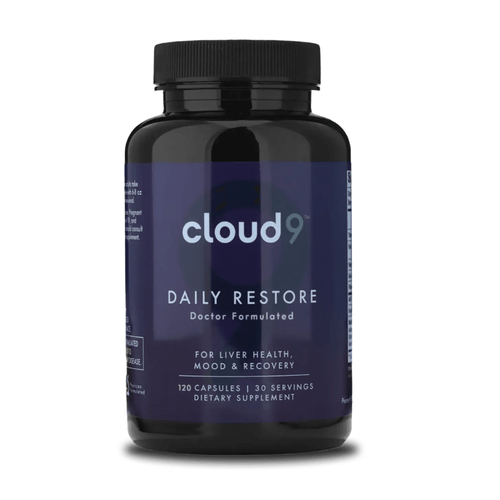
Cloud9 Daily Restore combines NAC, DHM, milk thistle, B vitamins, and ashwagandha to help support the pathways alcohol can tax most. Four capsules daily, drinking or not.
NAC | DHM | Milk Thistle | B Vitamins | Ashwagandha
See How Daily Restore WorksGround Yourself Before You Walk In
Preparation matters, but not the kind where you script conversations in your head. Physical grounding techniques can help calm your nervous system before you even enter a social situation.
Pre-Event Calming Rituals
Create a simple routine you can do in the car, bathroom, or just outside the venue. These practices signal to your body that you're safe, which helps counteract the anxiety response.
- Box breathing: inhale for four counts, hold for four, exhale for four, hold for four, repeat five times
- Progressive muscle relaxation: tense and release muscle groups from your toes to your jaw
- Sensory grounding: name five things you can see, four you can touch, three you can hear, two you can smell, one you can taste
- Power posing: stand tall with shoulders back for two minutes to boost confidence
Set Realistic Expectations
You don't need to be the life of the party or have profound conversations with everyone. Give yourself permission to have a moderate, even mediocre time. Sometimes just showing up and staying for a reasonable amount of time is enough.
Decide in advance what success looks like: maybe it's having one meaningful conversation, staying for an hour, or simply not leaving early due to panic. These smaller, achievable goals reduce pressure and make presence more accessible.

Shift From Self-Focus to Other-Focus
One of the most effective ways to reduce social anxiety is to redirect your attention outward. When you're genuinely curious about other people, there's less mental space for self-criticism.
The Power of Genuine Curiosity
Think of conversations as opportunities to learn about someone rather than performances you need to ace. Ask open-ended questions and actually listen to the answers. When you're focused on understanding someone else's experience, you're not simultaneously judging your own.
The paradox of social anxiety is that the more you try to control how others perceive you, the less authentic you become. True connection happens when you stop performing and start showing up as yourself.
Practice Active Listening
Active listening isn't just polite, it's anxiety-reducing. When you're fully engaged in what someone is saying, your anxious thoughts have to take a back seat. Notice their tone, their energy, the stories they choose to share.
- Make natural eye contact without forcing it (looking at their face generally, not staring)
- Nod and use small verbal affirmations like "that makes sense" or "tell me more"
- Ask follow-up questions based on what they just said
- Notice one interesting detail about their story and reference it later
Physical Techniques to Stay Present During Conversations
Your body and mind are connected. When anxiety hits mid-conversation, these physical anchors can help you return to the present moment.
Grounding Through Your Senses
Anchor yourself in physical reality when you feel yourself spiraling. Feel your feet on the floor. Notice the temperature of the air on your skin. Hold your drink and focus on its weight and temperature in your hand.
These tiny redirections interrupt the anxiety loop. You're reminding your nervous system that you're here, now, in this moment, not in the imagined future where everyone is judging you.
Breathe Without Making It Obvious
You can regulate your breathing without anyone noticing. Slow, steady breaths signal safety to your brain. Try breathing in through your nose for a count of four while someone else is talking, then exhaling slowly through your nose.
| Anxiety Signal | In-the-Moment Technique | Why It Works |
|---|---|---|
| Racing thoughts | Focus on one physical sensation (feet on floor, back against chair) | Redirects attention from internal narrative to present reality |
| Shallow breathing | Extend your exhale to be longer than your inhale | Activates parasympathetic nervous system, reduces fight-or-flight |
| Feeling disconnected | Make a small physical gesture (sip water, adjust posture) | Creates embodied presence and interrupts dissociation |
| Self-conscious spiral | Ask the other person a question about themselves | Shifts focus outward and gives you a moment to reset |
| Urge to escape | Tell yourself "I'll stay for five more minutes" | Makes staying feel manageable and often reduces urge to flee |
Build Confidence Through Gradual Exposure
Avoiding social situations might feel protective, but it actually strengthens anxiety over time. Gradual, manageable exposure helps your brain learn that social interactions aren't actually dangerous.
Create Your Exposure Ladder
Start with situations that create mild anxiety and work your way up. You might begin with texting a friend, then calling them, then meeting for coffee one-on-one, then joining a small group gathering. Each successful experience builds evidence that you can handle more than your anxiety tells you.
The key is consistency and self-compassion. If one situation feels overwhelming, that's feedback, not failure. Adjust and try again with slightly different circumstances or after more preparation.
Celebrate Small Wins
Acknowledge every step forward, even the tiny ones. You spoke up in a group conversation? That counts. You stayed at an event even though you felt anxious? That's progress. These moments add up and gradually reshape your relationship with social situations.
- Keep a "wins journal" where you note social moments that went better than expected
- Remind yourself that discomfort doesn't mean you're doing it wrong, it means you're growing
- Share your progress with a trusted friend who understands what you're working on
- Notice when anxiety was present but didn't control your choices
Practice Self-Compassion When Anxiety Shows Up
You'll have moments when anxiety wins, when you leave early or say something you wish you hadn't. These moments don't erase your progress, and they don't define your social capabilities.
Talk to Yourself Like a Friend
Notice how harsh your self-talk becomes after social situations. You probably wouldn't tell a friend she's awkward or unlikable based on one conversation. Extend that same kindness to yourself.
Try reframing: instead of "I'm so bad at this," try "I'm learning and it's hard sometimes." Instead of "everyone thinks I'm weird," try "I felt self-conscious, but I don't actually know what others thought." This shift doesn't erase anxiety, but it makes the experience less painful.
Remember That Others Are Often Self-Focused Too
Most people are thinking about themselves far more than they're analyzing you. That slightly awkward comment you made? They probably forgot it within minutes because they were worried about their own awkward moment. This isn't dismissive, it's liberating.
How Daily Restore Supports Your Health
Understanding what your body needs is one thing. Getting consistent daily support is another. Daily Restore was designed to address the key pathways alcohol can stress most, in one simple daily formula.
NAC (N-Acetyl Cysteine)
Supports glutathione production and antioxidant defenses
DHM (Dihydromyricetin)
Supports alcohol metabolism
Milk Thistle (Silymarin)
Supports healthy liver function
B Vitamins
Help replenish nutrients involved in energy and metabolism
Ashwagandha
Supports stress resilience and healthy cortisol balance
Daily Restore is not a detox or a cure. It is a daily support formula designed for people who drink socially and want to give their body consistent, evidence-informed support.
Frequently Asked Questions
How long does it take to see improvement in social anxiety symptoms?
The timeline varies for everyone, but many people notice subtle shifts within a few weeks of consistent practice with grounding techniques and mindfulness. Building new neural pathways takes time, so be patient with yourself and focus on small wins rather than overnight transformation.
Can natural supplements really help with social anxiety?
Research suggests that certain botanicals and amino acids can help support a calmer nervous system response when used consistently. While supplements aren't a replacement for therapy or medical treatment when needed, they can be a helpful part of a comprehensive approach to managing anxiety symptoms.
What if grounding techniques don't work in the moment?
Sometimes anxiety feels too overwhelming for any technique to break through immediately, and that's completely normal. If one method isn't helping, try switching to another, give yourself permission to step away from the situation temporarily, or simply acknowledge what you're feeling without judgment until the intensity passes.
Is it normal to feel anxious even in familiar social situations?
Absolutely. Social anxiety doesn't always follow logical patterns, and you might feel perfectly fine in one setting but anxious in another that seems similar. Your nervous system can be triggered by subtle cues you're not even consciously aware of, so there's no "right" way for anxiety to show up.
Should I tell people about my social anxiety?
This is entirely your choice and depends on your comfort level and the relationship. Sharing with trusted friends can often reduce the pressure you feel to appear "perfect," but you're never obligated to disclose your anxiety to anyone. Do what feels right for you in each situation.
The Bottom Line
Social anxiety can feel isolating, but you're far from alone in this experience. The strategies we've explored, from grounding techniques to mindful breathing to gradual exposure, are tools that can help you feel more present and less caught up in anxious thoughts during social moments. Progress isn't always linear, and some days will feel easier than others.
Building a consistent daily routine that supports your nervous system can make a real difference over time. Daily Restore was designed specifically to provide gentle, cumulative support for stress and anxiety through a blend of researched botanicals and calming nutrients. When taken regularly, it can help create a steadier baseline so that social situations feel less overwhelming.
Remember that managing social anxiety is about progress, not perfection. Each time you practice being present, each moment you choose curiosity over self-criticism, and each small step outside your comfort zone builds resilience. You deserve to enjoy your life and connect with others without constant worry holding you back.
Whether you incorporate Daily Restore into your morning routine, commit to one grounding technique, or simply start noticing your thoughts with more compassion, you're taking meaningful steps toward feeling more at ease in your own skin. Your journey is your own, and every bit of effort you make matters.
Build Your Daily Support Routine
Build Your Daily Support Routine
If drinking is part of your lifestyle, your support routine should not be random. Daily Restore was designed to help social drinkers support liver health, antioxidant defenses, alcohol metabolism, nutrient replenishment, and daily recovery in one simple routine.
NAC
DHM
Milk Thistle
B Vitamins
Ashwagandha