

You walk into a crowded room and your chest tightens. Your mind races through worst-case scenarios while everyone else seems perfectly at ease. That familiar wave of dread before group meetings, parties, or even casual hangouts isn't just nervousness. It's social anxiety, and it affects millions of people who appear completely confident on the outside.
Social anxiety can make ordinary social situations feel like high-stakes performances. But here's what matters: you don't have to let fear control your social life. With the right tools and understanding, you can learn to navigate group settings with greater ease and genuine confidence.
This guide offers practical, science-backed strategies to help you overcome social anxiety and stay positive in groups. Whether you're dealing with workplace meetings, social gatherings, or everyday interactions, these techniques can support you in building a more comfortable relationship with social situations.
Quick Take
- Social anxiety is a treatable condition rooted in your brain's threat response system, not a personal weakness
- Gradual exposure to social situations, combined with breathing techniques, can significantly reduce anxiety symptoms
- Cognitive reframing helps you challenge negative thought patterns and develop more balanced perspectives
- Physical preparation through sleep, nutrition, and movement creates a stronger foundation for managing anxiety
- Progress happens in small steps, and setbacks are a normal part of building social confidence
Understanding Social Anxiety in Groups
Social anxiety disorder goes beyond typical shyness or introversion. Research suggests it involves an overactive fear response in social situations, where your brain perceives potential judgment or rejection as genuine threats. This heightened alert system triggers physical symptoms like rapid heartbeat, sweating, and mental fog precisely when you need to be present and engaged.
Studies show that people with social anxiety often overestimate how much others notice or judge them. Your internal experience feels magnified and obvious, while outside observers typically perceive far less distress than you're experiencing. This gap between perception and reality creates a cycle where anxiety about appearing anxious fuels more anxiety.
Group settings amplify these challenges because they involve multiple potential sources of evaluation. The more people present, the more your threat detection system may activate. Understanding this neurological basis can help you recognize that your anxiety response is a medical phenomenon, not a character flaw or something you should simply "get over."
Daily Support for Social Drinkers
Your liver works hard every day. Give it consistent support.
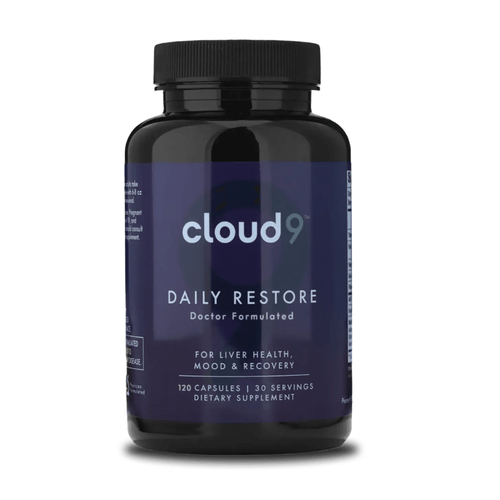
Cloud9 Daily Restore combines NAC, DHM, milk thistle, B vitamins, and ashwagandha to help support the pathways alcohol can tax most. Four capsules daily, drinking or not.
NAC | DHM | Milk Thistle | B Vitamins | Ashwagandha
See How Daily Restore WorksCognitive Strategies to Reframe Your Thoughts
Your thoughts directly influence your emotional state and physical anxiety response. Learning to identify and challenge anxious thinking patterns can help you approach social situations with a more balanced mindset.
Identify Your Anxiety Triggers
Start by noticing the specific situations, thoughts, or physical sensations that escalate your anxiety. Common triggers include making eye contact, entering a room where people are already seated, or anticipating your turn to speak. Once you can name your triggers, you gain the ability to prepare for them rather than being caught off guard.
Keep a simple log of anxiety-provoking situations for a week. Note what happened, what you thought, and how intense your anxiety felt on a scale of 1-10. This practice helps you spot patterns and recognize that anxiety levels fluctuate rather than staying constant.
Challenge Catastrophic Thinking
Social anxiety often involves predicting the worst possible outcome. Your mind might jump to conclusions like "Everyone will think I'm stupid" or "I'll completely embarrass myself." These predictions feel true in the moment but rarely reflect reality.
Try this reframing process when you notice catastrophic thoughts:
- Write down the anxious thought exactly as it appears in your mind
- Ask yourself: What evidence do I have that this will actually happen?
- Consider: What's a more realistic outcome based on past experience?
- Identify: What would I tell a friend having this same thought?
- Create: A balanced alternative thought that acknowledges both concerns and possibilities
Practice Self-Compassion
Research indicates that self-criticism intensifies anxiety, while self-compassion can help reduce it. When you make a social misstep or feel anxious, notice how you talk to yourself. Are you harsh and judgmental, or understanding and patient?
Self-compassion doesn't mean lowering your standards or making excuses. It means treating yourself with the same kindness you'd offer someone you care about. This shift in internal dialogue can create emotional space to learn and grow rather than spiral into shame.
The goal isn't to eliminate all social anxiety or become a different person. It's to develop skills that help you engage in meaningful social connections despite the discomfort, gradually expanding your comfort zone one interaction at a time.
Physical Techniques to Calm Your Nervous System
Social anxiety isn't just in your head. It creates real physical symptoms that can feel overwhelming. These body-based techniques can help you regulate your nervous system before, during, and after social situations.
Breathing Exercises for Immediate Relief
When anxiety spikes, your breathing often becomes shallow and rapid, which signals danger to your brain and intensifies the anxiety loop. Controlled breathing can interrupt this cycle by activating your parasympathetic nervous system, which promotes calm.
Try the 4-7-8 breathing technique: Breathe in through your nose for 4 counts, hold for 7 counts, and exhale slowly through your mouth for 8 counts. Repeat this cycle 3-4 times. The extended exhale is particularly effective at signaling safety to your nervous system.
Progressive Muscle Relaxation
Tension often builds in your body before you consciously recognize anxiety. Progressive muscle relaxation helps you release this physical tension and increase body awareness. Starting with your toes and moving upward, tense each muscle group for 5 seconds, then release and notice the sensation of relaxation for 10 seconds.
Practice this technique regularly when you're calm, not just during anxiety episodes. This builds muscle memory so your body recognizes and responds to the relaxation cues more quickly when you need them in social situations.
Grounding Techniques for Present-Moment Awareness
Anxiety pulls your attention toward future worries and imagined disasters. Grounding brings you back to the present moment, where you can actually respond to what's happening rather than what you fear might happen.
The 5-4-3-2-1 technique engages all your senses:
- Name 5 things you can see in your environment
- Identify 4 things you can physically touch or feel
- Notice 3 things you can hear
- Recognize 2 things you can smell
- Acknowledge 1 thing you can taste
Gradual Exposure: Building Confidence Through Action
Avoidance provides short-term relief but strengthens social anxiety over time. Gradual exposure, the practice of slowly and systematically facing feared situations, is one of the most effective approaches for reducing social anxiety symptoms.
Creating Your Exposure Hierarchy
List social situations from least to most anxiety-provoking, rating each on a 0-100 scale. Your hierarchy might include everything from saying hello to a coworker (30) to giving a presentation to a large group (95). The goal is to create a ladder of challenges you can climb step by step.
Start with situations rated 30-40 on your anxiety scale. Challenging yourself is important, but starting with your most feared situation can backfire and reinforce avoidance. Success builds on success, so begin where you have a genuine chance of managing the discomfort.
Designing Effective Exposure Practices
| Exposure Principle | What It Means | Example |
|---|---|---|
| Repeated | Practice the same situation multiple times | Attend the same weekly group meeting 4-5 times in a row |
| Prolonged | Stay in the situation long enough for anxiety to decrease | Remain at a social gathering for at least 45 minutes, not just 10 |
| Progressive | Gradually increase difficulty level | Start by observing, then asking one question, then contributing an idea |
| Planned | Schedule exposures intentionally, not just when forced | Choose to initiate a conversation rather than only responding when approached |
Learning from Each Experience
After each exposure, take a few minutes to reflect without judgment. What went better than expected? What was harder? What did you learn about your ability to tolerate discomfort? This reflection helps consolidate learning and prevents you from dismissing positive experiences.
Notice the difference between how you felt before the situation (anticipatory anxiety) and what actually happened. Often, anticipatory anxiety is significantly higher than the reality of the experience. Recognizing this pattern can help reduce pre-event worry over time.
Building a Sustainable Social Anxiety Management Plan
Managing social anxiety is an ongoing practice, not a one-time fix. Creating sustainable habits and realistic expectations sets you up for long-term success.
Lifestyle Foundations That Support Mental Health
Your baseline anxiety level is influenced by factors like sleep quality, nutrition, physical activity, and substance use. When you're sleep-deprived or relying on caffeine and alcohol to manage energy and nerves, your nervous system operates from a more reactive state.
Consider these foundational practices:
- Aim for 7-9 hours of sleep, especially before important social events
- Limit caffeine intake, which can mimic and amplify anxiety symptoms
- Engage in regular physical movement to help regulate stress hormones
- Maintain stable blood sugar through balanced meals and snacks
- Be cautious with alcohol, which may seem to ease anxiety but often worsens it over time
Knowing When to Seek Professional Support
Self-help strategies can be remarkably effective, but they're not always enough. If social anxiety significantly interferes with your work, relationships, or quality of life, professional treatment can provide additional tools and support.
Cognitive-behavioral therapy, particularly therapies focused on exposure and response prevention, has strong research support for treating social anxiety. Some people also benefit from medication, either short-term or as part of a longer treatment plan. There's no shame in seeking help, it's actually one of the most proactive steps you can take.
Measuring Progress Realistically
Progress with social anxiety rarely follows a straight line. You'll have good days and difficult days, breakthrough moments and setbacks. That's normal and expected, not a sign that you're failing or that strategies aren't working.
Focus on trend lines rather than individual experiences. Are you able to do things now that felt impossible six months ago? Are your anxiety levels slightly more manageable, even if not completely gone? Are you recovering from difficult social situations more quickly? These subtle shifts represent real progress worth celebrating.
How Daily Restore Supports Your Health
Understanding what your body needs is one thing. Getting consistent daily support is another. Daily Restore was designed to address the key pathways alcohol can stress most, in one simple daily formula.
NAC (N-Acetyl Cysteine)
Supports glutathione production and antioxidant defenses
DHM (Dihydromyricetin)
Supports alcohol metabolism
Milk Thistle (Silymarin)
Supports healthy liver function
B Vitamins
Help replenish nutrients involved in energy and metabolism
Ashwagandha
Supports stress resilience and healthy cortisol balance
Daily Restore is not a detox or a cure. It is a daily support formula designed for people who drink socially and want to give their body consistent, evidence-informed support.
Frequently Asked Questions
How long does it take to overcome social anxiety?
The timeline varies for everyone, but many people notice gradual improvements within a few weeks to months of consistent practice. Building confidence in social situations is a gradual process that depends on factors like the severity of your anxiety, the strategies you use, and how regularly you practice exposure to social settings.
Can supplements really help with social anxiety?
Research suggests that certain nutrients and botanicals may help support a calmer stress response and balanced mood. Ingredients like ashwagandha, L-theanine, and magnesium have been studied for their potential to promote relaxation and reduce anxious feelings. While supplements aren't a cure, they can be a helpful addition to other strategies like therapy and lifestyle changes.
What's the difference between shyness and social anxiety?
Shyness is a personality trait that may cause temporary discomfort in new social situations, but it doesn't typically interfere with daily life. Social anxiety, on the other hand, involves intense fear and avoidance that can limit your ability to work, socialize, or engage in everyday activities. If your concerns about social situations are persistent and significantly impact your quality of life, it may be worth speaking with a mental health professional.
Should I avoid social situations that make me anxious?
While avoidance provides temporary relief, it actually reinforces anxiety over time. Gradual exposure to feared situations, starting small and building up, is one of the most effective ways to reduce social anxiety. The goal isn't to eliminate all nervousness, but to prove to yourself that you can handle these situations and that the outcomes you fear rarely come true.
When should I seek professional help for social anxiety?
Consider reaching out to a therapist if your social anxiety is interfering with your work, relationships, or overall quality of life, or if you're avoiding important activities because of fear. Cognitive-behavioral therapy has strong evidence for treating social anxiety, and a trained professional can provide personalized strategies and support that go beyond self-help techniques.
The Bottom Line
Social anxiety doesn't have to control your life or keep you from meaningful connections and experiences. By understanding the root causes of your fears, practicing gradual exposure, challenging negative thought patterns, and building a supportive daily routine, you can develop genuine confidence in social settings.
Remember that progress isn't always linear. Some days will feel easier than others, and that's completely normal. What matters is consistency in your approach and self-compassion when things don't go perfectly. Each social interaction is an opportunity to practice, learn, and prove to yourself that you're more capable than your anxiety suggests.
Supporting your mental wellness from multiple angles can make a real difference. Cloud9's Daily Restore combines research-backed ingredients like ashwagandha, L-theanine, and magnesium to help promote a balanced stress response and calm, focused energy throughout your day. When taken consistently as part of your daily routine, it may help create a steadier foundation as you work on building social confidence.
The journey to overcoming social anxiety is personal and unique to you. Be patient with yourself, celebrate small victories, and remember that seeking support, whether through supplements, therapy, or trusted friends, is a sign of strength, not weakness.
Build Your Daily Support Routine
Build Your Daily Support Routine
If drinking is part of your lifestyle, your support routine should not be random. Daily Restore was designed to help social drinkers support liver health, antioxidant defenses, alcohol metabolism, nutrient replenishment, and daily recovery in one simple routine.
NAC
DHM
Milk Thistle
B Vitamins
Ashwagandha