

That knot in your stomach before a party. The racing thoughts as you're getting ready. The urge to cancel plans you were actually excited about. If pre-event anxiety is making social situations feel exhausting before they even begin, you're not alone.
Many young women experience heightened stress before social gatherings, even ones they genuinely want to attend. This anticipatory anxiety can stem from performance pressure, social comparison, or simply the mental load of preparing to be "on" around others.
The good news is that with the right relaxation strategies, you can shift from dreading social events to approaching them with calm confidence. Here's how to manage those overwhelming feelings and show up as your best self.
Quick Take
- Pre-event anxiety affects many young women and often intensifies in the hours before social gatherings
- Physical relaxation techniques like breathwork and progressive muscle relaxation can calm your nervous system within minutes
- Mental reframing strategies help shift from catastrophic thinking to realistic, balanced perspectives
- Creating a pre-event routine reduces decision fatigue and provides a sense of control
- Building long-term resilience through regular stress management makes each event progressively easier
Why Social Events Feel So Overwhelming
Your brain perceives social situations as potential threats to your social standing, which triggers the same stress response as physical danger. Research suggests that anticipatory anxiety often peaks 1-2 hours before an event, when your mind has time to generate worst-case scenarios but you're not yet engaged in the actual experience.
For young women specifically, social events can carry added pressure around appearance, conversation performance, and managing complex social dynamics. Studies show that women tend to experience more anticipatory anxiety than men, particularly in situations involving social evaluation.
Understanding this biological response helps normalize what you're feeling. Your nervous system is trying to protect you, even if the threat isn't real. The key is teaching your body that it's safe to relax.
Daily Support for Social Drinkers
Your liver works hard every day. Give it consistent support.
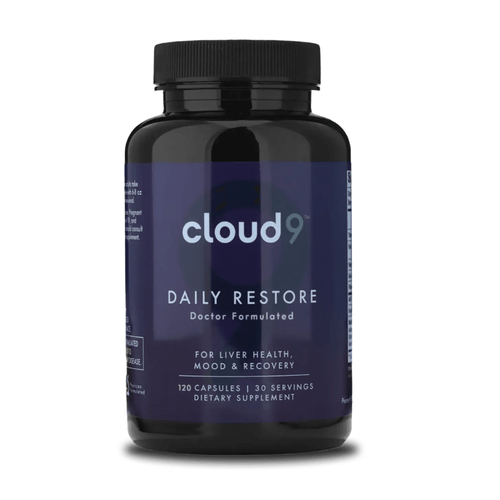
Cloud9 Daily Restore combines NAC, DHM, milk thistle, B vitamins, and ashwagandha to help support the pathways alcohol can tax most. Two capsules daily, drinking or not.
NAC | DHM | Milk Thistle | B Vitamins | Ashwagandha
See How Daily Restore WorksImmediate Relaxation Techniques for Right Before an Event
When you're 30 minutes from walking out the door and anxiety is peaking, you need tools that work fast. These evidence-based techniques can shift your nervous system from fight-or-flight to calm within minutes.
The 4-7-8 Breathing Method
This breathing pattern activates your parasympathetic nervous system, which triggers your body's natural relaxation response. Inhale through your nose for 4 counts, hold for 7 counts, then exhale slowly through your mouth for 8 counts.
Repeat this cycle 3-4 times while sitting comfortably. The extended exhale is key, as it signals safety to your nervous system and can reduce heart rate and tension within 2-3 minutes.
Progressive Muscle Relaxation
Tension often accumulates in your body without you noticing, particularly in your shoulders, jaw, and hands. Progressive muscle relaxation helps release this physical stress quickly.
- Start with your toes: tense them tightly for 5 seconds, then release completely
- Move up through your calves, thighs, abdomen, and chest
- Tense and release your hands, arms, shoulders, and neck
- Finish with your face: scrunch everything tight, then let it soften
- Notice the contrast between tension and relaxation in each area
The 5-4-3-2-1 Grounding Technique
When anxious thoughts spiral, grounding brings you back to the present moment. Look around and identify 5 things you can see, 4 things you can touch, 3 things you can hear, 2 things you can smell, and 1 thing you can taste.
This sensory exercise interrupts rumination and reminds your brain that you're safe right now, not in the imagined future scenario you're worried about.
Mental Strategies to Reframe Pre-Event Anxiety
Physical relaxation techniques work best when combined with mental strategies that address the thoughts fueling your anxiety. Cognitive reframing doesn't eliminate nerves, but it can transform overwhelming dread into manageable anticipation.
Challenge Catastrophic Thinking
Your anxious brain loves to predict disasters that rarely happen. When you notice thoughts like "Everyone will think I'm awkward" or "I'll have nothing to say," pause and examine the evidence.
Ask yourself: Has this worst-case scenario actually happened before? If something awkward did occur, what was the actual outcome? Most likely, you'll realize that your fears are disproportionate to reality and that you've successfully navigated similar situations many times.
Reframe Anxiety as Excitement
Research suggests that anxiety and excitement create similar physiological sensations: increased heart rate, butterflies, heightened alertness. Your interpretation determines whether these sensations feel threatening or energizing.
Instead of telling yourself "I'm so anxious," try "I'm excited and my body is getting ready." This simple linguistic shift can change your relationship with pre-event nerves without denying what you're feeling.
The goal isn't to eliminate all nervousness before social events. A little anticipation is normal and can even enhance your performance. The goal is to prevent anxiety from becoming so overwhelming that it stops you from showing up or enjoying yourself once you're there.
Create a Realistic Best-Case Scenario
Anxious thinking focuses exclusively on what could go wrong. Balance this by intentionally imagining what could go right, but keep it realistic rather than perfect.
Visualize yourself having one good conversation, laughing at something funny, or connecting with someone over a shared interest. These modest positive outcomes are far more likely than either your catastrophic fears or an unrealistic fantasy of social perfection.
Building a Pre-Event Routine That Reduces Overwhelm
Decision fatigue amplifies anxiety. When you're already feeling stressed, having to make choices about what to wear, when to leave, or how to style your hair adds unnecessary cognitive load.
A consistent pre-event routine eliminates these micro-decisions and creates a sense of control and predictability. Here's how to build one that works for you.
Timeline Your Preparation
Working backward from your departure time prevents the last-minute rush that intensifies anxiety. Decide in advance how long each preparation step takes and build in a 15-minute buffer.
| Time Before Event | Preparation Activity | Purpose |
|---|---|---|
| 2 hours | Choose outfit and get ready | Eliminate rushing and allow time for changes |
| 45 minutes | Eat a light snack with protein | Stabilize blood sugar to prevent anxiety spikes |
| 30 minutes | Practice breathing exercises | Activate relaxation response |
| 15 minutes | Final touch-ups and gather belongings | Transition mindfully without scrambling |
| 5 minutes | Set intention for the evening | Focus on connection rather than performance |
Prepare Conversation Topics in Advance
One of the biggest sources of social anxiety is the fear of awkward silence or not knowing what to say. Prepare 3-4 general topics or questions that feel natural to you.
- Recent experiences: a show you watched, a place you visited, something interesting you learned
- Open-ended questions: "What's been keeping you busy lately?" or "Any fun plans coming up?"
- Observations about the environment: comment on the venue, food, music, or shared context
- Follow-up questions based on what others share rather than preparing a script
Having these mental anchors reduces the pressure to be spontaneously brilliant and reminds you that you do have things to contribute to conversations.
Choose Comfort Within Your Style
Wearing something that requires constant adjustment or feels restrictive adds a layer of physical discomfort to your existing anxiety. Your outfit should make you feel confident without demanding your attention.
Select clothes the night before when you're calm and can think clearly. Choose something you've worn successfully before rather than debuting a brand-new outfit that might not feel right once you're wearing it.
Long-Term Practices That Build Social Resilience
While immediate techniques help in the moment, building ongoing resilience makes each social event progressively less overwhelming. These longer-term practices strengthen your baseline stress tolerance.
Regular Mindfulness Practice
Studies show that consistent mindfulness meditation can reduce anticipatory anxiety and improve your ability to stay present rather than getting lost in future-focused worry. Even 5-10 minutes daily can make a difference.
Apps and guided meditations work well for beginners. The goal is simply to practice noticing when your mind wanders to anxious thoughts and gently bringing your attention back to the present without judgment.
Gradual Exposure to Social Situations
Avoidance reinforces anxiety, while repeated positive experiences gradually retrain your nervous system. Start with lower-stakes social interactions and build up to more challenging events.
- Coffee with one friend before attempting a large party
- Attending an event for just 30 minutes instead of feeling you must stay the whole time
- Choosing events where you'll know at least one person well
- Gradually increasing the difficulty as your confidence builds
Each successful experience, no matter how small, provides evidence that contradicts your anxious predictions and makes the next event slightly easier.
Prioritize Sleep and Basic Self-Care
Your capacity to manage stress is significantly impaired when you're sleep-deprived, poorly nourished, or physically depleted. Research suggests that even one night of poor sleep can increase anxiety sensitivity the next day.
In the days leading up to social events, prioritize getting 7-9 hours of sleep, staying hydrated, moving your body in ways that feel good, and eating regular balanced meals. These basics create a foundation of resilience that makes stress management techniques more effective.
Build a Support System
Talking about your pre-event anxiety with trusted friends often reveals that they experience similar feelings. This normalization alone can be powerfully relieving and reduce the shame that often amplifies anxiety.
Consider having a "text buddy" you can check in with before events, someone who understands your experience and can offer encouragement or reality checks when your thoughts spiral. Knowing you have support makes facing anxiety feel less isolating.
How Daily Restore Supports Your Health
Understanding what your body needs is one thing. Getting consistent daily support is another. Daily Restore was designed to address the key pathways alcohol can stress most, in one simple daily formula.
NAC (N-Acetyl Cysteine)
Supports glutathione production and antioxidant defenses
DHM (Dihydromyricetin)
Supports alcohol metabolism
Milk Thistle (Silymarin)
Supports healthy liver function
B Vitamins
Help replenish nutrients involved in energy and metabolism
Ashwagandha
Supports stress resilience and healthy cortisol balance
Daily Restore is not a detox or a cure. It is a daily support formula designed for people who drink socially and want to give their body consistent, evidence-informed support.
Frequently Asked Questions
How early before a social event should I start using relaxation techniques?
Starting 30 minutes to an hour before an event can help you feel more centered and prepared. However, building a daily practice of stress management techniques, even on non-event days, may provide the most lasting benefits for managing social anxiety overall.
Is it normal to feel overwhelmed before every social gathering?
Many young women experience pre-social event anxiety, so you're definitely not alone. Research suggests that social anxiety affects a significant portion of the population, particularly during times of transition or uncertainty. If these feelings significantly impact your quality of life or prevent you from participating in activities you enjoy, speaking with a mental health professional can be helpful.
Can supplements really help with nervousness before social events?
Certain botanicals like ashwagandha, L-theanine, and rhodiola have been studied for their potential to support the body's stress response and promote a sense of calm. While supplements aren't a cure-all, they can be part of a holistic approach that includes breathing exercises, positive self-talk, and gradual exposure to social situations.
What if I try these techniques and still feel anxious?
It's important to remember that relaxation techniques take practice and may work differently for different people. Some strategies might resonate more than others, so give yourself permission to experiment. If anxiety continues to feel unmanageable, reaching out to a therapist who specializes in anxiety or social phobia can provide additional tools and support.
How can I make relaxation practices a consistent habit?
Start small by choosing just one or two techniques that feel manageable and practicing them at the same time each day. Pairing your practice with an existing habit, like morning coffee or your evening skincare routine, can help it stick. Consistency matters more than perfection, so even a few minutes daily can help build resilience over time.
The Bottom Line
Feeling overwhelmed before social events doesn't mean something is wrong with you. It's a common experience that many young women navigate, and the good news is that there are practical, science-backed strategies that can help you feel more grounded and confident. From breathing techniques and grounding exercises to reframing your thoughts and preparing ahead, you have multiple tools at your disposal.
Building a daily wellness routine can make a significant difference in how you respond to stressful situations. When your nervous system feels supported on a regular basis, you may find that the anticipatory anxiety before events becomes more manageable. This is where consistency really pays off.
Cloud9's Daily Restore was designed with this kind of daily support in mind. Featuring calming botanicals like ashwagandha, L-theanine, and rhodiola, it can help support your body's natural stress response when taken consistently. Combined with the relaxation techniques we've discussed, it becomes part of a holistic approach to feeling more at ease in your daily life and before those social moments that matter.
Remember, finding what works for you is a personal journey. Be patient with yourself, celebrate small wins, and know that each step you take toward managing overwhelm is a step toward living more fully and authentically.
Build Your Daily Support Routine
Build Your Daily Support Routine
If drinking is part of your lifestyle, your support routine should not be random. Daily Restore was designed to help social drinkers support liver health, antioxidant defenses, alcohol metabolism, nutrient replenishment, and daily recovery in one simple routine.
NAC
DHM
Milk Thistle
B Vitamins
Ashwagandha