

You walk in the door after work, head straight to the kitchen, and pour a drink. You didn't consciously decide to do it. Your hand just reached for the bottle, like it's done a hundred times before.
This automatic behavior is one of the most common challenges people face when trying to change their relationship with alcohol. The good news? Understanding how habits form and applying specific mindful drinking hacks can help you interrupt these patterns and make more intentional choices.
Whether you're looking to cut back, take a break, or simply drink with more awareness, breaking the autopilot loop is the first step toward lasting change.
Quick Take
- Automatic drinking follows a habit loop: cue, routine, reward. Identifying your specific triggers is essential for creating change.
- The "pause and name" technique creates crucial space between impulse and action, allowing you to make conscious choices.
- Replacing the physical ritual with an equally satisfying alternative can satisfy your brain's craving for routine without alcohol.
- Environmental design, like changing where you keep alcohol or creating new end-of-day rituals, can reduce automatic reaching by up to 60%.
- Progress isn't about perfection. Each time you notice the urge, you're strengthening your awareness muscle, even if you still have the drink.
Why We Reach for Drinks on Autopilot
Research suggests that up to 40% of our daily actions are driven by habit rather than conscious decision-making. When you repeatedly pair a behavior (pouring a drink) with a specific context (getting home from work, sitting on the couch, Friday evening), your brain creates a neural shortcut to save energy.
This automation happens in the basal ganglia, a part of your brain that encodes patterns and routines. The prefrontal cortex, which handles deliberate decision-making, essentially goes offline for habitual behaviors. You're literally not thinking about it anymore.
Understanding this isn't about blame or willpower. It's about recognizing that your brain is doing exactly what it evolved to do: creating efficiency. The key to breaking automatic drinking lies in disrupting these efficient patterns and rebuilding new ones.
Daily Support for Social Drinkers
Your liver works hard every day. Give it consistent support.
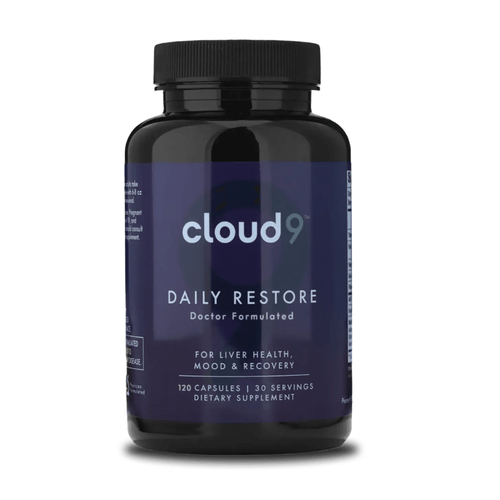
Cloud9 Daily Restore combines NAC, DHM, milk thistle, B vitamins, and ashwagandha to help support the pathways alcohol can tax most. Two capsules daily, drinking or not.
NAC | DHM | Milk Thistle | B Vitamins | Ashwagandha
See How Daily Restore WorksThe Anatomy of the Automatic Drink
Before you can change the habit, you need to understand its structure. Habit researchers have identified a consistent three-part loop that drives automatic behaviors.
The Habit Loop Breakdown
Every automatic drinking pattern follows this sequence, even if you've never consciously noticed it:
- The Cue: A trigger that tells your brain to initiate the routine (time of day, location, emotional state, social setting, or even specific people)
- The Routine: The behavior itself, the actual act of pouring and drinking
- The Reward: The benefit your brain gets from the behavior (relaxation, social connection, taste, the physical ritual, escape from stress)
Studies show that the cue and reward are actually more powerful than the routine itself. This is why you might find yourself reaching for a drink even when you don't particularly want one. Your brain has learned to anticipate the reward the moment it recognizes the cue.
Common Automatic Drinking Triggers
| Trigger Type | Common Examples | Why It Works |
|---|---|---|
| Time-Based | 5pm, end of workday, weekend evenings | Brain associates specific times with reward |
| Location-Based | Walking in the door, sitting on the couch, kitchen | Environmental cues trigger automatic responses |
| Emotional | Stress, anxiety, boredom, loneliness | Alcohol provides temporary emotional relief |
| Social | Certain friends, family gatherings, restaurants | Social norms create powerful behavioral cues |
| Transitional | End of tasks, switching from work to home mode | Rituals help brain shift between states |
Mindful Drinking Hacks to Interrupt the Autopilot
Breaking an automatic habit doesn't require superhuman willpower. It requires strategic interruption and conscious pattern redesign. Here are evidence-based techniques that can help you create space between impulse and action.
The Pause and Name Technique
The moment you notice the urge to pour a drink, stop for 90 seconds and name what you're experiencing. Research suggests that simply labeling an emotion or craving can reduce its intensity by creating distance between you and the impulse.
Try this framework:
- Notice: "I'm reaching for the wine bottle"
- Name the cue: "I just got home" or "I'm feeling stressed" or "It's 6pm"
- Identify the desired reward: "I want to relax" or "I want to mark the transition from work to home"
- Ask: "Is alcohol the only way to get this reward right now?"
You don't have to change your behavior every time. The practice itself, simply naming what's happening, begins to weaken the automatic connection.
Environmental Design Strategies
Your environment has more control over your behavior than you might think. Studies show that simply increasing the effort required to perform a habit can significantly reduce how often you do it.
Small environmental changes that can disrupt automatic drinking:
- Move alcohol to a less convenient location (back of a high cabinet, basement, garage)
- Keep alternative drinks at eye level in the fridge where wine or beer used to be
- Change your physical routine when you get home (enter through a different door, go straight to a different room)
- Remove visual cues like wine glasses on the counter or a visible bar cart
- Create a new "transition ritual" space that doesn't include your usual drinking spot

The Replacement Ritual Method
Your brain craves the ritual and reward, not necessarily the alcohol itself. Creating an equally satisfying replacement can fulfill the same psychological need without the drink.
The most successful habit changes don't eliminate the routine. They replace it with something that provides a similar reward. Your brain needs a substitute, not a void.
Effective replacement rituals include:
- Pour a special non-alcoholic drink in a nice glass (kombucha, sparkling water with fruit, fancy tea)
- Take a 10-minute walk around the block immediately when you get home
- Do 5 minutes of stretching or movement to physically transition your state
- Make a specific snack that signals "relaxation time" to your brain
- Call a friend or family member for a brief check-in
- Spend 5 minutes outside, even just sitting on the porch or balcony
The "If-Then" Planning Hack
Implementation intentions, or "if-then" plans, can increase your success rate in changing habitual behaviors. Research suggests that deciding in advance what you'll do when you encounter a trigger makes you two to three times more likely to follow through.
Create specific if-then statements for your common triggers:
- "If I walk in the door at 6pm, then I'll immediately change clothes and make a cup of tea"
- "If I feel stressed after work, then I'll do 10 deep breaths before I go to the kitchen"
- "If it's Friday evening, then I'll take a shower first thing when I get home"
- "If I'm at a social event, then I'll order a sparkling water with lime first"
The power of this technique lies in removing the decision-making moment. Your brain already knows the plan, so it doesn't have to choose in the moment when willpower is lowest.
Building Awareness Without Judgment
The foundation of all these hacks is awareness, but not the harsh, critical kind. Studies show that self-compassion actually increases the likelihood of behavior change, while self-criticism tends to reinforce shame-based drinking patterns.
The Noticing Practice
For one week, don't try to change anything. Just notice and track when you automatically reach for a drink. Use your phone or a small notebook to record:
- What time it happened
- Where you were
- What you were doing just before
- How you were feeling
- Whether you actually wanted the drink or it was purely automatic
This data becomes your roadmap. You'll likely see clear patterns emerge that help you understand your specific habit loops.
The Urge Surfing Technique
When you feel the automatic urge to drink, imagine it as a wave. Research on cravings shows they typically peak within 3-5 minutes and then naturally decrease, even if you don't act on them.
Practice riding the urge like a surfer:
- Notice where you feel it in your body (chest tightness, restlessness, tension)
- Breathe into that sensation without trying to change it
- Watch it build, peak, and begin to recede
- Remind yourself: "This feeling is temporary and will pass whether I drink or not"
Each time you successfully surf an urge without acting on it, you're teaching your brain that the craving isn't an emergency that requires immediate action.
Progress Tracking That Actually Helps
Traditional sobriety counting can feel rigid and set you up for "all or nothing" thinking. Instead, track your awareness and intentional choices.
| Instead of Tracking | Try Tracking |
|---|---|
| Days without drinking | Times you noticed the urge and paused before deciding |
| Drinks per week | Percentage of drinks that were conscious choices vs. automatic |
| Perfect adherence to rules | How many times you successfully used a replacement ritual |
| Failures or slip-ups | What you learned about your triggers and patterns |
Creating a Sustainable Mindful Drinking Practice
Breaking the automatic reaching habit isn't a one-time fix. It's an ongoing practice of bringing consciousness to what was previously unconscious. The goal isn't perfection but rather increasing the percentage of your drinks that are intentional choices.
The 80/20 Awareness Goal
Instead of aiming for zero automatic drinks, aim for 80% awareness. This means that 4 out of 5 times you have a drink, it's a conscious decision, not an autopilot response. This approach reduces the pressure that often leads to giving up entirely.
When you do drink automatically, use it as information rather than failure. What was different about that moment? What can you learn for next time?
Weekly Habit Review
Set aside 10 minutes each Sunday to review your week:
- Which triggers were easiest to notice and interrupt?
- Which ones still caught you off guard?
- What replacement rituals felt satisfying?
- What environmental changes made the biggest difference?
- How can you build on what worked this coming week?
This regular reflection helps you refine your approach and celebrate progress that might otherwise go unnoticed.
Building Your Support System
Changing automatic habits is significantly easier with support. Research consistently shows that social accountability and connection improve behavior change outcomes.
Consider these support options:
- Tell one trusted person about your intention to drink more mindfully and ask them to check in weekly
- Join an online community focused on mindful drinking or alcohol moderation
- Work with a coach or therapist who specializes in habit change
- Find an accountability partner who's working on a similar goal
- Share your if-then plans with someone who can help remind you in triggering moments
You don't have to do this alone, and asking for support is a sign of commitment, not weakness.
How Daily Restore Supports Your Health
Understanding what your body needs is one thing. Getting consistent daily support is another. Daily Restore was designed to address the key pathways alcohol can stress most, in one simple daily formula.
NAC (N-Acetyl Cysteine)
Supports glutathione production and antioxidant defenses
DHM (Dihydromyricetin)
Supports alcohol metabolism
Milk Thistle (Silymarin)
Supports healthy liver function
B Vitamins
Help replenish nutrients involved in energy and metabolism
Ashwagandha
Supports stress resilience and healthy cortisol balance
Daily Restore is not a detox or a cure. It is a daily support formula designed for people who drink socially and want to give their body consistent, evidence-informed support.
Frequently Asked Questions
How long does it take to break the habit of automatically reaching for a drink?
The timeline varies for everyone, but research suggests that forming new habits typically takes anywhere from three to eight weeks of consistent practice. The key is focusing on replacing the automatic behavior with a mindful alternative rather than simply trying to stop. With patience and the right support strategies, many people notice a shift in their patterns within the first few weeks.
What should I do if I slip up and drink more than intended?
First, approach yourself with compassion rather than judgment. A slip doesn't erase your progress or mean you've failed. Reflect on what triggered the automatic behavior, adjust your strategies accordingly, and return to your mindful practices the next day. Many people find that setbacks actually provide valuable information about which situations need more support or different approaches.
Can I still socialize and enjoy evenings without automatically drinking?
Absolutely. Many people discover that once they break the automatic habit, they actually enjoy social situations and evenings more fully. The key is planning ahead with appealing alternatives and being honest with yourself about which social situations feel supportive versus triggering. You might also find that true friends respect and even admire your intentional approach to drinking.
What's the difference between mindful drinking and quitting entirely?
Mindful drinking is about bringing awareness and intentionality to your alcohol consumption, which may mean reducing intake, drinking only in certain situations, or ultimately choosing not to drink at all. The focus is on conscious choice rather than automatic behavior. Some people use mindful drinking techniques as a bridge to sobriety, while others find a comfortable middle ground that works for their lifestyle and health goals.
How can supplements support my efforts to drink more mindfully?
Quality supplements may help address some of the underlying factors that contribute to automatic drinking habits, such as stress, poor sleep, or nutritional imbalances that affect mood and cravings. While supplements aren't a magic solution, they can be a valuable part of a comprehensive approach that includes behavioral strategies, stress management, and lifestyle changes. Look for products with research-backed ingredients that support overall wellness and stress resilience.
The Bottom Line
Breaking the habit of automatically reaching for a drink isn't about willpower alone. It requires understanding your triggers, creating intentional pauses, and building new routines that support the lifestyle you actually want. By identifying your specific patterns and implementing targeted strategies, you can transform your relationship with alcohol from automatic to intentional.
The most successful approach combines multiple strategies: mindfulness techniques to create space between trigger and action, environmental changes that make the automatic behavior less convenient, and replacement rituals that satisfy the same underlying needs. Consistency matters more than perfection, and small daily practices can create significant shifts over time.
Cloud9's Daily Restore can support your mindful drinking journey as part of your daily wellness routine. With ingredients like DHM, milk thistle, and adaptogens that may help support healthy liver function and stress resilience, it's designed to complement the behavioral strategies you're implementing. Taking it each morning can serve as a physical reminder of your commitment to more intentional choices throughout the day.
Remember, changing automatic habits is a process, not an event. Be patient with yourself, celebrate small wins, and focus on progress rather than perfection. With the right combination of awareness, strategy, and daily support, you can create a healthier, more mindful relationship with alcohol that aligns with your wellness goals.
Build Your Daily Support Routine
Build Your Daily Support Routine
If drinking is part of your lifestyle, your support routine should not be random. Daily Restore was designed to help social drinkers support liver health, antioxidant defenses, alcohol metabolism, nutrient replenishment, and daily recovery in one simple routine.
NAC
DHM
Milk Thistle
B Vitamins
Ashwagandha