

You've probably heard conflicting messages about alcohol and heart health. One study says a glass of red wine is good for your heart, another warns that any amount increases risk. Meanwhile, you're just trying to figure out if your evening drinks or weekend habits are slowly damaging your cardiovascular system.
The truth is more nuanced than simple yes or no answers, and the long-term effects can be subtle enough that many people don't connect the dots until years later. If you drink regularly, even moderately, understanding how alcohol affects your heart over time can help you make informed choices about your health.
Let's look at what actually happens to your cardiovascular system when alcohol becomes a consistent part of your life.
Quick Take
- Regular alcohol consumption can raise blood pressure and contribute to hypertension, even in people who drink moderately
- Long-term drinking may weaken heart muscle, leading to a condition called alcoholic cardiomyopathy that affects the heart's ability to pump effectively
- Alcohol can increase levels of unhealthy fats in your blood and contribute to irregular heart rhythms, particularly atrial fibrillation
- The "French Paradox" and claims about heart-protective benefits of moderate drinking have been challenged by recent research showing potential bias in earlier studies
- Reducing or eliminating alcohol intake can help reverse some cardiovascular damage, though the extent depends on how long and how much you've been drinking
The Cardiovascular System and Alcohol: What's Really Happening
Your heart and blood vessels form an intricate network that responds immediately to alcohol in your system. When you drink, alcohol enters your bloodstream and begins affecting your cardiovascular function within minutes. Your heart rate may increase, blood vessels dilate, and your blood pressure can fluctuate.
These immediate effects might seem harmless or even pleasant in the moment. But when they occur repeatedly over months and years, they create a cascade of changes that can fundamentally alter how your heart functions. Research suggests that consistent alcohol consumption triggers inflammatory responses, disrupts the balance of fats in your blood, and places ongoing stress on heart tissue.
The challenge is that these changes accumulate gradually. You won't feel your blood pressure creeping up or your heart muscle slowly weakening, which is why many people don't realize the impact until they face a serious health issue.
Daily Support for Social Drinkers
Your liver works hard every day. Give it consistent support.
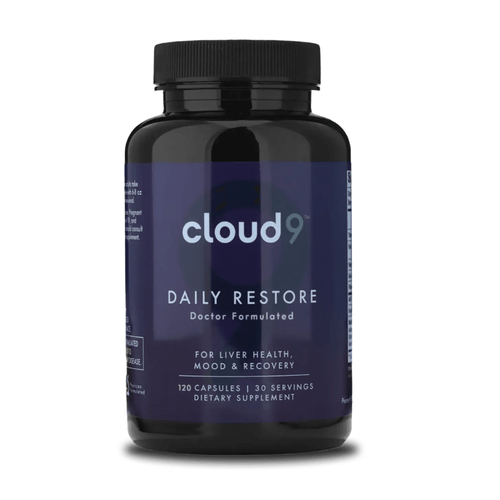
Cloud9 Daily Restore combines NAC, DHM, milk thistle, B vitamins, and ashwagandha to help support the pathways alcohol can tax most. Two capsules daily, drinking or not.
NAC | DHM | Milk Thistle | B Vitamins | Ashwagandha
See How Daily Restore WorksHow Alcohol Raises Blood Pressure Over Time
One of the most consistent findings in cardiovascular research is the relationship between regular alcohol consumption and elevated blood pressure. Even moderate drinking, typically defined as one drink per day for women or two for men, has been linked to measurable increases in blood pressure over time.
The Mechanism Behind Alcohol-Related Hypertension
Alcohol affects blood pressure through multiple pathways. It activates your sympathetic nervous system, the part responsible for your "fight or flight" response, which increases heart rate and constricts blood vessels. It also interferes with the balance of minerals like magnesium and calcium that help regulate vascular tone.
Additionally, alcohol stimulates the release of stress hormones like cortisol and can disrupt the renin-angiotensin system, which your body uses to control blood pressure. These effects compound when drinking occurs regularly, leading to sustained hypertension that persists even between drinking occasions.
Why This Matters for Your Heart
Chronic high blood pressure forces your heart to work harder to pump blood throughout your body. Over years, this extra workload can cause the heart muscle to thicken and become less efficient. High blood pressure also damages the delicate lining of your arteries, creating sites where plaque can accumulate and increasing your risk of heart attack and stroke.
Studies show that people who drink heavily have a significantly higher risk of developing hypertension compared to non-drinkers. But even those who drink at moderate levels show elevated blood pressure readings compared to people who abstain completely.
Alcoholic Cardiomyopathy: When Your Heart Muscle Weakens
Perhaps the most serious long-term effect of chronic alcohol consumption is its direct toxic effect on heart muscle tissue. This condition, called alcoholic cardiomyopathy, occurs when years of drinking damage the heart muscle cells themselves, making the heart enlarged, weakened, and unable to pump blood effectively.
How Alcohol Damages Heart Muscle
Alcohol and its metabolic byproducts, particularly acetaldehyde, are directly toxic to heart cells. They interfere with the proteins that allow heart muscle to contract properly and disrupt the mitochondria that produce energy within cells. Over time, this leads to cell death and replacement with fibrous scar tissue that cannot contract.
The heart responds to this weakening by enlarging, trying to maintain its pumping capacity. But this compensation eventually fails, leading to symptoms like shortness of breath, fatigue, swelling in the legs, and irregular heartbeats. In severe cases, alcoholic cardiomyopathy can lead to heart failure.
Risk Factors and Timeline
Alcoholic cardiomyopathy typically develops after years of heavy drinking, usually defined as consuming more than four to five drinks per day for men or three to four for women over a period of five to ten years or more. However, individual susceptibility varies significantly based on genetics, nutrition, and other health factors.
Some people develop this condition sooner or with less alcohol consumption than others. Women appear to be at higher risk than men, possibly developing cardiomyopathy with lower levels of alcohol consumption and over shorter time periods.
The good news is that alcoholic cardiomyopathy can sometimes improve or even reverse if you stop drinking early enough in the disease process. However, continued drinking will lead to progressive deterioration and potentially fatal heart failure.
Alcohol's Impact on Heart Rhythm and Cholesterol
Beyond blood pressure and heart muscle damage, long-term alcohol consumption affects other aspects of cardiovascular health that contribute to overall risk. These effects can occur independently or compound the problems caused by hypertension and cardiomyopathy.
Atrial Fibrillation and Irregular Heartbeats
Research has established a clear link between alcohol consumption and atrial fibrillation, a common heart rhythm disorder where the upper chambers of your heart beat irregularly and often rapidly. Even moderate drinking increases the risk of developing this condition, and binge drinking episodes can trigger acute episodes known as "holiday heart syndrome."
Atrial fibrillation matters because it significantly increases your risk of stroke. When blood pools in the irregularly beating atria, clots can form and travel to the brain. Studies suggest that each additional daily drink increases atrial fibrillation risk by about 8%, meaning the effect is dose-dependent rather than occurring only at high levels of consumption.
Effects on Blood Lipids
Alcohol's effect on cholesterol and triglycerides is complex. While moderate drinking may slightly increase HDL (often called "good") cholesterol, it also raises triglycerides, a type of fat in the blood that contributes to arterial plaque formation when elevated.
Heavy drinking consistently raises both total cholesterol and triglycerides to unhealthy levels. These effects contribute to atherosclerosis, the gradual buildup of plaque in arteries that can lead to heart attacks and strokes.
| Cardiovascular Effect | Moderate Drinking | Heavy Drinking |
|---|---|---|
| Blood Pressure | Slight to moderate increase | Significant increase, sustained hypertension |
| Heart Muscle Function | Generally preserved | Progressive weakening, cardiomyopathy risk |
| Heart Rhythm | Increased AFib risk (8% per drink) | Significantly higher AFib risk, other arrhythmias |
| Triglycerides | Moderate elevation possible | Consistently elevated |
| Stroke Risk | Varies by individual factors | Significantly increased |
Rethinking the "Heart-Healthy" Drinking Myth
For years, you may have heard that moderate drinking, especially red wine, can be good for your heart. This idea became popular based on observations like the "French Paradox," where French populations seemed to have lower heart disease rates despite high-fat diets, supposedly due to red wine consumption.
What Recent Research Reveals
More recent and rigorous research has challenged this narrative. Large-scale studies with better methodology suggest that earlier research showing benefits may have been flawed by selection bias. People who drink moderately often differ from non-drinkers in ways that independently affect heart health, such as higher income, better healthcare access, and healthier lifestyles overall.
When researchers account for these factors more carefully, the apparent protective effect of moderate drinking diminishes or disappears. Some studies now suggest that there is no safe level of alcohol consumption when it comes to overall health, though the cardiovascular risks at very low levels remain subject to ongoing research and debate.
The Resveratrol Question
Much of the "red wine is healthy" narrative centered on resveratrol, a compound found in grape skins with antioxidant properties. While resveratrol does have interesting properties in laboratory settings, you would need to drink an impractical amount of wine to get meaningful doses of it.
More importantly, any potential benefits from resveratrol are vastly outweighed by alcohol's negative effects. You can get resveratrol and similar compounds from grapes, berries, and other foods without the cardiovascular risks that come with alcohol.
Individual Risk Calculation
Your personal cardiovascular risk from alcohol depends on multiple factors beyond just how much you drink. These include your age, sex, family history, existing health conditions, medications, and lifestyle factors. Women generally face higher risk at lower consumption levels than men, and people with existing heart conditions or high blood pressure face compounded risks.
- Genetic variations affect how efficiently your body metabolizes alcohol and how susceptible your heart tissue is to alcohol's toxic effects
- Nutritional status matters, with deficiencies in thiamine, magnesium, and other nutrients making alcohol's cardiac effects worse
- Drinking patterns make a difference, with binge drinking causing more acute stress on the cardiovascular system than the same amount spread over time
- Interactions with medications, particularly blood pressure drugs and blood thinners, can create additional cardiovascular risks
Can You Reverse the Damage?
If you've been drinking regularly for years, you might be wondering whether stopping now can help or if the damage is already done. The answer depends on how extensive the changes are and how long you've been drinking.
What Improves with Reduced Drinking
Blood pressure often begins to normalize within weeks to months of stopping or significantly reducing alcohol intake. Some studies show measurable improvements in blood pressure within just three to four weeks of abstinence. The degree of improvement depends on how elevated your blood pressure was and whether you have other contributing factors.
Heart rhythm abnormalities, particularly alcohol-related atrial fibrillation, may decrease in frequency or resolve completely when you stop drinking. Many people who experience irregular heartbeats with drinking find that episodes become less frequent or disappear when they quit.
Recovery from Cardiomyopathy
In the earlier stages of alcoholic cardiomyopathy, stopping drinking can allow significant recovery of heart function. The heart may decrease in size, pumping efficiency can improve, and symptoms like shortness of breath and fatigue may resolve. However, this recovery is not guaranteed and is most likely when you stop drinking before extensive scarring has occurred.
In advanced cases with significant scarring and heart failure, complete recovery is less likely, though stopping drinking can still prevent further deterioration and may lead to partial improvement. Continued drinking with established cardiomyopathy typically leads to progressive worsening and poor outcomes.
The Sooner, the Better Principle
The timeline matters significantly. Someone who has been drinking heavily for five years will generally have better recovery potential than someone who has done so for twenty years. Similarly, younger people often show better cardiovascular recovery than older individuals, though improvement is possible at any age.
The key point is that your cardiovascular system has remarkable healing capacity when given the chance. While you cannot turn back time completely, reducing or eliminating alcohol gives your heart the best opportunity to recover whatever function it can.
How Daily Restore Supports Your Health
Understanding what your body needs is one thing. Getting consistent daily support is another. Daily Restore was designed to address the key pathways alcohol can stress most, in one simple daily formula.
NAC (N-Acetyl Cysteine)
Supports glutathione production and antioxidant defenses
DHM (Dihydromyricetin)
Supports alcohol metabolism
Milk Thistle (Silymarin)
Supports healthy liver function
B Vitamins
Help replenish nutrients involved in energy and metabolism
Ashwagandha
Supports stress resilience and healthy cortisol balance
Daily Restore is not a detox or a cure. It is a daily support formula designed for people who drink socially and want to give their body consistent, evidence-informed support.
Frequently Asked Questions
Can moderate drinking actually be good for your heart?
The idea that moderate alcohol consumption benefits heart health has been largely debunked by more recent research. While older studies suggested a protective effect, newer evidence indicates that even moderate drinking carries some cardiovascular risk. The safest approach for heart health is to minimize alcohol consumption or avoid it entirely.
How long does it take for heart health to improve after cutting back on alcohol?
Many people notice improvements in blood pressure within just a few weeks of reducing alcohol intake. More significant changes, like improved heart rhythm and reduced inflammation markers, may take several months. The timeline varies based on your previous drinking patterns, overall health, and individual factors, but positive changes can begin surprisingly quickly.
Does binge drinking affect the heart differently than daily drinking?
Both patterns carry serious risks, but in different ways. Binge drinking can trigger acute events like irregular heart rhythms and sudden blood pressure spikes, while chronic daily drinking tends to cause gradual structural changes to the heart muscle. Research suggests that the total amount consumed matters most, but the pattern of drinking influences the specific types of cardiovascular damage that may occur.
What heart symptoms should prompt me to see a doctor right away?
Seek immediate medical attention if you experience chest pain or pressure, severe shortness of breath, fainting, rapid or irregular heartbeat that doesn't resolve, or pain radiating to your jaw, arm, or back. Even if you're unsure whether symptoms are alcohol-related, it's always better to get checked out when it comes to potential heart issues.
Can supplements really help protect my heart if I still drink occasionally?
While targeted nutrients like B vitamins, antioxidants, and electrolytes can help support your body's recovery processes, they're not a free pass to drink without consequences. Think of supplementation as part of a broader strategy that includes moderating consumption, staying hydrated, and maintaining overall healthy habits. The best protection for your heart is always reducing alcohol intake itself.
The Bottom Line
The relationship between alcohol and heart health is clearer than many people realize. While the occasional drink may not cause immediate harm, regular consumption, even at moderate levels, can lead to measurable changes in blood pressure, heart rhythm, and cardiovascular structure over time. Understanding these risks gives you the power to make informed choices about your drinking habits.
If you do choose to drink, taking proactive steps to support your body can make a meaningful difference. Staying hydrated, maintaining good nutrition, exercising regularly, and replenishing key nutrients are all strategies that may help minimize some of alcohol's negative effects. This is where a consistent daily routine becomes valuable.
Daily Restore was specifically formulated to support people who want to maintain better habits around alcohol. With a targeted blend of B vitamins, electrolytes, antioxidants, and botanical extracts, it helps replenish what alcohol depletes and supports your body's natural recovery processes. While it's not a substitute for reducing consumption, it can be a helpful part of a more mindful approach to drinking.
Your heart is working for you every single day, and taking care of it is one of the most important investments you can make in your long-term health. Whether you're cutting back, taking breaks, or simply being more intentional about when and how much you drink, every positive change counts. Small, consistent actions add up to meaningful results over time.
Build Your Daily Support Routine
Build Your Daily Support Routine
If drinking is part of your lifestyle, your support routine should not be random. Daily Restore was designed to help social drinkers support liver health, antioxidant defenses, alcohol metabolism, nutrient replenishment, and daily recovery in one simple routine.
NAC
DHM
Milk Thistle
B Vitamins
Ashwagandha