
That sinking feeling hits before you even open your eyes. Your heart's racing, your mind is replaying fragments of last night, and the thought of facing your coworkers makes your stomach flip. You're not just hungover, you're caught in the grip of hangxiety, and you have eight hours of work ahead of you.
Hangxiety, the uncomfortable blend of hangover symptoms and intense anxiety, can make a normal workday feel impossible. When your body is recovering from alcohol while your mind spirals with worry, even simple tasks become overwhelming challenges.
The good news is that you can get through this. With the right strategies, you can manage the physical symptoms, quiet the anxious thoughts, and make it through your workday without completely falling apart.
Quick Take
- Hangxiety combines physical hangover symptoms with heightened anxiety, making work particularly challenging
- Immediate relief strategies include hydration, gentle movement, and regulating your nervous system through breathing
- Breaking your day into small, manageable tasks can prevent overwhelm and help you maintain focus
- Setting boundaries around communication and energy output protects you while you recover
- Long-term patterns of hangxiety signal it may be time to reassess your relationship with alcohol
Why Hangxiety Feels Worse at Work
Alcohol disrupts multiple systems in your body simultaneously. It depletes essential nutrients, destabilizes blood sugar, interferes with sleep quality, and temporarily alters your brain chemistry. Research suggests that as alcohol leaves your system, the rebound effect can trigger heightened anxiety that peaks the morning after drinking.
The work environment amplifies these symptoms. You're expected to perform, interact, and make decisions while your body and mind are in recovery mode. The pressure to appear normal while feeling anything but creates additional stress that feeds the anxiety loop.
Your brain's stress response system is already activated by the physical hangover. Add workplace demands, social interaction, and the fear of being judged, and you've created perfect conditions for anxiety to spiral. Understanding this connection doesn't make it disappear, but it does help you respond more effectively.
Daily Support for Social Drinkers
Your liver works hard every day. Give it consistent support.
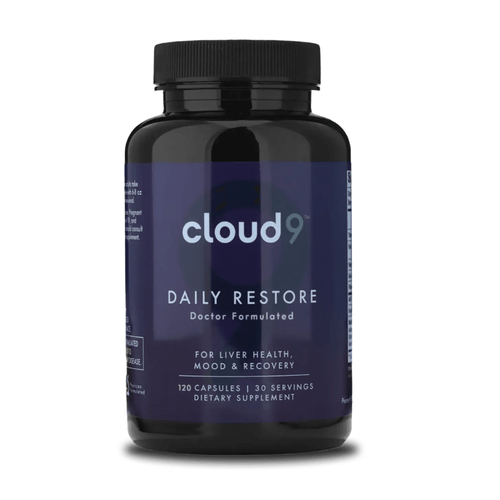
Cloud9 Daily Restore combines NAC, DHM, milk thistle, B vitamins, and ashwagandha to help support the pathways alcohol can tax most. Two capsules daily, drinking or not.
NAC | DHM | Milk Thistle | B Vitamins | Ashwagandha
See How Daily Restore WorksImmediate Strategies for the First Hour at Work
The first 60 minutes set the tone for your entire day. How you handle this critical window can mean the difference between managing through or completely unraveling.
Physical Stabilization Comes First
Your body needs specific support to begin recovering. Before you tackle any work tasks, address the physical foundation that's fueling your anxiety.
- Drink 16-20 ounces of water immediately, then keep a water bottle at your desk and sip consistently
- Eat something with protein and complex carbs within the first hour to stabilize blood sugar
- Avoid caffeine for the first 90 minutes, as it can amplify anxiety symptoms
- Take any necessary pain relief for headaches, but avoid overusing stimulants
- Use the bathroom to splash cold water on your face and wrists, activating your parasympathetic nervous system
Create Mental Space Before Diving In
Resist the urge to immediately check email or jump into tasks. Give yourself 10-15 minutes of transition time to orient yourself and set realistic expectations for the day.
Use this time to practice box breathing: inhale for four counts, hold for four, exhale for four, hold for four. Repeat for five cycles. This simple technique can help regulate your nervous system and reduce the physical sensations of panic.
Set Your Boundaries Early
Decide right now what you can realistically handle today. You don't need to explain yourself, but you do need to protect your limited energy and focus.
- Cancel or postpone non-essential meetings if possible
- Let your team know you're "fighting off something" if you need to explain lower energy
- Turn off non-urgent notifications to reduce sensory overwhelm
- Plan to eat lunch away from your desk, even if it's just 15 minutes of quiet
Managing Tasks When You Can Barely Think Straight
Cognitive function takes a real hit during hangxiety. Your working memory, decision-making ability, and focus are all compromised. Fighting this reality only increases frustration and anxiety.
The Task Triage System
Not everything on your list deserves equal attention today. Categorize your work honestly and adjust your approach accordingly.
| Priority Level | What to Do | Energy Required |
|---|---|---|
| Urgent & Important | Do first, when energy is highest (usually mid-morning) | High |
| Important, Not Urgent | Postpone to tomorrow or later this week | Medium-High |
| Urgent, Not Important | Delegate if possible, or do quickly without perfectionism | Medium |
| Neither Urgent Nor Important | Use for "easy wins" when you need to feel productive | Low |
Work in Micro-Sessions
Your attention span is shorter than usual, so work with it instead of against it. Set a timer for 20 minutes and commit to focused work on one task. When the timer goes off, take a genuine 5-minute break to stand, stretch, or step outside.
These micro-sessions prevent the overwhelm that comes from staring at a massive to-do list. Each completed session is a small win that can help counter the negative thought spiral.
Avoid High-Stakes Communication
Your judgment and emotional regulation are compromised. This is not the day for difficult conversations, important negotiations, or sending emails that require careful tone management.
- Delay sending important emails by saving them as drafts to review later
- Reschedule one-on-ones with your manager if possible
- Keep responses brief and factual rather than making promises or commitments
- If you must have a difficult conversation, script your key points beforehand
The goal isn't to perform at 100% today. The goal is to get through without making things worse, while treating yourself with the compassion you'd offer a friend in the same situation.
Calming the Mental Spiral
The physical symptoms are challenging enough, but the racing thoughts and catastrophic thinking can be even harder to manage. Your anxious brain is looking for threats and finding them everywhere.
Reality-Test Your Fears
Hangxiety often comes with intrusive thoughts about things you said or did. These worries are usually exaggerated or completely invented by your anxious mind.
Ask yourself these grounding questions: Do I have actual evidence this happened, or is this a feeling? If it did happen, would a friend think it was as bad as I think it is? What would I tell someone else who was worried about this same thing?
The 5-4-3-2-1 Grounding Technique
When panic starts rising, bring yourself back to the present moment using your senses. This interrupts the anxiety loop and reminds your nervous system that you're safe right now.
- Identify 5 things you can see in your environment
- Notice 4 things you can physically touch
- Listen for 3 sounds around you
- Recognize 2 things you can smell
- Name 1 thing you can taste
Limit Reassurance-Seeking
The urge to text friends asking "Was I okay last night?" or "Did I say anything weird?" is strong, but it usually backfires. Reassurance provides temporary relief but reinforces the anxiety pattern and can annoy the people you're repeatedly asking.
Set a boundary with yourself: no checking in with others about last night until the afternoon at earliest. If you still feel the need then, send one brief message rather than multiple anxious texts.
Getting Through the Afternoon Slump
Energy typically crashes hardest between 2-4 PM, especially when you're already depleted. This is when focus disappears entirely and the urge to give up peaks.
Strategic Energy Management
Plan your lowest-energy tasks for this window. This might be data entry, organizing files, responding to simple emails, or any work that doesn't require creative thinking or complex problem-solving.
Take a 10-minute walk outside if possible. Movement and fresh air can provide a surprising energy boost and help regulate stress hormones that have been elevated all day.
Fuel Strategically
Your blood sugar has likely been unstable all day. A protein-rich snack with healthy fats can help stabilize energy without the crash that comes from sugar or simple carbs.
- Handful of nuts with an apple
- Greek yogurt with berries
- Hummus with vegetables
- Cheese and whole grain crackers
- Hard-boiled eggs
Adjust Your Standards
Perfectionism is anxiety's best friend. Today, done is better than perfect. If something is 80% of what you'd normally produce, that's good enough.
Remember that most people are too focused on their own work to notice if yours isn't quite up to your usual standard. The mistakes you're worried about are likely far less visible than your anxious mind suggests.
How Daily Restore Supports Your Health
Understanding what your body needs is one thing. Getting consistent daily support is another. Daily Restore was designed to address the key pathways alcohol can stress most, in one simple daily formula.
NAC (N-Acetyl Cysteine)
Supports glutathione production and antioxidant defenses
DHM (Dihydromyricetin)
Supports alcohol metabolism
Milk Thistle (Silymarin)
Supports healthy liver function
B Vitamins
Help replenish nutrients involved in energy and metabolism
Ashwagandha
Supports stress resilience and healthy cortisol balance
Daily Restore is not a detox or a cure. It is a daily support formula designed for people who drink socially and want to give their body consistent, evidence-informed support.
Frequently Asked Questions
How long does hangxiety typically last?
Hangxiety symptoms can last anywhere from a few hours to a full day after drinking, depending on how much alcohol you consumed and your individual body chemistry. Most people find that symptoms peak in the morning and gradually improve throughout the day, especially with proper hydration and rest.
Can I take supplements to prevent hangxiety before drinking?
While no supplement can completely prevent hangxiety, taking certain nutrients before and after drinking may help support your body's stress response. Hydrating well before you drink, eating a balanced meal, and considering a magnesium supplement in the evening can help lay the groundwork for a calmer next morning.
Is it safe to work out when experiencing hangxiety?
Light to moderate exercise like walking or gentle yoga can actually help reduce anxiety symptoms by releasing endorphins and regulating stress hormones. However, intense workouts might add additional stress to your already taxed system, so listen to your body and opt for gentler movement when you're feeling fragile.
Why does anxiety feel worse in the morning after drinking?
Alcohol disrupts your sleep cycles and depletes important neurotransmitters like serotonin and GABA, which help regulate mood and calm your nervous system. As your body metabolizes alcohol overnight, these imbalances peak in the morning, often triggering heightened anxiety, racing thoughts, and physical tension right when you need to function at work.
Should I tell my boss or coworkers if I'm struggling with hangxiety?
This is a personal decision that depends on your workplace culture and relationships. You don't need to share specific details, but if you're noticeably off, a simple "I'm not feeling my best today" can help manage expectations. Focus on what you can control: showing up, doing your best work given the circumstances, and having strategies in place to prevent future episodes.
The Bottom Line
Hangxiety can turn an ordinary workday into an exhausting mental battle, but you don't have to white-knuckle your way through it alone. The combination of immediate relief strategies (hydration, protein, movement, breathing exercises) and long-term nervous system support can help you function more effectively and feel more in control, even on your worst mornings.
While there's no magic cure for post-drinking anxiety, building a consistent daily routine that supports your stress response can make these episodes less frequent and less severe. That's where Cloud9 Daily Restore comes in. With research-backed ingredients like ashwagandha, L-theanine, and magnesium, it's designed to help calm your nervous system, support healthy cortisol levels, and promote resilience against daily stressors, including those rough mornings after a night out.
The most effective approach combines awareness of your triggers, practical coping strategies for difficult mornings, and daily support for your overall stress resilience. When you prioritize both immediate relief and long-term nervous system health, you're setting yourself up to handle whatever the workday throws at you with more calm and confidence.
Remember, experiencing hangxiety doesn't make you weak or unprofessional. It's a real physiological response that many people face. The key is having a toolkit ready, whether that means keeping Daily Restore in your routine for ongoing support or knowing exactly which strategies help you get through the toughest mornings and back to feeling like yourself again.
Build Your Daily Support Routine
Build Your Daily Support Routine
If drinking is part of your lifestyle, your support routine should not be random. Daily Restore was designed to help social drinkers support liver health, antioxidant defenses, alcohol metabolism, nutrient replenishment, and daily recovery in one simple routine.
NAC
DHM
Milk Thistle
B Vitamins
Ashwagandha