

If you're working to support your liver health after drinking, you might be tracking what you eat, staying hydrated, and taking the right supplements. But there's one recovery tool you're probably overlooking: the quality of your sleep.
Your liver does some of its most critical repair work while you sleep. When alcohol disrupts your sleep patterns, it creates a challenging cycle where poor rest hampers the very organ trying to recover from alcohol's effects. Understanding this connection can transform your approach to liver health.
This isn't just about getting more hours in bed. It's about understanding how sleep quality directly influences your liver's ability to detoxify, regenerate, and heal from alcohol exposure.
Quick Take
- Your liver performs essential detoxification and cellular repair during deep sleep stages, making quality rest crucial for recovery from alcohol consumption
- Alcohol disrupts REM and deep sleep cycles even hours after consumption, creating a recovery paradox that slows liver healing
- Poor sleep elevates inflammatory markers that can worsen alcohol-related liver stress and delay tissue regeneration
- Sleep deprivation impairs your liver's ability to metabolize fats and regulate blood sugar, compounding alcohol's metabolic effects
- Strategic sleep optimization through timing, environment, and specific nutrients can significantly enhance your liver's natural recovery processes
Why Your Liver Needs Quality Sleep to Recover
Your liver operates on a circadian rhythm, just like the rest of your body. Research suggests that many liver functions, including fat metabolism, bile production, and detoxification enzyme activity, follow predictable daily patterns that align with your sleep-wake cycle. When you disrupt these patterns, you're working against your liver's natural repair schedule.
During deep sleep stages, your body increases growth hormone production and reduces cortisol levels. These hormonal shifts create an optimal environment for cellular repair throughout your body, including in liver tissue that may be stressed or damaged from alcohol exposure. Studies show that people who consistently get poor sleep have elevated markers of liver inflammation and oxidative stress.
The relationship works both ways. Existing liver stress from alcohol can disrupt sleep quality through mechanisms like inflammation, blood sugar instability, and altered neurotransmitter production. This creates a cycle where each problem reinforces the other.
Daily Support for Social Drinkers
Your liver works hard every day. Give it consistent support.
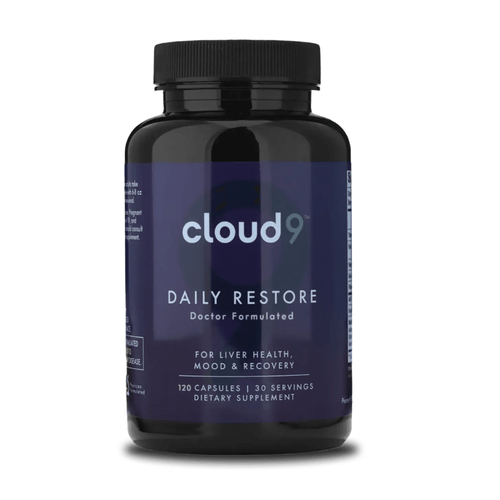
Cloud9 Daily Restore combines NAC, DHM, milk thistle, B vitamins, and ashwagandha to help support the pathways alcohol can tax most. Four capsules daily, drinking or not.
NAC | DHM | Milk Thistle | B Vitamins | Ashwagandha
See How Daily Restore WorksHow Alcohol Disrupts the Sleep Your Liver Needs
Many people experience an initial drowsiness after drinking, but this isn't the restorative sleep your liver needs. Alcohol fundamentally alters your sleep architecture in ways that directly impact liver recovery.
The Sleep Cycle Disruption
Alcohol suppresses REM sleep, the stage associated with cognitive restoration and hormonal regulation. Even moderate drinking can reduce REM sleep by up to 25% during the night. While this might not seem directly related to liver function, REM sleep plays a role in regulating the stress hormones and inflammatory responses that affect liver health.
As your body metabolizes alcohol during the night, you experience a "rebound effect." Sleep becomes lighter and more fragmented in the second half of the night, precisely when your liver is working hardest to process alcohol byproducts and perform routine maintenance.
The Inflammation Connection
Poor sleep quality increases inflammatory cytokines throughout your body. Research suggests that even one night of disrupted sleep can elevate markers like IL-6 and TNF-alpha, the same inflammatory compounds that contribute to alcohol-related liver stress. When you combine alcohol consumption with poor sleep, you're essentially doubling down on inflammation.
This inflammatory response doesn't just affect your liver in isolation. It can trigger a systemic stress response that affects insulin sensitivity, gut barrier function, and immune regulation, all of which play supporting roles in liver health.
The Metabolic Impact: Sleep, Alcohol, and Your Liver's Workload
Fat Metabolism and Sleep Deprivation
Your liver's ability to process fats depends heavily on sleep quality. When you're sleep-deprived, your liver shifts toward fat storage rather than fat burning, a condition that can contribute to fatty liver development. Alcohol already challenges your liver's fat metabolism, so poor sleep compounds this stress.
Studies show that people who sleep fewer than six hours per night have significantly higher rates of non-alcoholic fatty liver disease, even when controlling for diet and exercise. When you add alcohol to this equation, you create a perfect storm for fat accumulation in liver tissue.
Blood Sugar Regulation During Recovery
Sleep deprivation impairs insulin sensitivity, making it harder for your liver to regulate blood sugar effectively. This matters because your liver plays a central role in glucose homeostasis, and alcohol consumption already taxes this system. Poor sleep can lead to blood sugar swings that stress your liver further and may trigger middle-of-the-night waking.
The relationship creates a vicious cycle: alcohol disrupts sleep, poor sleep impairs blood sugar control, and unstable blood sugar further disrupts sleep quality. Breaking this cycle requires addressing both sleep hygiene and metabolic support.
Optimizing Sleep Quality for Liver Recovery
Timing Strategies That Support Both Sleep and Liver Health
When you drink matters almost as much as how much you drink. Consuming alcohol close to bedtime maximizes sleep disruption because your body is still metabolizing it during critical sleep stages. Research suggests stopping alcohol consumption at least three to four hours before bed can significantly improve sleep quality.
Your liver's detoxification systems follow a circadian pattern, with peak activity occurring during certain overnight hours. Aligning your sleep schedule to support these natural rhythms can enhance recovery:
- Aim for consistent sleep and wake times, even on weekends, to stabilize your liver's circadian rhythm
- Prioritize the hours between 10 PM and 2 AM, when liver detoxification activity is typically highest
- Allow at least seven to eight hours for sleep to ensure adequate time in deep and REM stages
- Avoid late-night eating, which can interfere with your liver's overnight fat metabolism and repair processes
Sleep Environment Modifications
Creating an environment that promotes deep, restorative sleep directly supports liver recovery. Small changes can have meaningful impacts on sleep quality:
| Sleep Factor | Optimal Range | Liver Recovery Benefit |
|---|---|---|
| Room Temperature | 60-67°F (15-19°C) | Cooler temperatures support deeper sleep stages and growth hormone release |
| Darkness Level | Complete darkness or eye mask | Maximizes melatonin production, which has antioxidant effects in liver tissue |
| Screen Cutoff | 2 hours before bed | Reduces blue light exposure that suppresses melatonin and disrupts circadian rhythm |
| Last Caffeine | 8-10 hours before sleep | Prevents interference with deep sleep stages needed for cellular repair |
Nutrients and Supplements That Support Sleep and Liver Function
Certain nutrients can help bridge the gap between alcohol-disrupted sleep and the quality rest your liver needs to recover. These compounds support both sleep quality and liver health simultaneously.
Magnesium plays a dual role in this process. It supports GABA activity in the brain, promoting relaxation and deeper sleep, while also participating in over 300 enzymatic reactions in the liver, including those involved in detoxification. Research suggests that magnesium glycinate, taken 30 to 60 minutes before bed, may improve sleep quality without the grogginess of sleep medications.
Glycine, a simple amino acid, has shown promise in studies for improving sleep quality and reducing the time it takes to fall asleep. Interestingly, glycine is also a precursor to glutathione, your liver's master antioxidant. Taking glycine before bed may support both better sleep and enhanced liver detoxification capacity.
When you prioritize sleep quality, you're not just resting your body. You're actively supporting your liver's natural repair mechanisms and giving it the environmental conditions it needs to recover from alcohol exposure.
Behavioral Strategies for Breaking the Cycle
Beyond supplements and environment, specific behaviors can help you break the alcohol-sleep-liver stress cycle. These strategies address the interconnected nature of the problem:
- Practice a consistent wind-down routine that signals to your body it's time for repair and recovery
- Use stress reduction techniques like deep breathing or gentle stretching to lower cortisol before bed
- Stay hydrated throughout the day, but taper fluid intake two hours before sleep to minimize nighttime waking
- Consider light morning exercise to strengthen circadian rhythms and improve sleep quality at night
- Track your sleep quality alongside any alcohol consumption to identify personal patterns and triggers
- On nights following alcohol consumption, prioritize extra sleep support rather than accepting poor rest as inevitable
Measuring Progress: Sleep Quality and Liver Health Markers
Understanding whether your sleep improvements are actually supporting liver recovery requires paying attention to both subjective and objective markers. You don't need expensive testing to notice meaningful changes.
Sleep Quality Indicators
Within a few weeks of prioritizing sleep quality, you may notice changes that suggest better liver function. Waking feeling more refreshed, having more stable energy throughout the day, and experiencing fewer sleep disruptions can all indicate that your body's repair processes are working more effectively.
If you use sleep tracking technology, look for increases in deep sleep percentage and decreases in nighttime waking. While these devices aren't perfectly accurate, trends over time can provide useful feedback about whether your interventions are working.
Liver Health Improvements
Better sleep quality often correlates with improvements in liver-related symptoms. You might notice changes in digestion, more stable energy levels, clearer thinking, or reduced feelings of sluggishness after meals. These subtle shifts can indicate that your liver is functioning more efficiently.
For those working with healthcare providers, blood markers like ALT, AST, and GGT can provide objective evidence of liver health improvements. Studies suggest that improved sleep quality, combined with reduced alcohol consumption, can lead to measurable improvements in these markers within several weeks to months.
How Daily Restore Supports Your Health
Understanding what your body needs is one thing. Getting consistent daily support is another. Daily Restore was designed to address the key pathways alcohol can stress most, in one simple daily formula.
NAC (N-Acetyl Cysteine)
Supports glutathione production and antioxidant defenses
DHM (Dihydromyricetin)
Supports alcohol metabolism
Milk Thistle (Silymarin)
Supports healthy liver function
B Vitamins
Help replenish nutrients involved in energy and metabolism
Ashwagandha
Supports stress resilience and healthy cortisol balance
Daily Restore is not a detox or a cure. It is a daily support formula designed for people who drink socially and want to give their body consistent, evidence-informed support.
Frequently Asked Questions
How long does it take for sleep quality to improve liver function?
Most people notice improvements in energy and overall wellness within 1-2 weeks of consistent, quality sleep. However, measurable changes in liver enzyme levels and detoxification capacity may take several weeks to months, depending on your baseline health and lifestyle factors. Consistency is more important than perfection when it comes to sleep and liver recovery.
Can good sleep reverse liver damage from alcohol?
While quality sleep supports your liver's natural regeneration processes, it cannot reverse severe liver damage on its own. Sleep works best as part of a comprehensive approach that includes reducing or eliminating alcohol, maintaining proper nutrition, and following medical guidance. Research suggests that adequate sleep can enhance the liver's ability to repair mild to moderate damage when combined with other healthy lifestyle changes.
What happens to my liver if I consistently get poor sleep?
Chronic sleep deprivation can interfere with your liver's ability to process toxins, regulate metabolism, and manage inflammation. Studies show that people who regularly sleep fewer than 6 hours per night have higher rates of fatty liver disease and elevated liver enzymes. Poor sleep also increases oxidative stress, which can compound the damage from alcohol and make recovery more difficult.
Is it better to take liver supplements before bed or in the morning?
Taking liver-supporting supplements before bed can align with your body's natural detoxification rhythms during sleep. However, the most important factor is consistency rather than exact timing. Some people prefer evening supplementation to support overnight recovery processes, while others incorporate it into their morning routine for better adherence.
Can naps help with liver recovery if I didn't sleep well at night?
Short naps (20-30 minutes) can help reduce stress and improve daytime function, but they don't fully replace the deep, restorative sleep your liver needs for optimal recovery. While occasional napping can be beneficial, focusing on improving nighttime sleep quality provides the most comprehensive support for liver health and metabolic processes.
The Bottom Line
Your liver's ability to recover from alcohol exposure is intimately connected to the quality of your sleep. During those crucial hours of rest, your liver performs its most intensive detoxification and repair work. Chronic sleep disruption doesn't just leave you feeling tired, it actively undermines your liver's capacity to heal and protect itself from ongoing damage.
The encouraging news is that improving your sleep quality can create a positive cascade of benefits for liver health. When you prioritize consistent, restorative sleep, you give your liver the optimal environment it needs to process toxins, reduce inflammation, and regenerate damaged cells. This natural recovery process works even better when supported by targeted nutrients that address both sleep quality and liver function.
Cloud9's Daily Restore is designed to support this critical connection between sleep and liver health. With ingredients like DHM, milk thistle, and L-theanine, it helps promote the quality rest your liver needs while providing direct support for detoxification pathways. Taking it as part of your nightly routine can help you maintain consistency, which is key to seeing real improvements in how you feel.
Whether you're working to reduce your alcohol intake, recovering from occasional overindulgence, or simply looking to support your liver's natural functions, remember that sleep isn't a luxury. It's a fundamental pillar of liver health that deserves the same attention you give to diet and exercise. Small, consistent improvements in your sleep habits can translate into meaningful support for your liver's long-term wellness.
Build Your Daily Support Routine
Build Your Daily Support Routine
If drinking is part of your lifestyle, your support routine should not be random. Daily Restore was designed to help social drinkers support liver health, antioxidant defenses, alcohol metabolism, nutrient replenishment, and daily recovery in one simple routine.
NAC
DHM
Milk Thistle
B Vitamins
Ashwagandha