
 You made it through the weekend. The hangover's faded, the headache's gone, and you're back at your desk. But something feels off. The creative spark isn't there. The problem you could've solved on Tuesday feels impossible on Monday.
That mental fog isn't in your head. It's your brain still recovering from alcohol's impact on the neural networks that drive creative thinking, problem-solving, and innovation. For professionals, creators, and anyone who depends on mental clarity, understanding this connection between alcohol and brain health isn't just interesting science. It's essential knowledge.
Here's what's actually happening in your brain after heavy drinking, and why your best creative work might be happening on the wrong days of your week.
Quick Take
- Heavy drinking disrupts prefrontal cortex function, the brain region responsible for complex thinking and creative problem-solving
- Cognitive impairment from alcohol can persist 3-5 days after drinking stops, long after physical hangover symptoms disappear
- Alcohol reduces connectivity between brain regions that need to work together for innovation and divergent thinking
- Weekend binge drinking creates a cycle where your brain's peak creative potential arrives mid-week, just in time to be disrupted again
- Recovery strategies including hydration, sleep optimization, and targeted nutrition can help restore cognitive function faster
The Neuroscience Behind the Creative Slowdown
Creative thinking requires your brain to fire on all cylinders. Multiple regions need to communicate seamlessly: the prefrontal cortex for executive function, the temporal lobes for memory retrieval, and the default mode network for free-flowing ideation. Alcohol disrupts these connections in ways that persist long after your blood alcohol returns to zero.
Research suggests that heavy drinking sessions trigger neuroinflammation, a state where your brain's immune response stays activated for days. This inflammation interferes with neurotransmitter production, particularly glutamate and dopamine, which are essential for the kind of flexible thinking that powers creativity. Your neurons are literally working harder to communicate with each other.
The prefrontal cortex, which orchestrates complex cognitive tasks, takes the hardest hit. Studies show this region exhibits reduced activity and altered blood flow patterns for 72 hours or more following heavy alcohol consumption. That's why the strategy session that felt impossible on Monday might suddenly click by Thursday.
Daily Support for Social Drinkers
Your liver works hard every day. Give it consistent support.
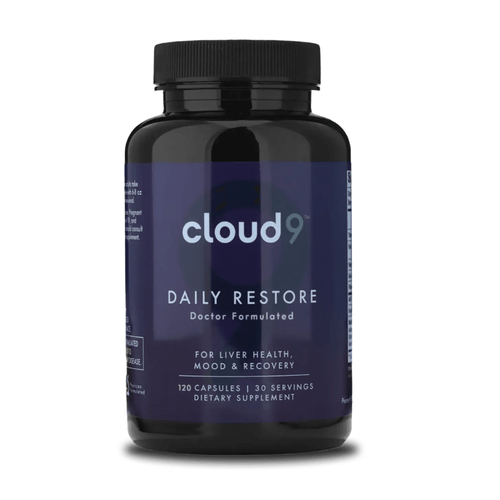
Cloud9 Daily Restore combines NAC, DHM, milk thistle, B vitamins, and ashwagandha to help support the pathways alcohol can tax most. Two capsules daily, drinking or not.
NAC | DHM | Milk Thistle | B Vitamins | Ashwagandha
See How Daily Restore WorksWhy Your Best Ideas Don't Come on Mondays
If you're drinking heavily on weekends, you're creating a predictable cognitive pattern. Your brain reaches its lowest creative capacity on Monday and Tuesday, begins recovering Wednesday and Thursday, hits peak performance Friday, and then the cycle resets. You're essentially operating at reduced mental capacity for nearly half your work week.
The Timeline of Creative Recovery
Understanding when your brain regains different cognitive abilities can help you schedule your week more strategically. Not all mental functions return at the same rate.
| Days After Drinking | Cognitive Functions Affected | Creative Impact |
|---|---|---|
| 0-24 hours | Working memory, attention, processing speed | Severely impaired; routine tasks only |
| 1-3 days | Executive function, problem-solving, mental flexibility | Reduced innovation and divergent thinking |
| 3-5 days | Complex reasoning, abstract thinking | Approaching baseline; nuanced work possible |
| 5-7 days | Full cognitive restoration (varies individually) | Peak creative capacity returns |
The Compound Effect of Regular Heavy Drinking
When you drink heavily every weekend, your brain never fully recovers. You're operating in a state of chronic subclinical impairment, where you feel "fine" but your cognitive performance remains 15-25% below your actual potential. Over months and years, this pattern can reshape your brain's baseline function.
Research suggests that repeated cycles of intoxication and withdrawal alter the brain's stress response systems and reduce neuroplasticity, the brain's ability to form new connections and adapt. This is why people often report that their "best thinking" happened during extended periods without alcohol, not just the days immediately following sobriety.
How Alcohol Sabotages the Creative Process
Creative work isn't one thing. It's a complex interplay of divergent thinking (generating many ideas), convergent thinking (selecting the best solution), cognitive flexibility (shifting between approaches), and working memory (holding multiple concepts simultaneously). Alcohol impairs each of these differently.
Divergent Thinking Takes the Biggest Hit
The free-flowing ideation that powers brainstorming and innovation relies on reduced inhibition between brain regions. You need different areas talking to each other in unexpected ways. Alcohol's lingering effects on neural connectivity mean those cross-talk pathways stay sluggish for days.
Studies show that divergent thinking tasks, like generating multiple solutions to open-ended problems, show measurable impairment for 48-72 hours after heavy drinking. You might still have ideas, but they tend to be more conventional, less original, and fewer in number.
Working Memory Becomes Your Bottleneck
Creative problem-solving requires holding multiple pieces of information in mind simultaneously: the problem parameters, potential solutions, constraints, and past attempts. Working memory acts as your mental workspace. When alcohol disrupts hippocampal and prefrontal function, this workspace shrinks.
The practical impact: you lose your train of thought more easily, struggle to see connections between disparate ideas, and find it harder to build on previous creative insights. Complex projects feel overwhelming because you can't hold all the pieces together mentally.
The most insidious aspect of alcohol's impact on creativity isn't that you feel impaired. It's that you don't. You sit down to work, you put in the hours, but the output lacks the spark and originality you're capable of. You're working hard but not working smart, and you don't realize the weekend is to blame.
Pattern Recognition and Insight Suffer
Those "aha moments" where everything suddenly clicks? They depend on your brain's ability to recognize patterns and make unexpected connections. This process, called insight problem-solving, requires the anterior cingulate cortex and right hemisphere to work in concert.
Alcohol's neurotoxic effects disrupt this coordination. Research suggests that insight-based problem-solving shows impairment even when other cognitive functions appear normal. You can still grind through analytical problems, but the elegant solutions and creative breakthroughs become rare.
The Recovery Roadmap: Restoring Your Creative Edge
If you're recognizing this pattern in your own life, the good news is that your brain is remarkably resilient. Cognitive function can bounce back faster with targeted strategies that support neural recovery.
Hydration and Electrolyte Balance
Your brain is 73% water, and even mild dehydration impairs cognitive function. Alcohol acts as a diuretic, depleting both water and essential electrolytes needed for neural signaling. Aggressive rehydration in the days following drinking can accelerate recovery.
- Aim for half your body weight in ounces of water daily (150 lbs = 75 oz minimum)
- Include electrolyte sources: coconut water, bone broth, or quality electrolyte supplements
- Front-load hydration in the morning when cortisol is naturally elevated
- Monitor urine color: pale yellow indicates adequate hydration
Sleep Optimization for Neural Repair
Alcohol severely disrupts sleep architecture, particularly REM sleep, which is crucial for memory consolidation and creative problem-solving. Even after the alcohol is metabolized, sleep patterns can remain disturbed for 2-3 nights.
Prioritize sleep recovery by maintaining consistent bed and wake times, even on weekends. Research suggests that sleep consistency matters more than duration for cognitive performance. Create a dark, cool environment and consider magnesium glycinate supplements, which can help restore the deep sleep stages alcohol depletes.
Nutritional Support for Brain Recovery
Heavy drinking depletes B vitamins, particularly B1 (thiamine), B6, and B12, which are essential for neurotransmitter production and cognitive function. It also increases oxidative stress and inflammation in brain tissue.
- Omega-3 fatty acids (EPA/DHA) support neuronal membrane repair and reduce inflammation
- B-complex vitamins restore neurotransmitter production pathways
- Antioxidants like NAC, vitamin C, and alpha-lipoic acid combat oxidative stress
- Protein-rich meals provide amino acids needed for dopamine and serotonin synthesis
- Limit refined carbohydrates, which can worsen blood sugar instability and brain fog
Strategic Cognitive Loading
Your brain recovers faster when you use it strategically. Light cognitive challenges in the days following drinking can actually accelerate recovery by promoting blood flow and neural activation. The key is matching task difficulty to your current capacity.
Days 1-2: Focus on routine, procedural tasks that don't require innovation. Clear emails, organize files, handle administrative work. Days 3-4: Gradually introduce more complex analytical work. Review and refine existing projects rather than generating new ideas. Days 5+: Schedule your most important creative work, brainstorming sessions, and strategic planning.
How Daily Restore Supports Your Health
Understanding what your body needs is one thing. Getting consistent daily support is another. Daily Restore was designed to address the key pathways alcohol can stress most, in one simple daily formula.
NAC (N-Acetyl Cysteine)
Supports glutathione production and antioxidant defenses
DHM (Dihydromyricetin)
Supports alcohol metabolism
Milk Thistle (Silymarin)
Supports healthy liver function
B Vitamins
Help replenish nutrients involved in energy and metabolism
Ashwagandha
Supports stress resilience and healthy cortisol balance
Daily Restore is not a detox or a cure. It is a daily support formula designed for people who drink socially and want to give their body consistent, evidence-informed support.
Frequently Asked Questions
How long does it take for creative thinking to return after a heavy drinking weekend?
Recovery timelines vary by individual, but research suggests that cognitive function can take 3 to 7 days to fully bounce back after heavy alcohol consumption. Creative problem-solving and divergent thinking often return more slowly than basic cognitive tasks. Supporting your brain with proper hydration, nutrition, and targeted supplements may help accelerate this recovery process.
Can moderate drinking still affect my creativity during the week?
Even moderate alcohol consumption can influence cognitive performance in the days following drinking, though effects are typically less severe than with heavy intake. Studies show that cumulative effects from regular weekend drinking can create a baseline cognitive deficit that persists throughout the week. Your brain's ability to form novel connections and think flexibly may be subtly compromised even if you're not experiencing obvious hangover symptoms.
What's the connection between sleep quality after drinking and creative thinking?
Alcohol significantly disrupts REM sleep, which is crucial for memory consolidation and creative problem-solving. Even if you sleep for 8 hours after drinking, the quality of that sleep is compromised, particularly the restorative stages where your brain processes information and makes new connections. This sleep disruption can impair creative thinking for several days as your brain struggles to catch up on proper rest cycles.
Are certain types of creative work more affected by alcohol than others?
Tasks requiring divergent thinking, flexible problem-solving, and novel idea generation tend to suffer most after drinking. Research suggests that convergent thinking tasks (those with a single correct answer) may be less impacted than open-ended creative work. If your job involves brainstorming, strategic planning, or innovative thinking, you're likely to notice more significant deficits in the days following heavy alcohol consumption.
Can supplements really help protect my brain when I drink?
While no supplement can completely eliminate alcohol's effects on the brain, certain nutrients can help support your body's natural recovery processes. Compounds like NAC, milk thistle, and B vitamins may assist with antioxidant defense and neurotransmitter production during alcohol metabolism. The key is consistent daily support rather than expecting a quick fix, as building nutritional reserves helps your brain cope more effectively when challenges occur.
The Bottom Line
Heavy weekend drinking creates a ripple effect that extends far beyond Sunday's hangover. When alcohol disrupts your brain's delicate neurochemical balance, creative thinking, problem-solving abilities, and cognitive flexibility can remain compromised well into the following week. Understanding this connection empowers you to make more informed choices about your drinking patterns and their impact on your professional and personal performance.
Protecting your brain health doesn't require perfection, but it does benefit from consistency. Daily Restore was designed to provide ongoing nutritional support for your brain and body, helping you build resilience against the oxidative stress and inflammatory responses that alcohol can trigger. By incorporating targeted nutrients like NAC, milk thistle, DHM, and essential B vitamins into your routine, you're giving your brain the tools it may need to maintain optimal function.
The most creative, productive version of yourself deserves consistent support. Whether you're navigating occasional social drinking or working to reduce your overall alcohol consumption, Daily Restore can be part of a comprehensive approach to brain health that includes quality sleep, proper hydration, and mindful drinking choices. Your cognitive performance and creative potential are worth protecting, not just on Monday morning, but every day of the week.
Build Your Daily Support Routine
Build Your Daily Support Routine
If drinking is part of your lifestyle, your support routine should not be random. Daily Restore was designed to help social drinkers support liver health, antioxidant defenses, alcohol metabolism, nutrient replenishment, and daily recovery in one simple routine.
NAC
DHM
Milk Thistle
B Vitamins
Ashwagandha