

You have a party tonight, and the familiar weight settles in your chest. You know you'll be fine once you have a drink or two. The edges soften, the words come easier, and suddenly you're the version of yourself you wish you could be all the time.
Millions of people reach for alcohol to take the edge off social situations, and for good reason: it works, at least in the moment. But if you've noticed you need it more often, or that your anxiety feels worse on the days you don't drink, you're not imagining things.
The relationship between alcohol and social anxiety creates a cycle that's both common and surprisingly damaging. Understanding why this happens, and what actually works better, can change how you show up in the world.
Quick Take
- Alcohol temporarily reduces social anxiety but disrupts the brain chemicals that regulate mood and stress, making baseline anxiety worse over time
- Using alcohol as a coping strategy prevents you from building genuine confidence and reinforces the belief that you can't handle social situations on your own
- The rebound effect after drinking can spike anxiety for 24-72 hours, creating a cycle where you need alcohol more frequently
- Evidence-based alternatives like cognitive behavioral techniques, adaptogens, and gradual exposure can reduce social anxiety without the negative feedback loop
- Breaking the alcohol-anxiety cycle typically shows measurable improvements within 2-4 weeks of consistent alternative approaches
Why Alcohol Feels Like It Works for Social Anxiety
Alcohol affects your brain's GABA receptors, the same system targeted by anti-anxiety medications. It increases inhibitory neurotransmission, which essentially slows down the mental chatter and physical tension that characterize social anxiety. This isn't placebo: alcohol genuinely reduces activity in the amygdala, your brain's fear center.
Research suggests that people with social anxiety disorder are 2-3 times more likely to develop alcohol use issues than the general population. The relief is real and immediate, which makes the pattern incredibly reinforcing. You learn, sometimes without realizing it, that alcohol equals social competence.
The problem isn't that alcohol doesn't work. The problem is what happens when it wears off, and what happens to your brain's natural anxiety regulation system when you use it repeatedly.
Daily Support for Social Drinkers
Your liver works hard every day. Give it consistent support.
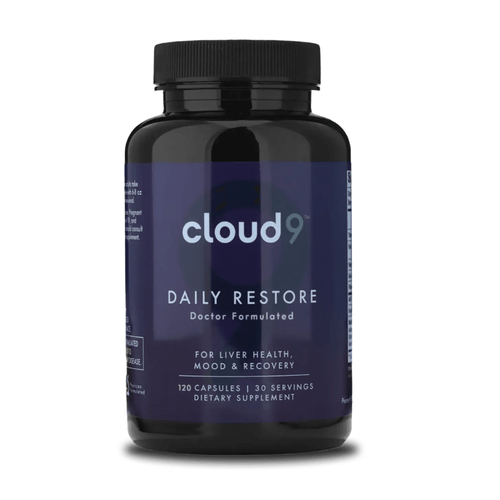
Cloud9 Daily Restore combines NAC, DHM, milk thistle, B vitamins, and ashwagandha to help support the pathways alcohol can tax most. Two capsules daily, drinking or not.
NAC | DHM | Milk Thistle | B Vitamins | Ashwagandha
See How Daily Restore WorksThe Rebound Effect: Why Anxiety Gets Worse After Drinking
When alcohol leaves your system, your brain doesn't just return to baseline. It overshoots in the opposite direction, a phenomenon researchers call the "rebound effect." Your GABA system, which was artificially suppressed, now underperforms, while your glutamate system, which creates excitation and alertness, goes into overdrive.
This creates a state of hyperarousal that can last 24 to 72 hours after drinking. Even if you don't have a hangover, your nervous system is recalibrating, and that recalibration looks a lot like anxiety: racing thoughts, physical tension, heightened sensitivity to perceived judgment.
What Happens to Your Brain Chemistry
Regular alcohol use for anxiety management changes your baseline neurochemistry. Your brain adapts to the repeated suppression by producing less GABA naturally and becoming more sensitive to stress signals. Studies show that people who drink regularly to manage anxiety often have lower natural GABA levels and higher cortisol responses to stress.
The cycle becomes self-perpetuating. You feel more anxious in general, which makes social situations more daunting, which makes alcohol feel more necessary, which further disrupts your natural anxiety regulation.
The Confidence Trap
Beyond the neurochemistry, using alcohol for social anxiety creates a psychological pattern that's just as problematic. Each time you use alcohol to get through a social situation, you reinforce a belief: "I can't do this without help."
You never get the chance to prove to yourself that you can handle these situations, learn from them, and build genuine social confidence. The experiences don't count toward your internal evidence that you're socially capable because you attribute any success to the alcohol, not to yourself.
Every social situation navigated with alcohol is a missed opportunity to build the neural pathways of real confidence. Your brain doesn't learn "I can do this." It learns "I can do this only with alcohol."
Signs the Alcohol-Anxiety Cycle Has Started
Many people don't realize they've developed a pattern until it's firmly established. The progression can be subtle, especially since social drinking is so normalized in our culture.
- You feel significant relief after your first drink in social settings, more than others seem to
- You pre-game before events to "take the edge off" before you even arrive
- You feel increased anxiety or dread on days when you know you'll be in social situations without the option to drink
- You notice your baseline anxiety has increased over months or years of regular social drinking
- You experience worse anxiety the day or two after drinking, even without a severe hangover
- You've started avoiding social situations where alcohol won't be available
- The amount you need to feel comfortable has gradually increased
- You feel irritable, on edge, or more socially anxious than you used to be in general
The Tolerance Problem
Like any substance that affects brain chemistry, alcohol tolerance builds over time. The amount that used to relax you stops working as well, leading to a gradual increase in consumption. This isn't a moral failing or a lack of willpower, it's basic neuroscience.
As tolerance builds, so does the severity of the rebound effect. Your brain adapts more dramatically, and the post-drinking anxiety becomes more intense and longer-lasting.
What Actually Works: Evidence-Based Alternatives
Breaking the alcohol-anxiety cycle doesn't mean white-knuckling through social situations or accepting a life of isolation. Research on anxiety treatment has identified several approaches that reduce social anxiety while actually building resilience over time.
Cognitive Behavioral Approaches
Cognitive behavioral therapy for social anxiety focuses on identifying and challenging the thought patterns that fuel anxiety, then gradually exposing yourself to feared situations. Studies consistently show CBT techniques reduce social anxiety symptoms by 50-70% in most people who practice them consistently.
The key elements you can start using immediately:
- Identify your anxious predictions before social events (write them down specifically)
- After the event, review what actually happened versus what you predicted
- Notice when you're mind-reading or catastrophizing, and consciously redirect to observable facts
- Practice "behavioral experiments" where you intentionally test your fears in low-stakes situations
- Focus attention outward on others and the conversation, not inward on your anxiety symptoms
Adaptogens and Natural Support
While not a magic solution, certain compounds can help manage the physiological aspects of social anxiety without creating dependence or rebound effects. Research suggests several options may help support a calmer baseline.
L-theanine, an amino acid found in tea, promotes alpha brain wave activity associated with calm alertness. Studies indicate it can reduce anxiety responses without sedation, typically at doses of 200-400mg. Unlike alcohol, it doesn't impair cognitive function or create tolerance.
Ashwagandha has been studied extensively for stress and anxiety, with research showing it can reduce cortisol levels and anxiety symptoms. The adaptogenic properties mean it helps regulate stress response rather than simply suppressing it.
Magnesium glycinate supports GABA function naturally and many people with anxiety have suboptimal magnesium levels. Supplementation can help restore natural calming neurotransmitter activity.
Gradual Exposure: Building Real Confidence
The most effective long-term strategy for social anxiety is systematic exposure to feared situations, starting small and building up. This allows your brain to learn through experience that social situations are manageable, rewiring the fear response at its source.
Create a hierarchy of social situations from least to most anxiety-provoking. Start with situations that create mild anxiety and practice them repeatedly without alcohol until your anxiety naturally decreases. Then move to the next level.
| Exposure Level | Example Situations | Practice Goal |
|---|---|---|
| Low Anxiety | Coffee with one familiar friend, brief small talk with cashier | 3-5 times until comfortable |
| Moderate Anxiety | Lunch with 2-3 acquaintances, asking a question in a meeting | 5-7 times until manageable |
| Higher Anxiety | Dinner party with mixed familiar and new people, networking event | 7-10 times with decreasing anxiety |
| Peak Anxiety | Public speaking, large parties with mostly strangers | Ongoing practice as needed |
Physiological Grounding Techniques
Social anxiety isn't just mental, it's deeply physical. Learning to regulate your nervous system in the moment can reduce anxiety without substances. These techniques work by activating your parasympathetic nervous system, which counteracts the fight-or-flight response.
- Box breathing: Inhale for 4 counts, hold for 4, exhale for 4, hold for 4, repeat for 2-3 minutes before and during social situations
- Physiological sigh: Two quick inhales through the nose followed by a long exhale through the mouth, proven to rapidly reduce stress
- Progressive muscle relaxation: Systematically tense and release muscle groups to reduce physical tension
- Cold water exposure: Splashing cold water on your face activates the dive reflex, which naturally calms anxiety
- Bilateral stimulation: Alternately tapping your knees or using other left-right movements can help regulate emotional intensity
Making the Transition: What to Expect
If you've been using alcohol to manage social anxiety regularly, stopping or reducing that pattern will feel uncomfortable at first. This is normal and temporary, but knowing what to expect can help you push through.
The First Two Weeks
Your baseline anxiety may initially increase as your brain recalibrates its natural neurotransmitter production. This is actually a sign that your system is beginning to heal. You might also experience difficulty sleeping, irritability, or increased physical anxiety symptoms.
During this phase, focus on support rather than performance. Use the grounding techniques heavily, consider adaptogenic support, and choose lower-stress social situations if possible. Don't judge your progress during this adjustment period.
Weeks Three to Six
Most people notice their baseline anxiety beginning to improve during this window. Your natural GABA production starts to normalize, and stress responses become less exaggerated. Social situations are still challenging, but you may notice they're slightly more manageable than they were with the alcohol rebound effect.
This is the crucial period for building alternative coping skills. Practice your CBT techniques, continue gradual exposure, and reinforce the neural pathways of managing anxiety without substances.
Two Months and Beyond
Research suggests that most people experience significant improvement in baseline anxiety within 8-12 weeks of stopping or substantially reducing alcohol use for anxiety management. Your brain's natural anxiety regulation system has largely recovered, and any skills you've been practicing have had time to become more automatic.
Many people report that their social anxiety is actually lower than it was when they were drinking regularly, even accounting for the temporary relief alcohol provided. Without the rebound effect and with developed coping skills, the overall anxiety burden decreases substantially.
How Daily Restore Supports Your Health
Understanding what your body needs is one thing. Getting consistent daily support is another. Daily Restore was designed to address the key pathways alcohol can stress most, in one simple daily formula.
NAC (N-Acetyl Cysteine)
Supports glutathione production and antioxidant defenses
DHM (Dihydromyricetin)
Supports alcohol metabolism
Milk Thistle (Silymarin)
Supports healthy liver function
B Vitamins
Help replenish nutrients involved in energy and metabolism
Ashwagandha
Supports stress resilience and healthy cortisol balance
Daily Restore is not a detox or a cure. It is a daily support formula designed for people who drink socially and want to give their body consistent, evidence-informed support.
Frequently Asked Questions
How long does it take to break the cycle of using alcohol for social anxiety?
The timeline varies for everyone, but many people notice shifts within 2-4 weeks of consistent alternative strategies. Physical dependence patterns can take longer to reset, which is why pairing behavioral changes with daily wellness support can help smooth the transition and build new neural pathways.
Can I still drink occasionally if I have social anxiety?
Occasional, mindful drinking is different from relying on alcohol as a coping mechanism. The key is developing other primary tools for managing social stress first, so alcohol becomes an optional choice rather than a psychological crutch. If you find yourself needing it before social situations, that's a sign the pattern may need attention.
What if natural supplements don't work as quickly as alcohol does?
That's actually the point. Alcohol provides instant relief followed by a crash and worsening anxiety, while supplements like L-theanine and magnesium work with your body's natural systems to build resilience over time. The goal isn't immediate sedation, it's sustainable nervous system support that doesn't create rebound effects.
Should I talk to a therapist about social anxiety, or can I handle it on my own?
If social anxiety significantly impacts your daily life or you've been using alcohol regularly to cope, professional support can be extremely valuable. Cognitive behavioral therapy and exposure therapy have strong evidence for social anxiety, and they work even better when combined with lifestyle changes and daily wellness practices.
How is Daily Restore different from just taking individual supplements?
Daily Restore combines research-backed ingredients in balanced ratios designed to work synergistically, supporting both immediate calm and long-term resilience. Rather than guessing at dosages or taking multiple separate products, you get a formulated approach that addresses stress response, neurotransmitter balance, and nervous system regulation in one consistent daily routine.
The Bottom Line
Using alcohol to manage social anxiety creates a cycle that ultimately makes the underlying anxiety worse. The temporary relief comes at the cost of disrupted brain chemistry, poor sleep, increased baseline anxiety, and the risk of psychological dependence. What feels like a solution in the moment becomes part of the problem over time.
The good news is that sustainable alternatives exist. Targeted supplements like L-theanine and magnesium, combined with practical strategies like breathwork and gradual exposure, can help you build genuine confidence in social situations. These approaches work with your nervous system rather than against it, creating lasting resilience without the downsides.
Daily Restore offers a convenient way to support this transition with a blend designed specifically for stress resilience and nervous system balance. By taking it consistently as part of your daily routine, you give your body the nutritional foundation it needs to handle social stress more effectively, making it easier to practice new coping skills and break old patterns.
Breaking free from the alcohol-anxiety cycle takes time and self-compassion, but every step toward healthier coping mechanisms is an investment in long-term well-being. Your nervous system has remarkable capacity to heal and adapt when given the right support, and you deserve strategies that actually work with your biology rather than against it.
Build Your Daily Support Routine
Build Your Daily Support Routine
If drinking is part of your lifestyle, your support routine should not be random. Daily Restore was designed to help social drinkers support liver health, antioxidant defenses, alcohol metabolism, nutrient replenishment, and daily recovery in one simple routine.
NAC
DHM
Milk Thistle
B Vitamins
Ashwagandha