

You wake up after a night out and immediately check your phone with a sinking feeling. Did you text something weird? Say something embarrassing? The social plans you have later today suddenly feel impossible to face.
This isn't just a bad hangover. It's hangxiety, and the urge to cancel everything and hide under the covers is one of its most powerful symptoms. Understanding why this happens can help you push through it without isolating yourself or letting anxiety take control.
Let's look at what makes hangxiety so socially paralyzing, and what actually works to get you out the door when every instinct tells you to bail.
Quick Take
- Hangxiety triggers intense social withdrawal through brain chemistry changes that amplify perceived social threats
- The urge to cancel plans is driven by disrupted GABA and glutamate balance, not actual social disasters
- Pushing through strategically (not forcing yourself through severe distress) can prevent anxiety from strengthening
- Gentle exposure combined with physical recovery strategies offers better results than pure avoidance or white-knuckling
- Knowing the difference between productive rest and anxiety-driven isolation helps you make better decisions
Why Hangxiety Hijacks Your Social Confidence
When alcohol leaves your system, it creates a neurochemical rebound that can turn even the most socially confident person into someone convinced they've ruined every relationship. Research suggests this happens because alcohol initially boosts GABA (a calming neurotransmitter) while suppressing glutamate (an excitatory one). When you stop drinking, this balance violently reverses.
The result is a brain in overdrive, scanning for threats and finding them everywhere. That text you sent feels humiliating. That joke you made seems offensive in retrospect. The plans you were excited about yesterday now feel like performance tests you're certain to fail.
Studies show that people experiencing hangxiety often engage in excessive rumination about social interactions, replaying conversations and finding flaws that likely don't exist. Your brain isn't giving you accurate information right now, it's running a threat-detection system with the sensitivity cranked up to maximum.
Daily Support for Social Drinkers
Your liver works hard every day. Give it consistent support.
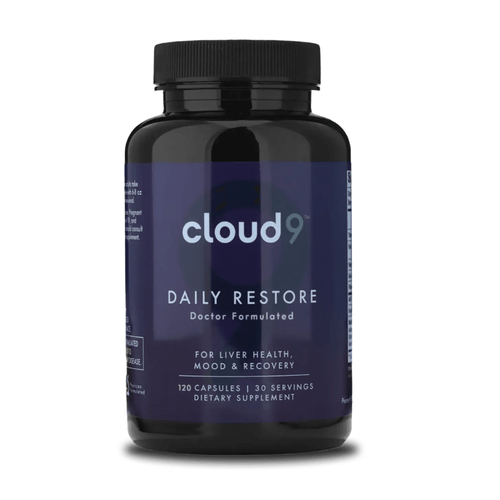
Cloud9 Daily Restore combines NAC, DHM, milk thistle, B vitamins, and ashwagandha to help support the pathways alcohol can tax most. Four capsules daily, drinking or not.
NAC | DHM | Milk Thistle | B Vitamins | Ashwagandha
See How Daily Restore WorksThe Cancel Culture in Your Head: Why Isolation Feels So Tempting
The urge to cancel isn't random. It's your anxious brain offering what feels like a solution: avoid the situation, avoid the discomfort. In the moment, texting "I'm so sorry, I can't make it" feels like pure relief.
But this relief comes with a cost. Each time you cancel due to anxiety, you reinforce the pattern that social situations during hangxiety are genuinely threatening. You also miss the opportunity to collect evidence that contradicts your anxious predictions.
What Your Brain Gets Wrong
During hangxiety, your mind makes specific prediction errors about social situations. Understanding these can help you recognize when you're being hijacked by brain chemistry rather than reality.
- Catastrophizing: Assuming people noticed and judged things they likely didn't register at all
- Mind reading: Believing you know others think poorly of you without any actual evidence
- Magnification: Taking small social awkwardness and inflating it into relationship-ending disasters
- Filtering: Remembering only negative moments while forgetting positive interactions from the same night
- Fortune telling: Predicting that upcoming social plans will go terribly based purely on how you feel right now
The Avoidance Trap
Canceling plans might solve your immediate discomfort, but it creates a bigger problem for your future self. Research on anxiety suggests that avoidance is one of the primary ways anxiety disorders strengthen and persist over time.
When you avoid a situation your brain has flagged as threatening, you never get to learn that the threat was overblown. Instead, your brain files away the lesson: "We avoided that situation and stayed safe, so it really was dangerous." Next time, the anxiety comes back stronger.
The most powerful way to weaken anxiety is to let it be present while doing the thing anyway. You don't need to feel confident to show up. You just need to show up despite not feeling confident.
How to Push Through: Strategies That Actually Work
Pushing through doesn't mean forcing yourself to attend a massive party while having a panic attack. It means making strategic choices that gently challenge your anxiety while supporting your nervous system's recovery.
The Hangxiety Decision Matrix
Not every situation requires the same response. Here's how to decide when to push through versus when rest is genuinely needed.
| Situation | Push Through | Consider Rescheduling |
|---|---|---|
| Coffee with close friend | Yes, low pressure environment | If you're physically ill (vomiting, severe headache) |
| Casual group hangout | Yes, can leave early if needed | If anxiety is severe (8+ out of 10) |
| Important work event | Yes, professional obligations matter | If you can't function (extreme fatigue, mental fog) |
| Big party or loud venue | If you have support person attending | High-stimulation may overwhelm recovery |
| First date or new people | Brief coffee, not multi-hour commitment | Performance pressure too high during recovery |
Pre-Social Recovery Protocols
If you've decided to keep your plans, these steps can help you show up feeling more equipped to handle the situation. They won't eliminate hangxiety, but they can reduce its intensity enough to make socializing manageable.
- Hydrate intentionally: Drink water with electrolytes starting when you wake up, not just before leaving
- Eat protein and complex carbs: Blood sugar stability directly impacts anxiety levels
- Move gently: A 10-minute walk can reduce anxiety without exhausting you further
- Shower and dress normally: Small acts of routine signal to your brain that things are okay
- Limit social media: Don't scan last night's posts or photos before going out again
- Use grounding techniques: 5-4-3-2-1 sensory awareness can calm your nervous system

During the Event: Managing Anxiety in Real Time
You showed up. That's already a win. Now here's how to navigate the actual social situation when your anxiety is telling you to flee.
Give yourself permission to leave early. Knowing you can exit reduces pressure and often makes staying easier. Set a mental minimum (stay 30 minutes) and a comfortable maximum (leave after 90 minutes if you want).
Focus on others, not yourself. Anxious self-monitoring makes everything worse. Ask questions, listen actively, and redirect attention outward when you catch yourself spiraling about how you're coming across.
Use your body to calm your mind. Slow, deep breathing activates your parasympathetic nervous system. Nobody will notice if you take a few deliberate breaths during conversation pauses.
Challenge your predictions in real time. Did that person actually look horrified, or did they just glance at their phone? Is everyone really judging you, or are they focused on their own conversations?
Building Long-Term Resilience Against Hangxiety Cancellations
If you find yourself in this cancel-or-push-through dilemma regularly, it might be time to look at the bigger picture. The most effective long-term solution isn't just managing hangxiety better, it's reducing how often you experience it in the first place.
Tracking Your Patterns
Start noticing what predicts worse hangxiety for you. Research suggests individual variation is significant, some people are more sensitive to alcohol's anxiety-inducing rebound effects than others.
- Do certain types of alcohol trigger worse hangxiety than others?
- Does drinking past a certain quantity reliably create next-day social anxiety?
- Are there patterns around when you drink (late night, on empty stomach, while already stressed)?
- Do you experience worse hangxiety after drinking in certain social contexts?
Preventive Strategies
You don't have to quit drinking entirely to reduce hangxiety frequency and intensity. Small changes to your drinking patterns can make a significant difference.
Set boundaries before you start: Decide your limit when you're sober, not when you're three drinks in. Studies show that pre-commitment strategies are more effective than in-the-moment willpower.
Prioritize sleep: Alcohol already disrupts sleep quality. Drinking late or drinking heavily makes this worse, and poor sleep amplifies anxiety. If you're going out, try to start earlier rather than drinking until 2am.
Space out drinking occasions: Giving your brain regular breaks from alcohol's neurochemical disruption helps maintain more stable baseline anxiety levels.
When to Seek Additional Support
If hangxiety is regularly interfering with your relationships, work, or quality of life, it may be worth exploring whether there's a larger pattern at play. Some people experience heightened hangxiety because of underlying anxiety disorders that alcohol temporarily masks but ultimately worsens.
Consider talking to a mental health professional if you notice these patterns:
- You drink primarily to manage social anxiety, then experience worse anxiety the next day
- Hangxiety has led you to cancel important commitments multiple times
- You feel trapped in a cycle of drinking to cope, then suffering intense anxiety during recovery
- The fear of hangxiety is starting to influence whether you drink, creating its own anxiety
- You're isolating yourself from friends and activities because of repeated hangxiety experiences
How Daily Restore Supports Your Health
Understanding what your body needs is one thing. Getting consistent daily support is another. Daily Restore was designed to address the key pathways alcohol can stress most, in one simple daily formula.
NAC (N-Acetyl Cysteine)
Supports glutathione production and antioxidant defenses
DHM (Dihydromyricetin)
Supports alcohol metabolism
Milk Thistle (Silymarin)
Supports healthy liver function
B Vitamins
Help replenish nutrients involved in energy and metabolism
Ashwagandha
Supports stress resilience and healthy cortisol balance
Daily Restore is not a detox or a cure. It is a daily support formula designed for people who drink socially and want to give their body consistent, evidence-informed support.
Frequently Asked Questions
How long does hangxiety typically last?
Hangxiety can last anywhere from a few hours to a full day or more, depending on how much you drank and your individual brain chemistry. For most people, the acute anxiety peaks in the morning and gradually improves as your body processes the alcohol and neurotransmitter levels begin to rebalance.
Can hangxiety happen even if I didn't drink that much?
Absolutely. Some people are more sensitive to alcohol's effects on their brain chemistry and can experience significant anxiety even after just a drink or two. Factors like genetics, stress levels, sleep quality, and whether you ate before drinking all play a role in how your body and brain respond.
Is it better to force myself to socialize or stay home when I have hangxiety?
There's no one-size-fits-all answer, but gentle activity and social connection often help more than complete isolation. If you can manage a low-key hangout with understanding friends, the distraction and human connection may actually ease your symptoms. However, if you're truly overwhelmed, it's okay to reschedule and prioritize rest.
Does drinking water or eating help with hangxiety?
Hydration and nutrition can help with physical hangover symptoms, which may indirectly ease some anxiety. However, hangxiety is primarily neurochemical, so while water and food support overall recovery, they won't immediately fix the brain chemistry imbalance. Supporting your body's natural recovery processes through rest, movement, and targeted nutrients may offer more comprehensive relief.
Will hangxiety get worse as I get older?
Many people report that hangovers, including the anxiety component, do tend to worsen with age. This may be due to changes in how efficiently your body processes alcohol, shifts in brain chemistry, and accumulated stress over time. Building consistent support habits becomes increasingly important as your body's resilience naturally changes.
The Bottom Line
Hangxiety isn't just in your head, it's a real neurochemical response that can make even simple social plans feel impossibly overwhelming. The urge to cancel everything and hide under the covers makes sense when your brain chemistry is temporarily out of balance. Understanding what's happening in your body can help you respond with more compassion and less shame.
While hangxiety will eventually pass on its own, you don't have to white-knuckle your way through it. Small actions like gentle movement, staying hydrated, connecting with supportive people, and supporting your body's natural recovery can all help ease the symptoms. The key is working with your body's recovery process rather than fighting against it.
Building consistent daily habits can also make a difference in how your brain handles occasional drinking. Cloud9's Daily Restore is designed to support your body's natural balance with ingredients like L-theanine, magnesium, and B vitamins that may help maintain steadier neurotransmitter function over time. When taken as part of a regular routine, these nutrients can support your body's resilience and recovery processes.
Remember, you're not weak for struggling with hangxiety, and you're not alone in feeling this way. Being kind to yourself during recovery, making informed choices about your drinking, and supporting your body consistently are all steps toward feeling more balanced and in control, hangover or not.
Build Your Daily Support Routine
Build Your Daily Support Routine
If drinking is part of your lifestyle, your support routine should not be random. Daily Restore was designed to help social drinkers support liver health, antioxidant defenses, alcohol metabolism, nutrient replenishment, and daily recovery in one simple routine.
NAC
DHM
Milk Thistle
B Vitamins
Ashwagandha