

You've been to that party. The one where drinks flow freely, conversations blur together, and by the end of the night you're wondering why you said yes to that third glass of wine. Meanwhile, there's always someone who seems perfectly in control, engaged, and genuinely enjoying themselves without overdoing it.
What separates mindful drinkers from everyone else isn't willpower or some special gene. It's a single, repeatable habit that changes everything about how they approach social drinking. Once you understand it, you can use it too.
The difference comes down to one deceptively simple practice: deciding exactly what they'll drink before they arrive. Not a vague intention to "take it easy" or "pace myself," but a specific, non-negotiable plan.
Quick Take
- Mindful drinkers create a specific drink plan before arriving at social events, not vague intentions
- Pre-commitment reduces decision fatigue and removes the need for willpower in the moment
- Research shows that advance planning activates different brain regions than in-the-moment decisions
- The most successful plans include both what you'll drink and how you'll handle social pressure
- This single habit creates a ripple effect that improves sleep, energy, and next-day performance
Why Pre-Commitment Works When Willpower Fails
When you walk into a social event without a plan, every drink becomes a fresh decision. Your brain has to weigh options, consider consequences, and resist temptation over and over. Research suggests this type of repeated decision-making depletes mental resources, making it progressively harder to say no as the evening continues.
Pre-commitment works differently. By deciding in advance, you shift the cognitive load to a time when you're calm, clear-headed, and not influenced by social dynamics. Studies show that advance planning activates the prefrontal cortex, the part of your brain responsible for rational thinking, rather than the limbic system that responds to immediate rewards.
This isn't about rigidity or missing out. It's about removing the exhausting mental negotiation that happens at every drink offer. When someone asks if you want another, you already know your answer.
Daily Support for Social Drinkers
Your liver works hard every day. Give it consistent support.
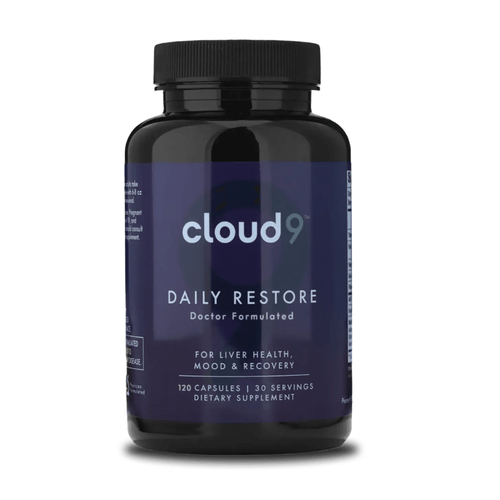
Cloud9 Daily Restore combines NAC, DHM, milk thistle, B vitamins, and ashwagandha to help support the pathways alcohol can tax most. Two capsules daily, drinking or not.
NAC | DHM | Milk Thistle | B Vitamins | Ashwagandha
See How Daily Restore WorksWhat a Real Pre-Commitment Plan Looks Like
The most effective drinking plans are specific and realistic. Vague goals like "drink less" or "be good" don't provide enough structure when you're in the moment. Here's what actually works.
The Four Elements of an Effective Plan
Every solid pre-commitment includes these components. Miss one, and you leave yourself vulnerable to impulse decisions.
- The number: Exactly how many drinks you'll have, including zero as a valid option
- The timeline: When you'll have them (one per hour, two in the first half, etc.)
- The alternative: What you'll drink instead when offered more (sparkling water, mocktail, kombucha)
- The exit strategy: Your response to "just one more" or peer pressure
Reactive vs. Proactive: Two Approaches Compared
| Reactive Drinker (No Plan) | Mindful Drinker (Pre-Committed) |
|---|---|
| Decides drink by drink throughout the event | Decides complete plan before arrival |
| Relies on willpower in high-pressure moments | Relies on pre-made commitment when clear-headed |
| Scrambles for excuses when offered drinks | Has prepared responses ready |
| Experiences decision fatigue as night progresses | Preserves mental energy for conversation |
| Often regrets choices the next morning | Wakes up proud and energized |
Sample Plans for Different Social Situations
Your plan should match the event. A three-hour dinner party requires different preparation than a late-night wedding reception.
- Dinner party: One drink before dinner, switch to sparkling water after
- Networking event: Zero alcohol, stick to tonic with lime to hold something
- Wedding reception: Two drinks maximum, one during cocktail hour and one during dinner, done by 8pm
- Sunday brunch: One mimosa or bloody mary, then coffee or juice
- After-work drinks: One drink in the first hour, leave by 7pm regardless
The Psychology Behind Social Drinking Pressure
Understanding why social pressure feels so intense helps you prepare for it. The urge to match those around you isn't a character flaw, it's basic human neurobiology.
Why "Just One More" Is So Persuasive
Research suggests that humans are hardwired for social conformity. When everyone around you is drinking, your brain interprets abstaining as a potential threat to group belonging. This triggers a mild stress response that makes saying no feel genuinely uncomfortable.
The key insight: this discomfort is temporary and predictable. When you expect it, you can plan for it. Mindful drinkers know the pressure will come, so they prepare specific responses in advance.
The difference between feeling deprived and feeling empowered comes down to whether you made the decision in advance or in the moment. Pre-commitment transforms the same action from restriction to intention.
Prepared Responses That Actually Work
You don't need elaborate explanations. Simple, confident responses end conversations quickly without creating awkwardness.
- "I'm good with this, thanks" (while holding your non-alcoholic drink)
- "I'm done for the night, but I'd love another sparkling water"
- "I've got an early morning, sticking to one tonight"
- "Not tonight, but tell me about..." (redirect conversation)
- "I'm the designated driver" (even if you took an Uber, you're the driver of your own choices)
The Ripple Effects Beyond the Event
The benefits of pre-commitment extend far beyond the social event itself. This single habit can improve multiple areas of your health and wellbeing.
Sleep Quality and Recovery
Studies show that even moderate alcohol consumption can disrupt sleep architecture, particularly REM sleep. By sticking to your pre-commitment, you protect the restorative sleep stages that are essential for memory consolidation, emotional regulation, and physical recovery.
Mindful drinkers consistently report better sleep quality, which creates a positive feedback loop. Better sleep leads to better decision-making, which reinforces the habit of pre-commitment.
Next-Day Performance and Clarity
The cognitive benefits show up immediately. Research suggests that alcohol can impair executive function and focus for up to 48 hours after consumption, even in the absence of a traditional hangover. Pre-commitment helps you wake up with genuine energy and mental clarity.
This matters for more than just avoiding hangovers. Your ability to think creatively, solve problems, and engage meaningfully with work and relationships improves when you consistently stick to your drinking intentions.
Building Self-Trust
Perhaps the most significant ripple effect is psychological. Each time you follow through on your pre-commitment, you build evidence that you can trust yourself. This self-trust extends beyond drinking into other areas where you want to make intentional choices.
Over time, this creates an identity shift. You stop seeing yourself as someone who needs willpower to resist drinks and start seeing yourself as someone who simply makes intentional choices about alcohol.
How Daily Restore Supports Your Health
Understanding what your body needs is one thing. Getting consistent daily support is another. Daily Restore was designed to address the key pathways alcohol can stress most, in one simple daily formula.
NAC (N-Acetyl Cysteine)
Supports glutathione production and antioxidant defenses
DHM (Dihydromyricetin)
Supports alcohol metabolism
Milk Thistle (Silymarin)
Supports healthy liver function
B Vitamins
Help replenish nutrients involved in energy and metabolism
Ashwagandha
Supports stress resilience and healthy cortisol balance
Daily Restore is not a detox or a cure. It is a daily support formula designed for people who drink socially and want to give their body consistent, evidence-informed support.
Frequently Asked Questions
What if I feel awkward ordering a non-alcoholic drink at a bar?
Most bartenders are accustomed to serving non-alcoholic options and won't think twice about it. If you're concerned about social perception, ordering a mocktail or simply asking for soda water with lime in a rocks glass gives you something to hold that looks like any other cocktail.
How do I handle pushy friends who keep offering me drinks?
A simple, confident response works best: "I'm good with what I have, thanks." You don't owe anyone a detailed explanation about your drinking choices. Most people respect a firm but friendly boundary, and those who don't are revealing more about themselves than about you.
Can I still be social and fun without drinking alcohol?
Absolutely. Research suggests that alcohol doesn't actually make you more interesting or sociable, it just lowers your inhibitions temporarily. Many people find they're more present, remember conversations better, and form deeper connections when they're not drinking or drinking mindfully.
What's the difference between mindful drinking and quitting entirely?
Mindful drinking means making intentional choices about when, how much, and why you drink, rather than consuming alcohol automatically or out of habit. It's about quality over quantity and staying in control of your decisions. Some mindful drinkers choose to abstain completely, while others drink occasionally in specific contexts that align with their values.
How long does it take to build the habit of checking in with yourself before drinking?
Like most habits, the pause-and-check-in practice typically takes a few weeks of consistent repetition to become automatic. Studies show that habit formation varies widely by individual, but most people notice the practice becoming more natural after 3-4 social events where they intentionally apply it.
The Bottom Line
The habit that separates mindful drinkers from everyone else isn't complicated or time-consuming. It's simply the practice of pausing before you drink and checking in with yourself: Am I choosing this, or just going through the motions? That single moment of awareness can transform your entire relationship with alcohol at social events.
Building this habit takes practice, but the benefits extend far beyond just drinking less. You'll likely find yourself more present in conversations, more confident in your choices, and more aligned with your health goals. The physical benefits can include better sleep, improved energy, and reduced inflammation, particularly when you support your body's natural processes consistently.
This is where Cloud9's Daily Restore can play a supporting role in your mindful drinking journey. Formulated with DHM, milk thistle, and NAC, it's designed to support your liver and overall wellness whether you're drinking occasionally or working toward alcohol-free living. Taking it daily helps establish a consistent routine that reminds you of your commitment to healthier choices.
Remember, mindful drinking is a practice, not perfection. Some social events will feel easier than others, and that's completely normal. What matters is that you're making intentional choices that align with how you want to feel, both during the event and the morning after.
Build Your Daily Support Routine
Build Your Daily Support Routine
If drinking is part of your lifestyle, your support routine should not be random. Daily Restore was designed to help social drinkers support liver health, antioxidant defenses, alcohol metabolism, nutrient replenishment, and daily recovery in one simple routine.
NAC
DHM
Milk Thistle
B Vitamins
Ashwagandha