

You know the feeling: your heart races before a meeting, your mind goes blank when someone asks you a question, or you spend hours replaying conversations wondering what everyone thought of you. Social anxiety doesn't just make social situations uncomfortable, it can keep you from living the life you want.
Most conventional anti-anxiety medications work by sedating your nervous system, which can leave you feeling foggy, tired, or disconnected. But what if you could support your body's natural stress response without sacrificing mental clarity? Research suggests certain natural supplements can help reduce social anxiety while keeping you alert and present.
Here's what actually works, according to current evidence, and how to use these supplements safely and effectively.
Quick Take
- L-theanine promotes calm alertness by increasing alpha brain waves without causing drowsiness, typically working within 30-60 minutes
- Magnesium glycinate helps regulate GABA receptors and stress hormones while supporting sustained energy throughout the day
- Ashwagandha can lower cortisol levels and reduce anxiety symptoms without sedating effects when taken consistently
- Rhodiola rosea may enhance stress resilience and mental performance during anxious situations
- Unlike sedative medications, these supplements work with your body's natural chemistry to support balanced nervous system function
Why Traditional Anxiety Treatments Often Leave You Feeling Sedated
Most prescription anti-anxiety medications belong to a class called benzodiazepines, which work by enhancing GABA, a neurotransmitter that slows down brain activity. While effective for severe anxiety, this mechanism inevitably causes drowsiness, cognitive impairment, and reduced reaction times. You might feel calmer, but you're also less sharp.
Even some natural remedies like valerian root or high doses of passionflower work through similar sedating pathways. They essentially tell your nervous system to slow down across the board. For occasional evening use, this might be fine, but it's not a sustainable solution for daytime social anxiety.
The most effective non-sedating supplements work differently. They help modulate stress responses, support healthy neurotransmitter balance, and promote resilience without simply dampening your nervous system. This allows you to stay mentally clear while feeling more emotionally regulated.
Daily Support for Social Drinkers
Your liver works hard every day. Give it consistent support.
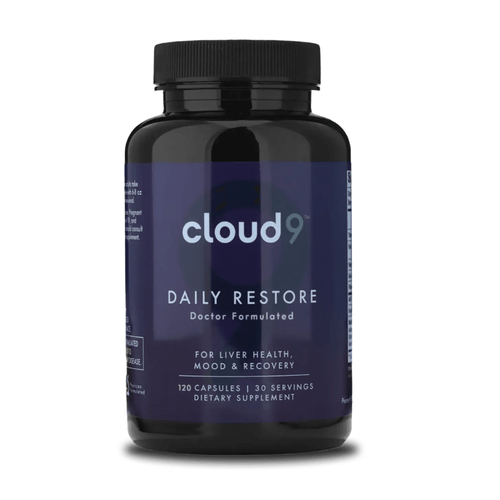
Cloud9 Daily Restore combines NAC, DHM, milk thistle, B vitamins, and ashwagandha to help support the pathways alcohol can tax most. Two capsules daily, drinking or not.
NAC | DHM | Milk Thistle | B Vitamins | Ashwagandha
See How Daily Restore WorksL-Theanine: The Alert Calm Compound
L-theanine is an amino acid found naturally in green tea that's become one of the most researched supplements for anxiety. What makes it unique is its ability to promote relaxation without sedation, a quality that's earned it the nickname "alert calm."
How L-Theanine Works
Research suggests L-theanine increases alpha brain wave activity, the same state associated with meditation and relaxed focus. It also influences neurotransmitters including GABA, dopamine, and serotonin, helping to balance the nervous system's response to stress. Unlike sedatives that suppress overall brain activity, L-theanine appears to promote a state of relaxed alertness.
Studies show that L-theanine can reduce both psychological and physiological stress responses. People taking L-theanine before stressful tasks report feeling calmer while maintaining or even improving their performance.
Practical Use for Social Anxiety
L-theanine typically works within 30 to 60 minutes, making it useful for acute social situations. A typical dose ranges from 200 to 400mg, though some people respond to as little as 100mg. Because it's water-soluble and has a good safety profile, it can be taken as needed before anxiety-provoking situations.
Many people combine L-theanine with caffeine in a 2:1 ratio (such as 200mg L-theanine with 100mg caffeine) to maintain alertness while reducing the jittery edge that caffeine alone can cause. This combination may be particularly helpful for social situations where you want to feel both energized and calm.
Magnesium: The Foundational Mineral for Calm Energy
Magnesium is involved in over 300 enzymatic reactions in your body, including those that regulate stress hormones and neurotransmitter function. Research indicates that many people don't get enough magnesium from their diet, and this deficiency can contribute to anxiety symptoms.
Why Magnesium Form Matters
Not all magnesium supplements are equally effective for anxiety. Magnesium glycinate is one of the best-absorbed forms and is specifically bound to glycine, an amino acid that has its own calming properties. Unlike magnesium oxide (which primarily acts as a laxative) or magnesium citrate (which can cause digestive upset in higher doses), magnesium glycinate is gentle on the stomach and efficiently absorbed.
Other brain-accessible forms include magnesium threonate, which research suggests may be particularly effective at crossing the blood-brain barrier. However, it's typically more expensive and may require higher doses to achieve the same overall magnesium levels.
How Magnesium Supports Non-Sedating Calm
Magnesium helps regulate the HPA axis (your stress response system) and supports healthy cortisol patterns. It also modulates NMDA receptors in the brain, which influence how you respond to stress. Rather than sedating you, adequate magnesium helps your nervous system respond more appropriately to stressors, maintaining the ability to activate when needed but also to calm down afterward.
Studies show that magnesium supplementation can reduce both subjective anxiety symptoms and physiological markers of stress. People often report feeling more resilient to daily stressors rather than feeling drowsy or disconnected.
Optimal Dosing and Timing
For anxiety support, research typically uses doses between 200 to 400mg of elemental magnesium daily. Many people find splitting the dose (half in the morning, half in the evening) provides steady support throughout the day without evening grogginess. Because magnesium can have a gentle relaxing effect, some prefer taking the full dose in the evening, but this rarely causes next-day sedation.

Ashwagandha: The Adaptogenic Stress Buffer
Ashwagandha is an adaptogenic herb that's been used in Ayurvedic medicine for thousands of years. Adaptogens are substances that help your body adapt to stress, supporting balance rather than pushing you in one direction. Modern research has validated many of ashwagandha's traditional uses, particularly for anxiety.
The Science Behind Ashwagandha's Anti-Anxiety Effects
Multiple clinical trials suggest that ashwagandha can significantly reduce anxiety symptoms and lower cortisol levels. One of the most studied mechanisms is its ability to modulate the HPA axis, helping to normalize your stress hormone response. Rather than sedating you, ashwagandha appears to help your body maintain a more balanced baseline.
Research also indicates that ashwagandha may influence GABA receptors, but through a different mechanism than sedative drugs. It seems to support the body's natural GABA production and receptor sensitivity rather than artificially enhancing GABA activity. This difference is why ashwagandha can reduce anxiety without causing drowsiness in most people.
KSM-66 vs. Other Extracts
Not all ashwagandha supplements are created equal. KSM-66 is a full-spectrum root extract that has the most clinical research supporting its use. It's standardized to contain at least 5% withanolides, the active compounds believed to be responsible for ashwagandha's effects. Other high-quality extracts include Sensoril, which contains both root and leaf material.
Most studies showing anxiety benefits use doses between 300 to 600mg of a standardized extract daily. Unlike L-theanine, which works acutely, ashwagandha typically requires consistent daily use for 2 to 4 weeks before full benefits emerge.
One important note: while ashwagandha isn't sedating for most people, some individuals report mild drowsiness, especially at higher doses. If this happens to you, try taking it in the evening rather than in the morning, or reduce your dose.
Rhodiola Rosea: The Performance-Enhancing Adaptogen
If ashwagandha is the calming adaptogen, rhodiola is the energizing one. Research suggests rhodiola rosea can reduce anxiety while simultaneously supporting mental and physical performance, making it particularly useful for performance-related social anxiety.
How Rhodiola Works Differently
Rhodiola appears to work primarily by influencing monoamine neurotransmitters like serotonin, dopamine, and norepinephrine. Studies show it can help these neurotransmitters remain available in the brain longer, potentially improving mood and stress resilience. It may also support mitochondrial function, helping you maintain energy during stressful situations.
Unlike stimulants, rhodiola doesn't artificially spike your energy. Instead, research suggests it helps your body more efficiently manage its existing resources. People often describe feeling more capable of handling stress rather than simply feeling "up" or wired.
Best Uses and Timing
Rhodiola is particularly well-suited for situations where you need to perform while anxious, such as presentations, interviews, or important social events. It typically works best when taken 30 to 60 minutes before a stressful situation, though consistent daily use may provide broader benefits.
Effective doses generally range from 200 to 600mg of a standardized extract (typically 3% rosavins and 1% salidroside). Because of its energizing properties, most people prefer taking rhodiola in the morning or early afternoon rather than in the evening.
Comparing Your Options: Which Supplement for Which Situation
Each of these supplements has distinct benefits and ideal use cases. Understanding these differences can help you choose the right option or combination for your specific needs.
| Supplement | Best For | Onset Time | Usage Pattern |
|---|---|---|---|
| L-Theanine | Acute social situations, maintaining focus while calm | 30-60 minutes | As needed or daily |
| Magnesium Glycinate | Overall nervous system support, daily baseline calm | 1-2 weeks for full effect | Daily, ongoing |
| Ashwagandha | Chronic stress, generalized social anxiety, cortisol regulation | 2-4 weeks for full effect | Daily, ongoing |
| Rhodiola Rosea | Performance anxiety, mental fatigue with anxiety | 30-60 minutes (acute), 1-2 weeks (consistent use) | As needed or daily |
Combining Supplements Safely
Many people find that combining certain supplements provides better results than using any single option. Some evidence-based combinations include:
- L-theanine + Magnesium: Magnesium provides foundational support while L-theanine offers acute relief when needed
- Ashwagandha + Rhodiola: The calming effects of ashwagandha balance the energizing properties of rhodiola, potentially providing both stress resilience and mental clarity
- Magnesium + Ashwagandha: Both support the HPA axis through different mechanisms, potentially providing complementary benefits
- L-theanine + Rhodiola: Useful for performance situations where you want calm focus with sustained energy
When combining supplements, start with lower doses of each and gradually increase as needed. This approach helps you identify which supplements are providing benefits and minimizes the risk of side effects.
What to Avoid: Supplements That Promise Calm but Deliver Drowsiness
While focusing on what works, it's equally important to understand which popular "anti-anxiety" supplements are more likely to cause sedation. These aren't necessarily bad options for everyone, but they're not ideal if staying alert is your priority.
Common Sedating Supplements
- Valerian Root: Works similarly to benzodiazepines by enhancing GABA activity, often causing drowsiness and next-day grogginess
- Kava (high doses): Can be effective for anxiety but frequently causes sedation, and has potential liver concerns with long-term use
- High-dose Passionflower: Another GABA enhancer that typically causes drowsiness, particularly at effective anti-anxiety doses
- Melatonin (for daytime anxiety): Specifically regulates sleep-wake cycles and will make you drowsy, only appropriate for nighttime use
- CBD (high doses): While low doses may be alerting for some people, higher doses often cause sedation
The Individual Response Factor
It's worth noting that individual responses to supplements can vary significantly. Some people feel energized by ashwagandha while others feel mildly relaxed. A small percentage of people find L-theanine too relaxing, while others need higher doses to notice any effect. This variability is why starting with lower doses and paying attention to your personal response is so important.
Keep a simple log when trying new supplements. Note the dose, timing, and how you felt over the next few hours. This information becomes invaluable for optimizing your protocol and understanding what works best for your unique biochemistry.
How Daily Restore Supports Your Health
Understanding what your body needs is one thing. Getting consistent daily support is another. Daily Restore was designed to address the key pathways alcohol can stress most, in one simple daily formula.
NAC (N-Acetyl Cysteine)
Supports glutathione production and antioxidant defenses
DHM (Dihydromyricetin)
Supports alcohol metabolism
Milk Thistle (Silymarin)
Supports healthy liver function
B Vitamins
Help replenish nutrients involved in energy and metabolism
Ashwagandha
Supports stress resilience and healthy cortisol balance
Daily Restore is not a detox or a cure. It is a daily support formula designed for people who drink socially and want to give their body consistent, evidence-informed support.
Frequently Asked Questions
How long does it take for natural supplements to help with social anxiety?
Most people notice subtle shifts within the first week, though more significant support typically develops over 2-4 weeks of consistent use. Unlike prescription medications that may work immediately or not at all, natural supplements work with your body's own systems and build effectiveness over time.
Can I take these supplements with my current anxiety medication?
Always consult your healthcare provider before combining supplements with prescription medications. Some natural ingredients can interact with SSRIs, benzodiazepines, or other medications, so professional guidance ensures both safety and effectiveness.
Will these supplements make me drowsy during the day?
The supplements discussed here are specifically chosen for their ability to support calm without sedation. Ingredients like L-theanine, ashwagandha, and magnesium work by balancing your stress response rather than suppressing your nervous system, which means you can stay alert and focused while feeling more relaxed.
Are natural supplements safe for long-term use?
Research suggests that high-quality, properly dosed natural supplements can be used safely over extended periods. Unlike some medications that may lose effectiveness or require dosage increases, many adaptogenic herbs and amino acids support your body's natural balance without creating dependence.
What if I don't notice any difference after taking supplements?
Everyone's body chemistry is different, and supplements work more effectively for some than others. If you don't notice support after 4-6 weeks of consistent use, you might need a different combination of ingredients, a higher quality product, or additional approaches like therapy or lifestyle changes alongside supplementation.
The Bottom Line
Social anxiety doesn't have to control your life, and finding relief doesn't mean choosing between feeling anxious or feeling sedated. Natural supplements offer a middle path: supporting your nervous system's balance while keeping your mind clear and your energy intact.
The key is consistency and quality. Individual ingredients like L-theanine, ashwagandha, and magnesium can each provide support, but comprehensive formulas that combine complementary ingredients often deliver more noticeable results. That's why we developed Daily Restore with a thoughtful blend of research-backed botanicals, adaptogens, and nutrients designed to work together.
Whether you're navigating networking events, public speaking, or simply everyday conversations, Daily Restore can help you show up feeling more grounded and present. It's not about eliminating all nervousness (some butterflies are normal and even helpful), but about reducing the intensity to a manageable level where you can still be yourself.
Remember that supplements work best as part of a broader approach. Combine them with adequate sleep, regular movement, and strategies like deep breathing or cognitive reframing for the most comprehensive support. Your social confidence is worth investing in, and sometimes the right natural support can make all the difference.
Build Your Daily Support Routine
Build Your Daily Support Routine
If drinking is part of your lifestyle, your support routine should not be random. Daily Restore was designed to help social drinkers support liver health, antioxidant defenses, alcohol metabolism, nutrient replenishment, and daily recovery in one simple routine.
NAC
DHM
Milk Thistle
B Vitamins
Ashwagandha