

You wake up with your heart racing, fragments of last night flashing through your mind. Did you say too much? Text someone you shouldn't have? The physical hangover is bad enough, but this crushing wave of shame and regret feels unbearable.
Hangxiety isn't just about feeling physically ill after drinking. It's the emotional aftermath that can haunt you for days: the stomach-dropping dread, the replaying of conversations, the certainty that everyone is judging you. These feelings are real, they're common, and there's actual science behind why they happen.
Understanding the emotional mechanics of hangxiety can help you recognize what's happening in your brain and body. More importantly, it can help you find your way out of the cycle.
Quick Take
- Alcohol disrupts neurotransmitters like GABA and glutamate, causing anxiety rebound when the sedative effects wear off
- The shame and regret you feel are amplified by alcohol's impact on memory, emotional regulation, and cortisol levels
- Your brain may create a distorted narrative about what happened, making situations feel worse than they actually were
- Hangxiety activates the same neural pathways as generalized anxiety, but typically resolves within 24 to 48 hours
- Breaking the cycle requires addressing both the physical recovery and the emotional thought patterns that keep you stuck
What Makes Hangxiety Different from a Regular Hangover
A regular hangover might leave you with a headache, nausea, and fatigue. Hangxiety adds a psychological layer that can feel more debilitating than any physical symptom. Research suggests this emotional component stems from alcohol's complex effects on brain chemistry and stress hormones.
When you drink, alcohol initially boosts feel-good neurotransmitters and suppresses anxiety signals. Your inhibitions lower, you feel relaxed, and social situations become easier. But this artificially induced calm comes with a price: your brain works to restore balance by reducing calming chemicals and increasing excitatory ones.
The morning after, you're left with depleted resources for managing stress and heightened sensitivity to anxiety triggers. Studies show that alcohol can elevate cortisol levels for hours after your last drink, keeping your stress response system in overdrive even as you try to rest and recover.
Daily Support for Social Drinkers
Your liver works hard every day. Give it consistent support.
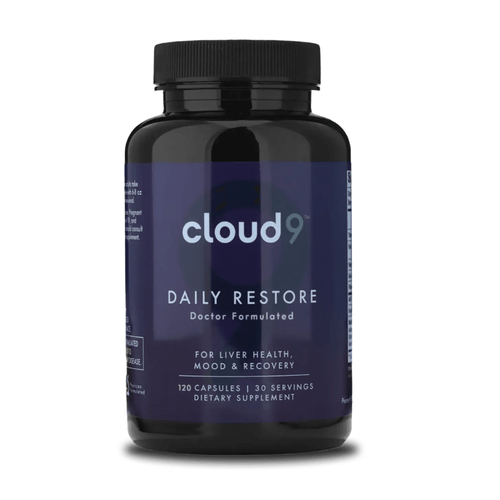
Cloud9 Daily Restore combines NAC, DHM, milk thistle, B vitamins, and ashwagandha to help support the pathways alcohol can tax most. Two capsules daily, drinking or not.
NAC | DHM | Milk Thistle | B Vitamins | Ashwagandha
See How Daily Restore WorksThe Three Core Emotions of Hangxiety
Shame: The Feeling You've Done Something Wrong
Shame during hangxiety often feels like a heavy, pervasive sense that you're fundamentally flawed or bad. Unlike guilt, which focuses on specific actions, shame attacks your core identity. You might think "I'm a mess" rather than "I did something I regret."
This intense shame response has biological roots. Alcohol impairs the prefrontal cortex, the part of your brain responsible for judgment and self-control. When you replay last night's events, you're viewing them through the lens of your sober, functioning prefrontal cortex, which can be harsh and unforgiving about decisions made when that system was offline.
The shame spiral is also fueled by what researchers call "fragmentary memory." You remember pieces of the night but not the full context, and your anxious brain tends to fill in the gaps with worst-case scenarios rather than neutral or positive interpretations.
Regret: Replaying What You Wish You Could Undo
Regret loops are one of the most torturous aspects of hangxiety. You obsessively replay conversations, cringe at jokes that landed wrong, or fixate on texts you wish you could unsend. This mental replay feels productive but usually just deepens your distress.
Research suggests that alcohol's impact on memory consolidation makes these regret loops more intense. You may have patchy recall, which creates uncertainty, and uncertainty fuels rumination. Your brain keeps trying to "solve" what happened, searching for the missing pieces that might make sense of your discomfort.
The physiological state of hangover also intensifies emotional processing. With elevated stress hormones and depleted neurotransmitters, your brain is literally less equipped to put situations in perspective or self-soothe effectively.
Dread: The Fear of Consequences Yet to Come
Dread is future-focused anxiety that convinces you something terrible is about to happen. You're certain your boss saw those Instagram stories, your friends think you're embarrassing, or you've permanently damaged a relationship. The waiting for the other shoe to drop can be agonizing.
This anticipatory anxiety is partly driven by your overactive amygdala, the brain's threat-detection center. Studies show that during alcohol withdrawal, even mild withdrawal, the amygdala becomes hyperresponsive to perceived threats. Neutral social cues get interpreted as negative, and minor concerns blow up into catastrophic predictions.
The dread often persists because alcohol disrupts your sleep architecture, leaving you without the REM sleep that helps process emotions and consolidate memories. Without adequate rest, your emotional regulation remains compromised, and the dread can follow you through the entire next day or longer.
Why Your Brain Distorts What Actually Happened
The Memory Gap Problem
Alcohol interferes with your hippocampus, the brain region responsible for forming new memories. This doesn't mean you were blacked out, but it does mean your memory of the evening may be spotty, out of sequence, or missing emotional context.
When you try to reconstruct the night, your anxious brain tends to assume the worst about the gaps. If you can't remember how someone reacted to your comment, you might convince yourself they were offended. If you can't recall the end of a conversation, you assume it ended awkwardly.
- Your brain prioritizes negative information when anxious, a phenomenon called negativity bias
- Fragmented memories feel more threatening than complete ones, even if nothing bad actually happened
- You may remember your internal anxiety more vividly than external events, distorting your perception of how things went
- The emotional intensity you feel now colors how you interpret what happened then
The Social Perception Distortion
Hangxiety often includes the certainty that everyone noticed your behavior and judged you harshly for it. In reality, research suggests that people are far less focused on your actions than you think. Most people are absorbed in their own experience and unlikely to remember minor social missteps.
This distortion happens because alcohol temporarily reduces social anxiety, making you feel more confident and less self-conscious. The next day, your social anxiety rebounds with extra intensity, and you retroactively apply that heightened self-consciousness to the previous night's events.
The stories we tell ourselves during hangxiety are almost always worse than reality. Your brain is running a threat-detection program with faulty data, creating narratives designed to keep you safe by making you feel terrible.
The Physical Factors That Amplify Emotional Hangxiety
Neurotransmitter Depletion and Rebound
Alcohol's impact on your brain chemistry creates a perfect storm for emotional distress. During drinking, alcohol enhances GABA, your brain's primary calming neurotransmitter, while suppressing glutamate, which is excitatory. This is why alcohol initially makes you feel relaxed and less anxious.
But your brain doesn't passively accept this chemical shift. It responds by downregulating GABA receptors and upregulating glutamate receptors to maintain balance. When the alcohol wears off, you're left with too little calming signal and too much excitatory activity, creating a state of heightened anxiety and emotional reactivity.
| Neurotransmitter | During Drinking | During Hangover |
|---|---|---|
| GABA (calming) | Enhanced activity, reduced anxiety | Depleted, less ability to self-soothe |
| Glutamate (excitatory) | Suppressed, contributing to sedation | Elevated, creating overstimulation |
| Serotonin (mood) | Temporarily boosted | Depleted, contributing to low mood |
| Dopamine (reward) | Increased, feeling good | Reduced, lack of pleasure or motivation |
Cortisol and the Stress Response
Alcohol consumption triggers a release of cortisol, your body's primary stress hormone. While you're drinking, the pleasant effects of alcohol may mask this stress response. But as your blood alcohol level drops, the elevated cortisol remains, keeping your body in a state of heightened alert.
Studies show that cortisol levels can remain elevated for up to 24 hours after drinking stops. This prolonged stress response makes you more reactive to perceived threats, more likely to interpret ambiguous situations negatively, and less able to regulate your emotional responses.
Sleep Disruption and Emotional Processing
Even if you slept for eight hours after drinking, the quality of that sleep was likely poor. Alcohol suppresses REM sleep, the stage where your brain processes emotions and consolidates memories. Without adequate REM sleep, you wake up emotionally raw and less resilient.
This sleep disruption doesn't just make you tired. It impairs your prefrontal cortex function, the same brain region responsible for rational thinking, perspective-taking, and emotional regulation. You're literally less equipped to talk yourself down from anxious thoughts or put situations in context.
- REM deprivation increases emotional reactivity and decreases stress tolerance
- Poor sleep quality amplifies negative emotional memories while diminishing positive ones
- Fragmented sleep maintains elevated cortisol levels throughout the next day
- Even if you feel physically rested, your emotional processing system may be significantly impaired
Breaking the Cycle: Addressing Emotional Hangxiety
Immediate Strategies for the Morning After
When you're in the thick of hangxiety, your first priority is harm reduction. You can't think your way out of a neurochemical imbalance, so focus on supporting your body's recovery and managing the immediate distress rather than solving every perceived problem from last night.
Resist the urge to send apology texts or have serious conversations while you're still in hangxiety. Your perception is distorted right now, and you're likely to overcorrect for problems that don't exist or aren't as serious as they feel.
- Hydrate with water and electrolytes to support basic brain function
- Eat protein and complex carbohydrates to stabilize blood sugar and support neurotransmitter production
- Move your body gently to metabolize stress hormones, even just a short walk
- Limit caffeine, which can amplify anxiety and stress response
- Avoid making big decisions or having difficult conversations until your system has recovered
- Use grounding techniques like deep breathing or naming objects in your environment to calm your nervous system
Reality-Testing Your Anxious Thoughts
Your thoughts during hangxiety are not reliable narrators. They're being generated by a brain running on depleted resources and heightened threat detection. Learning to recognize and question these thoughts can prevent you from spiraling deeper into shame and regret.
Try asking yourself: What evidence do I actually have that this bad thing happened or will happen? Am I remembering facts or interpreting feelings? Would I judge a friend this harshly for the same behavior? Often, you'll find your anxious narrative has little connection to objective reality.
| Hangxiety Thought | Reality Check |
|---|---|
| "Everyone thinks I'm embarrassing" | Most people were focused on their own experience, not analyzing yours |
| "I've ruined that relationship forever" | One night rarely destroys a solid relationship; wait to assess when you're not in crisis mode |
| "That person is definitely mad at me" | You're interpreting absence of contact as negative; they're likely just going about their day |
| "I need to apologize to everyone right now" | Wait until your perception clears; you may be apologizing for things that don't require apology |
Long-Term: Recognizing Your Patterns
If you find yourself experiencing intense emotional hangxiety regularly, it may be worth examining your relationship with alcohol. Not everyone experiences hangxiety to the same degree, and frequency or intensity can be a signal that alcohol isn't serving you well.
Pay attention to patterns: Do you drink to manage social anxiety, then experience worse anxiety the next day? Do you regularly find yourself in a shame spiral after drinking? Are you drinking more than you intended because the initial anxiety relief feels so good? These patterns can help you make informed decisions about whether and how much you want to drink.
For some people, moderating intake reduces hangxiety to manageable levels. For others, the anxiety rebound happens even with small amounts of alcohol, and the most effective solution is reducing or eliminating drinking altogether. There's no universal right answer, only what works for your particular brain chemistry and life circumstances.
How Daily Restore Supports Your Health
Understanding what your body needs is one thing. Getting consistent daily support is another. Daily Restore was designed to address the key pathways alcohol can stress most, in one simple daily formula.
NAC (N-Acetyl Cysteine)
Supports glutathione production and antioxidant defenses
DHM (Dihydromyricetin)
Supports alcohol metabolism
Milk Thistle (Silymarin)
Supports healthy liver function
B Vitamins
Help replenish nutrients involved in energy and metabolism
Ashwagandha
Supports stress resilience and healthy cortisol balance
Daily Restore is not a detox or a cure. It is a daily support formula designed for people who drink socially and want to give their body consistent, evidence-informed support.
Frequently Asked Questions
How long does hangxiety typically last?
Hangxiety symptoms can last anywhere from a few hours to a full day or more, depending on how much you drank and your individual brain chemistry. Most people notice the emotional symptoms begin to ease as the physical hangover improves and neurotransmitter levels start to rebalance.
Why do I get hangxiety but my friends don't?
Everyone's brain chemistry is different, and research suggests that people who are naturally more anxious or sensitive may be more prone to hangxiety. Genetic factors, baseline stress levels, and how your body metabolizes alcohol all play a role in whether you experience these emotional aftereffects.
Can you prevent hangxiety before it starts?
While there's no guaranteed prevention method, staying hydrated, eating before and during drinking, pacing yourself, and supporting your body with nutrients like glutathione and NAC may help minimize the severity. Taking a proactive approach to liver and brain health can make a meaningful difference in how you feel the next day.
Is hangxiety a sign I should stop drinking altogether?
Hangxiety alone isn't necessarily a red flag, but if you're consistently experiencing intense emotional distress after drinking, it's worth examining your relationship with alcohol. Pay attention to patterns: if the shame and anxiety are disrupting your life or mental health, it may be time to cut back or take a break.
Does coffee make hangxiety worse?
Caffeine can amplify anxiety symptoms for some people, especially when your nervous system is already on edge from alcohol withdrawal. If you're prone to hangxiety, consider skipping the coffee or sticking to a smaller amount, and focus on hydration and nutrient-rich foods instead.
The Bottom Line
Hangxiety is more than just a bad mood after a night out. It's a real physiological response to alcohol's impact on your brain chemistry, stress hormones, and neurotransmitter balance. The shame, regret, and dread you feel aren't signs of weakness or overreaction, they're your body working to recalibrate after a neurological disruption.
The good news is that understanding what's happening in your brain can help you respond with more compassion and better strategies. Hydration, rest, gentle movement, and self-kindness all support your recovery. So does giving your body the nutrients it needs to process alcohol more efficiently and restore balance.
That's where Cloud9 Daily Restore comes in. Formulated with clinically studied ingredients like glutathione, NAC, and DHM, it's designed to support your liver, protect your cells, and help your body bounce back more smoothly. Taking it consistently, whether you're drinking that day or not, means you're building a foundation of daily support that can make those mornings after feel a little less brutal.
You don't have to white-knuckle your way through hangxiety or let it steal your weekend. With the right tools and a little self-awareness, you can enjoy your social life without the emotional hangover that follows.
Build Your Daily Support Routine
Build Your Daily Support Routine
If drinking is part of your lifestyle, your support routine should not be random. Daily Restore was designed to help social drinkers support liver health, antioxidant defenses, alcohol metabolism, nutrient replenishment, and daily recovery in one simple routine.
NAC
DHM
Milk Thistle
B Vitamins
Ashwagandha