
You made it through the dinner party, the work mixer, or the family gathering. But now you're home, replaying every conversation in your head, picking apart what you said, how you looked, whether people actually liked you. Your body feels drained. Your mind won't stop analyzing.
This post-event emotional hangover is one of the most exhausting parts of social anxiety, and it's something millions of people experience after social interactions that felt hard. The good news is that you can learn to recover more quickly and build resilience for future events.
Here's how to give yourself the emotional reset you need after a challenging social experience.
Quick Take
- Post-event rumination is a common feature of social anxiety that can intensify distress if left unchecked
- Physical recovery strategies like rest, hydration, and gentle movement help regulate your nervous system after social stress
- Cognitive techniques can interrupt the cycle of negative self-analysis and create more balanced perspectives
- Self-compassion practices reduce shame and help you process the experience without harsh judgment
- Building a consistent recovery routine makes it easier to bounce back from future social challenges
Why Social Events Leave You Emotionally Drained
Social anxiety activates your body's threat response system, flooding you with stress hormones even during seemingly casual interactions. Research suggests that people with social anxiety experience heightened physiological arousal in social situations, similar to the body's reaction to actual danger. This means your nervous system has been working overtime, even if you looked calm on the outside.
The mental load is equally taxing. Studies show that socially anxious individuals engage in intense self-monitoring during interactions, constantly scanning for signs of judgment or rejection. You're essentially running two programs simultaneously: participating in the event and analyzing your performance in real time.
After the event ends, many people experience what psychologists call post-event processing, a pattern of repetitive negative thinking about social performance. This rumination can actually intensify anxiety and make future social situations feel more threatening. Understanding this pattern is the first step toward breaking it.
Daily Support for Social Drinkers
Your liver works hard every day. Give it consistent support.
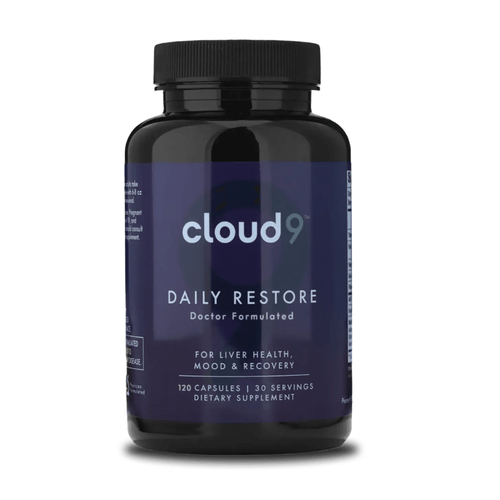
Cloud9 Daily Restore combines NAC, DHM, milk thistle, B vitamins, and ashwagandha to help support the pathways alcohol can tax most. Two capsules daily, drinking or not.
NAC | DHM | Milk Thistle | B Vitamins | Ashwagandha
See How Daily Restore WorksImmediate Physical Recovery Strategies
Your body needs tangible recovery after the stress response has been activated. These physical strategies help signal safety to your nervous system and begin the process of returning to baseline.
Give Yourself Permission to Rest
Social exhaustion is real, and it's not a character flaw. Your nervous system has been on high alert, and it needs time to recalibrate. Cancel non-essential plans for the rest of the day if possible, and don't force yourself into more stimulation before you're ready.
Create a comfortable, low-stimulation environment where you can decompress. Dim the lights, put on comfortable clothes, and allow yourself to simply be without any performance expectations.
Address Your Physical State
Anxiety and stress can leave you dehydrated, tense, and depleted. Taking care of your body's basic needs helps kickstart the recovery process.
- Drink water or herbal tea to rehydrate and signal relaxation to your body
- Eat something nourishing, especially if anxiety suppressed your appetite during the event
- Take a warm shower or bath to release physical tension
- Practice gentle stretching or progressive muscle relaxation to release held stress
- Get outside for fresh air and natural light if weather permits
Regulate Your Nervous System
Specific breathing and grounding techniques can help shift your body out of fight-or-flight mode. Try box breathing: inhale for four counts, hold for four, exhale for four, hold for four. Repeat for several minutes.
You can also try the 5-4-3-2-1 grounding technique: identify five things you can see, four you can touch, three you can hear, two you can smell, and one you can taste. This redirects your attention from internal rumination to present-moment awareness.
Interrupt the Rumination Cycle
The mental replay of social interactions can feel automatic and impossible to stop. But you can learn to recognize rumination and redirect your attention before it spirals.
Set a Time Limit for Processing
Give yourself a specific, bounded period to think about the event, perhaps 15 to 20 minutes. Set a timer if it helps. When the time is up, consciously redirect your attention to something else.
This approach acknowledges your need to process without letting rumination consume your entire evening. It creates structure around something that otherwise feels endless.
Write It Out and Let It Go
Journaling can help externalize the anxious thoughts swirling in your mind. Write down your worries, perceived mistakes, or uncomfortable moments without filtering or judging. The act of putting thoughts on paper often reduces their emotional intensity.
Once you've written everything out, you can choose to tear up the pages, close the journal, or even write a response from a more compassionate perspective. This creates a sense of completion and containment.
Challenge Your Interpretation
Social anxiety tends to distort perception, making neutral interactions seem negative. When you catch yourself ruminating on a specific moment, ask yourself these questions:
- What actual evidence do I have that this went badly?
- Am I remembering facts or interpreting through an anxious filter?
- Would an outside observer see this the same way I do?
- What percentage of the event actually felt difficult versus neutral or okay?
- How will this matter in a week, a month, or a year?
The stories we tell ourselves after social events are rarely accurate reflections of what actually happened. They're colored by anxiety, fatigue, and heightened self-focus. Learning to question these narratives is one of the most powerful social anxiety recovery skills you can develop.
Practice Self-Compassion Instead of Self-Criticism
The way you talk to yourself after a difficult social event directly impacts how quickly you recover. Harsh self-judgment intensifies shame and makes future social situations feel more threatening.
Recognize Common Self-Critical Patterns
Notice the language you use when replaying the event. Are you calling yourself names, catastrophizing, or holding yourself to impossible standards? These patterns keep you stuck in distress.
Common self-critical thoughts include "I'm so awkward," "Everyone thinks I'm weird," "I ruined everything," or "I'll never be good at this." Simply recognizing these thoughts as anxiety-driven rather than factual can create some distance.
Respond With Kindness
What would you say to a close friend going through the same experience? You'd likely offer understanding, perspective, and encouragement. Try extending that same compassion to yourself.
Acknowledge that social situations are genuinely challenging for you right now, and that struggling doesn't mean you're failing. It means you're dealing with something difficult, and you still showed up.
Celebrate What You Did, Not Just What Went Wrong
Anxiety narrows your focus to perceived mistakes and uncomfortable moments. Deliberately shift attention to what you actually accomplished:
- You attended the event even though it felt hard
- You engaged in conversation despite internal discomfort
- You managed anxiety symptoms without anyone necessarily noticing
- You're learning and building tolerance for social stress
- You're here now, actively working on recovery strategies
Build Your Personal Recovery Toolkit
Having a consistent post-event routine makes recovery feel less overwhelming and more automatic. Your toolkit should include strategies that work specifically for you.
Recovery Strategies Comparison
| Strategy Type | Best For | Time Needed |
|---|---|---|
| Physical rest and comfort | Nervous system regulation, immediate relief | 1-3 hours |
| Breathing and grounding | Acute anxiety, racing thoughts | 5-15 minutes |
| Journaling | Processing specific moments, externalizing worries | 15-30 minutes |
| Gentle movement | Releasing physical tension, shifting energy | 20-45 minutes |
| Distraction activities | Breaking rumination loops, mental reset | 30-90 minutes |
| Connection with support person | Gaining perspective, feeling less alone | 15-60 minutes |
Know When to Reach Out
Sometimes recovery is easier with support. Consider reaching out to a trusted friend or therapist if you're struggling to break the rumination cycle on your own. This isn't a sign of weakness; it's strategic use of your resources.
Be specific about what you need: validation, distraction, perspective, or just someone to listen. People who care about you generally want to help but may not know what would be most useful.
Create a Physical Comfort Menu
Keep a list of specific activities that help you feel safe and grounded. When you're in the midst of post-event distress, decision-making feels harder. Having a pre-made menu eliminates that barrier.
Your comfort menu might include watching a familiar show, doing a puzzle, cooking something simple, listening to a specific playlist, cuddling a pet, or taking a walk in a familiar place. Choose activities that are genuinely soothing rather than numbing or avoidant.
Learn From the Experience Without Harsh Judgment
Once you've given yourself time to recover, you can gently reflect on the experience in a more balanced way. This isn't about finding everything you did wrong; it's about building insight and resilience.
Identify What Actually Helped
Think about moments during the event when your anxiety decreased, even slightly. What were you doing? Who were you talking to? What mental strategies did you use? These insights help you understand what works for you specifically.
Maybe you felt better when asking questions rather than talking about yourself, or when standing near the edge of the room rather than in the center. These observations become data for future situations.
Recognize Your Growth Over Time
Compare this experience not to how you wish you'd performed, but to where you were six months or a year ago. Are you attending events you would have avoided before? Staying longer? Speaking up more? Recovery isn't linear, but zooming out often reveals progress you can't see day to day.
Keep a simple log of social events you attend and how you felt afterward. Over time, you may notice that recovery gets faster, events feel slightly less daunting, or you're building a stronger sense of what helps you cope.
Adjust Your Approach for Next Time
Without self-blame, consider what you might do differently in future similar situations. This could include:
- Setting clearer boundaries about when you'll leave
- Bringing a trusted friend for support
- Planning specific conversation topics in advance
- Choosing smaller gatherings or different types of events
- Using grounding techniques during the event, not just after
- Being more selective about which invitations you accept
How Daily Restore Supports Your Health
Understanding what your body needs is one thing. Getting consistent daily support is another. Daily Restore was designed to address the key pathways alcohol can stress most, in one simple daily formula.
NAC (N-Acetyl Cysteine)
Supports glutathione production and antioxidant defenses
DHM (Dihydromyricetin)
Supports alcohol metabolism
Milk Thistle (Silymarin)
Supports healthy liver function
B Vitamins
Help replenish nutrients involved in energy and metabolism
Ashwagandha
Supports stress resilience and healthy cortisol balance
Daily Restore is not a detox or a cure. It is a daily support formula designed for people who drink socially and want to give their body consistent, evidence-informed support.
Frequently Asked Questions
How long does it take to emotionally recover after a difficult social event?
Recovery time varies from person to person and depends on factors like the intensity of the event and your current stress levels. Some people feel better within a few hours of self-care, while others may need a day or two to fully reset. The key is to give yourself permission to take the time you need without judgment.
Is replaying conversations in my head after a social event normal?
Yes, this is extremely common, especially for people who experience social anxiety. Research suggests that rumination after social interactions is a natural response when your nervous system has been activated. While some reflection can be helpful, getting stuck in repetitive loops can increase anxiety, which is why grounding techniques and intentional distraction can be so beneficial.
Can supplements really help with post-social anxiety recovery?
Certain ingredients like ashwagandha, L-theanine, and magnesium have been shown in studies to support the body's stress response and promote a sense of calm. While supplements aren't a cure-all, they can be a helpful tool as part of a broader recovery strategy that includes rest, movement, and mindfulness practices.
Should I avoid social events if they make me anxious?
Avoidance can actually reinforce social anxiety over time, making future events feel even more daunting. Instead of avoiding altogether, consider starting with smaller, lower-pressure gatherings and building up your tolerance gradually. Pairing social exposure with good recovery practices can help you build confidence while honoring your needs.
What if I feel worse the day after a social event than I did during it?
This delayed response is often called a "social hangover" and happens when your body processes the adrenaline and cortisol released during the event. Physical symptoms like fatigue, headaches, or low mood are common as your nervous system recalibrates. Gentle self-care, hydration, and rest can help you move through this phase more smoothly.
The Bottom Line
Recovering emotionally after a challenging social event isn't about being tougher or "getting over it" faster. It's about developing a toolkit of strategies that help you reset your nervous system, process your experience, and return to balance in a way that feels sustainable and compassionate.
The practices we've covered, like grounding techniques, gentle movement, journaling, and intentional rest, can all play a role in helping you bounce back with more ease. When you combine these habits with consistent daily support, you're building resilience that extends far beyond any single event.
That's where Cloud9's Daily Restore comes in. Formulated with ingredients like ashwagandha, L-theanine, and magnesium, it's designed to help support your body's natural stress response and promote a sense of calm, even on the toughest days. Taking it consistently can help you feel more grounded overall, making both the social events themselves and the recovery afterward a little less overwhelming.
Remember, building emotional resilience is a practice, not a destination. Each time you show up for yourself after a hard event, you're reinforcing the message that your wellbeing matters. With the right tools and a little patience, you can navigate social anxiety with more confidence and care.
Build Your Daily Support Routine
Build Your Daily Support Routine
If drinking is part of your lifestyle, your support routine should not be random. Daily Restore was designed to help social drinkers support liver health, antioxidant defenses, alcohol metabolism, nutrient replenishment, and daily recovery in one simple routine.
NAC
DHM
Milk Thistle
B Vitamins
Ashwagandha