

Your heart races. Your palms sweat. That familiar tightness grips your chest as you walk into a crowded room or prepare to speak up in a meeting. Social anxiety has a way of hijacking your body before your mind can catch up.
What if you could interrupt that cascade in under two minutes? There's a specific breathing technique, grounded in how your nervous system works, that can help you regain control when anxiety spikes. It's discreet enough to use anywhere, and it works faster than you might expect.
This isn't about eliminating anxiety forever or pretending it doesn't exist. It's about having a reliable tool when you need it most.
Quick Take
- The 4-7-8 breathing technique can activate your parasympathetic nervous system in under 2 minutes
- Extending your exhale longer than your inhale signals safety to your brain and body
- This technique works because it interrupts the fight-or-flight response that drives social anxiety symptoms
- You can practice it anywhere without anyone noticing, making it ideal for social situations
- Regular practice makes the technique more effective when you need it during high-stress moments
Why Breathing Affects Social Anxiety So Powerfully
When social anxiety strikes, your body activates the same emergency response it would use if you were facing physical danger. Your sympathetic nervous system kicks in, flooding you with stress hormones, quickening your breath, and preparing you to fight or flee. The problem is that a networking event isn't actually life-threatening, but your body doesn't know the difference.
Here's where breathing becomes your advantage. Your breath is one of the few aspects of your autonomic nervous system you can consciously control. Research suggests that deliberately changing your breathing pattern sends direct signals to your brain stem, which can help shift you from sympathetic (stressed) to parasympathetic (calm) mode.
The key lies in the exhale. Studies show that extending your exhale activates the vagus nerve, which runs from your brain to your abdomen and helps regulate your stress response. When you breathe out slowly, you're essentially telling your nervous system that you're safe.
Daily Support for Social Drinkers
Your liver works hard every day. Give it consistent support.
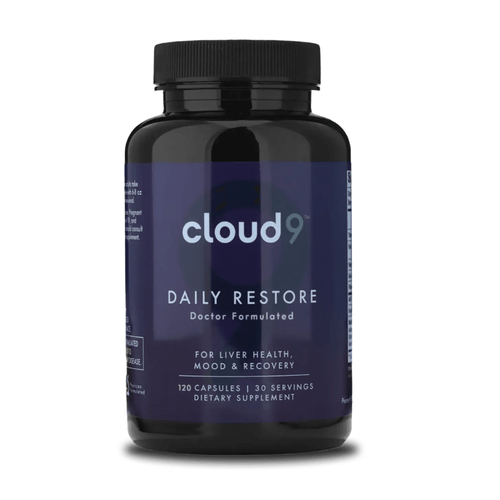
Cloud9 Daily Restore combines NAC, DHM, milk thistle, B vitamins, and ashwagandha to help support the pathways alcohol can tax most. Two capsules daily, drinking or not.
NAC | DHM | Milk Thistle | B Vitamins | Ashwagandha
See How Daily Restore WorksThe 4-7-8 Technique: Your Two-Minute Reset
This specific breathing pattern creates the optimal ratio between inhale, hold, and exhale to maximize calming effects. The extended exhale and brief breath retention work together to activate your body's natural relaxation response.
Step-by-Step Instructions
You can do this sitting, standing, or even walking. No one around you needs to know you're using a technique. Here's exactly how it works:
- Place the tip of your tongue against the ridge behind your upper front teeth and keep it there throughout the exercise
- Exhale completely through your mouth, making a gentle whoosh sound
- Close your mouth and inhale quietly through your nose for a count of 4
- Hold your breath for a count of 7
- Exhale completely through your mouth for a count of 8, making that whoosh sound again
- This completes one cycle. Repeat for three more cycles (four total)
The entire sequence takes about 90 seconds to two minutes. The specific numbers matter less than the ratio: your exhale should be roughly twice as long as your inhale, with a moderate hold in between.
What to Expect When You First Try It
Don't be surprised if you feel slightly lightheaded during your first few attempts. This is normal and typically subsides as your body adjusts. You might also notice that the breath hold feels challenging at first, especially if you're already anxious and breathing shallowly.
Start with shorter counts if needed. Try 3-5-6 or even 2-3-4 until you build capacity. The ratio matters more than hitting exact numbers.
When and Where to Use This Technique
The beauty of the 4-7-8 method is its versatility. You can modify it to fit almost any social situation where anxiety strikes.
High-Stakes Social Moments
- Right before entering a party or networking event
- In the bathroom during a work function when you need a reset
- Sitting in your car before walking into a social obligation
- During a conversation when you feel panic rising (silent version, breathing through your nose only)
- After a stressful interaction to help your system calm down
Building Your Baseline: Daily Practice
This technique becomes significantly more effective when you practice it regularly, not just during crisis moments. Research suggests that consistent breathwork can actually retrain your nervous system's baseline reactivity over time.
Try practicing twice daily when you're calm: once in the morning and once before bed. This builds muscle memory so the technique feels automatic when anxiety hits. You're essentially teaching your body a new default response pattern.
The most powerful thing about breathwork for social anxiety is that it gives you agency. You're not waiting for the anxiety to pass on its own. You're actively participating in your own nervous system regulation.
Common Mistakes and How to Avoid Them
Breathing Too Forcefully
This isn't about filling your lungs to maximum capacity or emptying them completely. Gentle, controlled breathing works better than dramatic, deep breaths. Forcing the breath can actually increase anxiety by making you more aware of your breathing and creating tension.
Think of it as calm and measured, not big and intense. Your breath should feel smooth and natural, not strained.
Giving Up After One Cycle
One round of 4-7-8 breathing rarely creates the full calming effect. Your nervous system needs the repetition of multiple cycles to shift states. Four complete cycles is the minimum for most people to notice a significant change.
If you're in an acute anxiety situation, you might need to do two full sets (eight total cycles) with a brief pause between sets.
Only Using It During Panic
The technique works during anxiety spikes, but it works even better when you've trained your system through regular practice. If you only reach for this tool during emergencies, you're missing the cumulative benefits that come from daily use.
| Situation | Recommended Approach | Number of Cycles |
|---|---|---|
| Daily practice (calm state) | Full technique with audible exhale | 4 cycles, twice daily |
| Before social event | Full technique in private space | 4-8 cycles |
| During conversation | Silent version, nose breathing only | 2-4 cycles |
| Acute panic response | Full technique, find private space if possible | 8-12 cycles |
| Post-event wind-down | Full technique with focus on release | 4-6 cycles |
Combining This Technique With Other Approaches
Pairing With Cognitive Strategies
The 4-7-8 breathing technique works on your body's physical stress response, but social anxiety also involves thought patterns. Once you've used the breathing to take the edge off your physical symptoms, you're in a better position to challenge anxious thoughts or use other cognitive tools.
Think of breathwork as creating the physiological foundation that makes mental strategies more accessible. It's hard to reframe catastrophic thinking when your heart is pounding and you can't catch your breath.
As Part of a Broader Toolkit
No single technique eliminates social anxiety entirely. This breathing method is most powerful as part of a larger approach that might include therapy, gradual exposure to feared situations, lifestyle factors like sleep and exercise, and possibly other interventions.
The advantage of having this particular tool is its speed and accessibility. While working on deeper patterns takes time, you can use this technique right now, in the moment when anxiety strikes.
What Makes This Different From "Just Take a Deep Breath"
You've probably heard "just breathe" or "take a deep breath" countless times. This technique is fundamentally different because of its specific structure. Random deep breaths can sometimes make anxiety worse by disrupting your natural breathing rhythm or making you hyperventilate.
The 4-7-8 pattern provides a framework that prevents these issues. The counts give your mind something concrete to focus on, which helps interrupt anxious thought spirals. The extended exhale specifically targets the physiological mechanism that calms your nervous system. And the breath hold creates a brief moment of stillness that helps reset your breathing pattern.
How Daily Restore Supports Your Health
Understanding what your body needs is one thing. Getting consistent daily support is another. Daily Restore was designed to address the key pathways alcohol can stress most, in one simple daily formula.
NAC (N-Acetyl Cysteine)
Supports glutathione production and antioxidant defenses
DHM (Dihydromyricetin)
Supports alcohol metabolism
Milk Thistle (Silymarin)
Supports healthy liver function
B Vitamins
Help replenish nutrients involved in energy and metabolism
Ashwagandha
Supports stress resilience and healthy cortisol balance
Daily Restore is not a detox or a cure. It is a daily support formula designed for people who drink socially and want to give their body consistent, evidence-informed support.
Frequently Asked Questions
Can breathing exercises really work as fast as medication for social anxiety?
Breathing techniques work through a different mechanism than medication, but research suggests they can activate the parasympathetic nervous system within seconds to minutes. While they may not replace prescribed treatments for severe anxiety, controlled breathing can offer quick relief for acute symptoms in social situations.
How often should I practice this breathing technique?
Daily practice helps build the skill so it becomes more effective when you need it most. Even 5 minutes of practice in a calm environment can strengthen your ability to use the technique during stressful moments. Think of it like training a muscle: regular practice makes the response more automatic.
What if focusing on my breath makes me more anxious?
Some people initially feel uncomfortable when directing attention to their breathing, especially if they're already feeling panicky. Start with shorter sessions of just 30 seconds, and try pairing the technique with a grounding object you can hold or a soothing environment. If breathwork consistently increases your distress, it's worth discussing alternative calming strategies with a mental health professional.
Can I use this technique before a big presentation or social event?
Absolutely. Many people find that using controlled breathing 5 to 10 minutes before a challenging social situation helps reduce anticipatory anxiety and creates a calmer baseline. You can even practice a shortened version discreetly during the event itself if you start feeling overwhelmed.
Should I combine breathing exercises with other anxiety management tools?
Research suggests that combining multiple approaches often yields the best results for managing social anxiety. Breathing techniques work well alongside therapy, lifestyle changes, regular exercise, and targeted supplements that support your nervous system. A comprehensive approach addresses anxiety from multiple angles.
The Bottom Line
Social anxiety doesn't have to control your life or keep you from meaningful connections. A simple two-minute breathing technique can help shift your nervous system from fight-or-flight into a calmer state, giving you the space to navigate social situations with more confidence. While it's not a cure-all, controlled breathing is a free, accessible tool you can use anytime, anywhere.
The key is consistency. Like any skill, breathing techniques become more effective with regular practice. Start incorporating them into your daily routine, even when you're not anxious, so they're ready when you need them most. Over time, you may find that your baseline anxiety decreases and your resilience in social situations grows stronger.
For comprehensive support, consider pairing your breathing practice with Daily Restore, a supplement formulated to help your body manage stress and support a balanced nervous system. With ingredients like ashwagandha, L-theanine, and magnesium, Daily Restore works behind the scenes to give your body the nutritional foundation it needs to handle daily stressors more smoothly.
Social anxiety is challenging, but you have more control than you might think. Between proven breathing techniques and targeted nutritional support, you're building a toolkit that can help you show up more fully in the moments that matter. Start with one breath at a time.
Build Your Daily Support Routine
Build Your Daily Support Routine
If drinking is part of your lifestyle, your support routine should not be random. Daily Restore was designed to help social drinkers support liver health, antioxidant defenses, alcohol metabolism, nutrient replenishment, and daily recovery in one simple routine.
NAC
DHM
Milk Thistle
B Vitamins
Ashwagandha