

You're standing outside the venue, heart racing, palms sweating, mentally rehearsing your exit strategy before you've even walked in. That familiar wave of social anxiety is telling you to turn around, go home, cancel.
But what if you had a reliable ritual that could shift your nervous system from panic mode to ready mode? Research suggests that structured pre-event routines can significantly reduce anticipatory anxiety and help you feel more grounded before challenging social situations.
This isn't about forcing yourself to be someone you're not. It's about building a personalized sequence of actions that signals to your brain: "We've done this before. We can handle this."
Quick Take
- Pre-event rituals help regulate your nervous system and reduce anticipatory anxiety before social situations
- The most effective rituals combine physical, mental, and sensory anchoring techniques
- Timing matters: start your ritual 30-90 minutes before the event for optimal impact
- Consistency builds neural pathways that make the calming response automatic over time
- Your ritual should be portable, repeatable, and tailored to your specific anxiety triggers
Why Pre-Event Rituals Work for Social Anxiety
Social anxiety operates on anticipation. Your brain starts spinning worst-case scenarios hours or even days before an event, building momentum until your nervous system is completely flooded. A pre-event ritual interrupts that spiral by giving your mind something concrete to focus on instead of imagined disasters.
Studies show that ritualized behaviors can reduce anxiety by creating a sense of control and predictability. When you follow the same sequence before challenging situations, you're essentially training your nervous system to associate those actions with successfully getting through events. The ritual becomes a bridge between your anxious state and your capable state.
The key is building a ritual that works with your body's stress response rather than against it. This means incorporating techniques that directly impact your autonomic nervous system, the part of your brain that controls your fight-or-flight response.
Daily Support for Social Drinkers
Your liver works hard every day. Give it consistent support.
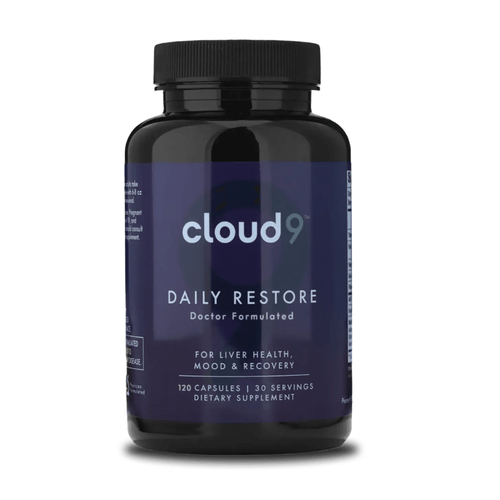
Cloud9 Daily Restore combines NAC, DHM, milk thistle, B vitamins, and ashwagandha to help support the pathways alcohol can tax most. Four capsules daily, drinking or not.
NAC | DHM | Milk Thistle | B Vitamins | Ashwagandha
See How Daily Restore WorksThe Three-Layer Ritual Framework
The most effective pre-event rituals address three distinct layers: physical regulation, mental preparation, and sensory anchoring. Each layer targets a different aspect of your anxiety response, creating a comprehensive shift from overwhelm to readiness.
Layer One: Physical Regulation (30-60 Minutes Before)
Start with your body. When social anxiety kicks in, your sympathetic nervous system activates, triggering rapid heartbeat, shallow breathing, and muscle tension. Physical regulation techniques help activate your parasympathetic nervous system, the calming counterbalance.
- Box breathing: Inhale for 4 counts, hold for 4, exhale for 4, hold for 4. Repeat for 5 minutes
- Progressive muscle relaxation: Tense and release each muscle group from toes to head
- Light movement: A 10-minute walk, gentle stretching, or simple yoga poses
- Cold water exposure: Splash your face with cold water or hold ice cubes to activate your vagus nerve
Choose one or two techniques that feel natural to you. The goal isn't perfection, it's creating a physiological shift that tells your body it's safe to calm down.
Layer Two: Mental Preparation (15-30 Minutes Before)
Once your body is calmer, redirect your mental energy. Instead of trying to stop anxious thoughts (which often backfires), give your brain a different job.
The most powerful shift happens when you stop asking "What if things go wrong?" and start asking "What's one thing I can look forward to about this?"
Research on cognitive reframing suggests that changing your relationship with anxiety, rather than trying to eliminate it, can reduce its intensity. Try these mental preparation techniques:
- Set one realistic intention: "I'll stay for 30 minutes" or "I'll talk to two people"
- Identify your exit strategy so you know you're not trapped
- Visualize one positive moment from the event, however small
- Write three facts about yourself to counter "everyone will judge me" thoughts
- Review past events you successfully attended, even if they felt hard
Layer Three: Sensory Anchoring (Right Before You Enter)
Sensory anchors are portable cues that ground you in the present moment. They work by engaging your five senses, which pulls your attention away from internal anxiety and into your immediate environment.
| Sense | Anchoring Technique | Why It Works |
|---|---|---|
| Touch | Smooth stone in pocket, textured bracelet, or grounding object | Physical sensation brings attention to the present |
| Smell | Essential oil rollerball (lavender, peppermint) or familiar scent | Scent directly affects the limbic system and emotion |
| Sound | Calming playlist or specific song on your commute | Music can regulate heart rate and mood |
| Taste | Mint, gum, or a specific tea beforehand | Strong taste interrupts anxiety loops |
| Sight | Photo on your phone or meaningful image | Visual cues can trigger calming associations |
Choose two or three sensory anchors that feel authentic to you. The repetition of using the same anchors builds stronger neural connections over time, making the calming effect more automatic.

Building Your Personal Ritual: A Step-by-Step Template
Generic advice doesn't work for social anxiety because everyone's triggers and calming responses are different. Your ritual needs to fit your specific patterns, schedule, and comfort level.
Start With Your Anxiety Timeline
Track when your anxiety peaks before events. Does it spike the morning of, an hour before, or right as you're walking in? Your ritual should begin before that peak, ideally catching the anxiety wave while it's still manageable.
If your anxiety starts days in advance, you'll need both a long-game strategy (daily grounding practices) and an immediate pre-event ritual. Focus the ritual on the 90 minutes directly before the event for maximum impact.
Create Your Custom Sequence
Using the three-layer framework, build a sequence that flows naturally. Here's an example timeline you can adapt:
- 90 minutes before: Light physical activity (walk, stretch, or gentle movement)
- 60 minutes before: Box breathing for 5 minutes, followed by a calming shower or self-care activity
- 30 minutes before: Set your intention, review your exit strategy, write down one thing you're capable of
- 15 minutes before: Play your anchor song, apply your scent anchor, hold your grounding object
- Right before entering: 5-4-3-2-1 grounding (name 5 things you see, 4 you hear, 3 you feel, 2 you smell, 1 you taste)
Test and Refine
Your first ritual probably won't be perfect, and that's completely normal. After each event, take notes on what helped and what felt forced or unhelpful. Studies on habit formation suggest it takes consistent repetition to build strong neural pathways, so give your ritual at least 5-6 trials before making major changes.
Pay attention to subtle shifts rather than expecting dramatic transformation. Did you feel 10% calmer? Did you stay 15 minutes longer than usual? Those incremental changes compound over time.
Common Ritual Mistakes and How to Avoid Them
Making It Too Complicated
A ritual with 15 steps that requires special equipment and perfect conditions will fail when you need it most. Keep it simple enough that you can do it in your car, a bathroom, or any semi-private space. Three to five core elements are plenty.
Starting Too Late
Beginning your ritual five minutes before an event when your anxiety is already at a 9 out of 10 won't give your nervous system enough time to shift. Start early, before the panic sets in, when your body can still respond to calming inputs.
Expecting Perfection
Your ritual won't eliminate anxiety completely, and that's not the goal. Research on anxiety management shows that trying to force yourself to feel calm often increases anxiety. Instead, aim for "manageable," where you feel anxious but capable of moving forward anyway.
Skipping It When You "Should" Be Fine
You might think you don't need your ritual for "easy" events, but consistency is what builds the neural pathway. Use your ritual before every social situation for the first few months, even casual ones. This repetition strengthens the association between the ritual and successfully showing up.
Adapting Your Ritual for Different Situations
While your core ritual should stay consistent, you can create variations for different contexts. A work presentation requires different preparation than a casual dinner party, even though both might trigger social anxiety.
High-Stakes Professional Events
For presentations, meetings, or networking events where performance matters, add competence-building elements to your ritual. Review your expertise, rehearse key points (but not scripts), and visualize yourself as prepared rather than perfect. Your physical regulation becomes even more important here since performance anxiety intensifies body symptoms.
Casual Social Gatherings
For parties, dinners, or informal hangouts, focus more on connection intentions rather than performance. Your ritual might include reminding yourself that small talk doesn't require brilliance, identifying one person you'd like to reconnect with, or setting a flexible timeline (stay for one hour, then reassess).
New or Unfamiliar Situations
When you're entering completely unknown territory, spend extra time on your exit strategy and sensory anchors. Knowing exactly how you'll leave if needed reduces the "trapped" feeling that amplifies social anxiety. Bring portable comfort items and give yourself permission to leave early without judgment.
How Daily Restore Supports Your Health
Understanding what your body needs is one thing. Getting consistent daily support is another. Daily Restore was designed to address the key pathways alcohol can stress most, in one simple daily formula.
NAC (N-Acetyl Cysteine)
Supports glutathione production and antioxidant defenses
DHM (Dihydromyricetin)
Supports alcohol metabolism
Milk Thistle (Silymarin)
Supports healthy liver function
B Vitamins
Help replenish nutrients involved in energy and metabolism
Ashwagandha
Supports stress resilience and healthy cortisol balance
Daily Restore is not a detox or a cure. It is a daily support formula designed for people who drink socially and want to give their body consistent, evidence-informed support.
Frequently Asked Questions
How far in advance should I start my pre-event ritual?
Most people find that starting their ritual 30 to 60 minutes before an event works well, though this can vary based on what works for you. The key is consistency: once you find a timing that helps you feel prepared, stick with it so your mind and body learn to recognize the routine as a signal that you're ready.
What if I don't have time for a full ritual before an unexpected event?
Having a condensed version of your ritual can be incredibly helpful for spontaneous situations. Try creating a quick 5-minute version that includes just your most essential elements, like a brief breathing exercise and a grounding technique you can do anywhere, even in a bathroom stall or parked car.
Can a pre-event ritual really help with severe social anxiety?
While rituals can be a valuable tool for managing social anxiety symptoms, they work best as part of a comprehensive approach that may include therapy, lifestyle changes, and consistent daily support. Research suggests that structured routines can help regulate the nervous system and create a sense of control, but they're most effective when combined with other evidence-based strategies.
How long does it take for a pre-event ritual to start feeling natural?
Studies on habit formation suggest it typically takes anywhere from three to eight weeks for a new routine to feel automatic. Be patient with yourself during this period, and remember that even if your ritual doesn't feel completely natural yet, it can still be providing real benefits to your nervous system and mental state.
Should I use the same ritual for every type of social event?
You can absolutely customize your ritual based on the situation, whether that's a work presentation, casual gathering, or formal event. That said, keeping certain core elements consistent across all your rituals can help create a reliable foundation, while allowing you to add or adjust specific techniques based on what each situation requires.
The Bottom Line
Creating a pre-event ritual isn't about eliminating social anxiety entirely, it's about building a reliable system that helps you show up as your best self even when nerves try to take over. By combining physical grounding techniques, mental preparation strategies, and consistent daily support, you can transform how you approach social situations that once felt overwhelming.
The most effective approach to managing social anxiety typically includes both acute strategies (like your pre-event ritual) and ongoing daily support. This is where Cloud9's Daily Restore can play a meaningful role. Formulated with adaptogens like ashwagandha and L-theanine, it's designed to support your body's natural stress response over time, helping create a more balanced baseline before you even need your ritual.
Remember that building an effective ritual takes experimentation and patience. What works perfectly for someone else might not resonate with you, and that's completely normal. Start with one or two techniques that feel manageable, practice them consistently, and gradually build from there as you discover what truly helps you feel grounded and capable.
Social anxiety doesn't have to keep you from meaningful connections, career opportunities, or experiences you value. With the right preparation, consistent practice, and daily support from tools like Daily Restore, you can create a sustainable approach to managing anxiety that makes any social situation feel just a little more manageable.
Build Your Daily Support Routine
Build Your Daily Support Routine
If drinking is part of your lifestyle, your support routine should not be random. Daily Restore was designed to help social drinkers support liver health, antioxidant defenses, alcohol metabolism, nutrient replenishment, and daily recovery in one simple routine.
NAC
DHM
Milk Thistle
B Vitamins
Ashwagandha